|
브레이크뉴스 문홍철 기자= 최근 국회에서 한국과 중국 기업들의 생존 전략과 미래 변화 등 경제 협력 방안을 논의하는 자리가 마련됐다.
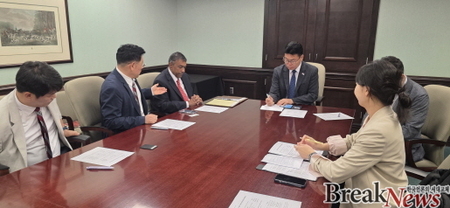
지난 달 30일 국회 제1소회의실에서 열린 ‘글로벌 경제위기 속 한·중 경제 협력과 발전 방향 세미나’는 더불어민주당 정진욱 의원실 주최로 (사)한국입법기자협회와 뉴스피어가 공동 주관했다.
이정우 한국입법기자협회 회장은 인사말에서 “지금 이 자리는 단순한 토론장이 아니라, 국가적 위기를 언론과 학계, 정치권이 함께 고민하고 해법을 모색하는 장”이라며 “협회가 7년간 준비한 세미나들이 이제는 사회적 영향력을 갖춘 공론장으로 자리잡고 있다”고 말했다.
이어 축사에 나선 설훈 전 국회의원은 “공급망과 외교, 안보는 모두 연결돼 있다. 이를 풀기 위해 정부, 국회, 시민사회가 긴밀히 협력해야 한다”고 강조했다.
세미나 발제에는 윤창원 서울디지털대 교수가 좌장을 맡아 진행됐으며, 김계환 산업연구원 선임연구위원과 김용경 건양대 특임교수가 각각 발표를 맡았다.
김계환 박사는 “공급망은 더 이상 기업의 이슈가 아니라 지정학, 경제안보, 국제정치가 얽힌 복합 구조 속에 있다”며 “한국이 기술, 에너지, 물류 등 분야에서 다층적 공급망 전략을 설계하는 ‘주도국’이 돼야 한다” 말했다.
김용경 교수는 “한중 관계는 단순한 무역 파트너십을 넘어 정치, 기술, 금융까지 얽힌 복합 네트워크로 진화하고 있다”며 “국회가 전략 설계자의 역할을 수행해야 한다”고 언급했다.
아우럴 지정 토론에서는 이원영 박사가 미국 무역적자 구조를 중심으로 지정학적 공급망의 맥락을 분석했고, 박경원 한양대 교수는 글로벌 가치사슬(GVC)의 정치화 흐름을 설명하며 국회의 역할을 강조했다. 라미경 서원대 교수는 대중국 산업 협력의 현장 반영 필요성을 언급했고, 김주희 대전대 교수는 지방정부, 중소기업, 문화교류 네트워크 등을 통한 연성 외교의 체계화를 강조했다.
한편, 참석자들은 공급망과 외교의 교차점에서 한국이 나아갈 방향으로는 ‘전략적 중립과 실용주의’라는 데 의견을 모았다.
break9874@naver.com
*아래는 위 기사를 '구글 번역'으로 번역한 영문 기사의 [전문]입니다. '구글번역'은 이해도 높이기를 위해 노력하고 있습니다. 영문 번역에 오류가 있을 수 있음을 전제로 합니다.<*The following is [the full text] of the English article translated by 'Google Translate'. 'Google Translate' is working hard to improve understanding. It is assumed that there may be errors in the English translation.>
Korea Legislative Reporters Association, Korea-China Economic Cooperation Solution Finding Discussion Successful
Recently, a forum was held at the National Assembly to discuss economic cooperation measures, including survival strategies and future changes for Korean and Chinese companies.
The ‘Korea-China Economic Cooperation and Development Directions Amid the Global Economic Crisis’ seminar held in the 1st Small Conference Room of the National Assembly on the 30th of last month was hosted by the office of Rep. Jeong Jin-wook of the Democratic Party of Korea and co-hosted by the Korea Legislative Reporters Association and Newspeer.
In his opening remarks, Lee Jeong-woo, Chairman of the Korea Legislative Reporters Association, said, “This is not a simple forum for discussion, but a place where the media, academia, and politics can think about the national crisis together and seek solutions.” He added, “The seminars that the association has prepared for the past seven years are now established as a public forum with social influence.”
Former National Assembly member Seol Hoon then gave a congratulatory speech, emphasizing, “Supply chains, diplomacy, and security are all connected. The government, the National Assembly, and civil society must work closely together to resolve this.”
The seminar presentation was moderated by Professor Yoon Chang-won of Seoul Digital University, and presentations were given by Senior Research Fellow Kim Gye-hwan of the Korea Institute for Industrial Economics and Trade and Special Professor Kim Yong-gyeong of Konyang University.
Dr. Kim Gye-hwan said, “Supply chains are no longer a corporate issue, but rather a complex structure intertwined with geopolitics, economic security, and international politics,” and added, “Korea must become a ‘leading country’ that designs multi-layered supply chain strategies in areas such as technology, energy, and logistics.”
Professor Kim Yong-gyeong said, “South Korea-China relations are evolving beyond a simple trade partnership into a complex network intertwined with politics, technology, and finance,” and added, “The National Assembly must play the role of a strategic designer.”
In the Aural Designation Discussion, Dr. Lee Won-young analyzed the context of the geopolitical supply chain centered on the structure of the U.S. trade deficit, and Professor Park Kyung-won of Hanyang University emphasized the role of the National Assembly by explaining the politicization of the global value chain (GVC). Professor Rami Kyung of Seowon University mentioned the need to reflect the field of industrial cooperation with China, and Professor Kim Ju-hee of Daejeon University emphasized the systematization of soft diplomacy through local governments, small and medium-sized enterprises, and cultural exchange networks.
Meanwhile, the participants agreed that the direction Korea should take at the intersection of supply chains and diplomacy is ‘strategic neutrality and pragmatism.’