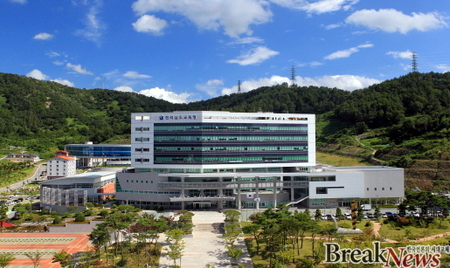
▲ 티엑스알로보틱스_스마트공장 및 로봇융합연구소 전경. |
로봇이 눈으로 물건을 보고, 손으로 정확하게 집어내는 시대가 성큼 다가왔다.
유진그룹(회장 유경선) 계열의 로봇·물류 자동화 전문기업 티엑스알로보틱스(대표 엄인섭)는 최근 한국기계연구원과 인공지능(AI) 기반 ‘랜덤 피스 피킹(Random Piece Picking, RPP)’ 로봇 솔루션에 대한 기술 통상실시권 계약을 체결했다고 밝혔다.
RPP는 물류창고나 공장처럼 형태와 크기가 제각각인 물체들이 뒤섞인 환경에서, 로봇이 목표 물체를 정확하게 인식하고 파지(집기)하는 기술이다. 지금까지는 복잡하고 비정형적인 피킹 작업은 사람의 손을 빌릴 수밖에 없었지만, AI 기술의 발전과 함께 자동화 가능성이 현실로 다가오고 있다.
티엑스알로보틱스가 이번 계약을 통해 확보한 핵심 기술은 ▲로봇이 카메라로 물체를 인식하는 ‘카메라 기반 AI 인식 기술’, 물체를 어떤 방식으로 잡아야 할지 판단하는 ‘파지 자세 판단 기술’, 주변 장애물과 충돌 없이 로봇 팔을 제어하는 ‘ROS 기반 로봇 제어 및 회피 기술’ 등 세 가지다.
한 마디로 로봇이 스스로 ‘보고, 판단하고, 정확하게 집어내는’ 전 과정을 수행할 수 있게 하는 기술 셋트를 확보한 셈이다.
해당 기술은 로봇이 주변 환경을 실시간 인식하고, 다양한 비정형 물체에 따라 적절한 전략을 자동 수립, 그리고 복잡한 작업 환경에서도 안정적으로 동작할 수 있게 하는 것이 핵심이다. 특히 AI 기반 시각 인식과 제어 기술이 유기적으로 결합돼 있어, 기술적 완성도가 높다는 평가를 받고 있다.
엄인섭 티엑스알로보틱스 대표는 “이번 기술 실시권 계약은 공공 연구기관이 보유한 유망 기술과 당사의 로봇 기술 역량이 결합할 수 있는 중요한 전환점”이라며, “이를 기반으로 다양한 산업 현장에 적용 가능한 기술적 응용 가능성을 적극 모색해 나가겠다”고 밝혔다.
티엑스알로보틱스는 그간 스마트 팩토리 및 물류 자동화를 위한 산업용 로봇을 자체 개발해온 기업이다.
이미 ▲AMR(자율이동로봇) ▲협동로봇 ▲물류 로봇 등 다양한 로봇 제품군을 보유하고 있으며, 이번 AI 피킹 로봇 기술을 바탕으로 더 복잡하고 정밀한 작업 환경을 소화할 수 있는 로봇 솔루션 확대를 예고하고 있다.
한편, 이번 기술 이전은 공공 연구기관의 원천 기술이 실제 산업 현장에 적용되는 대표적 사례로 주목된다. 티엑스알로보틱스는 향후 이 기술을 다양한 산업군에 접목해 로봇 자동화의 난제를 해결하는 기업으로 도약할 수 있을지 귀추가 주목된다.
*아래는 위 기사를 '구글 번역'으로 번역한 영문 기사의 [전문]입니다. '구글번역'은 이해도 높이기를 위해 노력하고 있습니다. 영문 번역에 오류가 있을 수 있음을 전제로 합니다.<*The following is [the full text] of the English article translated by 'Google Translate'. 'Google Translate' is working hard to improve understanding. It is assumed that there may be errors in the English translation.>
Eugene Group's TXR Robotics Secures AI Picking Robot Technology
-Robots 'See, Judge, and Pick' Like Humans…Signs Licensing Agreement for RPP Technology with KIMM
-From AI-Based Recognition to Grasping and Control…Robots Expertly Handle Complex, Unstructured Logistics Tasks
The era where robots can visually identify objects and precisely pick them up has arrived.
TXR Robotics, a robot and logistics automation specialist under the Eugene Group (Chairman Yoo Kyung-sun), recently announced that it has signed a licensing agreement for an AI-based 'Random Piece Picking (RPP)' robot solution with the Korea Institute of Machinery and Materials (KIMM).
RPP is a technology that allows robots to accurately recognize and grasp objects in environments where items of various shapes and sizes are mixed, such as in warehouses or factories. Until now, complex and unstructured picking tasks had to rely on human hands, but with the advancement of AI technology, the possibility of automation is becoming a reality.
The core technologies secured by TXR Robotics through this agreement are three-fold: ▲'Camera-based AI Recognition Technology' for robots to visually identify objects, ▲'Grasping Pose Determination Technology' for deciding how to pick up an object, and ▲'ROS-based Robot Control and Collision Avoidance Technology' for controlling robot arms without colliding with surrounding obstacles.
In short, the company has secured a set of technologies that enables robots to independently perform the entire process of 'seeing, judging, and precisely picking.'
The key to this technology is enabling robots to recognize their surroundings in real-time, automatically devise appropriate strategies for various unstructured objects, and operate stably even in complex work environments. Notably, the organic combination of AI-based visual recognition and control technologies is highly regarded for its technical completeness.
Eom In-seop, CEO of TXR Robotics, stated, "This technology licensing agreement is a significant turning point that allows the promising technology held by public research institutions to combine with our company's robot technology capabilities. Based on this, we will actively explore technical application possibilities for various industrial sites."
TXR Robotics has been a company that has independently developed industrial robots for smart factory and logistics automation.
It already possesses a diverse range of robot products, including AMRs (Autonomous Mobile Robots), collaborative robots, and logistics robots. With this new AI picking robot technology, the company is signaling an expansion of robot solutions capable of handling more complex and precise work environments.
Meanwhile, this technology transfer is drawing attention as a prime example of fundamental technology from a public research institution being applied in actual industrial settings. Moving forward, it remains to be seen whether TXR Robotics can leverage this technology across various industries to become a company that solves the challenging problems of robot automation.