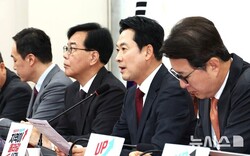
우원식 국회의장은 19일 오후 국회도서관 대강당에서 열린 '해방 80년·한일수교 60년 기념, 한일관계 대전환을 위한 국회토론회'에 참석했다.
 ▲ 우원식 의장은 "한일관계 발전을 위해서는 아픈 역사, 경제협력, 동북아와 한반도 평화를 만드는 동반자라는 세 기둥이 균형있게 서야 한다"면서 "역사를 직시하는 가운데 국익을 위해 필요한 것은 협력하고, 전략적 유연성을 발휘하면서도 역사적 정당성과 국민 정서를 놓치지 않는 균형 감각이 중요하다"고 역설했다. (사진, 국회의장실 제공) © 김충열 정치전문기자 |
이 자리에서 우 의장은 "어제 G7 정상회의에서 한일 정상회담이 있었는데, 12.3 비상계엄 이후 공백 상태였던 정상외교가 복원되어 다행"이라며 "한국의 리더십 교체로 양국관계가 어떻게 바뀔지 예민하게 지켜보던 일본과의 관계도 우호적으로 첫 단추를 잘 끼운 것 같다"고 말했다.
우 의장은 "역사문제는 양국관계를 어렵게 만드는 꼬인 매듭"이라며 "역사·영토와 관련된 일본 지도층의 부적절한 발언, 강제동원 등 과거사 문제는 끊임없이 갈등의 뇌관이 되어 왔으며, 국내적으로는 국민정서를 고려하지 않는 일방적인 대일 외교 정책이 큰 역풍을 맞기도 했다"고 진단했다.
그는 "한일기본조약과 청구권협정의 한계에 대한 지적도 지속해서 제기되고 있다"며, "1965년 체제를 극복하고 한일관계 대전환을 논의하는 이 자리가 그래서 더욱 의미 있다"고 강조했다.
우 의장은 "한일관계 발전을 위해서는 아픈 역사, 경제협력, 동북아와 한반도 평화를 만드는 동반자라는 세 기둥이 균형있게 서야 한다"면서 "역사를 직시하는 가운데 국익을 위해 필요한 것은 협력하고, 전략적 유연성을 발휘하면서도 역사적 정당성과 국민 정서를 놓치지 않는 균형 감각이 중요하다"고 역설했다.
이날 토론회는 김삼열 독립유공자유족회 회장, 이부영 한일협정재협상국민행동 대표, 송철원 (사)현대사기록연구원장, 조성두 역사기억평화행동 대표, 양영두 흥사단 민족통일운동본부 상임대표, 김형진 민족화해협력범국민협의회 상임이사, 이종원 와세다대/릿쿄대 명예교수, 남기정 서울대일본연구소 교수 등이 참석했으며, 박지원·김준형·이재강·황운하 의원 등이 자리를 빛냈다. hpf21@naver.com
* 아래는 위 기사를 '구글 번역'으로 번역한 영문 기사의 [전문]입니다. '구글번역'은 이해도 높이기를 위해 노력하고 있습니다. 영문 번역에 오류가 있을 수 있음을 전제로 합니다.
*The following is [the full text] of the English article translated by 'Google Translate'. 'Google Translate' is working hard to improve understanding. It is assumed that there may be errors in the English translation.
Speaker Woo Won-shik: “A Great Turnaround in Korea-Japan Relations, Relief of Summit Diplomacy through G7-Occurring Korea-Japan Summit”
Three Pillars Must Stand in Balance: Painful History, Economic Cooperation, and Peace Partners in Northeast Asia and the Korean Peninsula
Speaker Woo Won-shik attended the ‘National Assembly Debate on the 80th Anniversary of Liberation and the 60th Anniversary of Korea-Japan Diplomatic Relations, Relief of Summit Diplomacy’ held in the National Assembly Library’s main auditorium on the afternoon of the 19th.
At the event, Speaker Woo said, “Yesterday, there was a Korea-Japan summit at the G7 summit, and it is fortunate that summit diplomacy, which had been in a vacuum since the Martial Law on December 3, has been restored,” adding, “It seems that relations with Japan, which had been watching closely to see how bilateral relations would change due to the change in Korea’s leadership, have also made a good start on a friendly note.”
Chairman Woo said, “Historical issues are a tangled knot that makes bilateral relations difficult,” and diagnosed, “Inappropriate remarks by Japanese leaders regarding history and territory, and issues of the past such as forced mobilization have constantly been the triggers of conflict, and domestically, unilateral diplomatic policies toward Japan that do not consider national sentiment have also faced a great backlash.”
He emphasized, “Criticisms about the limitations of the Korea-Japan Basic Treaty and the Claims Settlement Agreement have also been continuously raised,” and “That is why this meeting, where we discuss overcoming the 1965 system and a major transformation of Korea-Japan relations, is all the more meaningful.”
Chairman Woo emphasized, “In order to develop Korea-Japan relations, the three pillars of painful history, economic cooperation, and partners who create peace in Northeast Asia and the Korean Peninsula must be balanced,” and “It is important to face history, cooperate when necessary for national interests, and demonstrate strategic flexibility while not losing sight of historical legitimacy and national sentiment.”
The discussion was attended by Kim Sam-yeol, chairman of the Association of Families of Independence Activists; Lee Bu-yeong, representative of the National Action for the Renegotiation of the Korea-Japan Treaty; Song Cheol-won, president of the Modern History Record Research Institute; Jo Seong-du, representative of the Historical Memory Peace Action; Yang Yeong-du, standing representative of the Heungsa Dan National Unification Movement Headquarters; Kim Hyeong-jin, standing director of the National Council for Reconciliation and Cooperation; Lee Jong-won, professor emeritus at Waseda University/Rikkyo University; and Nam Ki-jeong, professor at the Seoul National University Institute for Japanese Studies. Representatives Park Ji-won, Kim Jun-hyung, Lee Jae-gang, and Hwang Un-ha graced the occasion. hpf21@naver.com