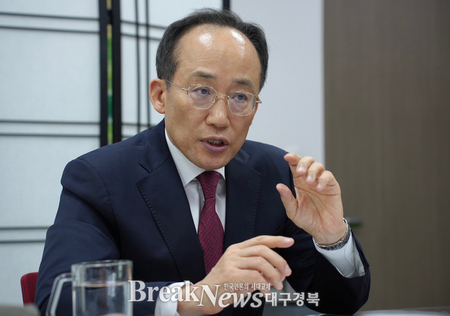
▲ 최민호 세종시장 기자회견 사진=세종시기자회 제공 © 김정환 기자 |
세종시가 민선 4기 3주년을 맞아 행정수도 완성과 미래전략수도로서의 비전을 향한 지난 3년간의 여정을 평가하고, 남은 1년의 과제를 제시했다.
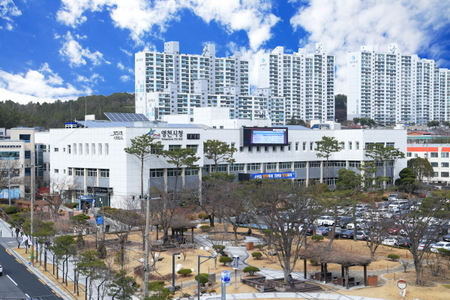
최민호 세종시장은 7월 1일 세종시청 정음실에서 기자회견을 열고, “창조와 도전의 정신으로 시정을 이끌어온 지난 3년간 세종시는 행정수도 완성에 한 걸음 더 다가섰고, 자족 기능을 갖춘 미래전략수도로서의 위상을 확고히 다져왔다”고 밝혔다.
정치적 혼란과 재정 여건의 제약 속에서도 시정 5대 비전을 중심으로 흔들림 없이 정책을 추진해 왔으며, 앞으로의 1년은 대한민국의 미래를 실질적인 성과로 구체화하는 시간으로 만들겠다는 의지도 함께 전했다.
최 시장은 먼저 국회 세종의사당과 대통령 세종집무실 설치, 세종지방법원과 검찰청의 확정 등 행정수도 기능 강화를 위한 핵심 인프라 조성 성과를 꼽았다. 여기에 더해 재정특례 연장을 위한 세종시법 개정 추진, 지방시대위원회 세종 출범, 시도지사협의회의 세종 이전 등 법적·제도적 기반 또한 강화됐다고 평가했다.
경제 분야에서는 시 출범 이후 최대 규모인 3조 2,100억 원의 기업 투자를 유치하며 외형적 성장을 이끌었다. 스마트국가산단 지정과 기회발전특구 확보 등으로 첨단 산업 기반도 마련되었으며, 소상공인 지원센터 개소, 농업인 수당 지급, 싱싱장터 확장, 전국 최초의 상가공실박람회 개최 등 지역경제 체질 개선을 위한 다양한 시도도 병행되었다.
문화와 관광 분야에서는 세종이 한글문화도시로 최종 지정되어 100억 원 규모의 국비를 확보했으며, ‘월인천강지곡’ 기탁을 계기로 한글 관련 정책과 행사를 꾸준히 추진해 세종만의 정체성을 확립했다.
더불어 국립민속박물관 등 6개의 국립박물관 유치와 유네스코 세계유산 국제해석센터 설치 등 박물관 도시로서의 성장도 본격화됐다. 사계절 축제와 야간 관광 브랜드 ‘세종 밤마실’은 시민 일상과 지역경제에 활력을 불어넣었다.
대중교통 개선도 중요한 변화 중 하나였다. 청소년 무상 교통 패스인 ‘이응패스’와 간선급행버스 ‘이응버스’의 확대 운영, 택시 증차 등을 통해 대중교통 이용률이 12% 상승했으며, 복지 영역에서는 세종충남대병원과의 협업을 통한 소아응급체계 구축, 나다움센터와 시립요양원의 개원을 통해 생애주기별 돌봄서비스를 강화하는 등 시민 체감형 복지가 확대됐다.
세종시는 안전 분야에서도 눈에 띄는 성과를 거뒀다. 자연재해 대응 분야에서 A등급을 획득했고, 심정지 환자 소생률 전국 1위를 달성하는 등 재난 대응 능력을 입증했다.
아울러 지방규제혁신평가 전국 1위, 정부합동평가 2년 연속 우수 지자체 선정 등 행정과 규제개혁 성과도 뒤따랐다. 부동산 규제와 군사보호구역 완화로 시민의 재산권 보호와 지역발전 여건도 한층 개선됐다.
이 같은 성과에 힘입어 세종시는 2년 연속 ‘전국에서 가장 살기 좋은 도시’로 선정되기도 했다.
최민호 시장은 기자회견에서 남은 임기 동안 집중할 7대 중점 과제도 제시했다.
국회 세종의사당과 대통령 집무실 기능의 실질적 확대와 공공기관 추가 이전, 행정수도 개헌 및 특별법 제정을 통한 제도적 완성, 광역교통망 구축, 중부권 암치료센터 설립과 종합병원 체계 정비, AI 및 양자기술 기반의 미래산업 생태계 조성, 한글문화 비엔날레와 자연사박물관 유치를 통한 문화도시 고도화, 그리고 재정분권과 인구정책 강화를 통한 제도 개선 등이 그것이다.
특히 스마트팜과 스마트시티 고도화, 기후위기 대응 체계 구축 등 미래 도시로서의 실험과 실행도 본격화할 계획이다.
최 시장은 “세종은 더 이상 개발 중인 신도시가 아니라, 대한민국의 미래를 이끌 실질적인 행정수도”라며, “본립도생(本立道生)의 정신으로 기본을 지키고, 시민과 함께 담대한 도약을 준비하겠다”고 밝혔다.
*아래는 위 기사를 '구글 번역'으로 번역한 영문 기사의 [전문]입니다. '구글번역'은 이해도를 높이기를 위해 노력하고 있습니다. 영문 번역에 오류가 있을 수 있음을 전제로 합니다.<*The following is [the full text] of the English article translated by 'Google Translate'. 'Google Translate' is working hard to improve understanding. It is assumed that there may be errors in the English translation.>
Sejong Mayor Choi Min-ho, Evaluation of 3rd Anniversary of 4th Local Government Election and Presentation of Tasks for the Remaining Year
Sejong City, marking the 3rd anniversary of its 4th local government, evaluated the journey of the past 3 years toward the completion of the administrative capital and the vision of a future strategic capital, and presented tasks for the remaining year.
On July 1, Sejong Mayor Choi Min-ho held a press conference at the Jeongeum Room of Sejong City Hall and announced, “In the past 3 years, when we have led the city administration with the spirit of creation and challenge, Sejong City has come one step closer to completing the administrative capital, and has solidified its status as a future strategic capital with self-sufficiency.”
Despite political turmoil and financial constraints, he has steadily promoted policies centered on the city administration’s 5 major visions, and he also conveyed his determination to make the next year a time to concretize the future of the Republic of Korea into tangible results.
Mayor Choi first cited the establishment of the National Assembly Sejong Hall and the President’s Office in Sejong, and the establishment of the Sejong District Court and the Public Prosecutors’ Office, as key infrastructure development achievements for strengthening the administrative capital’s functions. In addition, he evaluated that the legal and institutional foundations were also strengthened, such as the revision of the Sejong City Act for the extension of special financial measures, the launch of the Local Government Committee in Sejong, and the relocation of the Provincial Governors’ Council to Sejong.
In the economic sector, external growth was achieved by attracting corporate investment of KRW 3.21 trillion, the largest amount since the city was launched. Advanced industrial foundations were also established through the designation of a smart national industrial complex and the acquisition of an opportunity development special zone, and various attempts were made to improve the regional economic constitution, such as the opening of a small business support center, payment of allowances for farmers, expansion of the Ssingsing Market, and the holding of the nation’s first commercial space fair.
In the cultural and tourism sectors, Sejong was finally designated as a Hangul Cultural City, securing KRW 10 billion in national funds, and steadily promoting Hangul-related policies and events, starting with the donation of the ‘Wolinchon River Valley,’ established Sejong’s own identity.
In addition, the city has grown into a museum city by attracting six national museums, including the National Folk Museum, and establishing the UNESCO World Heritage Interpretation Center. The four-season festival and the nighttime tourism brand ‘Sejong Bammasil’ have revitalized the daily lives of citizens and the local economy.
Improvement of public transportation was also one of the important changes. The public transportation usage rate increased by 12% through the expansion of the free youth transportation pass ‘Ieung Pass’ and the trunk express bus ‘Ieung Bus’, and the increase in taxis. In the welfare sector, welfare that citizens can feel has expanded, such as establishing a pediatric emergency system through collaboration with Sejong Chungnam National University Hospital and strengthening life cycle care services through the opening of the Nadam Center and municipal nursing home.
Sejong City has also achieved notable results in the safety sector. It has earned an A grade in the natural disaster response sector and has proven its disaster response capabilities by achieving the highest survival rate for cardiac arrest patients nationwide.
In addition, administrative and regulatory reform achievements followed, such as ranking first nationwide in the local regulatory innovation evaluation and being selected as an excellent local government for two consecutive years in the government joint evaluation. The protection of citizens’ property rights and regional development conditions were also greatly improved by easing real estate regulations and military protection zones.
Thanks to these achievements, Sejong City was also selected as the ‘most livable city in the country’ for two consecutive years.
Mayor Choi Min-ho also presented seven key tasks to focus on during the remaining term in office at the press conference.
These include substantial expansion of the functions of the National Assembly Sejong Hall and the Presidential Office, additional relocation of public institutions, institutional completion through the revision of the administrative capital constitution and enactment of special laws, establishment of a metropolitan transportation network, establishment of a central region cancer treatment center and reorganization of the general hospital system, creation of a future industry ecosystem based on AI and quantum technology, advancement of the cultural city through the hosting of the Hangul Culture Biennale and the Museum of Natural History, and institutional improvement through fiscal decentralization and strengthening of population policy.
In particular, we plan to fully launch experiments and implementations as a future city, such as smart farms, smart city advancement, and climate crisis response system construction.
Mayor Choi said, “Sejong is no longer a new city under development, but a practical administrative capital that will lead the future of the Republic of Korea,” and “We will protect the basics with the spirit of ‘bonripdoseng (本立道生)’ and prepare for a bold leap forward together with the citizens.”
원본 기사 보기:브레이크뉴스대전세종충청