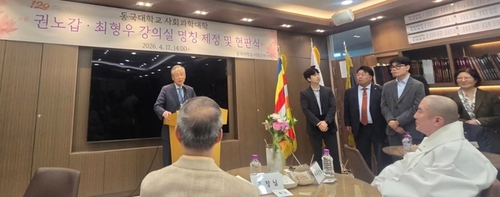
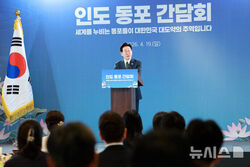
▲ 이영섭 자원순환녹지국장이 "공공녹지를 보존하고 도시 난개발을 차단하기 위해 열악한 재정 여건에도 불구하고 현재까지 총사업비 2,706원을 투입, 축구장 197개 면적에 해당하는 1.4㎢ 규모의 장기미집행 도시공원 부지를 매입했다"는 브리핑을 하고 있다. / 사진제공 = 전주시청 (C) 김현종 기자 |
시민의 삶의 질을 높이는 동시에 도시 녹지 인프라 확보를 위해 전주시가 장기미집행 도시공원 부지 가운데 꼭 필요한 사유지를 매입했다.
전북자치도 전주시는 공공녹지 보존 및 도시 난개발 차단을 위해 현재까지 총사업비 2,706억 원을 투입, 축구장 197개 면적에 해당하는 1.4㎢ 규모의 장기미집행 도시공원 부지를 매입했다고 10일 밝혔다.
매입한 부지는 전체 장기미집행 도시공원 부지(14.3㎢) 가운데 국공유지(4.3㎢)를 제외한 사유지(10㎢)의 약 14%다.
전주시는 현재까지 확보한 장기미집행 도시공원 부지가 단순한 토지 매입을 넘어, 시민과 미래세대를 위한 도시환경 자산을 지켜내는 중대한 전환점이자 실질적 변화를 이끌어내는 기반이 될 것으로 기대하고 있다.
세부적으로 살펴보면 ▲ 덕진공원 0.668㎢ ▲ 효자묘지공원 0.165㎢ ▲ 인후공원 0.168㎢ ▲ 기린공원 0.063㎢ ▲ 산성공원 0.049㎢ ▲ 완산공원 0.056㎢ ▲ 다가공원 0.01㎢ ▲ 화산공원 0.064㎢ ▲ 천잠공원 0.034㎢ ▲ 황방산공원 0.122㎢ ▲ 삼천공원 0.001㎢ 등이다.
부지 매입이 반드시 필요하지만, 협의가 완료되지 않은 일부 사유지의 보상 지연으로 인한 실효 사태를 막고 도시공원의 공공성을 확보하기 위해 지난달 토지수용재결을 신청하고 후속 행정절차를 이행하고 있다.
현재까지 확보한 부지를 활용, 각종 공모사업을 적극 추진하고 있다.
중앙정부 공모에 선정된 주요 사업은 ▲ 동부권 반다비 체육센터 건립(덕진공원) ▲ 덕진공원 대표관광지 육성사업(덕진공원) ▲ 완산권역 산불대응센터 신축(완산공원) ▲ 국립후백제 역사문화센터 건립(기린공원) 등으로 생활기반시설과 도시숲 조성ㆍ문화체험 공간 등 시민 체감형 프로젝트가 추진되고 있다.
앞으로도 중앙정부와 협력, 신규 공모사업 발굴 및 민간특례사업 등을 통해 재정 부담을 분산할 계획이다.
나머지 부지에 대해서는 공원 해제 이후에도 질서 있는 점진적 개발을 유도해 도시공간을 체계적으로 관리한다.
전주시 이영섭 자원순환녹지국장은 "지방채 발행이라는 재정적 부담을 감수하면서 도시공원을 지키는 이유는 바로 미래세대를 위한 투자이기 때문"이라며 "도시의 품격과 환경을 다음 세대에 온전히 물려주기 위한 장기적 시각에서 접근하고 있다"고 말했다.
☞ 아래는 위 기사를 구글 번역이 번역한 영문 기사의 '전문' 입니다.
구글 번역은 이해도를 높이기 위해 노력하고 있으며 영문 번역에 오류가 있음을 전제로 합니다.
【Below is the 'full text' of the English article translated by Google Translate.
Google Translate is working hard to improve understanding, and assumes that there are errors in the English translation】
Jeonju City Preserves 'Urban Park with an Area of 197 Soccer Fields'
Purchase of 1.4㎢ of private land among long-term unimplemented urban park sites
Reporter Lee Yo-han
In order to improve the quality of life of citizens and secure urban green infrastructure, Jeonju City has purchased private land that is essential among the long-term unimplemented urban park sites. Jeonju City,
Jeollabuk-do Autonomous Province, announced on the 10th that it has invested a total project cost of 270.6 billion won to date to purchase 1.4㎢ of long-term unimplemented urban park sites, equivalent to the area of 197 soccer fields, in order to preserve public green space and prevent urban overdevelopment.
The purchased land is approximately 14% of the total long-term unimplemented urban park land (14.3㎢), excluding the national land (4.3㎢) and private land (10㎢).
Jeonju City expects that the long-term unimplemented urban park land acquired so far will be a significant turning point that will protect urban environmental assets for citizens and future generations, and a foundation for leading to real change, beyond simple land purchase.
Looking at it in detail, ▲ Deokjin Park 0.668㎢ ▲ Hyoja Cemetery Park 0.165㎢ ▲ Inhu Park 0.168㎢ ▲ Girin Park 0.063㎢ ▲ Sanseong Park 0.049㎢ ▲ Wansan Park 0.056㎢ ▲ Daga Park 0.01㎢ ▲ Hwasan Park 0.064㎢ ▲ Cheonjam Park 0.034㎢ ▲ Hwangbangsan Park 0.122㎢ ▲ Samcheon Park 0.001㎢, etc.
Although land acquisition is absolutely necessary, in order to prevent the ineffective situation due to delays in compensation for some private land where agreements have not been completed and to secure the public nature of urban parks, we applied for a land acquisition decision last month and are currently carrying out follow-up administrative procedures.
We are actively promoting various public offering projects using the land we have acquired so far.
The major projects selected through the central government contest are ▲ Construction of the Eastern Bandabi Sports Center (Deokjin Park) ▲ Development of Deokjin Park's representative tourist destination (Deokjin Park) ▲ Construction of the Wansan Area Forest Fire Response Center (Wansan Park) ▲ Construction of the National Later Baekje History and Culture Center (Giraffe Park), etc., and citizen-focused projects such as the creation of living infrastructure, urban forests, and cultural experience spaces are being promoted.
In the future, we plan to disperse the financial burden through cooperation with the central government, discovery of new contest projects, and private special projects.
For the remaining sites, we will systematically manage urban space by inducing orderly and gradual development even after the park is lifted.
Jeonju City Resource Circulation and Greenery Bureau Director Lee Young-seop said, "The reason we are protecting urban parks while bearing the financial burden of issuing local bonds is because it is an investment for future generations," adding, "We are approaching this from a long-term perspective to pass on the city's dignity and environment to the next generation."
원본 기사 보기:브레이크뉴스 전북판