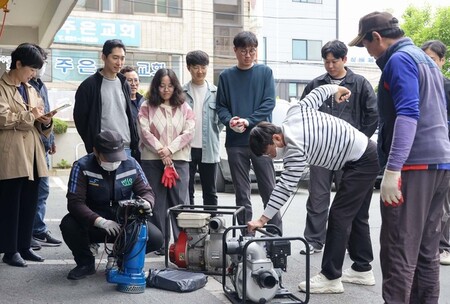
▲ 전북북소방본부가 올 상반기 동안 '긴급차량 우선 신호 제어시스템'을 운영한 결과, 병원 이송 시간이 평균 4분 37초 단축돼 약 33%의 골든타임 확보 효과를 거뒀다. / 사진제공 = 전북특별자치도 소방본부 (C) 김현종 기자 |
교통정보센터에서 제어하는 방식으로 운영하는 '긴급차량 우선 신호 제어시스템'이 생명을 살리는 '4분의 기적' 효과가 확인됐다.
18일 전북소방본부에 따르면 올 상반기 동안 '긴급차량 우선 신호 제어시스템'을 운영한 결과, 병원 이송 시간이 평균 4분 37초 단축돼 약 33%의 골든타임 확보 효과를 거뒀다.
이번 분석은 긴급차량의 특성을 반영, 시간대별 교통량 차이를 고려한 인근 시간대 시스템 미활용 출동사례를 표본으로 삼아 비교하는 방식으로 이뤄졌다.
특히 단순한 내비게이션 거리나 일반 차량 기준 소요 시간이 아니라, 최근 3년간 동일(또는 인근) 지점에서 동일 병원으로 이송된 출동 기록과 정밀 분석을 통해 실효성을 확인했다.
실제로 지난달 18일 오후 5시 38분께 10개월 된 아이의 생명을 위협하는 급성 알레르기 반응인 '아나필락시스 쇼크'신고를 받고 출동한 구급대는 '긴급차량 우선 신호 제어시스템'을 활용, 만성동에서 예수병원까지 8.6km 구간을 10분 만에 도착했다.
이오숙 전북소방본부장은 "신호를 일시적으로 제어하는 시스템으로 일반 차량 운전자는 불편함을 느낄 수 있겠지만, 소중한 생명을 살리기 위한 불가피한 조치"라며 "시스템의 정교한 운영으로 골든타임 확보에 최선을 다하겠다"고 밝혔다.
한편 '긴급차량 우선 신호 제어시스템'은 지능형 교통체계시스템(ITS) 사업 일환으로 구축됐으며 심정지 등 위급환자 이송ㆍ화재ㆍ구조 현장 출동의 소방 차량이 교차로에 접근하면 신호를 자동으로 제어해 골든타임을 확보할 수 있도록 지원한다.
차량이 신호제어기에 신호를 요청하면 신호제어기가 차량 진입을 감지하고 차량이 지나는 교차로 신호를 자동으로 제어해 신속하게 교차로를 통과할 수 있다.
현재 도내 지능형 교통체계시스템(ITS)은 ▲ 전주 16대 ▲ 군산 16대 ▲ 익산 6대 ▲ 정읍 4대(7월 18일 기준) 등 4개 시(市)에 도입돼 있다.
올 하반기 구급차ㆍ지휘차ㆍ구조공작차 등에 시스템 운영을 추가로 확대할 계획이다.
☞ 아래는 위 기사를 구글 번역이 번역한 영문 기사의 '전문' 입니다.
구글 번역은 이해도를 높이기 위해 노력하고 있으며 영문 번역에 오류가 있음을 전제로 합니다.
【Below is the 'full text' of the English article translated by Google Translate.
Google Translate is working hard to improve understanding, and assumes that there are errors in the English translation.】
Jeonbuk Fire Department 'Shortens hospital transfer time by 4 minutes and 37 seconds'
First of all, the performance of the signal control system is clear… The risk of collision at intersections is reduced
Reporter Kim Hyun-jong
The 'Emergency Vehicle Priority Signal Control System' operated in a way controlled by the Traffic Information Center has been confirmed to have the '4-minute miracle' effect of saving lives.
According to the Jeonbuk Fire Department on the 18th, as a result of operating the 'Emergency Vehicle Priority Signal Control System' during the first half of this year, the hospital transport time was shortened by an average of 4 minutes and 37 seconds, securing the golden time by approximately 33%.
This analysis was conducted by comparing cases of dispatches that did not utilize the system in nearby time zones, considering the characteristics of emergency vehicles and the difference in traffic volume by time zone.
In particular, the effectiveness was confirmed through precise analysis and dispatch records of transport from the same (or nearby) point to the same hospital over the past three years, rather than simple navigation distances or time required for general vehicles.
In fact, at 5:38 PM on the 18th of last month, an ambulance dispatched after receiving a report of 'anaphylactic shock', an acute allergic reaction threatening the life of a 10-month-old child, utilized the 'emergency vehicle priority signal control system' and arrived at the 8.6 km section from Manseong-dong to Yesu Hospital in 10 minutes.
Jeonbuk Fire Department Chief Lee Oh-sook said, "This system temporarily controls the signal, so drivers of ordinary vehicles may feel inconvenienced, but it is an inevitable measure to save precious lives," and added, "We will do our best to secure the golden time through the sophisticated operation of the system."
Meanwhile, the 'Emergency Vehicle Priority Signal Control System' was built as part of the Intelligent Transport System (ITS) project, and it automatically controls the signal when firefighting vehicles for transporting critical patients, such as cardiac arrest patients, or responding to fire or rescue scenes approach the intersection, thereby supporting the securing of the golden time.
When a vehicle requests a signal from the signal controller, the signal controller detects the vehicle's entry and automatically controls the intersection signal that the vehicle is passing through, allowing it to quickly pass through the intersection.
Currently, the Intelligent Transport System (ITS) has been introduced in four cities: ▲ Jeonju 16 units ▲ Gunsan 16 units ▲ Iksan 6 units ▲ Jeongeup 4 units (as of July 18).
The plan is to further expand the system operation to ambulances, command vehicles, and rescue vehicles in the second half of this year.
원본 기사 보기:브레이크뉴스 전북판