최근 특별검사팀의 전격적인 압수수색을 바라보며, 이 나라가 여전히 법치국가를 자처할 자격이 있는지 의문을 품게 된다. 법원의 영장을 받았다고 하나, 그것이 과연 모든 것을 정당화하는 면죄부인가? 수색 대상은 전방위로 확산됐고, 시점은 기습적이었으며, 수단은 물리력을 동반한 전광석화였다. 피의자나 변호인에게는 단 한 마디의 사전 통보도 없었다. 압수된 자료의 절반은 해당 사건과 무관한 사생활, 업무, 인적 네트워크에 관한 정보였다고 한다. 이런 행태를 두고 어떻게 법에 따른 수사라 부를 수 있단 말인가?
 *필자/ 김정기 칼럼니스트. <대한민국과 세계 이야기>의 저자. ©브레이크뉴스 *필자/ 김정기 칼럼니스트. <대한민국과 세계 이야기>의 저자. ©브레이크뉴스 |
압수수색은 수사기관이 휘두를 수 있는 가장 강력한 강제권이다. 그것은 자료 확보를 넘어, 대상자에게 공포를 주고 언론에 피의사실을 흘려 여론재판을 유도하는 정치적 무기로 악용될 수 있다. 그렇기에 문명국가는 이 제도에 엄격한 제한을 둔다. 헌법, 법률, 사법부, 그리고 시민사회의 다층적 견제가 존재한다. 과연 대한민국은 그 수준에 도달했는가?
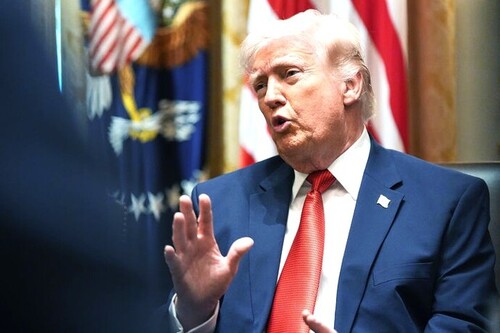
미국은 수정헌법 제4조를 통해 '불합리한 수색과 압수로부터의 자유'를 헌법적 권리로 명시한다. 수색의 대상, 범위, 시간까지 구체적으로 기술된 사전 영장이 없으면 수색은 명백한 위헌 행위다. 2022년 도널드 트럼프 전 대통령의 마러라고 자택 수색조차, 수개월 간의 사법 심사와 비례성 검토를 거쳐 이뤄졌다. 법무부는 반박할 여지가 없는 정황증거를 확보한 뒤에야 영장을 신청했고, 법원은 조건을 명확히 달아 승인했다. 그럼에도 불구하고 미국 정치권은 이 수색의 정치적 파장을 두고 치열하게 논쟁했다.
독일은 아예 ‘주거의 불가침’을 기본권으로 천명한다. 독일 연방헌법재판소는 수차례 판결에서 압수수색은 '최후의 수단이며, 절대적 필요성과 비례성을 동시에 충족해야 한다'고 못 박았다. 피의자의 권리를 침해하면서까지 확보한 증거는, 그 내용이 아무리 중요하더라도 법정에서 인정되지 않는다. 문명국가란 그런 것이다. 법치가 수사기관의 편의가 아니라, 국민의 자유를 위한 장치로 기능할 때 비로소 존경받는다.
일본 역시 다르지 않다. 한국과 유사한 수사체계를 가지고 있으면서도, 압수수색에는 훨씬 신중하다. 특히 언론인, 변호사, 의사 등 사생활과 프라이버시가 민감한 직종에 대해서는 사전고지, 변호인 입회, 제3자 감시 등의 조건이 필수처럼 붙는다. 디지털 자료도 무작위로 통째로 가져가지 않는다. 수색 당시 필요한 것만을 명시하고, 나머지는 침해 위험이 크다는 이유로 금지된다. 국민의 권리를 위해 국가 권력의 팔을 묶는 것이 일본 사법의 기본 태도다.
그런데 대한민국은 어떤가. 정치 특검이 구성되면 첫 수단은 으레 ‘압수수색 쇼’다. 그것도 조용히, 일부만이 아니라 대대적으로 벌어진다. 검찰 수사와 언론플레이가 결합된 이 특검시대의 정치극은 마치 유죄를 기정사실화하고 국민 여론을 선동하는 사법 드라마처럼 연출된다. 수색 당일 아침, 언론은 이미 대상자의 집 앞에 진을 치고 있고, 다음 날이면 피의자 얼굴이 전국 신문 1면을 장식한다. 정작 법정 다툼은 시작도 안 되었고, 재판도 열리지 않았는데 말이다.
이쯤 되면 묻지 않을 수 없다. 이 나라는 법치국가인가, 정치 쇼의 무대인가?
특검이 정치적 중립성과 제도적 정당성을 유지하고자 한다면, 첫째도, 둘째도 수단이 달라져야 한다. 압수수색은 단지 합법하다고 해서 허용되는 것이 아니라, 정당하고 비례적이어야 한다. 그것이 민주국가의 기준이다.
 ▲ 검찰청 청사. ©브레이크뉴스 |
구체적 개혁 방안은 명확하다.
첫째, 압수수색의 범위는 엄격히 제한돼야 한다. 광범위한 디지털 자료의 무차별 압수는 사적 자유의 침해일 뿐이다.
둘째, 수색 대상자에게는 사전 통보가 원칙이 되어야 하며, 변호인의 입회를 반드시 보장해야 한다.
셋째, 수색 전 과정을 영상으로 기록하고, 사후 법원에 제출하여 절차의 정당성을 입증해야 한다.
넷째, 정치적 민감 사안의 경우, 국회 산하의 독립 감시기구의 사전 심사를 의무화해 수사의 정치화를 차단해야 한다.
마지막으로, 불법·과잉 압수수색에 대해서는 국가의 손해배상은 물론, 수사기관 책임자에 대한 형사처벌이 뒤따라야 한다.
이것이 국민의 기본권을 지키는 국가의 자세다.
검찰권은 통제받지 않으면 곧 폭력이다. 정권이 바뀔 때마다 정적 수사의 이름으로 반복되는 전격적 압수수색은, 특정 정권의 문제가 아니라 이 제도 자체가 가진 구조적 결함을 드러내는 것이다. 정치적 특검이 반복될수록, 법과 제도는 침식되고, 국민의 권리는 공포정치의 희생물이 된다.
지금은 압수수색의 민주적 통제라는 새로운 헌법적 질서를 확립해야 할 시점이다. 더는 미룰 수 없다.
우리는 선진국과의 격차를 GDP 수치로만 따지지 않는다. 인권, 법치, 권력의 절제야말로 진짜 문명국가의 기준이다. 수사도 정치도 법도, 국민이 두려워해야 할 권력이 아니라, 국민을 위한 도구여야 한다. 그 상식을 지키는 것, 그것이 지금 우리가 회복해야 할 진짜 법치주의다. jeongkeekim@naver.com
*필자/김정기
● 학력
- 뉴욕주립대학교(Stony Brook) 정치학과 수석 졸업
- 마케트대학교(Marquette) 로스쿨 법학박사
- 하버드대학교(Harvard) 케네디스쿨 최고위 과정
- 베이징대학교(Peking) 북한학 연구학자
● 경력
- 세계스마트시티기구(WeGO) 사무총장 (현)
- 유엔 국제전기통신연합 (UN ITU) 가상세계 및 AI 글로벌 이니셔티브 집행위원(현)
- 아시아태평양지방정부네트워크(CityNet) 대표
- 제8대 주상하이 대한민국 총영사(13등급 대사)
- 2010 상하이엑스포 대한민국관 정부대표
- 제17대 대선 한나라당 이명박 대통령 후보 국제위원장
- 제20대 대선 국민의힘 윤석열 대통령 후보 정치개혁 공약 총괄
- 제21대 대선 국민의힘 김문수 대통령 후보 외교고문
- 자유한국당 오세훈 당대표 후보 SH전략회의 총괄 및 조직본부 총괄본부장
- 자유한국당 서울시장 예비후보
- 법무법인 대륙아주 중국 총괄 미국변호사
- 난징대학교 국제경제연구소 객좌교수
- 동국대학교 경영전문대학원 석좌교수
- 숭실사이버대학교 총장
● 저서
1. 대학생을 위한 거로영어연구[전 10권](거로출판사)
2. 나는 1%의 가능성에 도전한다(조선일보사)
3.<한국형 협상의 법칙> 저자.
4.<대한민국과 세계 이야기>의 저자.
*아래는 위 기사를 '구글 번역'으로 번역한 영문 기사의 [전문]입니다. '구글번역'은 이해도 높이기를 위해 노력하고 있습니다. 영문 번역에 오류가 있을 수 있음을 전제로 합니다.<*The following is [the full text] of the English article translated by 'Google Translate'. 'Google Translate' is working hard to improve understanding. It is assumed that there may be errors in the English translation.>
Reign of Terror - Indiscriminate Search and Seizure by the Special Prosecutor's Team "Is This Okay?" - Columnist Kim Jeong-gi
Looking at the recent surprise search and seizure by the Special Prosecutor's Team, I wonder if this country is still qualified to call itself a country governed by the rule of law. Even though they received a court warrant, is that really an indulgence that justifies everything? The search targets were spread out in all directions, the timing was sudden, and the means were lightning-quick, accompanied by physical force. There was not a single word of advance notice to the suspect or the defense attorney. It is said that half of the seized materials were information on private life, work, and personal networks unrelated to the case. How can this kind of behavior be called an investigation in accordance with the law?
Seizure and search are the most powerful coercive powers that an investigative agency can wield. Beyond securing information, it can be abused as a political weapon to instill fear in the target and leak the facts of the case to the media to induce a trial by public opinion. That is why civilized countries place strict restrictions on this system. There are multiple layers of checks and balances in the constitution, laws, the judiciary, and civil society. Has South Korea really reached that level?
The United States states the right to freedom from unreasonable searches and seizures as a constitutional right through the Fourth Amendment. Without a prior warrant that specifically describes the subject, scope, and time of the search, the search is clearly unconstitutional. Even the search of former President Donald Trump’s Mar-a-Lago home in 2022 was conducted after months of judicial review and proportionality review. The Department of Justice applied for a warrant only after securing irrefutable circumstantial evidence, and the court approved it with clear conditions. Nevertheless, the political circles in the United States fiercely debated the political repercussions of this search.
Germany even declares the “inviolability of housing” as a fundamental right. The German Federal Constitutional Court has repeatedly ruled that search and seizure is a “last resort, and must satisfy both absolute necessity and proportionality.” Evidence obtained by violating the rights of a suspect, no matter how important its content may be, is not recognized in court. That’s what a civilized country is like. The rule of law is respected only when it functions as a device for the freedom of the people, not for the convenience of the investigative agency.
Japan is no different. While it has a similar investigative system to Korea, it is much more cautious when it comes to search and seizure. In particular, conditions such as prior notice, presence of a lawyer, and third-party surveillance are mandatory for professions where privacy and private life are sensitive, such as journalists, lawyers, and doctors. Digital data is not taken in its entirety at random. Only what is necessary at the time of the search is specified, and the rest is prohibited on the grounds that there is a high risk of infringement. The basic attitude of the Japanese judiciary is to tie the arms of state power for the sake of the people’s rights.
But what about South Korea? When a political special prosecutor is formed, the first resort is always a “show of search and seizure.” This is happening not only quietly, but also on a large scale. The political drama of this special prosecution era, which combines the prosecution investigation and media play, is staged like a judicial drama that turns guilt into a fait accompli and incites public opinion. On the morning of the search, the media is already lined up in front of the target’s house, and the next day, the suspect’s face is on the front page of national newspapers. The legal battle has not even begun, and the trial has not even been held.
At this point, we cannot help but ask. Is this country a country governed by the rule of law or a stage for a political show?
If the special prosecution wants to maintain political neutrality and institutional legitimacy, the first and second methods must change. Search and seizure are not permitted simply because they are legal, but must be legitimate and proportionate. That is the standard for a democratic country.
The specific reform plan is clear.
First, the scope of search and seizure must be strictly limited. Indiscriminate seizure of a wide range of digital data is nothing more than an infringement on personal freedom. Second, prior notification to the subject of the search should be the rule, and the presence of a lawyer must be guaranteed.
Third, the entire search process should be recorded on video and submitted to the court afterwards to prove the legitimacy of the procedure.
Fourth, in the case of politically sensitive issues, prior review by an independent oversight body under the National Assembly should be mandatory to prevent politicization of the investigation.
Finally, in the case of illegal and excessive search and seizure, not only should the state compensate for damages, but the head of the investigative agency should be criminally punished.
This is the attitude of the state that protects the basic rights of the people.
If the prosecution power is not controlled, it becomes violence. The repeated surprise search and seizure in the name of political investigation every time the government changes is not a problem of a specific government, but reveals the structural flaws of the system itself. As political special investigations are repeated, laws and systems are eroded, and the rights of the people become victims of politics of fear.
Now is the time to establish a new constitutional order of democratic control of search and seizure. We cannot delay it any longer.
We do not measure the gap with advanced countries solely by GDP figures. Human rights, rule of law, and restraint of power are the standards of a truly civilized nation. Investigation, politics, and law should not be powers that the people should fear, but tools for the people. Maintaining that common sense is the true rule of law that we must restore now. jeongkeekim@naver.com
*Author/Kim Jeong-gi
● Education
- Graduated from Stony Brook University, Department of Political Science with honors
- Doctor of Law, Marquette University School of Law
- Harvard Kennedy School, Senior Program
- Peking University, North Korean Studies Research Scholar
● Career
- Secretary General of the World Smart Cities Organization (WeGO) (current)
- Executive Committee Member of the Virtual World and AI Global Initiative of the United Nations International Telecommunication Union (UN ITU) (current)
- Representative of the Asia-Pacific Local Government Network (CityNet)
- 8th Consul General of the Republic of Korea in Shanghai (13th Ambassador)
- Government Representative of the Republic of Korea Pavilion at the 2010 Shanghai Expo
- Chairman of the International Affairs Committee of the 17th Presidential Election, Grand National Party, Lee Myung-bak
- General Manager of the 20th Presidential Election, People Power Party, Yoon Seok-yeol
- Foreign Affairs Advisor of the 21st Presidential Election, People Power Party, Kim Moon-soo
- Liberty Korea Party Oh Se-hoon, candidate for party leader, SH Strategy Conference, General Manager and Organization Headquarters General Manager
- Liberty Korea Party Seoul Mayor Candidate
- Law Firm Continental Aju, General Manager of China, American Lawyer
- Visiting Professor, Nanjing University International Economic Research Institute
- Dongguk University Graduate School of Business, Distinguished Professor
- President, Soongsil Cyber University
● Books
1. Georo English Studies for College Students [10 Volumes] (Georo Publishing)
2. I Challenge the 1% Possibility (Chosun Ilbo)
3. Author of <The Laws of Korean Negotiation>.
4. Author of <The Story of the Republic of Korea and the World>.