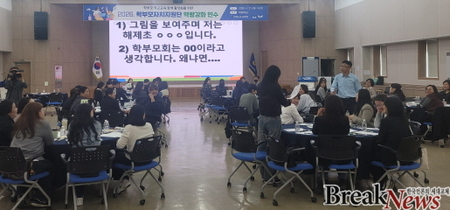
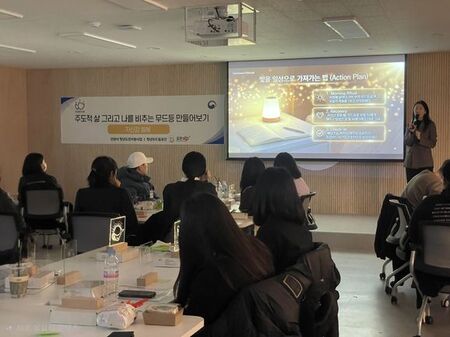
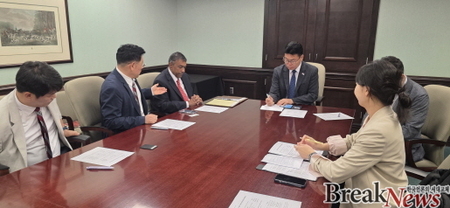
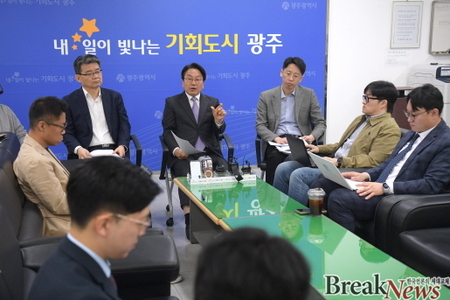
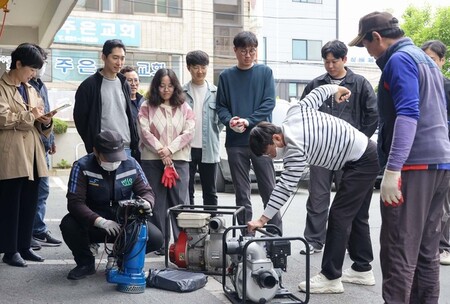
▲ 21일 나주 전남도산림연구원에서 열린 '기후변화 대응 산림 수종·양묘사업 개선회의'에서 관계자들이 산림 자원 조성 체계 전환 방안을 논의하고 있다. |
(무안·순천=브레이크뉴스) 이학수 기자=전라남도가 기후변화라는 거대한 시대적 변화에 발맞춰 산림 자원 조성 체계의 구조적 혁신을 선언했다.
전남도는 21일 나주 전남도산림연구원에서 시·군 관계자, 산림연구기관, 양묘 생산자 등 전문가 18명이 참석한 가운데 ‘기후변화 대응 산림 수종·양묘사업 개선회의’를 개최하고, 지속 가능한 산림 자원 육성 방안을 집중 논의했다.
이번 회의의 핵심은 기존 침엽수 중심의 천편일률적인 숲 조성에서 벗어나, 변화된 기후 환경에 강한 '기후적응형 수종'으로의 체질 개선이다.
전남도는 지역별 기후 특성을 고려한 맞춤형 수종을 적극 도입해 산불 등 산림재해에 대한 저항력을 높이고, 생태적 안정성과 공익적 기능을 동시에 강화한다는 전략이다. 특히 산림연구원이 제안한 ▲이나무 ▲아왜나무 ▲오동나무 등 주요 난대 활엽수와 밀원수종에 대해서는 올해 안에 종자 공급원을 확보, 본격적인 묘목 생산 체계 구축에 들어갈 예정이다.
꿀벌의 먹이자원인 '밀원수' 확보에도 총력을 기울인다. 밀원수는 양봉산업의 근간이자 산림 생태계를 유지하는 핵심 자원인 만큼, 단순 조림을 넘어 생태계 보전 차원에서 전략적으로 육성할 방침이다.
또한, 탄소 흡수 기능 조기 확보와 소나무재선충병 방제를 위한 수종 전환 등으로 인해 '큰나무 조림' 수요가 급증함에 따라, 묘령 기준 개선과 규격 다양화를 통해 수급 불균형을 해소하기로 했다.
전남도는 산림의 백년대계를 위해 중장기 수급 예측에 기반한 체계적인 공급 시스템을 가동한다. 단순히 나무를 심는 것에 그치지 않고 '묘목 생산 - 숲 조성 - 사후 관리'로 이어지는 전 과정을 통합 관리해 정책의 실효성을 높인다는 구상이다.
강신희 전남도 산림자원과장은 “기후변화로 산림 환경이 급변함에 따라 숲 조성 방식과 양묘 정책의 근본적인 전환이 시급하다”며 “현장의 목소리와 과학적 데이터를 결합해 지속 가능한 산림 자원을 조성하고 임업 경쟁력을 강화해 나가겠다”고 밝혔다.
아래는 위 기사를 '구글 번역'으로 번역한 영문 기사의 [전문] 입니다. '구글번역'은 이해도를 높이기를 위해 노력하고 있습니다. 영문 번역에 오류가 있을 수 있음을 전제로 합니다. The following is [the full text] of the English article translated by 'Google Translate'. 'Google Translate' is working hard to improve understanding. It is assumed that there may be errors in the lish translation.
South Jeolla Province Embarks on Major Transformation of Forest Species and Nursery System to Respond to Climate Crisis
Improvement Meeting Held at Forest Research Institute on the 21st... Discussion on Expanding Warm Temperate Broadleaf Trees and Nectar-Producing Trees - Shifting from Conifer-Centric to Climate-Adaptive Species to Strengthen Response Capabilities to Forest Disasters
(Muan·Suncheon = Break News) Reporter Lee Hak-su = South Jeolla Province has declared a structural innovation in its forest resource development system to keep pace with the massive epochal shift of climate change.
On the 21st, South Jeolla Province held the "Improvement Meeting on Forest Species and Nursery Projects in Response to Climate Change" at the South Jeolla Forest Research Institute in Naju. The meeting was attended by 18 experts, including city and county officials, forest research institutes, and nursery producers, and focused on discussing measures to foster sustainable forest resources.
The core of this meeting is to shift away from the existing uniform forest creation centered on conifers and fundamentally transform the system to focus on "climate-adaptive tree species" that are resilient to the changed climate environment. Jeonnam Province's strategy is to actively introduce customized tree species tailored to regional climate characteristics to enhance resistance to forest disasters such as wildfires, while simultaneously strengthening ecological stability and public benefits. In particular, regarding major subtropical broadleaf trees and nectar-producing species proposed by the Korea Forest Research Institute—such as the Korean fir, Japanese spindle tree, and Paulownia—the province plans to secure seed sources within this year and begin establishing a full-scale seedling production system.
The province is also devoting all its efforts to securing "nectar-producing trees," which serve as a food source for honeybees. As nectar-producing trees are the foundation of the beekeeping industry and a core resource for maintaining forest ecosystems, the province intends to cultivate them strategically for ecosystem conservation, going beyond simple reforestation.
Furthermore, as the demand for "large tree planting" is surging due to the need to secure carbon absorption functions early and switch species for the control of pine wilt disease, the province has decided to resolve supply-demand imbalances by improving seedling age standards and diversifying specifications.
To ensure a long-term future for its forests, Jeonnam Province is launching a systematic supply system based on mid-to-long-term supply and demand forecasts. The plan is to enhance the effectiveness of the policy by going beyond simply planting trees and integrating the entire process, which extends from seedling production to forest creation and post-management.
Kang Shin-hee, Head of the Forest Resources Division of Jeollanam-do, stated, "As the forest environment is rapidly changing due to climate change, a fundamental shift in forest creation methods and nursery policies is urgently needed." He added, "We will combine voices from the field with scientific data to create sustainable forest resources and strengthen the competitiveness of the forestry industry."
원본 기사 보기:브레이크뉴스 전남