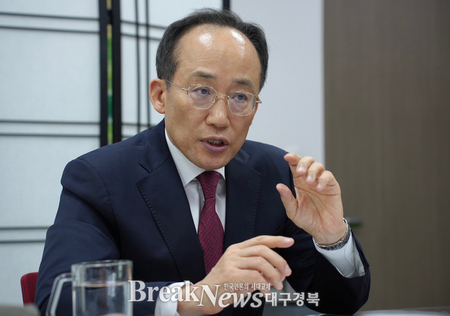
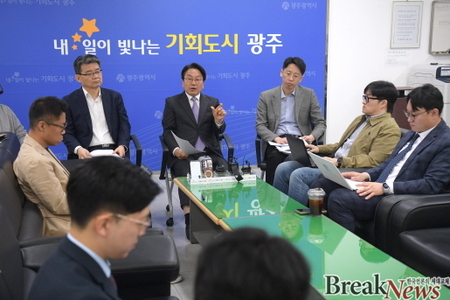
▲ 김용범 대통령실 정책실장이 31일 오전 용산 대통령실에서 관세 협상 타결 관련 브리핑을 하며 출입기자 질의에 답하고 있다. © 뉴시스 |
대통령실이 31일 한·미 관세협상 관련해 자동차에 부과하는 품목별 관세를 기존 25%에서 12.5% 하향을 목표로 협상에 나섰으나 15%선 절충에 그친 것에 아쉬움을 드러냈다.
김용범 정책실장은 이날 오전 용산 대통령실 브리핑에서 "협상 과정서 정부는 국익 최우선으로 감내할 수 있는 수준 내에서 상호 호혜적 결과를 도출한다는 자세로 임했다"며 "미국이 8월 1부터 부과키로 한 상호관세 25%는 15%로 낮아진다"고 전했다.
그러면서 "자동차 관세는 15%로 낮췄고 쌀·소고기 시장은 추가 개방 않기로 합의했다"며 "추후 부과 예고된 반도체·의약품 등도 다른 나라 대비 불리하지 않은 최혜국 대우를 받을 것"이라고 전했다.
또 "정부는 마지막까지 (관세율) 12.5%가 맞다 주장했는데 지난 4월 1일부터 벌어지고 있는 각 나라 협상을 보면 FTA 체제가 상당히 흔들리는 방식으로 전개되고 있다"며 "유럽·일본도 다 15%인데 아쉬운 부분"이라고 전했다.
이어 "가장 주목할 만한 점은 조선업 분야 협력을 확대키로 한 것"이라며 "1500억불은 선박 건조·MRO(유지·보수·정비)·조선 기자재 등 조선업 생태계 전반을 포괄하고 기업들 수혜에 기반해 구체적 프로젝트에 투자될 예정"이라고 전했다.
더불어 "조선 분야 외 반도체·원전·이차 전지·바이오 등 기업들이 경쟁력을 보유한 기업에 대한 대미 투자 펀드도 2000억불이 조성될 예정"이라며 "좋은 펀드의 투자 펀드를 고려한다면 기업이 전략적 파트너로서 참여케 될 가능성이 매우 높고, 이는 미국 진출에 관심이 있는 기업들에 좋은 기회가 될 것"이라고 전했다.
김 실장은 대미 투자펀드 규모 관련해선 "미국 상호관세 조치가 미국 무역적자를 줄이기 위해 시작된 점을 고려 시 일본과 우리 펀드 규모(3500억불)를 경제 규모로 단순 비교하는 건 어렵다"며 "한국·일본의 2024년 기준 무역 적자 수준은 비슷하고, 조선 분야 1500억불을 제외하면 2000억불로 일본의 36%에 불과하다"고 했다.
또 도널드 트럼프 미 대통령이 농산물 시장 완전 개방을 주장한 것 관련해선 "농축산물에 대해선 전혀 논의·합의된 바 없고, 대한민국 농업 분야는 99.7%가 개방돼 있다"며 "0.3%·10개 내외 종목만 유보돼 있으며 미국 소고기도 제1수입국으로 (미국) 통상국에서 공감을 많이 해줬으며 그쪽 분야에 대해선 특별히 문제 되지 않는 딜을 할 수 있었다"고 전했다.
그러면서 "한·미 정상은 2주 내 백악관에서 정상회담을 하기로 했다"며 "구체적 일정은 한미 외교라인을 통해 논의할 것"이라고 덧붙였다.
당초 정부는 미국이 자동차에 부과하는 품목별 관세를 25%에서 12.5%로 낮추는 것을 목표로 협상을 진행했으나 트럼프 대통령은 관세 하한선을 15%로 제시했다.
한국은 FTA에 따라 지금까지 무관세 혜택을 받았으나 일본·EU(유럽연합) 경우 25% 자동차 관세를 부담해온 가운데 15%에 합의한 일본·EU 대비 세율이 2.5% 포인트 더 낮아야 공정하다는 논리를 앞세웠으나 실패했다.
정부는 관세율 인하 대신 3500억불 규모 펀드를 미국에 투자키로 한 가운데 1500억불은 조선, 200억불은 반도체·원전·이차전지·바이오 등 분야에 조성한다.
영문 기사의 [전문]입니다. '구글번역'은 이해도 높이기를 위해 노력하고 있습니다. 영문 번역에 오류가 있을 수 있음을 전제로 합니다.<*The following is [the full text] of the English article translated by 'Google Translate'. 'Google Translate' is working hard to improve understanding. It is assumed that there may be errors in the English translation.
The Office of the President stated, "The tariffs on certain automobile items were lowered to 15%, but we are disappointed."
Kim Yong-beom agreed not to further open the rice and beef markets. Semiconductors and pharmaceuticals, previously subject to tariffs, will also receive most-favored-nation treatment. A $350 billion investment fund will be established to expand cooperation in the shipbuilding sector.
-kihong Kim reporter
The Office of the President expressed regret over the 15% level, saying it had begun negotiations on the 31st regarding the Korea-US tariff negotiations, aiming to lower tariffs on automobiles from the current 25% to 12.5%.
At a briefing in the Yongsan Office that morning, Kim Yong-beom, Chief of Staff for Policy, stated, "Throughout the negotiations, the government prioritized national interests and aimed to achieve mutually beneficial results within a tolerable level." He added, "The 25% reciprocal tariffs the US had planned to impose starting August 1 will be lowered to 15%."
He added, "The automobile tariff has been lowered to 15%, and we have agreed not to further open the rice and beef markets. Furthermore, products scheduled for imposition in the future, such as semiconductors and pharmaceuticals, will receive most-favored-nation treatment, which is not disadvantageous compared to other countries."
He also said, "The government insisted until the very end that the 12.5% tariff rate was correct, but judging by the negotiations between the countries that have been underway since April 1st, the FTA system is unfolding in a considerably shaky manner. Europe and Japan are both at 15%, which is disappointing."
He continued, "The most notable point is the agreement to expand cooperation in the shipbuilding industry. The $150 billion will encompass the entire shipbuilding ecosystem, including shipbuilding, MRO (maintenance, repair, and overhaul), and shipbuilding equipment. It will be invested in specific projects based on the benefits to companies."
Furthermore, he added, "A $200 billion investment fund will be created for US companies with competitive advantages in areas other than shipbuilding, such as semiconductors, nuclear power plants, secondary batteries, and biotechnology." He added, "Considering investment funds from well-respected funds, companies are highly likely to participate as strategic partners, which will provide a valuable opportunity for companies interested in entering the US market."
Regarding the size of the US investment fund, Director Kim stated, "Considering that the US reciprocal tariff measures were initiated to reduce the US trade deficit, it's difficult to simply compare the size of the Japanese and Korean funds (USD 350 billion) based on economic scale." He added, "As of 2024, the trade deficits between Korea and Japan are similar. Excluding the USD 150 billion in shipbuilding, the deficit is USD 200 billion, a mere 36% of Japan's."
Regarding US President Donald Trump's call for complete market liberalization of agricultural products, he stated, "There has been no discussion or agreement on agricultural and livestock products. South Korea's agricultural sector is 99.7% open." He added, "Only 0.3% of the market, or about 10 items, are reserved. As the US is the top importer of US beef, the US trade bureau has shown great sympathy, and we were able to reach a deal in that sector without any particular issues."
He added, "The South Korean and US leaders agreed to hold a summit at the White House within two weeks," and "The specific schedule will be discussed through South Korean and US diplomatic channels."
The government initially aimed to negotiate a reduction in US tariffs on automobiles from 25% to 12.5%, but President Trump proposed a lower tariff floor of 15%.
Under the FTA, South Korea has enjoyed tariff-free benefits, but Japan and the EU have been burdened with 25% tariffs on automobiles. South Korea argued that a 2.5 percentage point lower tariff rate than the 15% agreed upon by Japan and the EU would be fair, but failed.
Instead of lowering tariffs, the government has decided to create a $350 billion fund for investment in the US, with $150 billion to be allocated to shipbuilding and $20 billion to sectors such as semiconductors, nuclear power plants, secondary batteries, and biotechnology.