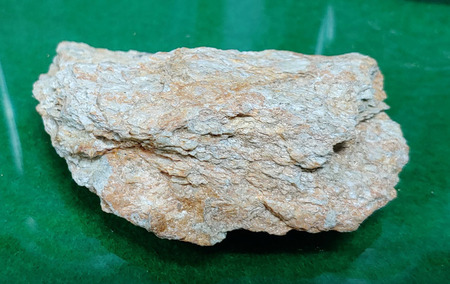
▲ '수(水)계 분산 기술(왼쪽)'을 기반으로 제조된 '리튬이온전지용 실리콘그래핀 복합 음극재(오른쪽)’ |
[브레이크뉴스=황민성 기자] 한국전기연구원(KERI)의 역대 대표성과 중 하나로 손꼽히는 ‘리튬이온전지용 실리콘/그래핀 복합 음극재’가 기술이전을 넘어 양산화를 눈앞에 두고 있다.
해당 기술은 리튬이온전지의 차세대 음극 소재로 주목받는 실리콘의 단점을 그래핀으로 보완한 것으로, 지난 2021년, 11억 원의 기술료로 전기·전자 소재·부품 전문기업인 ㈜JNC머트리얼즈(대표이사 이창근)에 기술이전까지 된 대형 성과다.
출연(연)의 연구개발 기술이 단순 사장되는 것이 아닌, 연구원과 기업이 함께 협력해 상용화까지 이끌어낸 측면에서 바람직한 상생의 사례로 손꼽히고 있다.
실리콘은 기존 흑연보다 에너지 밀도가 10배나 높고, 충·방전 속도도 빠르다는 장점을 가지고 있지만, 충·방전 시 부피 팽창(3배 수준) 문제와 전기 전도도가 낮다는 단점이 있었다.
이에 KERI는 2차원 탄소나노소재인 ‘그래핀’을 활용했다. 전도성이 높고, 전기 화학적으로 안정한 그래핀은 우수한 기계적 강도를 지닌 그물망 구조의 코팅층을 형성하여 실리콘의 부피 팽창에 따른 성능 감소를 크게 완화시킬 수 있다.
 ▲ NC머트리얼즈가 충북 제천시에 구축한 '그래핀 양산 설비(플랜트)' |
KERI는 특화된 산화·환원법을 통해 높은 전도성을 갖는 고품질 그래핀을 다양한 점도(묽은 잉크부터 고농도 페이스트 형태까지)로 만들어 리튬이온전지 음극 제조 공정에 바로 적용할 수 있는 ‘수(水)계 분산 기술’을 개발했었다.
그리고 이를 기반으로 한 One-step 공정으로, 코어인 실리콘을 그래핀이 껍데기처럼 감싸 보호하는 ‘코어-쉘(Core-Shell)’ 구조의 복합 음극재를 대량 생산하는 데도 성공했다.
이를 통해 기존 리튬이차전지 음극에 들어갔던 실리콘의 양(첨가량)을 기존 5% 이내 수준에서 20%까지 4배 이상 증가시켜 고용량·고품질의 음극을 안정적으로 제조하는 결과를 얻었다.
이는 전기차에 적용하면 주행거리를 약 20% 이상 늘릴 수 있을 정도의 성능이다.
재료도 기존 고가의 나노 실리콘 대비 값싼 마이크론 크기의 실리콘을 활용하여 가격 경쟁력을 확보했다.
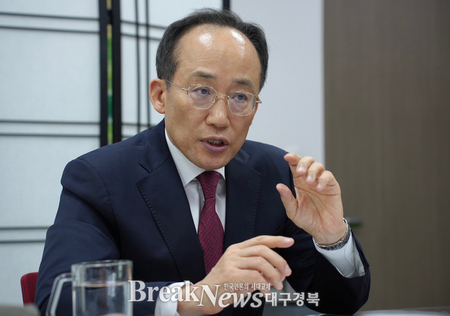
 ▲ KERI 정승열 나노융합연구센터장(왼쪽), JNC머트리얼즈 이창근 대표이사(오른쪽) |
연구팀은 시작품인 ‘파우치형 풀 셀’을 제작하고, 전기화학 특성 평가 및 국내·외 원천특허 등록까지 완료했다.
기술이전 이후에도 상용화를 위해 KERI는 꾸준하게 성과의 확산, 기업 현장 기술지도 및 자문 활동을 펼쳐왔다.
먼저, 미국과 중국으로부터 특허를 추가적으로 받아 국제적 기술 권리를 확보했고, 연구결과는 세계적 학술지인 ‘Energy & Environmental Materials’에 논문이 게재(2025년, IF14.1, 상위 7%)됐다.
해당 논문은 상용화 가능성과 응용성을 함께 제시한 점에서 학계와 산업계 모두의 높은 관심을 받았다.
㈜JNC머트리얼즈에서도 적극적인 투자 및 협력사와의 협업을 통해 그래핀 양산화를 위한 기반을 마련했다.
충북 제천의 ‘국가첨단전략산업 이차전지 특화단지’에 입주하여 최적의 생산 환경을 구축했고, KERI 원천기술을 스케일업하여 엔지니어링 단계(Basic->Detail)도 하나씩 밟아 나갔다.
이를 통해 지난해 국내 최초로 대규모 그래핀 양산 설비(플랜트)를 구축하여 최적화하는 데 성공했으며, 현재도 지속적인 기술 고도화를 위해 KERI와 적극적인 협력을 펼쳐나가고 있다.
해당 설비는 수천 톤급의 고품질 그래핀을 대량 생산할 수 있는 규모다. 추후 실리콘과의 복합화를 통해 고성능 음극재로 탄생한다면, 약 6만 대의 전기차용 전지(총 4GWh 규모) 혹은 수억 개의 스마트폰용 전지에 적용이 가능한 용량이다.
또한, 고용량·고성능 리튬이온전지가 필요한 에너지저장장치(ESS), 고성능 AI 반도체 및 서버 등에 활용되어 국가 에너지·AI 산업 경쟁력 강화에도 크게 기여할 것으로 보고 있다.
KERI 정승열 나노융합연구센터장은 “본 기술은 이차전지 고용량화 및 안정성 확보를 동시에 실현할 수 있는 고기능 나노소재 기반의 상용화 기술로서, 국내외 산업계와 학계로부터 기술적 완성도와 실용성을 동시에 인정받았다”며 “기술이전 후에도 복합 음극재의 양산화 기반을 마련하기 위해 우리 연구진이 꾸준한 관심을 가지고, 기업체와 협업했다”고 밝혔다.
이어 “원천기술 개발부터 상용화까지 잘 이어진 사례로, 출연(연) 기술 사업화의 성공적인 모범 사례로 손꼽힐 것”이라고 덧붙혔다.
JNC 머트리얼즈 이창근 대표는 “KERI의 혁신적인 원천기술과 긴밀한 상호 협력을 바탕으로 그래핀 양산화라는 중요한 성과를 달성할 수 있었으며, 앞으로도 꾸준한 협업을 통해 대한민국 이차전지 산업의 발전과 기술 경쟁력 강화에 기여할 수 있도록 노력하겠다”라고 전했다.
한편, KERI는 과학기술정보통신부 국가과학기술연구회 산하 정부출연연구기관이다. 향후에도 KERI는 산학연 협력을 통해 핵심 요소기술을 지속적으로 개발하여 ‘K-음극재’ 선도 제조기지로서의 위상을 확보하는 등 우리나라가 글로벌 전지 산업을 이끌 수 있도록 만든다는 목표다.
*아래는 위 기사를 '구글 번역'으로 번역한 영문 기사의 [전문]입니다. '구글번역'은 이해도 높이기를 위해 노력하고 있습니다. 영문 번역에 오류가 있을 수 있음을 전제로 합니다. *The following is [the full text] of the English article translated by 'Google Translate'. 'Google Translate' is working hard to improve understanding. It is assumed that there may be errors in the English translation.
KERI Breaks Lithium-ion Battery Limits, Mass-Producing 'Composite Anode Material' Nears
High-quality graphene manufacturing and dispersion technology increases high-capacity silicon content, a next-generation anode material
The Korea Electrotechnology Research Institute (KERI)'s (Korea Electrotechnology Research Institute) "silicon/graphene composite anode material for lithium-ion batteries," considered one of its most significant achievements, is on the verge of technology transfer and mass production.
This technology, which uses graphene to address the shortcomings of silicon, a promising next-generation anode material for lithium-ion batteries, is a significant achievement. In 2021, the technology was transferred to JNC Materials (CEO Lee Chang-geun), a company specializing in electrical and electronic materials and components, for a technology fee of KRW 1.1 billion.
This achievement is considered a positive example of mutual growth, as research and development technologies from a government-funded research institute are not simply being abandoned, but rather researchers and companies collaborate to achieve commercialization.
Silicon boasts an energy density ten times higher than conventional graphite and faster charge and discharge speeds. However, it suffers from volume expansion (approximately three times) during charge and discharge and low electrical conductivity.
To address this issue, KERI utilized graphene, a two-dimensional carbon nanomaterial. Highly conductive and electrochemically stable, graphene forms a network-like coating layer with excellent mechanical strength, significantly mitigating the performance degradation caused by silicon volume expansion.
KERI developed an "aqueous dispersion technology" that uses specialized oxidation and reduction methods to produce high-quality, highly conductive graphene in various viscosities (from thin ink to high-concentration paste) for immediate application in the lithium-ion battery anode manufacturing process.
Based on this technology, KERI also successfully mass-produced a composite anode material with a "core-shell" structure, where graphene encases and protects the silicon core like a shell, using a one-step process.
This resulted in the stable production of high-capacity, high-quality anodes by more than quadrupling the amount of silicon (added content) used in conventional lithium secondary battery anodes from less than 5% to 20%.
This performance is sufficient to increase the driving range of electric vehicles by approximately 20%.
The material also secured price competitiveness by utilizing inexpensive micron-sized silicon instead of expensive nano-silicon.
The research team manufactured a prototype, a pouch-type full cell, and completed electrochemical characterization and domestic and international patent registration.
Even after technology transfer, KERI has consistently promoted the dissemination of its findings and provided on-site technical guidance and consulting services to companies to ensure commercialization.
First, KERI secured international technology rights by obtaining additional patents in the US and China. The research results were published in the world-renowned journal "Energy & Environmental Materials" (2025, IF 14.1, top 7%).
This paper garnered significant attention from both academia and industry, demonstrating both commercial viability and applicability.
JNC Materials also laid the foundation for the mass production of graphene through active investment and collaboration with partners.
JNC Materials established an optimal production environment by moving into the "National Advanced Strategic Industry Secondary Battery Specialized Complex" in Jecheon, North Chungcheong Province, and gradually progressed through the engineering stages (from basic to detailed) by scaling up KERI's core technology.
Through this effort, the company successfully built and optimized Korea's first large-scale graphene mass production facility (plant) last year. The company continues to actively collaborate with KERI to further advance its technology.
This facility is capable of mass-producing thousands of tons of high-quality graphene. If combined with silicon to create a high-performance anode material, this capacity could be used to power approximately 60,000 electric vehicle batteries (4 GWh in total) or hundreds of millions of smartphone batteries.
Furthermore, it is expected to significantly contribute to strengthening the competitiveness of the national energy and AI industries by being utilized in energy storage systems (ESS), high-performance AI semiconductors, and servers that require high-capacity, high-performance lithium-ion batteries.
Jeong Seung-yeol, Director of the Nano Convergence Research Center at KERI, stated, "This technology is a commercialization technology based on high-performance nanomaterials that can simultaneously achieve high capacity and stability in secondary batteries. It has been recognized for both its technological perfection and practicality by both domestic and international industry and academia." He added, "Even after the technology transfer, our researchers have maintained a consistent interest and collaborated with companies to establish a foundation for mass production of composite anode materials."
He added, "This is a case of a successful transition from core technology development to commercialization, and will be cited as a model example of successful technology commercialization by a government-funded research institute."
Lee Chang-geun, CEO of JNC Materials, stated, "We were able to achieve the significant achievement of mass production of graphene thanks to KERI's innovative source technology and close collaboration. We will continue to collaborate to contribute to the advancement of Korea's secondary battery industry and enhance its technological competitiveness."
KERI is a government-funded research institute under the National Research Council of Science and Technology (NRST) of the Ministry of Science and ICT. KERI aims to continue developing core technologies through industry-academia-research collaboration, solidifying its position as a leading manufacturing base for "K-cathode materials" and enabling Korea to lead the global battery industry.
원본 기사 보기:브레이크뉴스경남