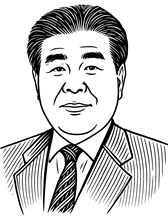
▲ 정길선 박사 ©브레이크뉴스 |
당시 16세기에 포르투갈이 동북아시아에 들어면서 상품 무역과 함께 일본에 들어온 것은 기독교였고 포르투갈 상인과 예수회 선교사는 동아시아에 진출하기 시작한 초기부터 협력적인 관계에 있었다. 프란시스코 사비에르가 사쓰마에 상륙한 이후, 중국 천주(泉州)와 일본 사카이(堺)에서의 포르투갈 상관(商館)의 건설이나 예수회 수도원 교구에서 설립한 상관의 관세를 재원으로 하는 것을 말라카 총독에게 제안하게 된다. 더불어 사비에르는 일본에서 수요가 있는 상품 목록도 만들어 안정적인 교역을 노렸다. 마카오 당국과 예수회 사이에 매년 50피코(Pico)의 생사를 예수회의 몫으로 하는 계약이 결성되었다. 예수회는 프로크라도르(Procrador)라는 무역이나 재무 담당 직위에 임명하여, 남만무역으로부터 재원을 조달하게 되었고, 금교(禁教) 이후에도 이 관계는 계속되었다. 예수회 제창으로 마카오 행정집행부가 발족하였고, 포르투갈령 인도 정부는 마카오를 촌락에서 시다드(Cidade, 시市)로 승격하게 하여 행정 단위로서 인정했다. 예수회는 마카오 지역 사회의 정비에 중요한 역할을 수행하게 된다.
나가사키(長崎)의 프로크라도르는 해안 곶에 건설된 교회 내의 카자(Casa)에 무역품을 저장하여 거래를 수행하였기 때문에, 교회가 포르투갈 상관처럼 기능하였다. 곧장 사비에르의 제안은 그대로 실현되지 않았지만, 프로크라도르의 형태로 실현되었다. 프로크라도르가 무역을 행하는 점은 발에 걸리는 돌부리(躓きの石)로서 비판 받아 금지된 시기도 있었다. 예수회는 마카오 상인과 카피탕 모르 사이를 중개하는 역할을 수행하여, 간이 재판소처럼 기능을 수행하였다. 창설된 상파울루 학원(聖パウロ学院 , Escola São Paulo)에는 금고가 설치되었고, 일본과의 무역이나 관세로 얻은 화폐를 보관하였다. 상파울루 학원은 일본 포교를 위해 일본인 사제 양성을 목적으로 하였다. 일본은 명나라와의 공식적인 무역이 금지되었으나 중국인이 동남아시아로 진출하는 것과 더불어, 16세기 말부터 일본인과 중국인은 동남아시아에서 거래를 늘렸다. 막부는 주인장(朱印状)을 발행하여, 해외 도항선을 관리하였다. 주인장은 일본을 거점으로 하면 국적에 관계없이 발행되었다.
포르투갈 인도 주인장을 받아들였다. 마카오 상인 비센트 로드리게스(Vicente Rodriguez)에게 주인장이 발행되었다는 기록이 있다. 마카오 상인의 주인장에는 예수회가 협력하고 있었다. 이후 스페인이 동북아시아에 진출하기 시작했으나 시작은 포르투갈에 뒤쳐져 있었고 이들은 아메리카 대륙을 경유하여 태평양 항로를 개척할 수밖에 없었다. 스페인의 식민지는 스페인령 누에바 에스파냐(Nueva España) 아카풀코(Acapulco)와 루손(Luzón)섬 마닐라(Manila)를 잇는 마닐라 갈레온을 시작으로 한다. 스페인이 마닐라로부터 일본을 방문하자, 도쿠가와 이에야스(徳川家康)는 스페인과의 무역에 적극적이 되었고, 교토(京都) 상인 다나카 가츠스케(田中勝介)를 누에바 에스파냐로 파견하게 된다. 또한 포르투갈 상인이 생사에 대한 독점적인 이익을 획득하였기 때문에 이를 삭감할 목적으로 교토, 사카이, 나가사키 상인들에게 이토왓푸나카마(糸割符仲間)를 결성하게 하였다. 이에야스 시기에는 기독교 포교가 금지되어 있었지만 무역은 장려되고 있었다. 그러나 이후 에도막부는 금교 정책을 철저히 하고 국제 분쟁의 악영향을 막으려는 관점에서 해외 무역 관리 및 통제를 점차 강화하게 된다.
유럽인과의 교역은 히라도와 나가사키에 국한되었고 스페인 선박 내항이 금지되었다. 후에 아유타야(Ayutthaya)에서 나가사키마치토시요리(長崎町年寄)인 다카키 사쿠에몬(高木作右衛門)의 주인선(朱印船)과 스페인 함대 사이에 분쟁이 발생했다. 결과적으로 주인선이 불타는 아유타야 사건이 발생한다. 막부에서는 주인장의 권위가 모욕당하였다고 하여 주인선 대신 봉서선(奉書船)으로 바꾸게 되었다. 늦게 동북아시아와의 교역에 참여한 스페인에 의한 포교에 따라 일본 기독교도들이 증가하게 된다. 개종된 현지 일본인들의 수는 37만~50만 명이라는 설이 있는데, 이는 당시 일본 열도 인구의 3~4%에 달하여 막부의 경계를 부르게 된다. 일본에 있어 포르투갈이 마카오에서 가져오는 중국산 생사는 필요불가결이었기 때문에 막부는 포르투갈의 무역과 포교를 분리시키려 하였다. 막부는 마카오 정청에 대하여 선교사의 일본으로 도항 금지를 요구하고 로주렌쇼 게치죠(老中連署下知状, ろうじゅうれんしょげちじょう)를 나가사키부교(長崎奉行)에게 내렸다. 이어 1634년 파올로 도스 산토스 사건(Paolo dos Santos 事件)이 발생한다.
산토스는 일본인 사제로서 기리시탄의 국외 추방에 의해 나가사키에서 마카오로 이주하였다. 막부는 마카오 상선에 의한 사제 서장 운반을 금하였으나 나가사키의 마카오 상선으로 산토스의 서장이 발견되었다. 이와 관련하여 나가사키부교였던 다케나카 시게요시(竹中重義)의 밀무역도 발각되었다. 사건에 따라 마카오가 금교 후에도 몰래 포교를 지원하고 있었던 것과 그에 따른 나가사키의 부패가 드러나면서, 막부는 마카오와의 단교를 본격적으로 검토하게 된다. 나가사키는 포르투갈 인들에 대한 관리를 위하여 데지마(出島)가 건설되었으며 나가사키 시내의 포르투갈 인이 수용되었다. 시마바라의 난(島原の乱)이 일어난 후, 금교를 보다 철저히 하려는 관점에서 막부는 포르투갈과의 단교를 검토하였다. 막각(幕閣)은 포르투갈을 대신할 거래상대로 네덜란드 상관장(オランダ商館長) 프랑소와 카론(François Caron)과 대화하였고, 네덜란드 식민지 대만(台灣)을 경유해서도 중국이나 동남아시아의 물자를 확보할 수 있다는 것을 확인하였다. 막부는 나가사키부교와 전국의 다이묘들에 대하여 포르투갈 선박의 내항을 금지하는 제5차 쇄국령(鎖国令)을 발포하였고 포르투갈 인들을 추방하게 된다.
마카오에서는 일본에 대한 부채를 변제하면 무역이 재개될 수 있다고 생각하여 부채를 변제하는 은을 지닌 무역 재개의 탄원 사절을 파견하였다. 그러나 막부의 단교 이유는 부채가 아닌 금교였기 때문에, 사절단은 하급선원을 제외한 61명이 처형되어 돌려보내졌고, 무역은 재개되지 못하게 된다. 마카오 시에서는 무역 단절의 구제를 포르투갈령 인도 정부에 요청하였으나 마카오는 포르투갈령 인도 관할 외에서 자치를 하고 있다는 이유로 인하여 구제할 수 없었다. 그 결과 남만무역은 종료되었다. 남만무역의 여명기에 사무 역에 종사하는 해상은 다수였다. 왜구에 참가한 자들도 있었으며, 구로한오니(黒蕃鬼)로 불리는 흑인 용병이나 노예도 존재하였다. 포르투갈 인에게는 유대인 추방령으로 이베리아 반도(Iberia Peninsula)를 떠난 세파라딤 유대인도 다수였으며, 개종하여 예수회 수사가 된 유대인도 있었다. 고아에서 이단 심문소(Inquisitio)가 개설되자, 인도에서 마카오나 마닐라로 이주하는 경우가 급증하여, 마카오 인구가 800명에서 5,000명 이상이 되었다. 예수회 수사는 남만무역 전반에 크게 관여하였으며, 일본에서의 발전에는 사비에르의 활동이 크게 영향을 주었다. 남만무역 개시에 따라 포르투갈령 인도에서 파견되는 카피탕 모르가 마카오의 장관이 되었다.
마카오 정주자가 늘어나자 현지 중국인이나 나가사키 일본인, 풍살합전(豊薩合戦)이나 규슈평정(九州平定)으로 노예가 된 일본인, 임진왜란(壬辰倭亂)으로 노예가 된 조선인과의 사이에서 혼혈 주민도 늘어났다. 혼혈 주민은 포르투갈 인으로서 세례를 받았다. 마카오에 정주한 포르투갈 인은 카자두(Casado, 포르투갈어로 “결혼한”)라고 칭해졌으며, 카자두 상인에 의한 자치가 진행되었다. 이들은 크게 세 부류로 나뉘고 있다. 첫 번째 부류는 만다린(Mandarin)이라고 불린 중국 관리, 두 번째는 포르투갈 인 항해를 지원한 해상 안내인이나 수부인 해민(海民), 그리고 세 번째, 해적 선원이다. 만다린에는 아이타오(Aytao, 海道副使), 샤엔(Chaen, 察院), 투탕(Tutão, 都堂), 숨빈(Chumbin, 巡撫使), 로우티아(Lotia, 下級役人)가 있었다. 남만선이 내항하는 나가사키에 각지에서 상인이 모여 들었는데, 가장 많은 곳은 하카타(博多) 상인들이었다. 하카타 출신 상인 중에는 다이칸(代官)도 역임하면서 주인선무역(朱印船貿易)도 수행한 스에츠구 헤이조(末次平蔵)가 가장 번영한 사람이었다. 나가사키에서는 해운으로 일하는 자 외에도 후나야도(船宿)를 경영하는 초닌(町人)이 다수 있었다.
당초에는 포르투갈 인이나 토진(唐人)에게는 거류지가 없었고 나이초(内町)라는 지구의 후네야도에 숙박하여 후나야도의 주인의 보호를 받았다. 더구나 후나야도의 주인은 중개업자이기도 하여, 사시야도제(差宿制)에 따라 내항한 상인을 대신하여 현지에서 장사 관련 이야기를 정리하는 역할도 수행하였다. 이러한 초닌에는 기리시탄이 많았으나, 에도막부 시대가 되면서 포르투갈 인에 대한 숙박업이나 중개업이 제한되었다. 포르투갈의 동인도 무역은 명목상 전부 포르투갈 왕실 사업이었으나 단독으로 인원과 배를 계속하는 것은 인구와 왕실 재정 규모로는 불가능하였다. 이에 대한 일례로 1505년 인도양에 보낸 22척 선단에는 왕실 연 수익의 75% 이상 비용이 들었기에 이탈리아계나 독일계 상인 집단이 반액 이상을 투자하였다. 또한 배를 보내는 권리는 귀족이나 상인에게 유료로 양도되었다. 포르투갈과 스페인의 무역은 16세기 후반부터 제노바 공화국(Genova Republic)의 산 조르조 은행(Banco de San Giorgio)으로부터 융자를 받았다. 또한 고객과 상업용 물품 리스크 관리를 위하여 복수의 사람들이 공동출자하는 콤파니아(Companha)나 고리의 해상대부(海上貸付, Emprestimo a risco)인 레스폰덴시아(Respondencia)가 행해졌다.
포르투갈은 카톨릭 국가로서 교회법에서는 우수라(Usura)에 의하여 고리가 금지되고 있었다. 때문에 카톨릭교도 사이에서는 해상 대부는 해상 보험 명목으로 취급되었다. 마카오에 부임한 벨쇼르 카르네이로(Belchior Carneiro) 사교는 자선원(慈善院, Misericordia)를 설립하였다. 당시 포르투갈 자선원에는 부자의 자금을 투자하거나 빈자의 희사로 운영하는 은행 업무를 포함하고 있었다. 리오(Rio)와 고아를 두고 원격으로 신용 태환 거래도 행해졌다. 마카오 자선원에서는 남만무역 항해 자금도 대출했던 것으로 보인다. 동인도 관구 순찰사(巡察使, Visitador)로서 알렉산드로 발리냐노(Alessandro Valignano)가 마카오에 도착하여 일본으로 가는 포교자금의 확보를 과제로 하였다. 거기에서 카르네로는 생사의 출자조합인 콤파니아나 알마산(Almazan)과 계약을 체결하였다. 이 계약에 따라 매년 50피코 생사 할당을 예수회가 확보하고 재원이 되었다. 카르네이로 계약에 따라 대상인에 의한 생사 독점은 사라지고, 소액 자본으로도 남만무역에 참가할 수 있게 되었다.
콤파니아나 레스폰덴시아는 후에 나가사키에서 나게카네(投銀)라는 투자 형태의 원형이 되었다. 일본 상인에 의한 나게카네(投銀)는 겐덴긴(言伝銀)과 가이죠긴(海上銀)이라는 계약으로 나뉘었다. 겐덴긴은 상품을 구입하기 위하여 은을 위탁하는 계약이다. 가이죠긴은 해난 시에 채무자가 유한 책임을 지는 고리 계약을 지칭한다. 일본 상인은 중국 식품을 사기 위하여 대량의 겐덴긴을 포르투갈 상인과 계약하여, 포르투갈 상인은 중국으로부터 신용 대부가 가능해졌다. 그러나 이에 따라 마카오에서는 대 일본인 채무가 급증하였다. 또한 다이묘나 바쿠신(幕臣)을 가이죠긴으로 이익을 얻어서, 막부는 바쿠신의 가이죠긴을 금지한 후에 상인을 포함하여 모든 겐덴긴과 가이죠긴을 금지했다. 한편 카피탕 모르는 상인으로부터 위탁 받은 상품으로부터 일정한 수송료를 징수하였다. 마카오에서 대 일본 부채가 늘어나자, 카피탕 모르 제도를 폐지하고 마카오 시는 임금으로 카피탕 모르를 고용하였다. 말라카. 세이론, 고아에서는 왕국의 수익으로 관세를 납부하였다. 마카오에 있던 포르투갈 인은 명나라에 대하여, 지조, 선박 정박세, 출항 시의 관세 등을 납부하였다.
정박세 금액은 선박 용량에 의하여 결정되었다. 또한 마카오가 네덜란드 공격을 받은 이후, 요새 정비를 위한 공납을 포르투갈 인에게 요청하였다. 이러한 점에서 스페인령 필리핀 식민지인 마닐라와는 달랐다. 일본, 중국, 포르투갈 선박은 나가사키에서 오오무라 가문(大村氏)에게 정박료를 지불하였다. 정박료는 오오무라 가문의 보호비도 포함하였다. 남만무역에 관계하는 화폐 단위로서는 일본이나 중국에서 금은의 중량 단위로서 타엘(Tael) 즉 량(兩), 포르투갈은 레이스(Reis), 스페인은 페소(Peso)가 사용되었다.
*필자/ 정길선.
노바토포스 회원, 역사학자, 고고인류학자, 칼럼니스트, 러시아 과학아카데미 유라시아 고고인류학연구소 연구교수.
*아래는 위 기사를 '구글 번역'으로 번역한 영문 기사의 [전문]입니다. '구글번역'은 이해도 높이기를 위해 노력하고 있습니다. 영문 번역에 오류가 있을 수 있음을 전제로 합니다.<*The following is [the full text] of the English article translated by 'Google Translate'. 'Google Translate' is working hard to improve understanding. It is assumed that there may be errors in the English translation.>
16th-Century Macau and Japan: Portuguese East Asian Trade and the Jesuits
Columnist Jeong Gil-seon
When Portugal entered Northeast Asia in the 16th century, Christianity entered Japan along with trade goods. Portuguese merchants and Jesuit missionaries had a cooperative relationship from the beginning of their expansion into East Asia. After Francis Xavier landed in Satsuma, he proposed to the Governor-General of Malacca that they establish Portuguese trading posts in Quanzhou, China, and Sakai, Japan, and that they finance these posts with customs duties. Xavier also created a list of products in demand in Japan, aiming for stable trade. A contract was signed between the Macau authorities and the Jesuits, stipulating that the Jesuits would receive an annual share of 50 picos (about 100 pounds) of raw silk. The Jesuits appointed procradors, responsible for trade and finance, to finance the Nanban trade. This relationship continued even after the Prohibition of Christianity. The Macau Administrative Executive was established at the initiative of the Jesuits, and the Portuguese Indies elevated Macau from a village to a cidade (city), recognizing it as an administrative unit. The Jesuits played a crucial role in the development of the Macau community.
The procradors of Nagasaki functioned like Portuguese trading posts, storing trade goods in a casa within a church built on a coastal promontory. While Xavier's proposal was not immediately implemented, it was implemented in the form of procradors. The procradors' ability to engage in trade was criticized as a stumbling block and was even banned for a time. The Jesuits acted as intermediaries between Macanese merchants and the Capitão Mor, functioning like a simple court. The newly established São Paulo Institute (Escola São Paulo) had a treasury to store currency earned through trade with Japan and customs duties. The São Paulo Institute aimed to train Japanese priests for missionary work in Japan. Although Japan was officially prohibited from trading with the Ming Dynasty, Japanese and Chinese traders expanded in Southeast Asia from the late 16th century, along with the expansion of Chinese trade. The shogunate issued red seals (朱印状) to manage overseas vessels. Red seals were issued regardless of nationality, provided they were based in Japan.
The Portuguese also accepted red seals. There is a record of a red seal being issued to a Macanese merchant, Vicente Rodriguez. The Jesuits were involved in the red seals issued by Macanese merchants. Afterwards, Spain began to advance into Northeast Asia, but it was behind Portugal at the beginning, and they had no choice but to pioneer a Pacific route via the American continent. Spain's colony began with the Manila Galleon, which connected Acapulco in New Spain and Manila on Luzon Island. When Spain visited Japan from Manila, Tokugawa Ieyasu became active in trade with Spain and dispatched the Kyoto merchant Katsuke Tanaka to New Spain. In addition, since Portuguese merchants had secured a monopoly on raw silk, he had merchants in Kyoto, Sakai, and Nagasaki form the Itowappunakama (Thread Cutter Association) with the aim of cutting into this. During Ieyasu's reign, Christian missionary work was prohibited, but trade was encouraged. However, the Edo shogunate, seeking to solidify its ban on Christianity and prevent the negative impact of international conflict, gradually strengthened its control and management of overseas trade.
Trade with Europeans was limited to Hirado and Nagasaki, and Spanish ships were prohibited from entering the port. Later, a dispute erupted in Ayutthaya between the red seal ships of Takaki Sakuemon, the Nagasaki magistrate, and the Spanish fleet. This resulted in the Ayutthaya Incident, in which the red seal ships were burned. The shogunate, concerned that this insulted the authority of the red seal ships, replaced them with hosho ships. The number of Christians in Japan increased with the missionary work of Spain, which later joined trade with Northeast Asia. The number of local Japanese converts is estimated at 370,000 to 500,000, representing 3-4% of the Japanese population at the time, raising concerns for the shogunate. Because Chinese raw silk imported from Macau by Portugal was essential for Japan, the shogunate sought to separate Portuguese trade and missionary work. The shogunate demanded that the Macau government prohibit missionaries from traveling to Japan and granted the title of rojurensho gechijō (Officer of the Old and New Kingdoms) to the Nagasaki magistrate. This was followed by the Paolo dos Santos Incident in 1634.
Santos, a Japanese priest, emigrated from Nagasaki to Macau due to the expulsion of Christians. The shogunate prohibited the transport of priestly letters by Macau merchant ships, but Santos' letters were discovered on a Macau merchant ship in Nagasaki. In connection with this, smuggling by Takenaka Shigeyoshi, then magistrate of Nagasaki, was also discovered. This incident revealed that Macau had been secretly supporting missionary work even after the ban on Christianity and that Nagasaki's corruption was the result, and the shogunate began seriously considering severing diplomatic relations with Macau. Dejima (出島) was built in Nagasaki to manage the Portuguese, and the Portuguese living in Nagasaki were interned. After the Shimabara Rebellion, the shogunate considered severing diplomatic relations with Portugal with the aim of further strengthening the ban on Christianity. The shogunate consulted with François Caron, the Dutch merchant general, as a potential trading partner for Portugal. They confirmed that supplies from China and Southeast Asia could be secured via the Dutch colony of Taiwan. The shogunate issued the Fifth Isolation Edict, prohibiting Portuguese ships from entering the country, to the Nagasaki Magistrate and daimyo throughout the country, and expelled the Portuguese.
Macau, believing that repaying its debt to Japan would restore trade, dispatched a delegation with silver to petition for the resumption of trade. However, since the shogunate's reason for severing diplomatic relations was not debt but prohibition, 61 members of the delegation, excluding low-ranking sailors, were executed and returned, preventing the resumption of trade. The city of Macau requested relief from the Portuguese Indian government for the interruption of trade, but Macau was unable to do so because it was outside the jurisdiction of Portuguese India and was autonomous. As a result, the Nanban Trade ended. At the dawn of the Nanban Trade, many maritime traders engaged in private trade. Some had participated in the Japanese pirate campaign, and there were also black mercenaries and slaves known as Kurohanoni (黒蕃鬼). Among the Portuguese were many Sephardic Jews who had left the Iberian Peninsula due to the expulsion of the Jews, and some converted and became Jesuits. With the establishment of the Inquisition in Goa, immigration from India to Macau and Manila rapidly increased, increasing the Macau population from 800 to over 5,000. The Jesuits were heavily involved in the Nanban Trade, and the activities of Xavier significantly influenced its development in Japan. With the opening of the Nanman Trade, Captain Mor, dispatched from Portuguese India, became the governor of Macau.
As the number of Macau settlers increased, the number of people of mixed descent increased, including local Chinese, Japanese from Nagasaki, Japanese enslaved during the Battle of Pungsal and the Pacification of Kyushu, and Koreans enslaved during the Imjin War. These mixed-race people were baptized as Portuguese. The Portuguese who settled in Macau were called casado (Portuguese for "married"), and self-government was achieved through casado merchants. They were broadly divided into three groups: Chinese officials called Mandarins; maritime guides and seafarers who supported Portuguese voyages; and pirate sailors. The mandarins included Aytao (海道副使), Chaen (察院), Tutão (都堂), Chumbin (巡撫使), and Lotia (下級役人). Merchants from all over gathered in Nagasaki, where the Nanban ships arrived, with the largest number coming from Hakata. Among Hakata merchants, Suetsugu Heizō, who served as a daikan (大官) and engaged in the red seal trade, was the most prosperous. In Nagasaki, in addition to those working in maritime affairs, there were many chōnin (町人) who ran funayado (船宿) boat inns.
Initially, the Portuguese and Chinese (Tōjin) did not have their own residences, and they stayed in funeyado (内町) in districts called Naicho (内町), where they were protected by the owners of the funeyado. Furthermore, the owners of the funeyado also served as brokers, acting as intermediaries and organizing local business-related matters on behalf of incoming merchants under the shashiyado system (差宿制). While many Christians lived in these chonin, with the advent of the Edo shogunate, the accommodation and brokerage business for the Portuguese was restricted. While the Portuguese East Indies trade was nominally a royal enterprise, the scale of the royal finances and the number of ships it could sustain were too small for the Portuguese to operate independently. For example, the fleet of 22 ships dispatched to the Indian Ocean in 1505 cost over 75% of the royal family's annual income, requiring Italian and German merchants to invest more than half of the funds. Furthermore, the right to dispatch ships was granted to nobles and merchants for a fee. From the late 16th century, trade between Portugal and Spain was financed by the Banco de San Giorgio of the Republic of Genoa. Furthermore, to manage the risks of customers and commercial goods, several parties pooled their capital (compania) and engaged in usurious maritime loans (emprestimo a risco) (respondencia).
Portugal, a Catholic country, prohibited usury under canon law (usura). Therefore, among Catholics, maritime loans were treated as maritime insurance. The religious order of Belchior Carneiro, who was stationed in Macau, established the Misericordia (House of Charity).
) was established. At the time, the Portuguese charitable institution included banking services, either investing the wealth of the rich or operating as charitable donations for the poor. Credit exchange transactions were also conducted remotely between Rio and Goa. The Macau charitable institution appears to have also lent funds for voyages to the Southern Barbarian trade. Alessandro Valignano, as Visitador of the East Indies, arrived in Macau and was tasked with securing funds for missionary work to Japan. There, Carneiro concluded a contract with the Compania Almazan, a silk cooperative. Under this contract, the Jesuits secured an annual quota of 50 picos of raw silk, becoming their financial resource. The Carneiro Agreement abolished the monopoly of the merchants on raw silk, allowing participation in the Southern Barbarian trade even with small capital.
Compania or Respondencia later became the prototype for the investment form called Nagekane (投銀) in Nagasaki. Nagekane (投銀) by Japanese merchants was divided into contracts called Gendengin (言伝銀) and Kaijogin (海銀). Gendengin was a contract to entrust silver to purchase goods. Kaijogin refers to a usurious contract in which the debtor bears limited liability in the event of a maritime disaster. Japanese merchants contracted large quantities of Gendengin with Portuguese merchants to purchase Chinese food, enabling Portuguese merchants to borrow money from China. However, this led to a sharp increase in debt to Japanese merchants in Macau. Furthermore, daimyo and shoguns (幕臣) profited from kaijogin, so the shogunate prohibited all Gendengin and Kaijogin, including those of merchants, after banning kaijogin by shoguns. Meanwhile, Capitán Moro collected a fixed transportation fee from goods entrusted by merchants. As Macau's debt to Japan grew, the capitán mor system was abolished, and the city of Macau employed capitán mors on a salary. Malacca, Ceylon, and Goa paid customs duties from royal revenues. The Portuguese in Macau paid land taxes, mooring fees, and departure duties to the Ming Dynasty.
The amount of mooring fees was determined by vessel capacity. Furthermore, after Macau was attacked by the Dutch, the Portuguese were requested to contribute tribute for fortification maintenance. In this respect, Macau differed from Manila, a Spanish colony in the Philippines. Japanese, Chinese, and Portuguese ships paid mooring fees to the Ōmura clan in Nagasaki. These fees also included the Ōmura clan's protection fee. The monetary units used in the Nanban trade were the tael (literally "two liang"), a unit of weight for gold and silver in Japan and China, the reis (literally "reis") in Portugal, and the peso (literally "peso") in Spain.