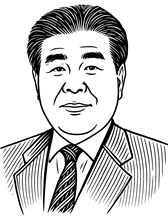
▲ 필자/정길선 박사 ©브레이크뉴스 |
몽골은 세계 10대 자원 부국이다. 구리와 석탄 매장량이 각각 세계 2위와 4위 규모일 정도로 지하 광물자원이 풍부하다. 몰리브덴의 매장량도 세계 11위이며 희토류는 전세계의 16%가 몽골에 묻혀있다. 타반 톨고(Taban Tolgoi)에는 석탄, 오유 톨고이(Oyu Tolgoi)에는 구리와 금 등 세계 최대 규모로 알려진 광산들이 사실상 몽골 경제를 이끌고 있다.
지난해 기준으로 몽골 GDP에서 광업이 차지하는 비중은 24.8%에 달하고 있다. 광업은 2위 농업의 16.5% 보다 훨씬 높다. 특히 수출에서는 광물 자원 비중이 90%가량으로 절대적이다. 1990년 사회주의에서 시장경제로 체제를 바꾼 몽골은 이처럼 넘쳐나는 지하자원을 발판으로 경제성장을 거듭했다. 광물 가격이 오르고 광업 개발 투자가 급증한 덕택에 2011년에는 17.3%라는 기록적인 경제 성장률을 달성하기도 했다.
1990년 사회주의에서 시장경제로 체제를 바꾼 몽골은 이처럼 넘쳐나는 지하자원을 발판으로 경제 성장을 거듭했다. 광물 가격이 오르고 광업 개발 투자가 급증한 덕택에 2011년에는 17.3%라는 기록적인 경제 성장률을 달성하기도 했다. 몽골 정부는 2006년 기존의 광물법을 개정하면서 광산을 전략 광산, 일반 광산, 기타 광산으로 분류하였다. 특히 생산 규모가 GDP의 5%를 넘고, 국가 안보 및 경제, 사회적으로 큰 영향을 미치는 15개 광산을 전략 광산으로 지정하여 관리하고 있다.
전략 광산의 효율적 관리를 위하여, 채굴권의 승인, 투자 보장 계약 심의, 정부 지분율 결정 등에는 국회의 승인이 필요한데, 광산 개발 방식에 따라 다소 다르지만 정부가 전략 광산에 반드시 지분을 보유하도록 법제화하고 있다. 몽골의 전략 광산에는 구리, 금, 석탄을 비롯하여 철, 우라늄, 몰리브덴, 인, 아연 등 주요 광물이 포함되어 있다. 특히 오유 톨고이 지역은 우문 고비 아이막 항복드 솜(Hangbokd Som)에 위치한 80,000ha 면적의 세계 3대 구리 광산 중 하나로 나타난다.
이곳에는 구리, 금 등이 주로 생산되고 있으며, 캐나다계 이반호에 미네스(IVANHOE MINES)사에 의해 탐사 되어, 광업 메이저 회사인 투르쿠오이세 힐 레소울체스(TURQUOISE HILL RESOURCES)가 66%, 몽골 정부 34%의 지분을 소유하는 형태로 2009년에 투자 계약이 체결되어 오늘에 이르고 있다. 투르쿠오이세 힐 레소우르체스(TURQUOISE HILL RESOURCES)회사는 다국적 광업기업인 리오 틴토(RIO TINTO)가 50.8% 소유함으로 리오 틴토(RIO TINTO)가 운영권을 가지고 있다.
확정, 추정 및 예상 매장량을 모두 합산하여 31.1억 톤의 매장량이 보고되고 있으며, 품위는 Cu 0.98%, Au 0.299g/t으로 나타난다. 노천 광산과 지하 광구로 구분되고 있으며, 현재 노천 광산 채굴만 이루어지고 있다. 지하 광구 리프트 건설 공사가 진행 중이며, 2025년부터 지하 광구 본격 생산에 들어가면 연간 순 구리 55만 톤, 금 45만 톤으로 세계 3위 구리 광산이다. 따라서 2020년을 기준으로 한 해 동광석 100만 톤을 채굴하여, 69만 톤 동정광을 수출한 것으로 확인되고 있다. lukybaby7@gmail.com
*필자/ 정길선.
노바토포스 회원, 역사학자, 고고인류학자, 칼럼니스트, 러시아 과학아카데미 유라시아 고고인류학연구소 연구교수.
*아래는 위 기사를 '구글 번역'으로 번역한 영문 기사의 [전문]입니다. '구글번역'은 이해도 높이기를 위해 노력하고 있습니다. 영문 번역에 오류가 있을 수 있음을 전제로 합니다.<*The following is [the full text] of the English article translated by 'Google Translate'. 'Google Translate' is working hard to improve understanding. It is assumed that there may be errors in the English translation.>
Mongolia is one of the world's top 10 resource-rich countries... Mongolia has great potential
- Jeong Gil-seon, columnist
Mongolia is one of the world's top 10 resource-rich countries. Its underground mineral resources are abundant, with the second and fourth largest copper and coal reserves, respectively. It also boasts the 11th largest molybdenum reserves, and Mongolia holds 16% of the world's reserves of rare earth elements. These mines, known as the world's largest, are the driving force behind Mongolia's economy, including coal in Taban Tolgoi and copper and gold in Oyu Tolgoi.
As of last year, mining accounted for 24.8% of Mongolia's GDP, significantly higher than the 16.5% contribution of agriculture, the second-largest. Mineral resources are a significant contributor to exports, accounting for approximately 90% of the total. Since transitioning from a socialist to a market economy in 1990, Mongolia has achieved sustained economic growth, leveraging its abundant underground resources. Thanks to rising mineral prices and a surge in mining development investment, Mongolia achieved a record economic growth rate of 17.3% in 2011.
Mongolia, which transitioned from a socialist to a market economy in 1990, has enjoyed sustained economic growth, leveraging its abundant mineral resources. Thanks to rising mineral prices and a surge in mining development investment, Mongolia achieved a record economic growth rate of 17.3% in 2011. In 2006, the Mongolian government revised its existing Minerals Law, classifying mines into strategic mines, general mines, and other mines. Specifically, 15 mines with production exceeding 5% of GDP and significant impacts on national security, the economy, and society are designated and managed as strategic mines.
To ensure efficient management of strategic mines, parliamentary approval is required for mining rights approval, investment guarantee agreement review, and government shareholding determinations. While this varies slightly depending on the mine development method, the government is required to hold a stake in strategic mines. Mongolia's strategic mines include copper, gold, coal, iron, uranium, molybdenum, phosphorus, and zinc. In particular, the Oyu Tolgoi region, located in Hangbokd Som, Umun Gobi Province, is one of the world's three largest copper mines, spanning 80,000 hectares.
The region primarily produces copper and gold. Exploration began with Canadian-based Ivanhoe Mines, and an investment agreement was signed in 2009, with major mining company Turkuise Hill Resources holding a 66% stake and the Mongolian government holding a 34% stake. Turquoise Hill Resources is 50.8% owned by the multinational mining company Rio Tinto, which holds the operating rights.
The mine has a reported reserve of 3.11 billion tons, including confirmed, inferred, and projected reserves, grading 0.98% copper and 0.299 g/t gold. It consists of open-pit and underground mines, with only open-pit mining currently underway. Construction of an underground mine lift is underway, and once full-scale underground production begins in 2025, the mine is expected to produce 550,000 tons of pure copper and 450,000 tons of gold annually, making it the world's third-largest copper mine. As of 2020, the mine produced 1 million tons of copper ore and exported 690,000 tons of copper ore. lukybaby7@gmail.com
*Author: Gil-seon Jeong.
Novatopos member, historian, paleoanthropologist, columnist, and research professor at the Institute of Eurasian Archaeology and Anthropology, Russian Academy of Sciences.