[노병한의 관상·칼럼]글자 모양에 비유하는 관상의 유형에는 ‘갑(甲)자상·유(由)자상·신(申)자상·전(田)자상·동(同)자상·왕(王)자상·원(圓)자상·목(目)자상·용(用)자상·풍(風)자상’ 등 10가지가 대표적이다. 오늘은 납 왕자형(王字形) 얼굴의 생김새의 특징을 살펴보자.
왕자형(王字形)의 관상은 대체로 많이 보이는 유형 중의 하나다. 왕자형(王字形)의 관상은 얼굴의 면부(面部)·안면(顔面)을 보았을 때, 이마에 가로 주름이 2~3줄 뚜렷하고, 코·뿌리인 산근(山根)과 콧날이 곧아 세로축이 강해 보이며, 오관(五官)에 해당하는 ‘눈·코·입·귀·눈썹’의 이목구비의 축선이 ‘왕(王)자’의 획처럼 정돈돼 보이는 상이다.
왕자형(王字形)의 관상은 얼굴형은 대체로 네모·방정·직사각형 계열로 광대와 턱이 균형을 이루고 턱선이 단단하며, 삼골(三骨)에 해당하는 ‘전두골(前頭骨·이마뼈)·관골(官骨·광대뼈)·시골(顋骨·턱뼈)‘이 돌출(凸)되어 툭 불거지고, 뺨은 움푹(凹) 들어간 상이다. 왕자형(王字形)의 관상은 미간이 너무 좁지 않고, 눈썹뼈가 과도하게 솟지 않으며 눈동자 초점이 안정적이며, 코는 콧대가 반듯하고 콧방울이 적당히 도톰하며 인중이 뚜렷한 상이다.
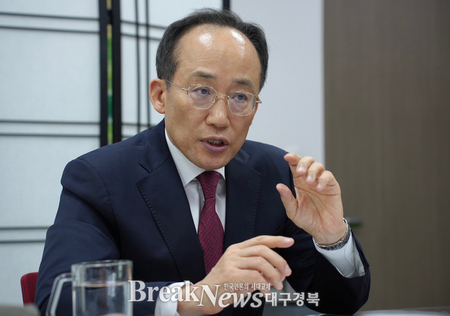
 ▲ 왕(王)자형 관상의 개념도와 박정희·김종필· © 노병한 사주풍수칼럼니스트 |
왕자형(王字形)의 관상은 입술 라인이 가지런하고 입꼬리가 살짝 올라가며, 치열이 비교적 단정하며 측면에서 보았을 때 이마·코·턱의 수직선이 무너지지 않고 균형이 잡힌 상이다. 왕자형(王字形)의 관상은 얼굴의 상하 전체가 정사각형에 가깝고 이마·광대·턱이 고르게 발달하여 마치 왕(王)자 모양의 균형을 이루는 상이다.
왕자형(王字形)의 관상인데 상정·중정·하정이 평평하면 가히 발복 할지라도 곧 없어지며 없다가도 또 곧 있을 것이다. 왕자형(王字形)의 관상인데 상정·중정·하정이 평평하면 처자(妻子)에게도 복록이 약하여 평생 수고가 많아 고생하며 분주할 수밖에 없는 상이다. 왕자형(王字形)의 관상에 오관(五官)에 해당하는 ‘눈·코·입·귀·눈썹’의 이목구비가 단정할지라도 상정·중정·하정이 평평하면 이름은 나지만 실리와 실속이 없으며, 실리가 있더라도 이름을 얻지 못할 것이니 재록(財祿)이 온전하지 못할 상이다.
왕자상(王字相)의 관상은 경직성·권위적으로 비칠 위험이 있고, 세부적인 감정에 관리가 부족할 수 있으며, 완벽주의·통제적인 성향으로 속도 저하나 융통성·창의성이 요구되는 상황에서 답답함을 줄 수 있는 약점을 가진 상이다.
왕자형(王字形)의 관상인지의 판단 기준은, 아래 6개의 점검리스트 중에서 4~5개 정도에 해당하면 왕자형(王字形)의 관상에 속한다고 할 수 있다. 첫째 얼굴의 이마에서 가로의 주름 2~3줄이 평행에 가깝고 깊이가 비교적 균일한 상인가? 둘째 얼굴의 세로축에서 “미간·콧대·인중·턱끝”이 한 축으로 반듯하게 떨어지는 상인가?
셋째 얼굴형에서 “광대·턱”의 좌우가 균형이 좋아 정사각형·직사각형의 상인가? 넷째 얼굴의 코에서 콧대가 휘지 않고 콧방울의 볼륨이 지나치게 과하거나 빈약하지 않은 상인가? 다섯째 얼굴의 눈·입에서 눈매가 흔들림이 적고 입술 라인 즉 윗입술과 아랫입술의 비율이 “1:1~1:1.3”정도로 균형을 이루는 상인가? 여섯째 얼굴의 측면 선에서 “이마·코·턱”의 입체 선이 급격히 꺾이지 않는 상인가?
왕자형(王字形)의 관상은 감정의 표현은 절제하고 인내심이 있는 편이고, 원칙·규범을 중시하고 합리성·공정성을 지향하며, 추진력·리더십·책임감·의사 결정력이 강하고 신뢰를 중시해 약속·기한을 잘 지키는 스타일의 상이다.
 ▲ 왕(王)자형 관상과 운세의 특징 © 노병한 사주풍수칼럼니스트 |
그런데 왕자형(王字形)의 관상에 얼굴이 모가지고 바르며 뼈는 있는데 살이 없고, 이마인 천정과 턱인 지각이 이지러지고 움푹 들어가듯 함몰(陷沒)하는 경우, 이는 양(陽)이 음(陰)을 이김이니, 음(陰)의 기운이 양(陽)의 기운에 편승함이므로, 재물의 취산(聚散)이 심해 모이고 흩어지기를 반복해 재물은 있어도 명예가 부족한 관상으로 고위 관직에 오르기는 어려운 상이다.
‘왕(王)자형의 관상’의 건강과 수명을 보자. ‘왕(王)자형의 관상’은 대체로 심장과 폐의 기능이 약한 체질로 순환기·소화기질환에 주의가 필요한 상이다. 그리고 ‘왕(王)자형의 관상’의 얼굴에서 광대뼈에서 턱에 이르는 사이의 찰색(察色)이 붉은 색조를 보이면 간(肝)·췌장(膵臟)에 열이 많아 과로 때문에 병치레를 할 수 있다. 그러나 과로·스트레스의 관리만 잘하면 건강에 유리한 체질이기에 장수가 가능한 상이다.
재계의 유명 인사 중 ‘왕(王)자형의 관상’에 속한 경우는 정주영·이병철·구인회·최종현 등을 들 수 있다. 한편 연예계의 유명 인사 중 ‘왕(王)자형의 관상’에 속한 경우는 안성기·이병헌·최민식·조용필·비(정지훈)·지드래곤 등을 들 수 있다. 정계의 유명 인사 중 ‘‘왕(王)자형의 관상’에 속한 경우는 박정희·김영삼·노무현·박근혜·문재인·김종필·정운찬 등을 들 수 있다.
한편 ‘왕(王)자형 관상’에 속하는 사람의 진로·직업 및 초년운·중년운·말년운에 대한 운세의 흐름과 길흉화복 그리고 운(運)이 닫히거나 막히는 경우 돌파하는 방편으로 운(運)을 열리게 하는 개운(開運)에 대해서는 다음 차회(次回)의 칼럼에서 다루기로 한다.
 © 노병한 사주풍수칼럼니스트 |
이상에서 살펴본 "사진·이미지·영상을 통한 단순한 글자 유형의 관상"이나 또 "얼굴·생김새·면부(面部)·안면(顔面)을 단순한 동물(動物)·금수(禽形)·물형(物形)에 비유한 관상“만으로는 대강(大綱)을 살피는 것이지 당사자의 미래와 운세의 흐름을 적중시키기에는 한계가 있다.
그러함의 이유는 실제 대면(對面) 관상을 통해 당사자의 "안광(眼光)·안청(眼睛)·시선(視線)·기세(氣勢)·아우라(Aura)·기색(氣色)·체취(體臭)·체격(體格)·보행(步行)·음성(音聲)"과 함께 관상을 보는 시점에 당사자의 "찰색(察色)에 깃든 서조(瑞兆)·흉조(凶兆)" 등을 다면·입체적으로 살필 수가 없고, 또 지연의 일조(日照)가 아닌 조명(照明)의 유무에 따라 차이가 나기 때문이다. 그래서 단순히 사진·이미지·영상만을 기준으로 관상을 보고 단정적으로 예단하는 건 바람직하지 않다.
□글/노병한:박사/한국미래예측연구소(소장)/노병한박사철학원(원장)/자연사상칼럼니스트/인생상담사.
*아래는 위 기사를 '구글 번역'으로 번역한 영문 기사의 [전문]입니다. '구글번역'은 이해도 높이기를 위해 노력하고 있습니다. 영문 번역에 오류가 있을 수 있음을 전제로 합니다.<*The following is [the full text] of the English article translated by 'Google Translate'. 'Google Translate' is working hard to improve understanding. It is assumed that there may be errors in the English translation.>
Park Chung-hee and Kim Jong-pil: Three-Bone Protrusion, "Wang (王)" Shaped Faces, Authority Types, Leadership
- Noh Byeong-han, Four Pillars of Destiny, Feng Shui Columnist
[Noh Byeong-han's Face Reading and Column] There are ten representative types of face readings based on the shapes of letters: Gap (甲), Yu (由), Sin (申), Jeon (田), Dong (同), Wang (王), Won (圓), Mok (目), Yong (用), and Pung (風). Today, let's examine the characteristics of the Wang-ja (王字形) face.
The Wang-ja (王字形) face reading is one of the most common types. The prince-type (王字形) face is characterized by two to three distinct horizontal wrinkles on the forehead when looking at the face, a straight nose and bridge that give the face a strong vertical axis, and the five sense organs (eyes, nose, mouth, ears, and eyebrows) that appear to be aligned like the strokes of the character for king (王). The prince-type (王字形) face shape is generally square, square, or rectangular, with balanced cheekbones and chins, a firm jawline, and prominent protruding frontal bones (forehead bone, zygomatic bone, and jaw bone), while the cheeks are sunken. The prince-type (王字形) face shape is characterized by a moderately narrow forehead, moderately high eyebrows, stable pupil focus, a straight nose bridge, moderately plump nostrils, and a distinct philtrum. ▲ Conceptual diagram of the "王" (King)-shaped face and Park Chung-hee, Kim Jong-pil, © Noh Byeong-han, Feng Shui columnist
The "王" (King)-shaped face has a well-defined lip line, slightly upturned corners, relatively neat teeth, and a balanced, unbroken vertical line between the forehead, nose, and chin when viewed from the side. The face is nearly square from top to bottom, with the forehead, cheekbones, and chin evenly developed, creating a balanced "王" (King) shape.
If the "王" (King)-shaped face has flat tops, middle, and bottoms, even prosperity will likely fade away, and even disappearances will return soon. If the "王" (King)-shaped face has flat tops, middle, and bottoms, even prosperity with a wife and children will be weak, leading to a life of hardship and busyness. Even if the five organs (eyes, nose, mouth, ears, and eyebrows) of a prince-type face are well-defined, if the upper, middle, and lower parts are flat, fame will be limited by lack of substance and practicality. Even if there is practicality, it will not achieve fame, and thus, wealth and fortune will be uncertain.
A prince-type face carries the risk of being perceived as rigid and authoritarian, lacking control over detailed emotions, and possessing perfectionist and controlling tendencies that can slow things down or cause frustration in situations requiring flexibility and creativity.
The criteria for determining whether a prince-type face is one of the following six checklist items are: If four or five of them are present, the face is considered prince-type. First, are the two or three horizontal wrinkles on the forehead nearly parallel and relatively even in depth? Second, are the vertical axis of the face, between the eyebrows, bridge of the nose, philtrum, and chin, aligned along a single axis?
Third, is the face shape balanced between the cheekbones and chin, giving it a square or rectangular appearance? Fourth, is the nose bridge not crooked, and is the nostrils neither excessively full nor sparse? Fifth, are the eyes and mouth relatively unshakable, and are the lip lines, i.e., the ratio of the upper and lower lips, balanced at around 1:1 to 1:1.3? Sixth, is the side profile of the face, along the forehead, nose, and chin, not sharply curved?
The Prince type (王字形) is characterized by restrained expression of emotions and patience. They value principles and norms, strive for rationality and fairness, and possess strong drive, leadership, responsibility, and decision-making skills. They also value trust and are good at keeping promises and deadlines. ▲ Characteristics of the King (王)-shaped face and fortune © Noh Byeong-han, Feng Shui columnist
However, if the face of a prince (王)-shaped face is square and upright, with bones but no flesh, and the forehead and chin are slanted and sunken, this indicates that yang is overcoming yin, meaning yin energy is riding on yang. Consequently, wealth tends to accumulate and disperse, resulting in a repeated cycle of accumulation and dispersal. This means that while wealth is abundant, it lacks prestige, making it difficult for a person to rise to a high position.
Let's look at the health and longevity of a "king"-shaped face. A "king"-shaped face generally indicates a constitution with weak heart and lung function, requiring caution against circulatory and digestive disorders. Furthermore, if the face of a "king" (王)-shaped face shows a reddish hue between the cheekbones and the chin, it indicates excessive heat in the liver and pancreas, which can lead to illness due to overwork. However, if overwork and stress are properly managed, this constitution is beneficial for health and longevity.
Celebrities with "king" (王)-shaped face types include Chung Ju-yung, Lee Byung-chul, Koo In-hoe, and Choi Jong-hyun. Meanwhile, celebrities with "king" (王)-shaped face types include Ahn Sung-ki, Lee Byung-hun, Choi Min-sik, Cho Yong-pil, Rain (Jung Ji-hoon), and G-Dragon. Famous figures in politics with "king" (王)-shaped face types include Park Chung-hee, Kim Young-sam, Roh Moo-hyun, Park Geun-hye, Moon Jae-in, Kim Jong-pil, and Chung Un-chan.
Meanwhile, the flow of fortunes for those with the "king" (王)-shaped physiognomy, including their career paths, occupations, early, middle, and later years, as well as the good and bad fortunes and the means to overcome blocked or blocked fortunes by opening them up, will be discussed in the next column.
© No Byeong-han, Saju Feng Shui Columnist
The "simple text-based physiognomy using photos, images, and videos" discussed above, or the "physiognomy that compares the face, appearance, facial features, and facial features to simple animals, birds, or things," only provide a general overview and are limited in accurately predicting the individual's future and fortune.
This is because, when reading a face-to-face, it is impossible to comprehensively and three-dimensionally examine the subject's "good and bad omens contained in the observed appearance" along with their "eyesight, eyesight, gaze, spirit, aura, color, body odor, physique, gait, and voice" through actual face-to-face readings. Furthermore, differences can arise depending on the presence or absence of lighting, not sunlight. Therefore, it is not advisable to make definitive predictions based solely on photographs, images, or videos. nbh1010@naver.com
□Writer/Noh Byeong-han: Ph.D./Korea Future Forecasting Institute (Director)/Noh Byeong-han Ph.D. Philosophy Institute (Director)/Natural Thought Columnist/Life Counselor