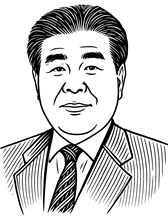
▲필자/ 정길선 박사 ©브레이크뉴스 |
몽골은 1917년 러시아 혁명에서 4년 후인 1921년에 인민공화국이 수립되어, 세계에서 두 번째로 공산화 된 나라가 되었다. 1911년 중국에서 신해혁명이 일어나면서 외몽골의 부족장들이 청나라의 지배를 거부하여 독립했으며, 그 후 러시아 혁명시기에 몽골 인민당이 러시아 백군과 중국 정부의 개입을 배격하고 공산화에 성공했다. 몽골 인민당은 인민혁명당으로 이름을 바꾸게 된다. 몽골의 공산정권은 소련의 군사적, 경제적 지원을 받았기 때문에 사실상 소련의 속국이 되었다. 몽골에는 소련군이 주둔했고, 스탈린 시기, 독재자 허를러깅 처이발상 시기에는 목축업이 집단화되었다. 처이발상 시기 소련에 반대하는 정치인, 민족주의를 강조하는 라마불교 승려 등은 숙청되어 사라졌다. 공산정권은 몽골의 고유문자를 폐기하고, 러시아의 키릴문자를 도입시킴으로써 문화적 종속을 심화시켰다.
제2차 세계대전 말기에 소련 스탈린과 중국 장개석(蔣介石)이 외몽골은 독립시키고, 내몽골은 중국에 귀속하는 것으로 합의해 몽골족은 완전히 분할되었다. 이후 모택동의 중공(中共)은 외몽골의 영유권을 주장했지만 몽골의 공산 정권은 친(親) 소련주의를 고수하여 소련의 위성국 지위를 유지하게 된다. 이흐후 1984년 8월, 26년 동안 집권한 융자깅 체뎅발(Yumjaagiin Tsedenbal)이 인민 혁명당 총서기에서 물러나게 되었으며 잠빙 바트믕흐(Jambyn Batmönkh)가 1인자로 올라서게 된다. 바트믕흐는 전임자에 비해 비교적 온건적인 노선을 견지했고, 이는 소련 고르바쵸프 서기장의 지지를 받게 된다. 이와 같은 몽골의 개혁-개방은 20대 청년인 차히아긴 엘벡도르지(Цахиагийн Элбэгдорж)로부터 출발한다. 1963년 생인 엘벡도르지는 모스크바 육군사관학교를 나와 키예프에서 언론학을 공부했으며, 그 때 고르바쵸프의 개혁-개방 정책을 알게 되었다.
엘벡도르지는 언론의 자유를 보장하는 글라스노스뜨와 시장개방을 강조하는 뻬레스뜨로이까의 열렬한 지지자가 되었다. 1988년에 귀국한 엘벡도르지는 울란오드(Ulaan Od)라는 신문사에서 기자 생활을 하게 된다. 당시 인민혁명당의 노선에 거스르는 논조를 펴면 간첩 혐의로 몰리던 시절이었다. 그러나 엘벡도르지는 여기에 굴하지 않고 자신과 뜻을 같이 하는 동료들을 모으게 된다. 1989년 11월 28일, 울란바토르에서 제2차 전국청년예술가 대회가 열렸다. 26살인 엘벡도르지는 청중들 앞에 나서 자신의 생각을 밝혔다.
“지금 몽골은 페레스트로이카를 과감하게 추진해야 할 때입니다. 청년들이 할 일은 말로만 지지하는 것이 아니라, 행동으로 뒷받침하는 것입니다. 우리가 힘을 모으면, 소기의 목적을 달성할 수 있습니다. 우리의 목표는 민주주의이고, 글라스노스뜨의 개방 정신입니다. 우리는 이런 뜻을 관철하기 위해 대중적이고, 자발적인 조직을 만들어야 합니다. (Одоо Монгол Улс Перестройка-г зоригтойгоор хөөцөлдөх цаг болжээ. Залуучуудын хийх ёстой зүйл бол үгээр дэмжихээс гадна үйлдлээр дэмжих явдал юм. Бид хүчээ нэгтгэж чадвал зорилгодоо хүрч чадна. Бидний зорилго бол ардчилал, Гласностын нээлттэй сүнс юм. Энэ зорилгоо хэрэгжүүлэхийн тулд ард түмний сайн дурын байгууллага бий болгох хэрэгтэй.)”
오랜 공산 치하에 젖어온 몽골 사회에서 엘벡도르지는 금기의 발언을 한 것이다. 그러자 후환이 두려워진 대회 의장은 엘벡도르지의 발언을 중단시켰다. 대회가 끝나고 그와 뜻을 함께 하는 두 명의 동지가 찾아왔으며, 이어 10명이 합세했다. 이들이 몽골민주혁명의 13인 지도자로 부상하게 된다. 그가 다니던 신문사에서는 더 이상 공산주의에 반대하는 활동을 할 경우, 해고하겠다고 협박했다. 그럼에도 불구하고, 엘벡도르지는 몽골국립대학 강의실에서 비밀리에 동지들을 만나 민주주의와 자유시장에 대한 학습 활동을 벌였다. 동시에 조직을 확대하고 반(反) 정부 전단을 제작해 거리에 붙였다. 마침내 1989년 12월 10일 아침, 그들은 수도 울란바토르 청년문화센터 앞에서 최초의 민주화 시위를 벌이게 된다. 엘벡도르지는 그 자리에서 몽골민주동맹의 창당을 선언했다. 이는 몽골 공산 정권 68년만에 생긴 최초의 야당이다.
그들은 공산정부에 뻬레스뜨로이까와 글라스노스뜨를 채택하고, 자유선거와 경제개혁을 단행할 것을 요구했다. 나아가 러시아 키릴 문자를 폐지하고 고유 몽골문자를 사용할 것도 주장했다. 그런데 이 때 우발적인 사건이 발생했다. 소련의 세계적인 체스 선수 가리 까스빠로브(Гарри Каспаров)가 플레이보이 잡지와의 인터뷰에서 “소련이 경제적 어려움을 극복하기 위해 몽골을 중국에 팔아야 한다(Советскому Союзу следовало продать Монголию Китаю, чтобы преодолеть свои экономические трудности).”고 말했다. 이 체스 선수의 발언은 소련 당국의 공식적인 견해는 물론 아니었지만, 몽골의 민족주의의 발단이 된다. 새해가 되어 1990년 1월 2일, 민주동맹은 전단지를 배포하고 민주 혁명을 요구했다. 바트믕흐 정부가 이에 아무런 대응을 하지 않자, 민주동맹은 보다 공격적으로 바트믕흐 정부에 민주화를 요구했다.
1월 14일, 시위대 1,000명이 울란바토르 레닌박물관 앞에 집결했다. 1월 21일에는 영하 30도의 날씨에도 시위대는 칭기즈칸을 표어로 한 깃발을 들고 시위했다. 칭기즈칸은 몽골에서는 영웅이지만 러시아에서는 침략자로써 아주 치를 떠는 대상이었기에 소비에트 치하에서 칭기즈칸은 금기어나 마찬가지였다. 그래서 소련 치하 몽골에서는 칭기즈칸을 언급조차 하지 못했다. 칭기즈칸 탄생 600주년인 1962년에 인민혁명당 정치국원이 칭기즈칸을 언급했다가 소련에 의해 숙청당하기도 했다. 울란바토르 수흐바타르 광장의 시위대는 몽골에 뻬레스뜨로이까와 글라스노스뜨를 도입할 것을 요구했다. 반(反) 정부 인사들은 "인간의 얼굴을 한 사회주의(Хүний нүүртэй социализм)" 내에서 자유로운 선거와 경제 개혁을 요구했다.
시위대인 몽골인 거의 대부분은 당시에는 읽을 수 없었지만 민족주의적인 몽골 전통문자인 비치크 문자를 사용하면서 몽골식 키릴 문자가 가진 정치 체제를 상징적으로 부정했다. 처음 300명에서 1,000명으로 늘어난 시위대는 레닌 박물관 앞 광장으로 집결했으며, 레닌 박물관 앞 광장은 이때부터 울란바토르 자유 광장이라 불리게 되었다. 다음 날인 22일에도 영하 21도의 날씨 속에서도 수흐바타르 광장에 시위가 열렸다. 시위대는 칭기즈칸을 칭송하는 푯말을 들며 소련이 학교 교육에서 의도적으로 무시하는 몽골 민족 영웅들을 재발굴하였다. 시위대는 칭기즈칸 탄생 800주년을 기념한 죄로 1962년 몽골 인민혁명당에서 축출되었던 정치인 다라민 토모르오치르(Daramin Tomorocir)도 재평가하였다. 여기에 몽골 인민공화국의 국기에서 공산주의를 뜻하는 별을 지워버린 국기를 흔들었다.
이후 몇 달 동안 시위대는 행진, 데모, 단식투쟁, 교사 파업 및 노동자 파업을 일으켰다. 이 시위대는 몽골 도심, 농촌 전반에서 몽골인들의 지지를 얻으면서 세력을 불러나갔다. 이후 1월과 2월 매주마다 주말 시위가 열렸으며, 수도 울란바토르 뿐 아니라 주도 에르데네트와 다르항, 후브스굴 주 무룽에도 열리기 시작한다. 수천 명의 시위대가 매일 시위를 열자 1990년 3월 4일 몽골 민주 연합(MDU) 및 기타 3개 개혁 조직은 회동을 열어 정부의 회담 참석을 요구했다. 정부가 이에 대해 반응을 하지 않자 시위대는 10만 명까지 불어났다. 1990년 3월 7일 민주연합은 수흐바타르 광장에서 공산당의 사임을 촉구하며 10명이 단식투쟁을 벌이기 시작했다. 단식투쟁을 하는 사람들이 이들의 뒤를 이어 불어나기 시작했다. 결국 몽골 인민혁명당 정치국은 시민들의 압력에 이기지 못하고 3월 11일 정부-시민단체 회담에 참석하기 시작했다. 몽골 인민혁명당 정치국 의장이었던 잠빙 바트뭉흐는 1990년 3월 9일 정치국을 해산하고 의장에 사임했다.
그러나 인민혁명당 내에서는 시위대 진압작전을 진지하게 고려하기 시작하여 잠빙 바트뭉흐에게 작전 명령을 서명하라고 요구했다. 하지만 바트뭉흐는 서명을 거부하고 무력을 사용하지 않은 채 엄중하게 다루라고 말했다. 이처럼 몽골 민주화 운동은 점차 민족주의 색채를 강하게 띠며 반소운동으로 전개되었다. 민주동맹 이외에도 다양한 민주단체들이 조직되었으며 민주동맹과 3개의 단체는 공동집회를 열었다. 이 날 집회에는 약 10만 명이 모여 민주화를 외쳤다. 울란바토르 수흐바타르 광장 민주동맹 소속 10명은 공산 정권의 퇴진을 요구했다. 사태가 걷잡을수 없이 확대되자, 인민혁명당내 강경파는 시위를 진압할 것을 요구하며, 계엄령 선포를 바트뭉흐 총서기에게 요구했다. 바트뭉흐는 서명을 거부했다. 당시 긴박했던 상황을 그의 아내는 이렇게 회고했다.
“남편이 집에서 제8차 전당대회 연설문을 준비하고 있던 차에 전화가 걸려 왔습니다. 몇 마디 대화가 오가더니 남편은 ‘우리 몇 안되는 몽골인들끼리 상대방의 코피를 터트릴수 없지 않겠는가’라며 버럭 소리를 지르고 전화통을 던져 버렸어요. 그답지 않은 행동이었지요. 평상시에 조용하던 분이 목청을 돋우며 ‘일부 지도부가 나에게 서명을 요구하는데, 내가 다녀오리다’고 말했어요. 그는 오른손에 넥타이를 쥐고 있으면서도 넥타이를 달라고 했어요. 그리곤 식사도, 차 한잔도 마시지 않고 휑하니 나가버렸어요.”
바트뭉흐는 3월 9일 저녁에 정치국 회의를 열어 손으로 책상을 내리치며, 계엄령을 막았다. 그는 인민혁명당 정치국을 해체하고, 자신도 사임했다. lukybaby7@gmail.com
*필자/ 정길선.
노바토포스 회원, 역사학자, 고고인류학자, 칼럼니스트, 러시아 과학아카데미 유라시아 고고인류학연구소 연구교수.
*아래는 위 기사를 '구글 번역'으로 번역한 영문 기사의 [전문]입니다. '구글번역'은 이해도 높이기를 위해 노력하고 있습니다. 영문 번역에 오류가 있을 수 있음을 전제로 합니다.<*The following is [the full text] of the English article translated by 'Google Translate'. 'Google Translate' is working hard to improve understanding. It is assumed that there may be errors in the English translation.>
Mongolia became the world's second communist country when the People's Republic was established in 1921, four years after the Russian Revolution of 1917. Following the Xinhai Revolution in China in 1911, the tribal chieftains of Outer Mongolia rejected Qing rule and declared independence. Subsequently, during the Russian Revolution, the Mongolian People's Party successfully defeated the intervention of the Russian White Army and the Chinese government, leading to the establishment of communism. The Mongolian People's Party was renamed the People's Revolutionary Party. Mongolia's communist regime, receiving military and economic support from the Soviet Union, effectively became a Soviet vassal state. Soviet troops were stationed in Mongolia, and during the Stalinist and dictatorial eras of Khorloging Choibalsan, livestock farming was collectivized. During Choibalsan's era, politicians who opposed the Soviet Union and Buddhist lamas who emphasized nationalism were purged. The communist regime further deepened cultural dependence by abolishing Mongolia's native script and adopting the Russian Cyrillic alphabet.
At the end of World War II, Soviet Union's Joseph Stalin and China's Chiang Kai-shek agreed to grant independence to Outer Mongolia and annex Inner Mongolia to China, completely dividing the Mongolian people. Afterwards, Mao Zedong's Communist Party claimed sovereignty over Outer Mongolia, but Mongolia's communist regime maintained its pro-Soviet stance and maintained its status as a Soviet satellite state. Then, in August 1984, Yumjaagiin Tsedenbal, who had been in power for 26 years, resigned as General Secretary of the People's Revolutionary Party, and Jambyn Batmönkh ascended to the top position. Batmönkh maintained a relatively moderate line compared to his predecessor, and this earned him the support of Soviet General Secretary Gorbachev. Mongolia's reform and openness began with Tsakhiagiin Elbegdorj, a young man in his twenties. Born in 1963, Elbegdorj graduated from the Moscow Military Academy and studied journalism in Kyiv, where he became acquainted with Gorbachev's reform and openness policies.
Elbegdorj became an ardent supporter of glasnost, which guaranteed freedom of the press, and perestroika, which emphasized market openness. Upon returning to Mongolia in 1988, Elbegdorj became a journalist for the newspaper Ulaan Od. At the time, anyone who spoke against the People's Revolutionary Party's line was accused of espionage. However, Elbegdorj refused to be deterred and gathered like-minded colleagues. On November 28, 1989, the Second National Conference of Young Artists was held in Ulaanbaatar. Elbegdorj, then 26, stood before the audience and shared his thoughts. “Now is the time for Mongolia to boldly pursue perestroika. The role of young people is not to support it with words, but to back it up with actions. If we join forces, we can achieve the desired goal. Our goal is democracy and the open spirit of glasnost. We must create popular, voluntary organizations to carry out this purpose. (Одоо Улс Перестройка-г зоригтойгоор хөөцөлдөх цаг болжээ. Залуучуудын хийх ёстой зүйл бол үгээр дэмжих ээс гадна үйлдлээр дэмжих явдал юм. Бид хүчээ "I will not allow the people to speak. I ... After the conference, two like-minded comrades approached him, and ten more joined them. They emerged as the 13 leaders of the Mongolian Democratic Revolution. His newspaper threatened to fire him if he continued his anti-communist activities. Nevertheless, Elbegdorj secretly met with comrades in a lecture hall at the National University of Mongolia and engaged in learning activities about democracy and the free market. Simultaneously, they expanded their organization and produced anti-government leaflets to post on the streets. Finally, on the morning of December 10, 1989, they staged their first pro-democracy demonstration in front of the Youth Cultural Center in the capital, Ulaanbaatar. There, Elbegdorj declared the founding of the Mongolian Democratic Union, the first opposition party in Mongolia's 68-year communist regime.
They demanded that the communist government adopt perestroika and glasnost, hold free elections, and implement economic reforms. They also advocated for the abolition of the Russian Cyrillic alphabet and the adoption of the Mongolian script. But then something unexpected happened. In an interview with Playboy magazine, Soviet world-class chess player Garry Kasparov said, “The Soviet Union should sell Mongolia to China to overcome its economic difficulties.” Although this chess player’s remarks were not the official position of the Soviet authorities, they became the starting point of nationalism in Mongolia. On January 2, 1990, the Democratic League distributed leaflets and called for a democratic revolution. When the Batumkh government failed to respond, the Democratic Alliance became more aggressive in demanding democratization.
On January 14, 1,000 protesters gathered in front of the Lenin Museum in Ulaanbaatar. On January 21, despite temperatures of minus 30 degrees Celsius, protesters held banners bearing the slogan of Genghis Khan. While Genghis Khan was considered a hero in Mongolia, he was reviled as an invader in Russia, making him virtually taboo under Soviet rule. Consequently, even mention of Genghis Khan was forbidden in Soviet Mongolia. In 1962, the 600th anniversary of Genghis Khan's birth, a member of the Politburo of the People's Revolutionary Party was purged by the Soviets for mentioning him. Protesters in Ulaanbaatar's Sukhbaatar Square demanded the adoption of perestroika and glasnost in Mongolia. Anti-government activists demanded free elections and economic reform within the framework of "socialism with a human face."
Although most of the Mongolian protesters could not read at the time, they used the nationalistic Mongolian Bychikh script, symbolically rejecting the Mongolian Cyrillic-based political system. Initially 300 protesters, then swelled to 1,000, gathered in the square in front of the Lenin Museum, which came to be known as Ulaanbaatar Freedom Square. The following day, on the 22nd, protests continued in Sukhbaatar Square, despite temperatures of -21 degrees Celsius. Carrying signs praising Genghis Khan, the protesters rediscovered Mongolian national heroes who had been deliberately ignored in Soviet school education. The protesters also re-evaluated Daramin Tomorocir, a politician who had been expelled from the Mongolian People's Revolutionary Party in 1962 for commemorating the 800th anniversary of the birth of Genghis Khan. They also waved a flag of the Mongolian People's Republic with the communist star removed.
Over the next few months, the protesters staged marches, demonstrations, hunger strikes, and teacher and worker strikes. The protests gained support from Mongolians across urban and rural areas, gaining momentum. Weekly weekend demonstrations began in January and February, not only in the capital, Ulaanbaatar, but also in the provincial capitals of Erdenet and Darkhan, and in Murun, Khovsgol Prefecture. With thousands of protesters demonstrating daily, on March 4, 1990, the Mongolian Democratic Union (MDU) and three other reform organizations convened a meeting to demand the government's participation in talks. When the government failed to respond, the protests swelled to 100,000. On March 7, 1990, the Democratic Alliance began a hunger strike in Sukhbaatar Square, with ten members demanding the resignation of the Communist Party. Following their lead, the number of hunger strikers grew. Ultimately, the Politburo of the Mongolian People's Revolutionary Party (MPRP) gave in to public pressure and began attending a government-civic group meeting on March 11. Jambin Batmunkh, then chairman of the MPRP Politburo, dissolved the Politburo and resigned on March 9, 1990.
However, the MPRP began seriously considering a crackdown on the protesters, demanding that Jambin Batmunkh sign the operational order. However, Batmunkh refused, insisting on a strict response without resorting to force. Thus, the Mongolian democracy movement gradually took on a nationalist tone and developed into an anti-Soviet movement. In addition to the MPRP, various democratic organizations were formed, and the MPRP and three other organizations held joint rallies. That day, approximately 100,000 people gathered at the rally, calling for democracy. Ten members of the League for Democracy in Ulaanbaatar's Sukhbaatar Square demanded the resignation of the communist regime. As the situation spiraled out of control, hardliners within the People's Revolutionary Party demanded that General Secretary Batmunkh declare martial law, demanding a crackdown on the protests. Batmunkh refused to sign. His wife recalled the tense situation as follows: "My husband was at home preparing his speech for the 8th National Congress when he received a phone call. After a few exchanges, he shouted, 'We're a small group of Mongolians, so we can't make each other's noses bleed, can we?' and threw the phone away. It was uncharacteristic of him. The normally quiet man raised his voice and said, 'Some leaders are asking for my signature, and I'll be back.' He was holding a tie in his right hand, but he asked for it. Then, without even a meal or a cup of tea, he stormed out."
On the evening of March 9, Batmunkh convened a Politburo meeting, slammed his hand on the desk, and averted martial law. He dissolved the Politburo of the People's Revolutionary Party and resigned.