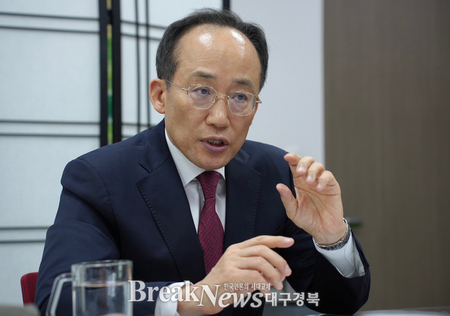
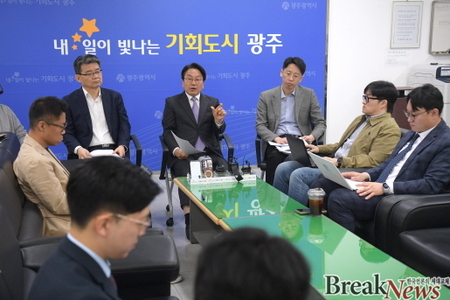
▲ 박형준 시장이 5일 시청 브리핑을 통해 “부산이 전국 최초로 분산 에너지 특구로 선정됐다”고 설명하고 있다. ©배종태 기자 |
[브레이크뉴스=배종태 기자] 부산시가 전국 최초로 분산에너지 특화지역(이하 분산 특구)으로 지정됐다. 시는 이번 지정이 안정적인 전력공급을 넘어 도시 경쟁력 강화와 탄소중립 실현을 견인할 전환점이 될 전망이다.
분산에너지 특구 지정 확정
시는 5일 오전 기후에너지환경부 장관 주재 에너지위원회에서 부산의 분산에너지 특구 지정이 최종 확정됐다고 밝혔다. 시는 지난 4월 정부에 지정을 신청해 5월 실무위원회 심사를 거쳤으며, 부산·전남·경기·제주 등 4개 지자체가 최종 지정됐다. 울산·경북·충남 3곳은 보류됐다.
분산에너지 특구는 에너지를 사용하는 지역 인근에서 전력을 생산·소비하는 ‘에너지 지산지소’ 체계를 구축하기 위한 제도로, 「분산에너지 활성화 특별법」에 따라 지정된다. 특구 내 사업자는 전력시장을 거치지 않고 지역 내 생산 전기를 직접 거래할 수 있다.
‘신산업활성화형’ 모델로 추진
부산이 선정된 특구 유형은 ‘신산업활성화형’으로, 대규모 에너지저장장치(ESS) 설치와 인공지능(AI) 기반 에너지 효율화가 핵심이다. 대상 지역은 에코델타시티, 명지지구, 그리고 강서권 6개 산업단지(명지녹산·미음·신호·화전·생곡·국제물류도시)로 총 49.9㎢(약 1,511만 평)에 달한다.
시 관계자는 “리튬인산철(LFP) 배터리를 활용한 ESS를 통해 계통 안정성과 에너지 가격 경쟁력을 높이고, EMS 및 스마트그리드 기술을 결합해 실시간 전력 관리 체계를 구현할 것”이라고 밝혔다.
전기요금 절감·기업 유치 등 다각적 효과 기대
시는 특구 지정에 따라 ▲산업체 전기요금 절감 ▲전력 설비투자비 절감 ▲재생에너지 출력제한 해소 ▲기업 유치 촉진 등 다각적인 효과를 거둘 것으로 기대하고 있다.
우선, 총 500MWh 규모의 ESS를 설치하면 기업별 전기요금이 최대 8% 절감되고, 부산 전체적으로 연간 157억 원의 절감이 예상된다.
데이터센터·반도체 산업 등은 ESS 구독형 서비스를 통해 약 2,500억 원의 설비투자비 절감이 가능해진다. 재생에너지 과잉공급 조정으로 연 44억 원의 비용 절감 효과가 기대되며, 안정적인 전력공급 기반은 첨단기업 유치에도 도움이 될 전망이다. ESS 500MWh는 약 4만2천 세대의 하루 사용량에 해당하며, 대형 데이터센터 5곳을 운영할 수 있는 규모다.
“에너지 자립·탄소중립 향한 전환점”
박형준 부산시장은 “전국 최초 분산에너지 특화지역 지정은 부산의 산업·도시 경쟁력을 한 단계 높이는 계기가 될 것”이라며 “에너지 자립과 탄소중립을 실현하는 글로벌 친환경 에너지 허브도시로 도약하겠다”고 말했다.
박 시장은 이어 “사직야구장 재건축 국비 299억 원 확보, 금정산 국립공원 지정, 전국체전 2위 달성, 외국인 관광객 300만 명 돌파 임박 등 부산의 성과가 이어지고 있다”며 “BuTX 급행철도 사업의 본격 추진을 비롯해 시민과 함께 미래로 나아가겠다”고 강조했다.
[Here is the full English version of the article] Busan Named Korea’s First Distributed Energy Special Zone**
Busan has become the first city in South Korea to be designated as a Distributed Energy Special Zone, a move the city expects will enhance energy stability, boost urban competitiveness, and accelerate its path toward carbon neutrality.
Busan Confirmed as Special Zone
The city announced on Wednesday that the designation was finalized during the national Energy Committee meeting chaired by the Minister of Climate, Energy and Environment. Busan applied for the designation in April and advanced through the working-level review in May. Four local governments—Busan, Jeonnam, Gyeonggi, and Jeju—were ultimately selected, while decisions for Ulsan, Gyeongbuk, and Chungnam were deferred.
The distributed energy program is designed to promote localized generation and consumption of electricity near demand centers, in line with the government’s “Energy Produced and Consumed Locally” initiative under the Special Act on Promoting Distributed Energy. Businesses within the designated zones will be allowed to trade electricity directly within the region without going through the national power market.
Focus on Smart Industry Activation
Busan’s project is categorized as a “smart industry activation type,” focusing on installing large-scale energy storage systems (ESS) and applying artificial intelligence (AI) for energy efficiency and system optimization.
The targeted areas cover 49.9 square kilometers, including Eco Delta City, Myeongji District, and six industrial complexes in Gangseo District such as Myeongji-Noksan, Mieum, Shinho, Hwajeon, Saenggok, and the International Logistics City.
A city official said, “By utilizing lithium iron phosphate (LFP) batteries for energy storage and integrating energy management systems (EMS) and AI-based smart grid technology, Busan aims to establish a real-time optimized power management model.”
Expected Benefits: Cost Savings and Investment Attraction
The city projects multiple benefits—reduced electricity bills, lower infrastructure investment costs, eased renewable energy curtailment, and stronger corporate attraction.
- Installation of a 500 MWh ESS system is expected to reduce electricity costs by up to 8 percent for individual companies and yield citywide savings of about 15.7 billion won per year.
- Subscription-based ESS services could save advanced industries such as data centers and semiconductor facilities up to 250 billion won in capital investment.
- The system will also help stabilize fluctuating renewable energy supply, producing an estimated 4.4 billion won in annual savings.
The facility’s 500 MWh capacity equals the daily power consumption of about 42,000 households or the electricity required to run five major data centers.
“A Turning Point for Energy Self-Reliance”
Mayor Park Heong-joon said, “Being named the nation’s first Distributed Energy Special Zone marks a significant milestone in strengthening Busan’s industrial and urban competitiveness. This will serve as a springboard for transforming our city into a global, eco-friendly energy hub that realizes both energy self-reliance and carbon neutrality.”
원본 기사 보기:부산브레이크뉴스