|
브레이크뉴스 문홍철 기자= 현대자동차가 국내 주요 운수업체 및 관계 기관과 협력해 수송부문 탈탄소화에 적극 나선다.
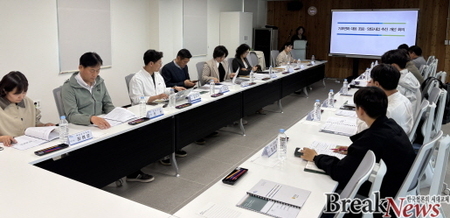
현대차는 7일 현대차 강남대로 사옥에 위치한 UX 스튜디오 서울에서 기후에너지환경부, K1 모빌리티 그룹, 하이넷(수소에너지네트워크), 한국자동차환경협회와 ‘수도권 광역노선 수소버스 도입 확대를 위한 업무협약’을 체결했다고 밝혔다.
이날 협약식에는 현대차 국내판매사업부장 김승찬 전무, 에너지&수소정책담당 신승규 전무, 기후에너지환경부 서영태 녹색전환정책관, K1 모빌리티 오정민 전무, 하이넷 송성호 대표이사, 한국자동차환경협회 정종선 협회장 등 주요 관계자가 참석했다.
이번 업무협약은 현대차와 K1 모빌리티가 수도권 광역노선 내 수소버스를 선제적으로 도입하는 데 뜻을 모아 이뤄졌으며, 2030년까지 K1 모빌리티의 광역노선 차량 총 300 대를 수소버스로 전환하는 것을 목표로 한다.
특히, 협약당사자로 기후에너지환경부, 하이넷, 한국자동차환경협회 등이 함께 참여해 수소 인프라 확충을 적극 지원하고, 2030년까지 전체 광역버스의 25%를 수소버스로 운행하기로 하는 국토교통부 대도시권광역교통위원회의 ‘제2차 대도시권 광역교통기본계획(2021-2040)’ 달성에 힘을 모은다.
현대차는 이번 협약을 바탕으로 K1 모빌리티에 유니버스 수소전기버스를 적기에 공급하고 수소버스 특화 정비 교육을 제공해 운수사의 원활한 수소버스 운용을 지원한다.
유니버스 수소전기버스는 1회 충전 시 최대 960.4km 주행이 가능한 고속형 대형버스로, 전기버스 대비 충전 시간이 짧고 주행 가능 거리가 길어 광역노선 운행에 적합하다.
K1 모빌리티는 이를 공급받아 현재 운영 중인 수도권 광역노선에 우선 도입하고 수소버스 운행 차량을 점진적으로 확대해 나간다.
기후에너지환경부는 수소버스 보급과 수소충전소 구축을 위한 행정·재정적 지원을 제공하고, 하이넷은 한국자동차환경협회와 협력해 수도권 광역노선 거점에 신규 수소충전소 구축 사업을 추진한다.
현대차는 이번 업무협약을 바탕으로 2030년까지 수송부문 온실가스를 2018년 대비 최대 37.8% 감축하는 ‘2030 국가 온실가스 감축목표(NDC)’에 기여해 나갈 것으로 기대하고 있다.
현대차 관계자는 “수도권 광역노선 내 수소버스 보급을 활성화하기 위해 국내 주요 운수업체 및 정부부처와 선도적으로 협력했다”며 “이번 업무협약은 수소충전소 구축 등 수소 인프라 확충에 필요한 협력도 함께 이뤄져 더욱 의미가 크다”고 말했다.
break9874@naver.com
*아래는 위 기사를 '구글 번역'으로 번역한 영문 기사의 [전문]입니다. 구글번역'은 이해도 높이기를 위해 노력하고 있습니다. 영문 번역에 오류가 있을 수 있음을 전제로 합니다.<*The following is [the full text] of the English article translated by 'Google Translate'. 'Google Translate' is working hard to improve understanding. It is assumed that there may be errors in the English translation.>
Hyundai Motor Company plans to convert 300 hydrogen buses to operate on metropolitan routes by 2030.
Hyundai Motor Company is actively working with major domestic transportation companies and related organizations to decarbonize the transportation sector.
Hyundai Motor Company announced on the 7th that it signed a "Business Agreement to Expand the Introduction of Hydrogen Buses on Metropolitan Routes in the Seoul Metropolitan Area" at UX Studio Seoul, located at the Hyundai Motor Company headquarters on Gangnam-daero, with the Ministry of Climate, Energy, and Environment, K1 Mobility Group, Hynet (Hydrogen Energy Network), and the Korea Automobile Environmental Association.
The signing ceremony was attended by key officials, including Kim Seung-chan, Executive Vice President and Head of the Domestic Sales Division at Hyundai Motor Company; Shin Seung-gyu, Executive Vice President of Energy & Hydrogen Policy; Seo Young-tae, Director of Green Transition Policy at the Ministry of Climate, Energy, and Environment; Oh Jeong-min, Executive Vice President of K1 Mobility; Song Seong-ho, CEO of Hynet; and Jeong Jong-seon, Chairman of the Korea Automobile Environmental Association.
This MOU was signed by Hyundai Motor Company and K1 Mobility to proactively introduce hydrogen buses on metropolitan routes in the Seoul metropolitan area. The goal is to convert a total of 300 K1 Mobility vehicles on metropolitan routes to hydrogen buses by 2030.
Parties to the MOU, including the Ministry of Climate, Energy and Environment, Hynet, and the Korea Automobile Environmental Association, will actively support the expansion of hydrogen infrastructure and join forces to achieve the Ministry of Land, Infrastructure and Transport's Metropolitan Area Transportation Committee's "Second Metropolitan Area Transportation Master Plan (2021-2040)" targeting 25% of all metropolitan buses to be hydrogen buses by 2030.
Based on this agreement, Hyundai Motor Company will provide K1 Mobility with the timely delivery of Universe hydrogen electric buses and provide specialized maintenance training for hydrogen buses, supporting the transportation company's smooth operation of hydrogen buses.
The Universe hydrogen-electric bus is a high-speed, large-capacity bus capable of traveling up to 960.4 km on a single charge. Compared to electric buses, its shorter charging times and longer range make it ideal for metropolitan routes.
K1 Mobility will initially deploy the buses on existing metropolitan routes in the Seoul metropolitan area and gradually expand its fleet.
The Ministry of Climate, Energy and Environment will provide administrative and financial support for the distribution of hydrogen buses and the construction of hydrogen charging stations. HyNet will collaborate with the Korea Automobile Environmental Association to build new hydrogen charging stations at key locations along metropolitan routes in the Seoul metropolitan area.
Based on this MOU, Hyundai Motor Company expects to contribute to the 2030 National Greenhouse Gas Reduction Target (NDC), which aims to reduce greenhouse gases in the transportation sector by up to 37.8% by 2030 compared to 2018 levels.
A Hyundai Motor Company official said, “We have proactively collaborated with major domestic transportation companies and government ministries to promote the distribution of hydrogen buses on metropolitan routes,” adding, “This business agreement is even more meaningful because it also includes cooperation necessary to expand hydrogen infrastructure, such as building hydrogen charging stations.”