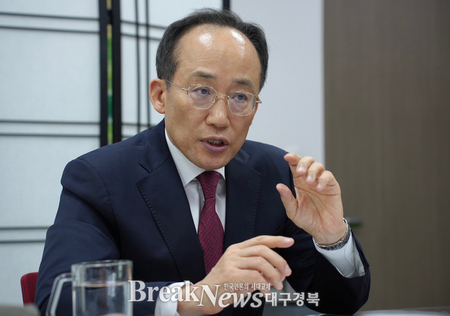
▲ 양기대 전 국회의원(시진)은 북극항로와 유라시아 철도를 결합한 '대한민국의 새로운 북방전략(North Strategy)'을 수립해야 한다고 강하게 제안했다. ©브레이크뉴스 |
양기대 전 국회의원은 북극항로와 유라시아 철도를 결합한 '대한민국의 새로운 북방전략(North Strategy)'을 수립해야 한다고 강하게 제안했다. 양기대 전 국회의원은 지난 11월26일 경기도 의왕 한국교통대학교에서 한국철도기술연구원, 한국교통대, 동아시아고속철도(ETX) 포럼이 공동 주최한 '북극항로와 동아시아 고속철도' 세미나에 참석해 이같이 주장했다. 이날 세미나에는 오재학 전 한국교통연구원장, 진장원 ETX 포럼 상임대표, 김경석 공주대 교수 등 국내 북방 및 철도 전문가들이 자리했다.
'해양'과 '대륙' 실크로드의 통합 연계 강조
양기대 전 국회의원은 인사말과 토론을 통해 북극항로와 유라시아 철도가 상호 보완적인 구조를 가지고 있다고 역설했다.
▲북극항로: 북극권의 에너지·광물을 한국으로 들여오는 '해양 실크로드' 역할.
▲유라시아 철도: 그 에너지와 물자를 동북아로 확산시키는 '대륙 실크로드' 역할.
양기대 전 국회의원은 "북극항로만으로는 내륙 물류에 한계가 있고, 유라시아 철도만으로는 글로벌 항만 네트워크가 부족하다"며, "두 전략이 결합할 때 비로소 대한민국은 진정한 동아시아 물류·에너지 허브가 될 수 있다"고 강조했다.
 ▲ 한국철도기술연구원, 한국교통대, 동아시아고속철도(ETX) 포럼이 공동 주최한 '북극항로와 동아시아 고속철도' 세미나. 항로 비교도./사진 매일신문. |
 ▲한국철도기술연구원, 한국교통대, 동아시아고속철도(ETX) 포럼이 공동 주최한 '북극항로와 동아시아 고속철도' 세미나 장면, 서있는 인물이 양기대 전 의원. ©브레이크뉴스 |
 ▲한국철도기술연구원, 한국교통대, 동아시아고속철도(ETX) 포럼이 공동 주최한 '북극항로와 동아시아 고속철도' 세미나. ©브레이크뉴스 |
 ▲한국철도기술연구원, 한국교통대, 동아시아고속철도(ETX) 포럼이 공동 주최한 '북극항로와 동아시아 고속철도' 세미나. ©브레이크뉴스 |
북방 전문가, '기회와 현실적 제약' 공존 지적
전문가 패널들은 북극항로의 잠재적인 경제 효과와 현실적인 제약을 동시에 제시하며 양 전 의원의 주장에 힘을 실었다. 박정준 철도기술연 책임연구원은 북극항로와 한반도-시베리아 철도 연계의 필요성을 강조하며 물류비 30~40% 절감, 운항기간 2주 이상 단축, 북극자원 개발 촉진 등 경제 효과를 언급했다. 김경석 공주대 교수는 중간 기착항 부족, 연중 4개월 운항이라는 현실적 제약과 함께 유빙 충돌 대비를 위한 선박 비용 증가 등을 지적하며, "경제성 확보를 위한 추가 전략 마련이 필요하다"고 제언했다.
"남-북-러 3각 협력이 北方 전략 성공의 핵심"
양기대 전 국회의원은 이 전략의 성패가 남·북·러 관계 개선에 달렸음을 분명히 했다. 현재 북-러 밀착 상황을 고려할 때, 남·북·러 3각 협력만이 새로운 북방전략을 현실화할 수 있는 유일한 해법이라고 강조했다. 특히 2028년 개통 예정인 강릉∼제진 철도가 남·북·러 철도 연결의 실질적인 기반이 될 것이라고 역설했다. 그는 강릉∼제진 구간이 완성되면 한반도가 세계 물류망의 '섬 구조'를 벗어나 글로벌 물류·에너지 허브로 도약할 새로운 문이 열릴 것이라고 전망했다.
양기대 전 국회의원은 "유라시아 철도 구상과 이재명 정부의 북극항로 전략을 결합해 대한민국 북방 대전략을 만드는 데 앞장을 서 겠다"며 발제를 마무리했다.
*아래는 위 기사를 '구글 번역'으로 번역한 영문 기사의 [전문]입니다. '구글번역'은 이해도 높이기를 위해 노력하고 있습니다. 영문 번역에 오류가 있을 수 있음을 전제로 합니다.<*The following is [the full text] of the English article translated by 'Google Translate'. 'Google Translate' is working hard to improve understanding. It is assumed that there may be errors in the English translation.>
Former National Assemblyman Yang Ki-dae: "Combining the Northern Sea Route and Eurasian Railway: 'New Northern Strategy' Urgently Needed"
Emphasis on trilateral cooperation between South Korea, North Korea, and Russia... "Opening of the Gangneung-Jejin Railway in 2028 will be a turning point"
- Reporter Park Jeong-dae
Former National Assemblyman Yang Ki-dae strongly proposed the establishment of a "New Northern Strategy for South Korea" that combines the Northern Sea Route and the Eurasian Railway. He made this argument on November 26th at the Korea National University of Transport in Uiwang, Gyeonggi Province, at a seminar titled "The Northern Sea Route and East Asian High-Speed Railway," co-hosted by the Korea Railroad Research Institute, Korea National University of Transport, and the East Asia High-Speed Railway (ETX) Forum. The seminar was attended by domestic experts in northern policy and railways, including Oh Jae-hak, former president of the Korea Transport Institute; Jin Jang-won, standing representative of the ETX Forum; and Kim Kyung-seok, professor at Kongju National University.
Emphasizes the Integrated Linkage of the 'Maritime' and 'Continental' Silk Roads
Former National Assemblyman Yang Ki-dae emphasized the complementary nature of the Northern Sea Route and the Eurasian Railway in his opening remarks and discussion.
▲The Northern Sea Route: Acts as a 'Maritime Silk Road' bringing energy and minerals from the Arctic to Korea.
▲The Eurasian Railway: Acts as a 'Continental Silk Road' distributing that energy and materials to Northeast Asia.
Former National Assemblyman Yang Ki-dae emphasized, "The Northern Sea Route alone has limitations in inland logistics, and the Eurasian Railway alone lacks a global port network." He added, "Only when these two strategies are combined can Korea truly become a logistics and energy hub in East Asia."
Northern Expert Points Out the Coexistence of 'Opportunities and Practical Constraints'
The expert panel supported former Assemblyman Yang's argument by simultaneously highlighting the potential economic benefits and practical constraints of the Northern Sea Route. Park Jeong-jun, a senior researcher at the Korea Railroad Research Institute, emphasized the necessity of connecting the Northern Sea Route with the Korean Peninsula-Siberia Railway, citing economic benefits such as a 30-40% reduction in logistics costs, a reduction of more than two weeks in transit time, and the promotion of Arctic resource development. Professor Kim Gyeong-seok of Kongju National University pointed to the lack of intermediate ports of call, the practical constraints of operating only four months of the year, and the increased cost of vessels to prepare for collisions with drift ice, suggesting that "additional strategies are needed to ensure economic feasibility."
"Trilateral Cooperation Among South Korea, North Korea, and Russia is Key to the Success of the Northern Strategy"
Former National Assemblyman Yang Gi-dae made it clear that the success of this strategy hinges on improving relations among South Korea, North Korea, and Russia. Given the current close relationship between North Korea and Russia, he emphasized that trilateral cooperation among South Korea, North Korea, and Russia is the only solution to realize the new Northern Strategy. He particularly emphasized that the Gangneung-Jejin Railway, scheduled to open in 2028, will serve as a practical foundation for connecting the three Koreas, North Korea, and Russia railways. He predicted that the completion of the Gangneung-Jejin section would open a new door for the Korean Peninsula to break free from its "island structure" in the global logistics network and leap forward as a global logistics and energy hub.
Former National Assemblyman Yang Ki-dae concluded his presentation by saying, "I will take the lead in developing South Korea's Northern Grand Strategy by combining the Eurasian Railway Plan with the Lee Jae-myung administration's Northern Sea Route strategy."