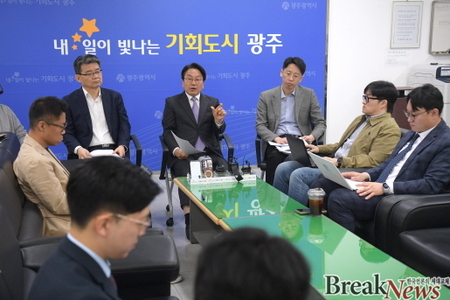
▲ 유정복 인천시장이 21일, '2026년 제1회 청년정책조정위원회'에서 기념촬영을 하고 있다.(사진제공:인천시) © 박상도 기자 |
(브레이크뉴스인천 박상도 기자) 인천시가 22일, 청년정책조정위원회를 개최하고 ‘인천광역시 제2차 청년정책 기본계획(2026~2030)’을 심의·확정했다고 밝혔다.
인천시에 따르면, 이번 기본계획은 제1차 계획 기간 종료에 따라 변화된 정책 환경과 인천 청년 실태조사 결과를 반영해 수립됐으며, 향후 5년간 청년의 삶 전반을 아우르는 중장기 청년정책의 방향과 실행 전략을 담고 있다.
전국적으로 청년인구 감소가 이어지는 가운데, 인천시는 청년 전입이 전출을 꾸준히 상회하며 최근 3년간 약 1만 명 규모의 청년 순유입을 유지하고 있다.
특히, 2014년 이후 감소세를 보이던 청년인구가 2025년 처음으로 증가세로 전환되며 의미 있는 변화를 나타냈다.
이러한 긍정적 변화를 이어가기 위해서는 일자리와 주거비 부담, 마음건강 등 청년들이 체감하는 복합적 어려움에 대해 보다 세심하고 지속적인 정책적 지원이 요구된다.
이에 인천시는 단편적 지원을 넘어 청년의 성장·정착·자립을 체계적으로 뒷받침하는 종합 정책 체계가 필요하다는 판단 아래 제2차 기본계획을 수립했다.
이번 계획은 “청년의 활력으로 미래를 여는 포용도시 인천”을 비전으로 미래 역량과 주도성을 갖춘 성장 지원, 공정한 기회 보장을 위한 포용적 안전망 구축, 정주 여건과 자립 기반 강화를 통한 지속가능한 도시 실현을 목표로 추진된다.
이를 위해 일자리, 교육·직업훈련, 주거, 금융·복지·문화, 참여·기반 등 5대 분야에서 69개 과제를 단계적으로 추진하며, 2030년까지 국비·시비·군·구비를 연계해 총 1조 1,766억 원을 투입할 계획이다.
○ 일자리 분야
일자리 분야에서는 양질의 청년 일자리 환경 조성을 목표로 총 21개 과제(975억 원)를 추진한다.
우선 신규로 추진하는 ‘청년 고용안심 지원사업(청년드림일자리)’은 정규직 채용 기업에는 인건비를, 청년에게는 근속 인센티브를 지원함으로써 지역 기반 일자리 창출과 장기근속을 유도한다.
또한 ‘인천 청년도약기지(취업아카데미)’는 지원대상을 기존 미취업 청년에서 재직 청년까지 확대해 디지털 전환, 전략산업, 리더십 교육을 새롭게 보강하여 청년 역량 강화를 지원한다.
이와 함께 ‘자격증 응시료·면접복장 지원, 재직청년 복지포인트’를 확대하는 한편, ‘청년 프리랜서 지원’을 단계적으로 도입해 다양한 고용 형태를 포괄한다.
아울러 예비–초기–성장 단계별 창업 지원을 통해 청년 창업기업의 지속 성장을 뒷받침할 계획이다.
○ 교육ㆍ직업훈련 분야
교육·직업훈련 분야는 13개 과제(1,558억 원)를 통해 청년의 미래지향적 성장을 지원한다.
신규로 추진되는 ‘인천 청년 갭이어 사업’을 통해 청년의 자기주도적 진로 탐색과 역량 강화를 지원하고, ‘청년 인재 육성사업’과 ‘인천 디지털 미래스쿨’을 통해 미래 산업 대응 역량과 글로벌 경쟁력을 높인다.
아울러 지역혁신중심 대학지원체계(RISE)를 기반으로 전략산업과 연계한 인재 양성 시스템을 구축하고, 화이트바이오·마이스(MICE)·콘텐츠·농어촌 등 지역 산업 맞춤형 실무 인재 양성에 나선다.
○ 주거 분야
주거 분야에서는 8개 과제(4,727억 원)를 통해 다각적인 주거 안전망을 구축한다.
‘아이플러스 집드림(천원주택)’을 중심으로 청년 매입임대주택, 공공임대주택, 인품자립주택 등 공공 주거 정책을 연계해 청년의 주거 안정을 지원하고, 청년월세 지원, 주택임차보증금 이자 지원, 전세보증금반환보증 보증료 지원 등을 통해 주거비 부담을 완화한다.
또한 분산된 정책 정보를 통합하는 청년주거 통합지원 체계를 단계적으로 구축해 주거 정책 접근성을 높인다.
○ 금융·복지·문화 분야
금융·복지·문화 분야는 21개 과제(4,328억 원)를 통해 청년의 삶 전반을 아우르는 수요자 중심 지원을 강화한다.
경제적 자립과 미래 준비를 위해 공공기관 주도의 신뢰 가능한 금융교육 수요에 따라 ‘청년금융교육’을 신규 추진해 자산형성, 채무 관리, 부동산 계약 등 실생활 중심의 재무 상담·교육을 제공하고, 2027년부터는 청년 농어업인을 대상으로 한 적금사업을 도입한다.
재직청년 드림For청년통장은 근무지 요건을 완화해 지원 대상을 확대한다.
또한 예방 중심의 마음건강 지원을 위해 ‘청년마음놀이터’를 새롭게 추진하고, 가족돌봄·고립은둔·자립준비 청년 등 취약청년을 대상으로 한 맞춤형 지원을 통해 정책 사각지대 해소로 촘촘한 안전망을 이어간다.
문화 분야에서는 ‘인천형 청년문화예술패스’를 2026년부터 19~20세로 확대하고, 향후 단계적으로 지원 범위를 넓히며, 청년예술활동지원사업을 통해 창작 활동을 뒷받침한다.
○ 참여·기반 분야
참여·기반 분야는 6개 과제(178억 원)를 통해 청년이 정책의 수혜자를 넘어 주체로 참여할 수 있는 환경을 조성한다.
광역 청년지원센터와 군·구 청년공간 간 연계를 강화하고, 온라인 플랫폼과 오프라인 공간을 연계해 정책 접근성을 높인다.
또한 고교 졸업생과 대학 신입생을 대상으로 한 ‘찾아가는 인천 유스톡톡’을 운영해 정책 인지도와 체감도를 제고한다.
인천시는 5대 분야 정책을 유기적으로 연계해 청년이 인천에서 배우고, 일하고, 정착하며, 참여하는 전 과정을 지원하는 정책 생태계를 구축할 계획이다.
인천시는 이번 기본계획을 통해 청년의 성장과 정착을 도시 경쟁력으로 연결하고, 청년정책을 지속적으로 고도화해 나갈 방침이다.
*아래는 위 기사를 ‘구글 번역’으로 번역한 영문 기사의 [전문]입니다.‘구글번역’은 이해도 높이기를 노력하고 있습니다. 영문 번역에 오류가 있을 수 있음을 전제로 합니다.<*Below is the full text of the English version of the above article, translated using Google Translate. Google Translate strives to improve comprehension. Please understand that there may be errors in the English translation.>
Incheon City Finalizes Second Basic Plan for Youth Policy...Promotes 69 Tasks in 5 Major Areas
-Break News Incheon Park Sang-do Reporter
Incheon City announced on the 22rd that it held a Youth Policy Coordination Committee meeting and reviewed and finalized the "Incheon Metropolitan City Second Basic Plan for Youth Policy (2026-2030)."
According to Incheon City, this basic plan was developed to reflect the changing policy environment following the end of the first plan period and the results of a survey on the state of Incheon's youth. It contains the direction and implementation strategies for mid- to long-term youth policies encompassing the entire lives of young people over the next five years.
Amidst the nationwide decline in the youth population, Incheon City has maintained a net influx of approximately 10,000 youth over the past three years, with the number of young people moving in consistently exceeding the number moving out.
In particular, the youth population, which had been declining since 2014, showed a significant change, turning upward for the first time in 2025.
To sustain these positive changes, more meticulous and sustained policy support is needed to address the complex challenges faced by young people, including job security, housing costs, and mental health.
Consequently, Incheon City established its Second Basic Plan, recognizing the need for a comprehensive policy framework that systematically supports youth growth, settlement, and self-reliance, beyond piecemeal support.
With the vision of "Incheon, an inclusive city that opens the future through the vitality of youth," this plan aims to realize a sustainable city by supporting growth driven by future capabilities and initiative, establishing an inclusive safety net to ensure fair opportunities, and strengthening settlement conditions and the foundation for self-reliance.
To this end, 69 projects will be implemented in phases across five key areas: jobs, education and job training, housing, finance, welfare, and culture, and participation and infrastructure. A total of KRW 1.1766 trillion will be invested by 2030, combining national, city, county, and district funding.
○ Jobs
In the jobs sector, a total of 21 projects (KRW 97.5 billion) will be implemented with the goal of creating a quality job environment for young people.
First, the newly launched "Youth Employment Security Support Project (Youth Dream Jobs)" will support labor costs for companies hiring full-time employees and provide long-term employment incentives for young people. This will encourage local job creation and long-term employment.
Furthermore, the "Incheon Youth Leap Forward Base (Employment Academy)" will expand its support from previously unemployed youth to include employed youth, and will support youth capacity building by adding new training in digital transformation, strategic industries, and leadership.
In addition, the government will expand support for certification exam fees and interview attire, and provide welfare points for employed youth. Furthermore, it will gradually introduce support for youth freelancers to encompass diverse employment types.
Furthermore, it plans to support the sustainable growth of youth startups by providing support across the pre-launch, early-stage, and growth stages.
○ Education and Vocational Training Sector
The education and vocational training sector will support the future-oriented growth of young people through 13 projects (KRW 155.8 billion).
The newly launched "Incheon Youth Gap Year Project" will support self-directed career exploration and capacity building among young people. The "Youth Talent Development Project" and the "Incheon Digital Future School" will enhance future industry readiness and global competitiveness.
Furthermore, based on the Regional Innovation-Oriented University Support System (RISE), the government will establish a talent development system linked to strategic industries and develop practical talent tailored to regional industries such as white bio, MICE, content, and rural communities.
○ Housing Sector
In the housing sector, a multifaceted housing safety net will be established through eight projects (KRW 472.7 billion).
Focusing on the "I-Plus Home Dream (1,000 Won Housing)" initiative, the government will support housing stability for young people by linking public housing policies such as youth purchase rental housing, public rental housing, and Inpum Independent Housing. Housing costs will be alleviated through support for youth monthly rent, housing deposit interest, and jeonse deposit return guarantee fees.
Furthermore, an integrated youth housing support system will be gradually established to integrate fragmented policy information, thereby improving accessibility to housing policies.
○ Finance, Welfare, and Culture Sectors
In the finance, welfare, and culture sectors, demand-oriented support encompassing the entire life cycle of young people will be strengthened through 21 projects (KRW 432.8 billion).
To foster economic independence and future preparation, the government will launch a new "Youth Financial Education" program to address the growing demand for reliable financial education led by public institutions. This program will provide practical financial counseling and education on asset formation, debt management, and real estate contracts. Starting in 2027, a savings program targeting young farmers and fishermen will be introduced.
The Dream For Youth Savings Account, designed for employed youth, will expand eligibility by easing workplace requirements.
Furthermore, the "Youth Mind Playground" program will be newly launched to support preventative mental health. Tailored support for vulnerable youth, including those caring for family members, those living in isolation, and those preparing for independence, will address policy blind spots and maintain a robust safety net.
In the cultural sector, the "Incheon Youth Culture and Arts Pass" will be expanded to include those aged 19-20 starting in 2026. The scope of support will be gradually expanded in the future, and creative activities will be supported through the Youth Arts Activity Support Project.
○ Participation and Infrastructure Sector
The Participation and Infrastructure Sector aims to create an environment where young people can participate as active participants, not just beneficiaries of policies, through six projects (KRW 17.8 billion).
The plan will strengthen connections between regional youth support centers and youth spaces in county and district governments, and enhance policy accessibility by linking online platforms with offline spaces.
Furthermore, the "Incheon Youth Talk Talk" program, targeting high school graduates and college freshmen, will be operated to raise policy awareness and engagement.
Incheon City plans to organically link policies in five key areas to build a policy ecosystem that supports the entire process of youth learning, working, settling in, and participating in Incheon.
Through this master plan, Incheon City aims to link youth growth and settlement with urban competitiveness and continuously advance youth policies.
원본 기사 보기:ebreaknews.com