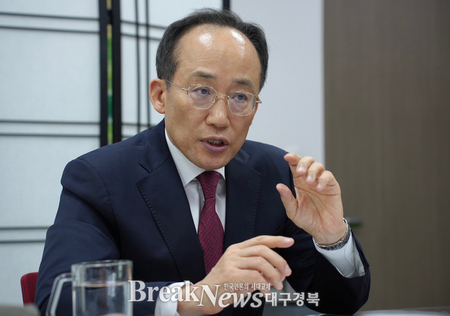
▲ 최은석 국회의원 © 최은석 의원실 |
【브레이크뉴스 대구】진예솔 기자=대구시장 선거판이 빠르게 달아오르고 있다. 현역 국회의원들이 잇따라 출마를 선언하며, 이번 선거는 일찌감치 ‘정치력 대결’ 구도로 굳어지는 분위기다.
누가 더 중앙과 가까운지, 누가 예산과 인맥을 더 많이 쥐고 있는지가 주요 경쟁 요소로 떠올랐다.
이 같은 상황에서 최은석 국회의원은 전혀 다른 언어로 출마를 선언했다. 그는 대구를 ‘부도 직전의 회사’에 비유하며 “정치 선수가 아니라 위기 기업을 살려본 CEO가 필요하다”고 말했다.
본지는 대구시장 출마를 선언한 최 의원과의 인터뷰를 통해, 다수의 현역 의원이 뛰어든 이번 선거에서 그가 어떤 문제의식과 해법을 갖고 있는지 집중적으로 물었다.
초선 의원으로서 정치적 자산이 부족하다는 지적, 기업인 출신 시장에 대한 우려, 행정 조직과의 충돌 가능성 등 최 의원을 둘러싼 쟁점을 정면으로 제기했다. 이는 정책 나열이 아니라, ‘왜 지금 최은석인가’를 검증하기 위한 질문이었다.
“정치는 경력이 아니라 결과로 증명하는 것”
최 의원이 가장 먼저 마주한 질문은 ‘정치적 힘’이었다. 현역 의원 다수가 출마한 상황에서, 초선 의원이 과연 거대 국책사업과 중앙정부 협상을 이끌 수 있느냐는 의문이다.
이에 대해 그는 “정치적 힘은 선수 경력이나 인맥에서 나오는 게 아니다”고 말했다. “실력과 명분이 있을 때 비로소 생기는 것”이라는 설명이다.
그는 기획재정부 장관 인사청문회를 사례로 들었다. “거짓과 꼼수로 일관한 후보자의 허점을 끝까지 파고들었고, 결국 지명 철회라는 결과를 만들어냈다”며 “정치적 공세를 견뎌내는 맷집과 돌파력은 이미 증명됐다”고 강조했다.
최 의원의 화법은 분명했다. 중앙 정치 경험의 ‘양’이 아니라, 결정적 순간에 결과를 만들어내는 ‘질’을 강조하는 방식이다. 그는 “지금 대구에 필요한 협상력은 여의도식 정치 셈법이 아니라, 글로벌 시장에서 수조 원대 거래를 성사시켜 온 비즈니스 협상력”이라고 말했다.
“대구 경제, 이미 위기 신호가 울리고 있다”
최 의원의 문제의식은 경제 진단에서 더욱 분명해진다. 그는 대구의 현 상황을 기업 경영에 빗대 설명했다.
“기업으로 치면 이미 재무제표가 위험 신호를 보내고 있다. 1인당 지역내총생산은 수십 년째 최하위권이고, 산업 생산·수출·소비 등 실물 지표가 모두 바닥이다.”
그는 단순히 재정이 부족한 문제가 아니라고 강조했다. “돈이 없는 게 아니라 돈을 벌어올 성장 엔진이 꺼져 있다는 것이 핵심”이라는 것이다.
기존 산업은 노후화됐고, 새로운 먹거리는 만들어지지 않았다. 그 결과 청년 인구가 빠져나가고 소비와 투자도 함께 줄어드는 구조적 악순환이 이어지고 있다는 진단이다.
“위기의 기업이 혁신 없이 빚으로만 연명하면 결국 부도나듯, 대구도 체질을 바꾸지 않으면 지방 소멸이라는 파산 선고를 피하기 어렵다”고 말했다.
‘803 대구 마스터플랜’, 관료 행정과의 결별 선언
최 의원이 제시한 해법이 바로 ‘803 대구 마스터플랜’이다. 기존 시정에서 추진해 온 산업 육성 정책과 큰 틀에서 비슷해 보인다는 지적에 대해 그는 “목표가 아니라 실행의 방정식이 다르다”고 선을 그었다.
그는 관료적 정책의 한계를 “예산을 얼마나 확보해 공평하게 나누느냐에 머문 방식”이라고 규정했다. 반면 자신의 접근은 “시장을 창출하고 기업이 실제로 돈을 벌게 만드는 것”에 맞춰져 있다고 설명했다.
‘8’은 대구 경제를 떠받칠 8대 핵심 산업을 의미한다. 로봇과 AI 같은 신산업뿐 아니라 섬유·기계 등 대구의 전통 산업에 신기술을 접목해 고부가가치 산업으로 재편하겠다는 구상이다.
그는 “비비고를 단순한 만두가 아니라 글로벌 K-푸드로 만든 것처럼, 낡은 산업에 경영의 디테일을 더해 완전히 새로운 먹거리로 재탄생시키겠다”고 말했다. 기존 산업을 버리는 것이 아니라 업그레이드하겠다는 점을 거듭 강조했다.
‘0’은 시민의 일상 부담을 줄이겠다는 의미다. 응급 상황 10분 내 대응 체계 구축, 사교육비 부담 완화 등 ‘살기 좋은 도시’의 기본 조건을 갖추겠다는 구상이다.
‘3’은 분명한 성과 목표다. 혁신 기업 300개 육성, 매출 1조 원 기업 3곳 조기 배출을 통해 대구를 다시 대한민국 3대 도시로 복귀시키겠다는 약속이다.
“지원금으로는 서민 경제 못 살린다”
기업인 출신이라는 이력은 서민 경제 이해 부족이라는 비판으로 이어진다. 이에 대해 최 의원은 자신의 출발점을 꺼냈다.
“이불 보따리 하나 들고 상경한 평범한 신입사원으로 사회생활을 시작했다. 신혼도 반지하 월세방에서 시작했다.”
그는 자신이 밑바닥을 경험해 왔기에 장사의 본질을 누구보다 잘 안다고 말했다.
“장사는 결국 손님이 있어야 된다. 지금 소상공인이 힘든 이유는 노력이 부족해서가 아니라 손님이 대구를 떠났기 때문”이라는 진단이다.
최 의원은 지원금 중심의 정책을 ‘임시 처방’으로 규정했다. “손님이 없는데 지원금 몇 푼으로 상권이 살아나겠느냐”며 “양질의 일자리를 만들어 구매력을 회복시키는 것이 근본 해법”이라고 강조했다.
신공항·행정통합 “국가가 책임져야 할 문제”
대구·경북 신공항 재원 조달 문제에 대해서는 현행 ‘기부 대 양여’ 방식의 한계를 지적했다.
“지자체가 빚을 내 군 공항을 지어주라는 구조는 기업 논리로도 말이 안 된다”며 “국가 안보 시설은 국가가 책임져야 한다”고 말했다.
행정통합에 대해서도 원칙적 찬성 입장을 밝혔다. 다만 “형식적인 통합이 아니라 실질적인 경제 통합이 핵심”이라며 “재정 지원, 국세 이양, 인허가 권한 이전 등 확실한 자산을 먼저 확보해야 한다”고 강조했다.
“정치 구호가 아니라 결과로 평가받겠다”
최 의원은 인터뷰 전반을 관통하는 메시지를 분명히 했다. 대구의 문제는 정치 구호가 아니라 ‘먹고사는 문제’라는 것이다.
그는 “성과와 실행력으로 검증된 리더십이 필요한 시점”이라며 “정치적 수사가 아니라 결과로 책임지는 시장, 멈춰 선 대구의 성장 엔진을 다시 돌리는 시장이 되겠다”고 말했다.
최 의원은 이번 대구시장 선거의 의미를 ‘누가 더 정치적인가’라는 단순한 경쟁이 아니라 ‘누가 대구의 미래를 설계할 수 있는가’라는 본질적인 물음으로 전환하고 있다. 대구를 하나의 조직, 즉 기업으로 바라보고 체질 개선을 강조하는 그의 시각은 익숙함과 동시에 신선함을 전하는 부분이다.
관심이 쏠리는 대목은 최 의원의 이러한 진단과 해법이 실제로 표심으로 이어질 수 있느냐다. 정치적 경력보다는 결과를 앞세우는 그의 접근이 유권자들에게 어떤 울림을 줄지, 또한 다수의 현역 의원들이 만들어온 기존 선거 구도에 어떤 변화를 불러올지 이번 선거에서 중요한 관전 포인트로 떠오르고 있다.
<구글 번역으로 번역한 영문 기사의 전문 입니다. 번역에 오류가 있을 수 있음을 밝힙니다.>
The Daegu mayoral election is heating up rapidly. With incumbent lawmakers declaring their candidacies one after another, the race is quickly becoming a contest of political power.
Key factors in the competition are who is closest to the central government and who holds the most control over the budget and connections.
Against this backdrop, National Assemblyman Choi Eun-seok has announced his candidacy in a completely different language. He likened Daegu to a "company on the verge of bankruptcy," saying, "We need a CEO with experience reviving troubled businesses, not a political player."
In an interview with Representative Choi, who has declared his candidacy for Daegu mayor, this magazine focused on the issues he faces and his solutions in this election, which is currently being contested by numerous incumbent lawmakers.
We directly addressed the issues surrounding Representative Choi, including his perceived lack of political capital as a first-term lawmaker, concerns about a mayor with a business background, and the potential for conflict with the administrative structure. These questions were not intended to list policies, but rather to examine the question, "Why Choi Eun-seok now?"
"Politics is not about experience, but about results."
The first question Representative Choi faced was "political power." With many incumbent lawmakers running, the question was whether a first-term lawmaker could truly lead large-scale national projects and central government negotiations.
He responded, "Political power doesn't come from athletic experience or connections." He explained, "It only comes from ability and a just cause."
He cited the confirmation hearing for the Minister of Strategy and Finance as an example. "We thoroughly exploited the vulnerabilities of a candidate who consistently resorted to lies and tricks, ultimately resulting in the withdrawal of the nomination." He emphasized, "The resilience and ability to withstand political attacks have already been proven."
Representative Choi's approach was clear. He emphasized the "quality" of central political experience, not the "quantity," but the "quality" of achieving results at crucial moments. He stated, "The negotiating power Daegu needs now is not Yeouido-style political calculations, but business negotiation skills that have secured trillions of won in global transactions."
"Daegu's economy is already showing signs of crisis."
Councilman Choi's critical assessment of the situation becomes even clearer. He compared Daegu's current situation to corporate management.
"If we were to compare it to a company, its financial statements are already sending warning signals. Per capita GDP has been at the bottom for decades, and real indicators like industrial production, exports, and consumption are all at rock bottom."
He emphasized that the problem isn't simply a lack of finances. "The key is not a lack of money, but the stalling of the growth engine that generates revenue."
Existing industries have become outdated, and new growth engines have failed to emerge. As a result, he diagnosed, a vicious cycle of youth exodus, coupled with a decline in consumption and investment, is continuing.
"Just as a company in crisis, surviving solely on debt without innovation, will ultimately go bankrupt, Daegu will face the prospect of regional extinction if it doesn't change its structure."
The "803 Daegu Master Plan" Declares a Break with Bureaucracy
Councilman Choi's proposed solution is the "803 Daegu Master Plan." Responding to criticism that its broad framework resembles the industrial development policies pursued by the previous city administration, he drew a line, saying, "It's not the goals, but the equation for implementation that is different."
He defined the limitations of bureaucratic policies as "a method that focuses solely on securing a certain amount of budget and distributing it fairly." In contrast, he explained that his approach is focused on "creating markets and enabling companies to actually make money."
The "8" represents eight core industries that will underpin Daegu's economy. The plan aims to transform Daegu's traditional industries, such as textiles and machinery, into high-value-added industries by incorporating new technologies, as well as emerging industries like robotics and AI.
He stated, "Just as Bibigo transformed simple dumplings into a global K-food, we will infuse management details into old industries to completely regenerate them into new food products." He repeatedly emphasized that he would upgrade, not abandon, existing industries.
The "0" signifies the intention to reduce the burden on citizens' daily lives. This plan aims to establish the basic conditions for a "livable city," including establishing a 10-minute emergency response system and alleviating the burden of private education costs.
The "3" represents a clear performance goal. It represents a pledge to restore Daegu to its status as one of South Korea's top three cities by fostering 300 innovative companies and quickly establishing three companies with sales of 1 trillion won.
"Subsidies won't revitalize the economy for ordinary people."
His background as a businessman has led to criticism that he lacks understanding of the economy for ordinary people. In response, Rep. Choi shared his own origins.
"I started my career as an ordinary new employee, coming to Seoul with just a bundle of blankets. My honeymoon began in a semi-basement rental."
He stated that having experienced the rock bottom, he understands the essence of business better than anyone else.
"Business ultimately depends on customers. The reason small business owners are struggling now is not because of a lack of effort, but because customers have left Daegu," he concluded.
Representative Choi characterized the subsidy-centered policy as a "temporary measure." He emphasized, "How can a few subsidies revive a commercial district when there are no customers?" He added, "The fundamental solution is to restore purchasing power by creating quality jobs."
New Airport and Administrative Integration: "The State Must Take Responsibility"
Regarding the issue of financing the new Daegu-Gyeongbuk airport, he pointed out the limitations of the current "donation vs. grant" approach.
"The structure of asking local governments to borrow money to build military airports makes no sense, even from a business perspective," he said. "National security facilities should be the state's responsibility."
He also expressed his principled support for administrative integration. However, he emphasized, "Substantial economic integration, not mere formality, is key. We must first secure solid assets, including financial support, tax devolution, and the transfer of licensing authority."
"I will be judged by results, not political slogans."
Representative Choi made clear his message throughout the interview: Daegu's problem isn't political slogans, but rather a matter of "making a living."
He stated, "We need leadership proven through results and execution." He added, "I will be a mayor who takes responsibility for results, not political rhetoric, and who will revitalize Daegu's stagnant growth engine."
Representative Choi is shifting the meaning of this Daegu mayoral election from a simple competition of "who is more political?" to a fundamental question: "who can shape Daegu's future?" His perspective, viewing Daegu as an organization, or a business, and emphasizing structural reform, is both familiar and refreshing.
The key question is whether Representative Choi's diagnosis and solutions can actually translate into voter support. How his approach, prioritizing results over political experience, will resonate with voters and how it will change the existing electoral landscape, shaped by the majority of incumbent lawmakers, is emerging as a key point of interest in this election.
원본 기사 보기:브레이크뉴스 대구경북