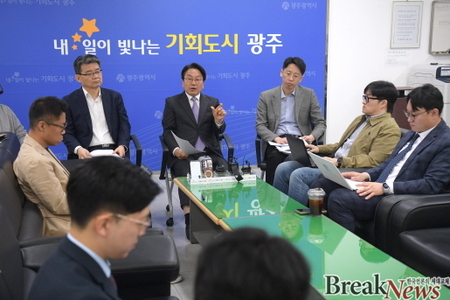
브레이크뉴스 김충열 정치전문기자 = 2026년 2월 23일, 헌법재판소의 헌법불합치 결정 이후 12년 동안 방치되었던 국민투표법 개정안이 국회 행정안전위원회를 통과했다. 이로써 오는 6·3 지방선거와 동시에 헌법 개정 국민투표를 실시하기 위한 법적 선결 조건이 마련됐다.
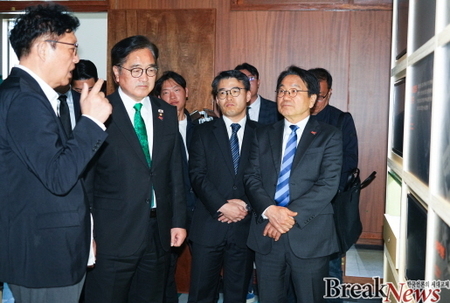
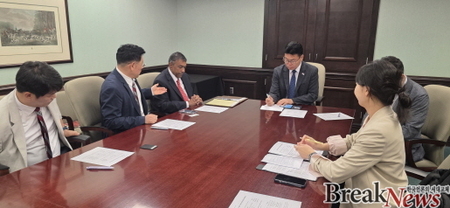
 ▲ 정치권 관계자는 “국민투표법이 본회의를 통과할 경우, 지방선거와 맞물린 5·18 정신 헌법 전문 수록 등 개헌 논의가 급물살을 탈 것”이라고 전망했다. © 사진, SBS뉴스 캡춰/ 김충열 정치전문기자 |
■ 12년 입법 공백 해소… 재외국민 참정권 회복
이번 개정안은 2014년 헌법재판소가 주민등록이나 국내 거소 신고가 되지 않은 재외국민의 투표권을 제한한 현행법에 대해 ‘헌법불합치’ 결정을 내린 지 약 12년 만에 이뤄진 조치다.
개정안의 핵심 내용은 ▲재외투표인 명부 등재자의 국민투표권 보장 ▲투표 가능 연령을 현행 19세에서 공직선거법과 동일한 18세로 하향 ▲사전투표·거소투표·선상투표 도입 등이다. 그동안 국민투표법은 헌재가 정한 개정 시한(2015년)을 넘기며 사실상 효력이 상실된 상태로 방치되어 왔다.
■ 우원식 의장 “시간 없다” vs 국민의힘 “개헌용 날치기”
국민투표법 개정은 정치권에서 논의 중인 ‘개헌’의 기술적 토대다. 우원식 국회의장은 6월 지방선거와 개헌 투표 병행을 주장하며 “최소한의 대비를 해야 한다”고 법 개정을 강력히 압박해 왔다.
반면 국민의힘은 절차상 문제를 제기하며 표결에 불참했다. 야당 간사인 서범수 의원은 “법안심사소위와 공청회도 거치지 않은 일방적 처리”라며 “국민투표법 개정은 결국 개헌이라는 블랙홀로 빠져들게 할 것”이라고 경고했다.
이에 민주당 간사인 윤건영 의원은 “과거 여당 시절 즉각 개정을 외치던 분들이 이제 와서 반대하는 것은 이해하기 어렵다”며 “참정권 제한을 해소하는 것이 국회의원의 본분”이라고 맞받았다.
민주당 소속인 신정훈 행안위원장은 “국민의힘이 여야 간 협의를 통해 또 다른 의사 일정을 찾겠다는 입장도 아니지 않나”라며 국민투표법 개정안을 전체회의에 회부했다. 신 위원장은 “우 의장이 행안위 위원장과 여야 간사를 불러서 중재할 때마다 국힘은 회의와 논의 자체를 거부했다”며 “여당이 밀어붙이는 것처럼 음모론을 얘기하는 건 전혀 가당치 않다”라고 비판했다. 이에 따라 국민의힘 의원들이 불참한 가운데 민주당 의원들 중심으로 표결이 이뤄져 법안이 가결됐다.
■ 24일 본회의 상정 유력… 입법 전쟁 여야 격돌
민주당은 오는 24일 본회의에서 국민투표법 개정안을 포함해 아동수당법, 상법 개정안, 사법개혁 법안 등을 일괄 처리할 계획이다. 국민의힘이 본회의 소집 자체를 거부하고 있어, 2월 임시국회 막판 여야 간의 물리적·정치적 충돌이 최고조에 달할 것으로 보인다.
정치권 관계자는 “국민투표법이 본회의를 통과할 경우, 지방선거와 맞물린 5·18 정신 헌법 전문 수록 등 개헌 논의가 급물살을 탈 것”이라고 전망했다.
■ 5·18 민주화운동 정신 ‘헌법 전문’ 수록, 원포인트 개헌...'6·3 지방선거' 동시 실시?
특히 5·18 민주화운동 정신 ‘헌법 전문’ 수록은 이재명 정부와 정청래 당대표가 최우선 과제로 꼽는 사안이다.
이번 개헌안의 주요 내용은 현행 헌법 전문에 명시된 "3·1운동으로 건립된 대한민국임시정부의 법통과 불의에 항거한 4·19민주이념을 계승하고"라는 문구 뒤에 '5·18 민주화운동'을 추가하는 것이다. 이는 5·18 정신을 국가의 근간이 되는 헌법적 가치로 격상시켜, 역사 왜곡을 방지하고 민주주의의 정통성을 확립하겠다는 취지이다. 이 점은 여야 간의 이견이 가장 적은 부분이라 '원포인트 개헌'의 1순위 후보로 거론되고 있다.
또한 권력구조 개편은 ‘대통령 5년 단임제’ → ‘4년 중임제’로의 개헌은 1987년 체제 이후 40년 가까이 유지된 현행 권력구조를 시대 변화에 맞게 바꾸자는 논의다.
현재 정청래 당대표는 오는 6월 지방선거와 함께 개헌 국민투표를 실시하자는 '원포인트 개헌' 전략을 밀어붙이고 있다. 만약 이것이 성사된다면, 1987년 이후 처음으로 국민의 손으로 직접 헌법 문구를 바꾸는 역사적 장면이 연출될 것으로 전망된다.
특별히 본지는 최근 22 일자 기사에서도 “국회가 2월 안에 국민투표법을 개정하지 못하면 국민투표 절차상(국회 의결 → 국민투표 → 발효) 6·3 지방선거와 개헌 국민투표를 동시에 치르는 것은 사실상 불가능해진다. 과연 국회가 6일 밖에 남지 않은 시간 내에 개헌을 이뤄낼 수 있을까? 우리 국민 68.3%가 개헌에 찬성한다는 국민 여론을 국회는 무시해선 안된다.”며, “국회가 시간이 없어서 국민 절대다수의 여론을 묵살하는 것은 직무유기이다.”고 비판하며 개헌을 촉구한바 있다. hpf21@naver.com
*아래는 위 기사를'구글 번역'으로 번역한 영문 기사의[전문]입니다. '구글번역'은 이해도 높이기를 위해 노력하고 있습니다.영문 번역에 오류가 있을 수 있음을 전제로 합니다.*The following is [the full text] of the English article translated by 'Google Translate'. 'Google Translate' is working hard to improve understanding. It is assumed that there may be errors in the English translation.
The Democratic Party-led Public Administration and Security Committee passes the National Referendum Act, the first step toward constitutional amendment, making the June 3 local elections a likely referendum on constitutional amendments.
Guaranteeing voting rights for overseas Koreans and lowering the voting age to 18… People Power Party protests, calling it a “black hole” for constitutional amendments.
Chairman Woo Won-sik: “Local elections and constitutional amendments must be carried out in parallel”… Expected to be tabled in the plenary session on the 24th.
Break News, Political Reporter Kim Choong-Lyoul = On February 23, 2026, the National Assembly Public Administration and Security Committee passed the National Referendum Act amendment, which had been in limbo for 12 years since the Constitutional Court ruled it unconstitutional. This establishes the legal prerequisites for holding a national referendum on constitutional amendments concurrently with the June 3 local elections.
■ Closing a 12-year legislative vacuum… Restoring Voting Rights for Overseas Koreans
This amendment comes approximately 12 years after the Constitutional Court ruled in 2014 that the current law, which restricted the voting rights of overseas Koreans without a registered residence or domestic residence, was unconstitutional.
The key provisions of the amendment include: guaranteeing the right to vote for overseas voters listed on the voting register; lowering the voting age from 19 to 18, the same as the Public Official Election Act; and introducing early voting, absentee voting, and shipboard voting. The National Referendum Act has been effectively invalidated, having passed the 2015 deadline set by the Constitutional Court for revision.
■ Speaker Woo Won-sik: "There's No Time" vs. People Power Party: "A Hurry-up for a Constitutional Amendment"
The amendment to the National Referendum Act is the technical foundation for the "constitutional amendment" currently being discussed in the political world. National Assembly Speaker Woo Won-shik has been strongly pressuring for revisions to the law, insisting that the June local elections and the constitutional amendment vote be held concurrently, stating, "We must make the bare minimum."
In contrast, the People Power Party boycotted the vote, raising procedural issues. Opposition floor leader Seo Beom-soo warned, "This is a unilateral measure that has not even gone through the legislative review subcommittee or public hearings," and that "the revision of the National Referendum Act will ultimately lead us into the black hole of constitutional amendment."
Democratic Party floor leader Yoon Kun-young countered, "It's difficult to understand why those who once called for immediate revision during the ruling party are now opposing it." He added, "Removing restrictions on voting rights is the duty of a National Assembly member."
Shin Jeong-hoon, chairman of the Public Administration and Security Committee and a member of the Democratic Party, stated, "The People Power Party is not even willing to seek another agenda through bipartisan consultations," and referred the revision to the plenary session. Chairman Shin criticized, "Every time Speaker Woo summoned the chair of the Public Administration and Security Committee and the floor leaders of the ruling and opposition parties to mediate, the People Power Party refused to even participate in the meeting or discussion. It's completely inappropriate to peddle conspiracy theories as if the ruling party is pushing them." Consequently, the bill was voted on by Democratic Party lawmakers, with the People Power Party lawmakers absent, and passed.
■ Likely to be submitted to the plenary session on the 24th… Ruling and opposition parties clash in legislative battle
The Democratic Party plans to pass the National Referendum Act amendment, the Child Allowance Act, the Commercial Act amendment, and the Judicial Reform Bill en masse at the plenary session on the 24th. With the People Power Party refusing to convene the plenary session itself, physical and political clashes between the ruling and opposition parties are expected to reach a peak in the final days of the February extraordinary session.
A political insider predicted, "If the National Referendum Act passes the plenary session, discussions on constitutional amendments, including the inclusion of the May 18th spirit in the Constitution, will gain momentum, coinciding with the local elections."
■ Incorporating the Spirit of the May 18th Democratization Movement into the Preamble, a One-Point Constitutional Amendment... Simultaneous Holding of the June 3rd Local Elections?
Incorporating the spirit of the May 18th Democratization Movement into the Preamble is a top priority for the Lee Jae-myung administration and Democratic Party leader Chung Cheong-rae.
The key content of this constitutional amendment is the addition of the "May 18th Democratization Movement" to the phrase "Inheriting the legitimacy of the Provisional Government of the Republic of Korea established by the March 1st Movement and the democratic ideology of the April 19th Revolution that resisted injustice" in the current Preamble. This elevates the spirit of the May 18th Movement to a fundamental constitutional value, thereby preventing historical distortion and establishing the legitimacy of democracy. This is the area where the ruling and opposition parties share the least disagreement, making it a top candidate for a "one-point constitutional amendment."
Furthermore, the restructuring of the power structure, which involves a constitutional amendment from a single five-year presidential term to a four-year term, is a discussion about adapting the current power structure, which has been in place for nearly 40 years since the 1987 regime, to a changing era.
Currently, Party leader Chung Cheong-rae is pushing a "one-point constitutional amendment" strategy, which calls for a national referendum on constitutional amendments alongside the local elections in June. If this is successful, it is expected to be the first time since 1987 that the people have directly changed the text of the Constitution.
In particular, in a recent article on the 22nd, this newspaper criticized, "If the National Assembly fails to revise the National Referendum Act within February, it will become virtually impossible to hold the June 3 local elections and the national referendum on constitutional amendment simultaneously due to the national referendum procedure (National Assembly approval → national referendum → enforcement). Can the National Assembly really achieve a constitutional amendment in the remaining six days? The National Assembly must not ignore public opinion, which shows that 68.3% of our citizens support a constitutional amendment." The newspaper also urged constitutional amendment, criticizing, "It is dereliction of duty for the National Assembly to ignore the public opinion of the absolute majority due to a lack of time." hpf21@naver.com