▲ 이궁 복원 이미지 조감도 © |
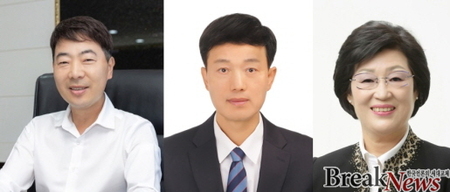
 ▲필자/ 정성태(시인/칼럼니스트) ©브레이크뉴스 |
*아래는 위 기사를 '구글 번역'으로 번역한 영문 기사의 [전문]입니다. '구글번역'은 이해도 높이기를 위해 노력하고 있습니다. 영문 번역에 오류가 있을 수 있음을 전제로 합니다.<*The following is [the full text] of the English article translated by 'Google Translate'. 'Google Translate' is working hard to improve understanding. It is assumed that there may be errors in the English translation.>
Byun Ji-ryang, Preliminary Candidate for Chuncheon Mayor: 'Redesigning Chuncheon's Old Downtown for the Next 100 Years'
- Columnist Jung Sung-tae
Byun Ji-ryang, a preliminary candidate for the People Power Party running for the Chuncheon mayoral position, presented a blueprint for dramatically improving Chuncheon's future on the 15th via his Facebook page. He posted a message titled "Redesigning Chuncheon's Future for the Next 100 Years by Revitalizing the Old Downtown via the Gangwon Provincial Office Relocation Site and the Restoration of the Royal Palace."
Preliminary Candidate Byun stated, "The former provincial office site that will remain after the relocation is not merely empty land," adding, "This is a core space where Chuncheon's history, administration, and symbolism are condensed." He emphasized, "The future of Chuncheon's old downtown depends on how this site is utilized," adding, "I will not approach the former provincial government site with a simple logic of development, but will revitalize Chuncheon's old downtown by transforming it into a historical, cultural, and tourism hub centered on the restoration of the Secondary Palace."
The full text is below.
1. Why Restore the Secondary Palace?
The restoration of the Secondary Palace is not merely a project to rebuild an old building. It is an urban regeneration project that reclaims Chuncheon's historical identity and breathes new life into the old downtown. Currently, the old downtown is facing a triple crisis: weakening commercial districts, declining floating populations, and diminishing cultural centrality. Furthermore, as urban expansion centered on apartments and new downtown areas continues, the old downtown is gradually losing its vitality.
In this situation, what is needed is not yet another uniform building, but a space that embodies Chuncheon's unique history and symbolism. The restoration of the Secondary Palace is the most powerful card that can make Chuncheon a city distinct from others. This is because it allows us to simultaneously revitalize history and culture, tourism and commercial districts, and civic pride.
2. Basic Principles for Utilizing the Former Provincial Government Site
The former provincial government site must be utilized under three principles. First is the restoration of historical significance. It must be a symbolic space that demonstrates Chuncheon's identity. Second is the revitalization of the downtown commercial district. It must not be a space visited solely by tourists, but rather a structure that revitalizes nearby shops, markets, and the alley economy. Third is the creation of a citizen-friendly cultural space. It must be a living space where people walk, rest, experience, and consume, rather than just a space to look at.
3. Key Strategies to be Pursued Alongside the Restoration of the Secondary Palace
A. Restoration of the Main Body of the Secondary Palace and Creation of a Historical and Cultural Park: A restoration project that preserves the historical significance and symbolism of the Secondary Palace must be pursued on the former provincial government site, and the surrounding area must be developed into a large-scale historical and cultural park. Rather than a simple architectural restoration, traditional gardens, historical walking paths, night lighting, and resting areas must be created to make it a space where citizens and tourists can linger. This place must serve as a space for history education and strolling during the day, and at night, become a nighttime cultural landmark where lighting and performances harmonize. It must become Chuncheon's representative photo spot, walking destination, and starting point for tourism.
B. Establishment of a Pedestrian Axis Directly Connected to the Old Downtown Commercial District: The restoration of the Secondary Palace alone will not revitalize the old downtown. What is crucial is that the restored area connects Myeong-dong, Jungang Market, Yukrimgogae, the Underground Shopping Center, and the Yoseon-dong area into a single lifestyle and tourism route. Therefore, a pedestrian-friendly street must be created that extends from the Secondary Palace site to the core commercial district of the old downtown. Cafes, restaurants, souvenir shops, workshops, exhibition spaces, and youth shops must be naturally connected as one walks along the path. The city must transform from one where people merely pass by in cars into one where they walk slowly and consume.
C. Establishment of a Chuncheon-style Historical and Cultural Tourism Belt: The restoration of the Secondary Palace should not be an independent project, but must be connected to other historical and cultural resources in Chuncheon. We must create a Chuncheon historical and cultural tourism belt by linking the historical and cultural resources of Jungdo, the Soyang River, Uiam Lake, Chuncheon Myeongdong, Yukrimgogae, and Gongjicheon. Chuncheon should not be a city where tourists visit just to eat dakgalbi and leave, but a city where they stay all day to see, walk, experience, and spend. The restoration of the Igung (secondary palace) can serve as both the starting point and the central axis for this.
D. Creation of a Complex Cultural Space Combining Tradition and Modernity: The area around the Igung must not be limited to merely a site for viewing historical remains. A traditional culture exhibition hall, a Chuncheon history museum, Hanbok experience areas, traditional performance venues, small outdoor stages, book cafes, and cultural goods shops must be arranged together. Only then will a constant flow of people be generated. Furthermore, exhibitions, flea markets, traditional culture experiences, and performance programs must be regularly operated to allow young artists and local cultural planners to participate. The Igung must serve as a legacy of the past while simultaneously becoming a stage for future-oriented cultural industries.
E. Strategy for Revitalizing the Night Economy: For the old downtown area to come alive, people must be active even at night. We must create an old downtown area that attracts visitors even at night by introducing nightscape lighting, media art, traditional lantern festivals, outdoor performances, and weekend night markets into the restored Igung Palace space. Chuncheon is a city beautiful for its lakes, nightscapes, and changing seasons. By utilizing these elements to create a dual structure of "history by day, culture by night," the city can transform into a destination for extended stays.
4. Substantive Effects of Revitalizing the Old Downtown Economy
The restoration of the Igung Palace is not merely a visually appealing symbolic project; it must generate tangible economic effects. First, increased visitor numbers will boost sales in surrounding commercial districts. Second, local small businesses—such as cafes, restaurants, accommodations, souvenir shops, and workshops—will thrive. Third, it will provide a platform for local artists and young entrepreneurs. Fourth, the value of Chuncheon's city brand will be enhanced. Fifth, citizens' expectations regarding real estate and the living environment in the old downtown will be revived. In short, the restoration of the Igung Palace is not merely the restoration of a single building, but a project that revives the economy and pride of the entire old downtown area.
5. An Implementation Method Tangibly Perceived by Citizens
This project must not be pushed through unilaterally by the administration. It must be accompanied by public deliberation, expert consultation, the collection of opinions from merchant associations and residents, and the participation of the history and culture community. Only then will a genuine Chuncheon-style model emerge. Furthermore, it must be implemented in stages. Stage 1 involves establishing a master plan and reviewing historical significance. Stage 2 involves site preparation and the commencement of core restoration projects. Stage 3 involves promoting a cultural park, pedestrian axes, and projects linking surrounding commercial districts. Stage 4 involves establishing festival, tourism, and cultural industry programs. Only by doing so can it become a sustainable urban regeneration project, rather than a mere showpiece.
6. Final Vision
The site where the Provincial Office was relocated could simply be left empty, or filled with simple administrative facilities or revenue-generating buildings. However, doing so will not revitalize Chuncheon's original downtown. What Chuncheon needs is a symbolic project that revives the city's memory, restores civic pride, and makes the downtown economy thrive again.
** I will transform the former Provincial Office site into the foundation for the restoration of the Royal Palace, the heart of Chuncheon’s history and culture, and the starting point for the revitalization of the old downtown. Through the restoration of the Royal Palace, I will transform Chuncheon into a city where history and culture come alive, a city where people gather again, and a city where the old downtown smiles once more.
* Author: Jung Sung-tae (Poet/Columnist)