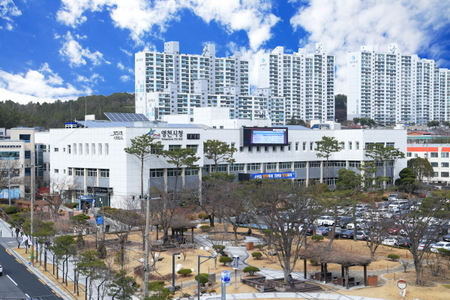
▲ 홍제역(서대문구 홍제동 298-9 일대), 홍제천 복원 © 서울시 |
브레이크뉴스 문홍철 기자= 서울시내 325개 모든 역세권이 단순한 교통 경유지에서 벗어나 일터와 주거, 여가가 어우러진 ‘미래형 생활거점’으로 전격 탈바꿈한다.
서울시는 규제를 대폭 완화하고 사업성을 높인 ‘서울 역세권 직·주·락(職·住·樂) 활성화 전략’을 발표, 2031년까지 서울 전역을 고밀 복합 개발하겠다고 25일 밝혔다.
가장 눈에 띄는 변화는 사업 대상지의 확대다. 기존에는 중심지 내 153개 역에서만 가능했던 상업지역 용도상향이 서울 전체 325개 역세권으로 확대된다. 사실상 서울의 모든 역 주변이 복합개발 가능 구역이 되는 셈이다.
특히, 사업성이 낮아 사업 추진이 어려웠던 11개 자치구에 대해서는 공공기여 비율을 기존 50%에서 30%로 하향 조정한다. 민간 참여를 유도해 지역 간 개발 격차를 해소하고 균형 발전을 도모하겠다는 취지다.
주거 안정을 위한 대책도 강화된다. 역세권 장기전세주택의 입지 범위를 역세권 반경 350m에서 500m까지 넓히고, 폭 20m 이상의 주요 간선도로 교차지 인근도 포함하기로 했다.
행정 절차 역시 대폭 간소화된다. ‘사전검토’와 ‘계획검토’ 단계를 통합해 통상 24개월 걸리던 인허가 기간을 5개월 이상 단축한다. 이를 통해 현재 12만 호 수준인 공급 물량을 21만2000호까지 끌어올려 안정적이고 신속한 주거공급에 박차를 가할 계획이다.
유동인구가 집중되는 환승역세권은 용적률을 최대 1300%까지 허용해 업무·상업·문화시설이 집약된 ‘성장거점형 도심복합개발’을 추진한다. 향후 5년간 35곳의 신규 대상지를 발굴할 예정이다.
또한, 역과 역 사이의 사각지대였던 ‘주요 간선도로변(폭 35m 이상)’에도 ‘성장잠재권 활성화 사업’을 신규 도입한다. 역세권의 활력을 간선도로변까지 확장해 점(역)에서 선(도로)으로 이어지는 입체적인 도시 공간을 만든다는 구상이다.
오세훈 서울시장은 “그간 역세권을 중심으로 일자리·주거·여가 기능이 결합된 직·주·락 생활거점이 점차 확대되고 있다”며 “앞으로는 제도 개선과 신규 사업 도입을 통해 더 많은 지역에서 더 빠르게 역세권 활성화가 체감될 수 있도록 하고, 서울 전역에 생활거점을 촘촘히 확산해 나가겠다”고 말했다.
이어 “민간과 공공이 협력해 역세권의 고밀·복합개발을 추진함으로써, 누구나 살고 싶고 머물고 싶은 미래세대를 위한 서울만의 도시공간을 만들겠다”고 강조했다.
break9874@naver.com
*아래는 위 기사를 '구글 번역'으로 번역한 영문 기사의 [전문]입니다. 구글번역'은 이해도 높이기를 위해 노력하고 있습니다. 영문 번역에 오류가 있을 수 있음을 전제로 합니다.<*The following is [the full text] of the English article translated by 'Google Translate'. 'Google Translate' is working hard to improve understanding. It is assumed that there may be errors in the English translation.>
Seoul City to Reshape Map of Seoul by 2031 with ‘Work-Residence-Entertainment’ Mixed-Use Development in All 325 Station Areas
All 325 station areas in Seoul will undergo a radical transformation, moving beyond mere transit points to become "future-oriented living hubs" where work, residence, and leisure are harmoniously integrated.
On the 25th, the Seoul Metropolitan Government announced the "Strategy for Revitalizing Work, Residence, and Leisure in Seoul Station Areas," which features significantly relaxed regulations and enhanced business feasibility. The city stated it plans to carry out high-density mixed-use development across the entire city by 2031.
The most notable change is the expansion of the project sites. The rezoning of commercial areas, previously limited to 153 stations within central districts, will be extended to all 325 station areas in Seoul. This effectively means that the areas surrounding every station in Seoul will become zones eligible for mixed-use development.
In particular, for the 11 autonomous districts where project implementation was difficult due to low profitability, the public contribution ratio will be lowered from the existing 50% to 30%. This is intended to encourage private sector participation to bridge the development gap between regions and promote balanced development.
Measures to ensure housing stability will also be strengthened. The designated location range for long-term lease housing near train stations will be expanded from a radius of 350m to 500m, and areas near intersections of major arterial roads with a width of 20m or more will also be included.
Administrative procedures will also be significantly streamlined. By integrating the ‘preliminary review’ and ‘plan review’ stages, the permit approval period, which typically takes 24 months, will be shortened by more than 5 months. Through this, the plan is to increase the supply volume from the current level of 120,000 units to 212,000 units, thereby accelerating the stable and rapid supply of housing.
For transfer station areas where pedestrian traffic is concentrated, the floor area ratio will be allowed up to 1,300% to promote ‘growth hub-type urban mixed-use development’ that integrates office, commercial, and cultural facilities. Thirty-five new target sites are scheduled to be identified over the next five years.
In addition, the ‘Growth Potential Zone Activation Project’ will be newly introduced for ‘along major arterial roads (width of 35m or more),’ which were previously blind spots between stations. The plan is to extend the vitality of station areas to arterial roads, creating a three-dimensional urban space that connects points (stations) to lines (roads).
Seoul Mayor Oh Se-hoon stated, “Residential hubs combining work, housing, and leisure functions have been gradually expanding around station areas.” He added, “Going forward, we will improve systems and introduce new projects to ensure that the revitalization of station areas is felt more quickly in more regions, and we will densely spread these living hubs throughout Seoul.”
He further emphasized, “By promoting high-density, mixed-use development in station areas through cooperation between the private and public sectors, we will create a unique urban space for future generations where everyone wants to live and stay.”