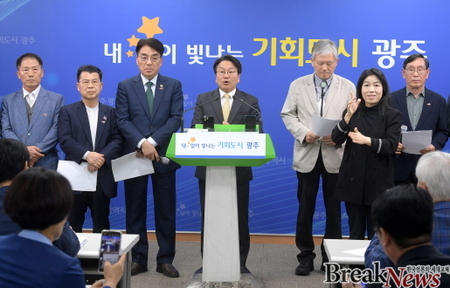
▲ 성광진 대전교육감 예비후보=예비후보 캠프 제공 © 정지완 기자 |
성광진 대전교육감 예비후보가 1일 인공지능 전환 시대에 맞춘 특성화고 활성화 공약을 내놓았다. 지역 산업 수요에 맞는 직업교육 체계를 다시 짜고, 학생들의 취업 경쟁력과 진로 지속성을 함께 높이겠다는 구상이다. 성 예비후보가 발표한 공약의 큰 틀은 협약형 특성화고 확대, 첨단기술 중심 학과 개편, 취업 이후까지 이어지는 전주기 지원체계 구축이다.
성 예비후보는 대전 직업계고가 취업률에서 전국 상위권을 유지하고 있지만, 산업 구조 변화 속도를 교육이 충분히 따라가지 못하는 문제가 남아 있다고 진단했다. 단순히 취업률 수치를 관리하는 데 머무르지 않고, 학교 교육과 지역 산업을 실제로 연결하는 방향으로 직업교육을 손봐야 한다는 것이다.
공약의 핵심은 지역 전략산업과 학교를 더 밀착시키는 데 있다. 방위산업과 바이오헬스 등 일부 분야에서 운영 중인 협약형 특성화고 모델을 2차전지, 의료서비스, 바이오, 비즈니스 분야까지 넓히고, 산업체가 교육과정 설계와 운영에 직접 참여하는 구조를 강화하겠다고 밝혔다. 반도체, 인공지능, 드론 등 첨단 기술 중심으로 학과를 개편하고 실습 기자재를 보강하겠다는 구상도 함께 내놨다.
취업 지원 방식도 바꾸겠다고 했다. 지역 중소·중견기업과 연계한 ‘대전형 일자리 매칭 시스템’을 구축하고, 해외 인턴십을 통해 학생들의 진로 선택 폭을 넓히겠다는 계획이다. 여기에 ‘직업계고 졸업생 계속지원센터(JOBSCO)’를 운영해 취업 뒤에도 경력 개발과 사후관리를 지원하겠다고 밝혔다. 학교 졸업과 동시에 지원이 끊기는 기존 방식에서 벗어나, 취업 이후 적응과 경력 형성까지 교육청이 책임지겠다는 메시지다.
학업 중단 위기 학생을 포괄하는 대안형 특성화고 신설 구상도 포함됐다. 체험 중심의 유연한 교육과정을 갖춘 별도 학교 모델을 만들어, 직업교육이 일부 학생에게만 열린 통로가 아니라 보다 폭넓은 진로 선택지로 작동하게 하겠다는 취지다.
성 예비후보는 또 대전의 바이오, 국방, 반도체, 우주항공 등 핵심 산업과 연계한 지·산·학 협력체계를 강화하겠다고 밝혔다. 고교 단계부터 맞춤형 인재를 길러내고, 교육발전특구를 활용해 교육과 취업, 지역 정착으로 이어지는 흐름을 만들겠다는 구상이다. 학생이 졸업 뒤 지역을 떠나는 구조를 완화하고, 지역 산업이 필요로 하는 인력을 현장에서 키우는 방식으로 직업교육의 방향을 재설정하겠다는 뜻으로 읽힌다.
성 예비후보는 특성화고가 단순한 취업 교육기관이 아니라 미래 산업을 이끌 인재를 키우는 핵심 기반이라고 강조했다. 학생들이 졸업과 동시에 안정적으로 사회에 진출하고 경제적 자립까지 이룰 수 있도록 교육청이 책임을 강화하겠다는 것이다.
이번 공약은 취업률 유지에 머물렀던 기존 평가 틀을 넘어, 산업 변화에 대응하는 직업교육의 질적 전환을 전면에 내세웠다는 점에서 경선 과정의 주요 쟁점 가운데 하나가 될 것으로 보인다.
*아래는 위 기사를 '구글 번역'으로 번역한 영문 기사의 [전문]입니다. '구글번역'은 이해도를 높이기를 위해 노력하고 있습니다. 영문 번역에 오류가 있을 수 있음을 전제로 합니다.<*The following is [the full text] of the English article translated by 'Google Translate'. 'Google Translate' is working hard to improve understanding. It is assumed that there may be errors in the English translation.>
Seong Gwang-jin, Preliminary Candidate for Daejeon Superintendent of Education, Announces Pledges to Reform Vocational Education at Specialized High Schools
Proposes Expansion of Contract-based Specialized High Schools and Reorganization of High-tech Departments… Overhauling Support from Employment to Post-Employment Management
On the 1st, Seong Gwang-jin, a preliminary candidate for Daejeon Superintendent of Education, unveiled pledges to revitalize specialized high schools in line with the era of artificial intelligence (AI) transition. His vision is to restructure the vocational education system to meet the demands of local industries and to simultaneously enhance students' employment competitiveness and career continuity. The broad framework of the pledges announced by Candidate Seong includes expanding contract-based specialized high schools, reorganizing departments around high-tech, and establishing a full-cycle support system that extends beyond employment.
Candidate Seong diagnosed that while Daejeon's vocational high schools maintain top rankings nationwide in employment rates, the problem remains that education is not sufficiently keeping pace with the speed of changes in the industrial structure. He argues that vocational education must be overhauled not merely to manage employment rate figures, but to actually connect school education with local industries.
The core of the pledge lies in bringing schools closer to local strategic industries. It was announced that the agreement-based specialized high school model, currently operating in select fields such as the defense industry and bio-health, will be expanded to include secondary batteries, medical services, biotechnology, and business. Furthermore, plans were made to strengthen the structure in which industrial companies directly participate in the design and operation of the curriculum. A plan was also unveiled to reorganize departments around cutting-edge technologies such as semiconductors, artificial intelligence, and drones, and to reinforce practical training equipment.
It was also stated that employment support methods would be changed. The plan involves establishing a "Daejeon-style Job Matching System" linked with local small and medium-sized enterprises (SMEs) and expanding students' career choices through overseas internships. In addition, it was announced that the "JOBSCO (Job Support Center for Vocational High School Graduates)" would be operated to provide career development and follow-up support even after employment. This conveys a message that the Office of Education will take responsibility for students' adaptation and career development after employment, moving away from the existing system where support ceases immediately upon graduation.
The plan also includes the establishment of alternative specialized high schools to accommodate students at risk of dropping out of school. The intention is to create a separate school model equipped with a flexible, experience-oriented curriculum, ensuring that vocational education functions as a broader career path rather than remaining a pathway open only to a select few students.
Preliminary Candidate Seong also announced plans to strengthen the local-industry-academic cooperation system linked to Daejeon's core industries, such as bio, defense, semiconductors, and aerospace. His vision is to cultivate customized talent starting from the high school level and utilize special education development zones to create a flow that leads from education to employment and local settlement. This can be interpreted as a redefinition of vocational education to mitigate the structure where students leave the region after graduation and to train the workforce required by local industries on the job site.
Preliminary Candidate Seong emphasized that specialized high schools are not merely employment training institutions, but a core foundation for nurturing talent that will lead future industries. He intends for the Office of Education to strengthen its responsibility to ensure students can stably enter society and achieve economic independence immediately upon graduation.
This pledge is expected to become one of the major points of contention in the primary election process, as it moves beyond the existing evaluation framework that focused solely on maintaining employment rates and places a qualitative transformation of vocational education in response to industrial changes at the forefront.
원본 기사 보기:브레이크뉴스대전세종충청