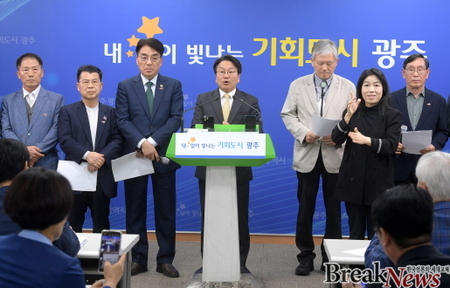
▲ 맹수석 대전교육감 예비후보, '교육공동체 맞춤형 복지 체계 구축' 공약 발표 장면=예비후보 캠프 제공 © 정지완 기자 |
맹수석 대전시교육감 예비후보가 2일 학생과 학부모, 교원, 교육청 직원 등 '모두를 위한 교육공동체 복지 공약'을 내놨다. 학습격차와 정서위기, 돌봄 공백, 교직원 업무 부담을 개별적 사안이 아닌 교육 현장 전반의 구조적 문제로 보고, 통합형 복지체계 적용을 통해 풀어 나가겠다는 구상이다.
먼저 맹 후보는 재원 조달 방식으로 ‘재정구조 혁신 시스템’을 제시했다. 목적성 경비 집행 실태를 촘촘하게 점검해 유사·중복 사업과 실효성이 낮은 사업을 정비하고, 여기서 줄인 재원을 복지사업에 재투입하겠다는 것이다. 즉, 신규 재정 부담을 크게 늘리지 않으면서 지속 가능한 복지체계를 마련하겠다는 것이다.
학생 대상 공약으로는 이동권과 학습, 정서적 지원을 한데 묶는 데 초점을 맞췄다. 대중교통비를 지원하는 ‘에듀패스’ 바우처와 학습부진 학생 대상 ‘학생 성장 바우처’, 위기학생 지원을 위한 통합지원센터 정비, 마음 건강 관리를 위한 ‘마음보듬 센터’ 신설이 핵심적으로 다뤄졌다. 학부모 분야에서는 초등 3학년부터 6학년까지 돌봄 확대, 방학 중 급식을 지원하는 ‘돌봄플러스 시스템’ 구축, 전문상담기관 연계 자녀상담, 학교와 학부모 사이 갈등을 조정하는 사전 중재 체계 구성을 내걸었다.
교원을 위한 공약은 수업에 집중할 수 있는 여건 조성에 방점을 뒀다. 행정업무를 줄이는 ‘학교업무 다이어트 시스템’, 민원 대응과 법률지원을 묶은 분쟁 대응체계, 심리지원 프로그램이 포함된다. 교육청 일반직 공무원에게는 결원 대응용 예비인력풀과 수습 행정인력 학교 배치, 지구별 행정지원 협의체 운영 등을 제시했고, 교육공무직원에게는 맞춤형복지비 인상과 처우 격차 완화, 복무기준 정비 등을 약속했다.
이번 공약은 복지 대상을 학생에만 한정하지 않고 교육 현장의 모든 주체로 넓혔다는 점에서 이목을 끈다. 그러나 중복 예산에 관한 정비를 통해 재원을 어느 정도의 수준으로 확보 가능한지, 교육청이 가진 권한 내에서 각 공약들을 얼마나 현실화할 수 있는지 등에 대한 구체적 계획과 전략 또한 선거 과정에서 검증해야 할 숙제라는 게 전문가들의 공통된 의견이다.
맹 후보는 모두의 삶을 위한 보편적 복지의 중요성을 강조하면서 '학생의 성장, 교육에 집중할 수 있는 교사, 학부모와의 신뢰, 존중받는 직원'이라는 키워드를 중심으로 한 균형 있는 교육공동체를 만들어 나가겠다는 뜻을 전했다.
*아래는 위 기사를 '구글 번역'으로 번역한 영문 기사의 [전문]입니다. '구글번역'은 이해도를 높이기를 위해 노력하고 있습니다. 영문 번역에 오류가 있을 수 있음을 전제로 합니다.<*The following is [the full text] of the English article translated by 'Google Translate'. 'Google Translate' is working hard to improve understanding. It is assumed that there may be errors in the English translation.>
Maeng Su-seok, Preliminary Candidate for Daejeon Superintendent of Education, Announces Tailored Pledges for Students, Parents, Teachers, and Staff
Reorganizing the Educational Community Welfare System… Securing Welfare Funds Through Financial Restructuring
On the 2nd, Maeng Su-seok, a preliminary candidate for the Daejeon Superintendent of Education, unveiled "Welfare Pledges for the Educational Community for All," covering students, parents, teachers, and Office of Education staff. He envisions addressing learning gaps, emotional crises, care gaps, and the workload of school staff not as isolated issues, but as structural problems affecting the entire educational field, by implementing an integrated welfare system.
First, Candidate Maeng proposed a "Financial Structure Innovation System" as a method for securing funding. The plan involves meticulously reviewing the execution of earmarked expenses to streamline similar, overlapping, and ineffective projects, and reinvesting the funds saved from this process into welfare programs. In other words, the goal is to establish a sustainable welfare system without significantly increasing the financial burden.
For pledges targeting students, the focus is on integrating mobility rights, learning, and emotional support. Key initiatives addressed included the ‘EduPass’ voucher to subsidize public transportation costs, the ‘Student Growth Voucher’ for underachieving students, the reorganization of Integrated Support Centers to assist students in crisis, and the establishment of ‘Maum Bodeum Centers’ for mental health management. In the area of parents, proposals included expanding childcare for elementary school students from grades 3 to 6, establishing the ‘Care Plus System’ to provide school meals during vacations, offering child counseling linked to professional counseling agencies, and creating a pre-mediation system to resolve conflicts between schools and parents.
Pledges for teachers focused on creating an environment where they can concentrate on teaching. These included a ‘School Work Diet System’ to reduce administrative tasks, a dispute response system combining civil complaint handling and legal support, and psychological support programs. For general civil servants at the Office of Education, measures such as a reserve pool to address vacancies, the placement of probationary administrative staff in schools, and the operation of district-level administrative support councils were proposed. For educational support staff, promises included increasing customized welfare benefits, mitigating disparities in treatment, and reorganizing service standards.
This pledge draws attention for expanding the scope of welfare beyond just students to include all stakeholders in the educational field. However, experts agree that concrete plans and strategies regarding the feasibility of securing funds through the streamlining of overlapping budgets, and the extent to which each pledge can be realized within the authority of the Office of Education, are tasks that must be verified during the election process.
Emphasizing the importance of universal welfare for the lives of all, Candidate Maeng conveyed his intention to build a balanced educational community centered on keywords such as "student growth, teachers who can focus on education, trust with parents, and respected staff."
원본 기사 보기:브레이크뉴스대전세종충청