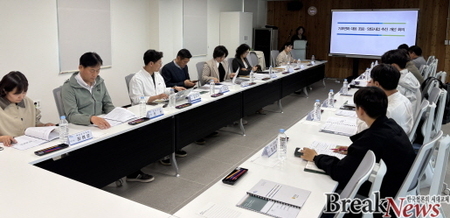
▲ 사진제공=명지병원 (C) |
명지병원이 지난 23일 인체유래물은행(은행장 이승열 교수)의 문을 열고 본격적인 운영에 들어갔다. 또 이날 은행 개소를 기념하는 심포지엄도 개최했다.
지난 8월 1일 질병관리청으로부터 인체유래물은행 개설 허가를 받은 명지병원은 그동안 인체유래물저장실, 인체유래물처리실, 정보관리실 등의 제반 시설을 갖췄다.
또 은행장과 부은행장, 10명의 교수로 구성된 분양운영위원회, 기관생명윤리위원회(IRB), 분양관리팀, 자원관리 및 행정관리팀, 개인정보보안책임팀 등의 조직도 구성하고 본격적인 운영에 들어갔다.
인체유래물은행은 생명윤리 및 안전에 관한 법률에 따라 인간에게서 얻은 조직, 혈액, 체액, 세포, DNA 등 인체 유래물과 이를 통해 얻어지는 역학·임상 등 다양한 정보를 적법하게 수집, 보관하고 이를 연구에 이용하거나 제공하는 역할을 한다.
환자의 신체조직을 이용해 장기 모사체(오가노이드)를 제작·보관하는 오가노이드뱅크와는 구별된다.
이날 오후 2시부터 명지병원 농천홀에서 진행된 ‘인체유래물은행 개설 기념 심포지엄’은 현장 참여 및 유튜브 ‘명지병원’ 채널을 통해 온·오프라인으로 동시에 진행됐다.
명지병원 인체유래물은행장 이승열 교수(정형외과)의 인체유래물은행 설립 과정과 조직, 비전 소개에 이어, 가톨릭대학교 서울성모병원 박경신 인체유래물은행장이 ‘연구자와 함께하는 인체 유래물 은행 운영’이라는 제목으로 지난 2013년부터 운영해온 노하우를 소개했다.
이어 강원대학교 약학과 양윤미 교수가 ‘인체 유래 간 조직을 이용한 연구 소개 및 인체유래물은행의 중요성’을 발표했으며, 넥스트앤바이오 김민서 박사가 ‘Organoid Biobank - Patient-Derived Cancer Organoid for precision medicine’라는 제목으로 오가노이드의 임상적 유효성 가치에 대해 소개했다.
명지의료재단 이왕준 이사장은 이날 인사말을 통해 “정밀의료 연구의 새로운 기틀이 마련됐다는 측면에서 항암연구소와 알츠하이머연구소 등 원내 다양한 연구소와 연구자들에게 새로운 촉매제가 될 것”이라며 “원내뿐만 아니라 외부 병원과 연구소, 기관 등과의 오픈이노베이션 전략을 통해 혁신적이며 속도감 있는 연구 성과를 도출할 수 있을 것으로 기대한다”고 밝혔다.[고양=박정호기자]
*아래는 위 기사를 '구글 번역'으로 번역한 영문 기사의 [전문]입니다. '구글번역'은 이해도 높이기를 위해 노력하고 있습니다. 영문 번역에 오류가 있을 수 있음을 전제로 합니다.<*The following is [the full text] of the English article translated by 'Google Translate'. 'Google Translate' is working hard to improve understanding. It is assumed that there may be errors in the English translation.>
Opened Myongji Hospital Human Materials Bank
Research on collection and storage of human tissues, blood, body fluids, cells, DNA, etc.
On the 23rd, a symposium to commemorate the opening of the bank was also held.
On the 23rd, Myongji Hospital opened the human body bank (bank president, Professor Seung-Yeol Lee) and started operation in earnest. A symposium was also held to commemorate the opening of the bank.
Myongji Hospital, which received permission to open a human material bank from the Korea Centers for Disease Control and Prevention on August 1, has been equipped with various facilities such as a human material storage room, a human material processing room, and an information management room.
In addition, organizations such as the bank president, deputy bank president, and 10 professors, the Sales Steering Committee, Institutional Bioethics Committee (IRB), Sales Management Team, Resource Management and Administrative Management Team, and Personal Information Security Responsibility Team, were formed and started operation in earnest.
In accordance with the Bioethics and Safety Act, the Human Material Bank legally collects and stores various information, such as epidemiologic and clinical information, obtained from human materials such as tissues, blood, body fluids, cells, and DNA obtained from humans, and uses them for research purposes. to use or provide.
It is distinguished from the organoid bank, which manufactures and stores organ mimics (organoids) using the patient's body tissues.
The 'symposium to commemorate the opening of the Human Material Bank', which was held at the Nongcheon Hall of Myongji Hospital from 2 pm on the same day, was held simultaneously online and offline through on-site participation and through the YouTube channel 'Myongji Hospital'.
Following the introduction of the process, organization, and vision of the establishment of the bank of human specimens by Professor Seung-yeol Lee (orthopedic surgeon), the head of Myongji Hospital’s Human Materials Bank, Park Kyung-shin, President of the Catholic University of Korea Seoul St. We introduced the know-how that we have been operating since 2013.
Next, Professor Yang Yun-mi of the Department of Pharmacy at Kangwon National University announced 'Introduction of research using human liver tissue and the importance of a human-derived bank', followed by Dr. Min-seo Kim of Next&Bio under the title 'Organoid Biobank - Patient-Derived Cancer Organoid for precision medicine'. We introduced the clinical efficacy value of organoids.
Myongji Medical Foundation Chairman Lee Wang-joon said in his greeting on the day, “In terms of laying a new foundation for precision medical research, it will become a new catalyst for various research institutes and researchers in the hospital, including the Cancer Research Institute and Alzheimer’s Research Institute.” We expect that we will be able to derive innovative and speedy research results through open innovation strategies with .
원본 기사 보기:고양 브레이크뉴스