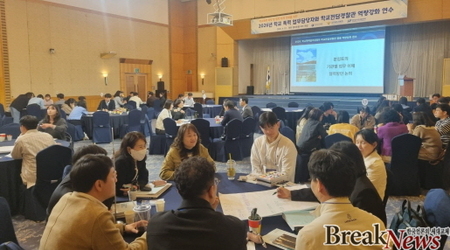
© 한국경제인협회 |
브레이크뉴스 문홍철 기자= 일부 지자체에서 대형마트 의무휴업일을 공휴일에서 주중 평일으로 변경하고 있는 가운데, 소비자 네명 중 세명 이상(76.4%)이 대형마트 규제를 폐지하거나 완화해야 한다는 의견을 가지고 있는 것으로 나타났다. 또한, 대형마트 의무휴업일 및 심야 영업금지 시간에 온라인 거래를 허용하는 데 대해서는 78.9%의 소비자가 찬성하는 것으로 조사됐다.
22일 한국경제인협회에 따르면 시장조사 전문기관 모노리서치에 의뢰해 전국 성인 남녀 ,000명을 대상으로 ‘유통규제 관련 소비자 인식 조사’를 실시한 결과, 76.4%의 소비자는 대형마트 규제를 폐지하거나 완화해야 한다고 응답했다.
32.2%는 대형마트 의무휴업 제도를 폐지해야 한다고 응답했으며, 33.0%는 평일 의무휴업 실시 등 규제완화를, 11.2%는 의무휴업일 및 심야 영업금지 시간에 온라인 거래를 허용해야 한다고 응답했다. 현행 의무휴업 제도를 유지해야 한다는 의견은 23.6% 수준이었다.
대형마트 의무휴업일 생필품 대체 구매처와 관련한 질문에는 슈퍼마켓·식자재마트(46.1%)라는 응답이 가장 많았고, △대형마트 영업일 재방문(17.1%) △온라인거래(15.1%) △전통시장(11.5%) △편의점(10.2%) 등이었다.
한경협은 대형마트 의무휴업일에 생필품 구매를 위해 전통시장을 방문한다는 응답이 10명 중 1명 정도에 불과한 점을 감안할 때, 대형마트 공휴일 의무휴업에 따른 전통시장 보호 효과는 크지 않은 것으로 추정했다.
대구, 청주 등 일부 지자체에서 시행한 대형마트 의무휴업일 주중 평일 변경 조치에 대해서는 △적극 찬성(42.8%) △찬성(32.0%) △반대(16.9%) △적극 반대(8.3%) 등으로, 찬성 의견(74.8%)이 반대 의견(25.2%) 보다 약 3배 가량 높은 것으로 나타났다.
대형마트 의무휴업일 주중 평일 변경 조치에 찬성하는 소비자를 대상으로 그 이유를 물어본 결과, △소비자 편익보호(52.3%) △입점 소상공인 피해 방지(20.5%) △공휴일 의무휴업의 전통시장 보호 효과 미미(18.0%) △마트 주변상권 활성화(9.2%) 등의 순서로 응답했다.
주중 평일 변경 조치에 반대하는 의견을 가진 소비자는 그 이유로 △유통산업 균형 발전(33.7%) △전통시장 보호(25.8%) △지역경제 활성화(25.4%) △골목상권 보호(15.1%) 등을 꼽았다.
아울러 대형마트 의무휴업일과 심야 영업금지 시간에 온라인 거래를 허용하는 데 대한 의견을 물은 결과, △적극 찬성(40.7%) △찬성(38.2%) △반대(15.3%) △적극 반대(5.8%) 등으로 , 찬성 의견(78.9%)이 반대’ 의견(21.1%) 보다 3.7배 높은 것으로 나타났다.
대형마트 의무휴업일 및 심야 영업금지 시간에 온라인 거래를 허용하는 데 대해 찬성하는 소비자를 대상으로 그 이유를 물어본 결과, △소비자 편익보호(69.9%) △온라인거래 금지의 전통시장 보호효과 미미(13.5%) △유통산업 선진화(12.2%) 등이었다.
대형마트 의무휴업일 및 심야 영업금지 시간 온라인 거래를 반대하는 소비자는 그 이유로 △전통시장 보호(32.8%) △유통산업 균형 발전(27.8%) △골목상권 보호(22.8%) △중소 온라인 쇼핑 플랫폼 업체 보호(16.6%) 순이었다.
한경협 이상호 경제산업본부장은 “대규모점포의 영업․출점제한은 소비자권익을 침해하고, 납품기업과 농수산물 산지 유통업체의 피해를 초래하는 반면, 전통시장 활성화 효과는 뚜렷하지 않다”며 “세계 유통산업이 시간과 국경을 초월해 소비자에게 다가가는 상황이므로, 국내 유통정책은 규제보다는 소비자 편익과 유통산업의 글로벌경쟁력 육성 중심으로 재조정돼야 한다”고 말했다.
break9874@naver.com
*아래는 위 기사를 '구글 번역'으로 번역한 영문 기사의 [전문]입니다. '구글번역'은 이해도 높이기를 위해 노력하고 있습니다. 영문 번역에 오류가 있을 수 있음을 전제로 합니다.<*The following is [the full text] of the English article translated by 'Google Translate'. 'Google Translate' is working hard to improve understanding. It is assumed that there may be errors in the English translation.>
76% of consumers hope for the abolition or relaxation of regulations on large supermarkets. The effect of protecting traditional markets is not significant.
While some local governments are changing the mandatory closing days for large supermarkets from public holidays to weekdays, more than three out of four consumers (76.4%) are of the opinion that regulations on large supermarkets should be abolished or relaxed. In addition, 78.9% of consumers were found to be in favor of allowing online transactions during large supermarket mandatory closed days and late-night business hours.
According to the Korea Economic Association on the 22nd, as a result of conducting a 'consumer perception survey related to distribution regulations' targeting ,000 adult men and women nationwide by conducting a market research agency, Mono Research, 76.4% of consumers said that regulations on large supermarkets should be abolished or relaxed. I responded that I did.
32.2% responded that the mandatory closed business system for large supermarkets should be abolished, 33.0% responded that regulations should be relaxed such as mandatory closed business days on weekdays, and 11.2% responded that online transactions should be allowed on mandatory closed days and late-night business hours. The opinion that the current mandatory non-working system should be maintained was 23.6%.
When asked about alternative purchase sources for daily necessities on days when large supermarkets are required to be closed, the most common responses were supermarkets and food ingredient marts (46.1%), followed by △Revisiting large supermarkets on business days (17.1%) △Online transactions (15.1%) △Traditional markets (11.5%) △ Convenience stores (10.2%), etc.
Considering that only about one in 10 people responded that they visit traditional markets to purchase daily necessities on days when large supermarkets are required to be closed, the Korea Economic Cooperation Cooperative estimates that the effect of protecting traditional markets due to mandatory closures on public holidays at large supermarkets is not significant.
With regard to the measure implemented by some local governments such as Daegu and Cheongju to change the mandatory closed business days for large supermarkets to weekdays, the opinions in favor were as follows: △Strongly agree (42.8%) △Agree (32.0%) △Disagree (16.9%) △Strongly oppose (8.3%) (74.8%) was found to be about three times higher than the opposing opinion (25.2%).
As a result of asking consumers in favor of changing the mandatory closed business days for large supermarkets to weekdays, the reasons were as follows: △Protection of consumer convenience (52.3%) △Prevention of damage to small business owners (20.5%) △Low effect of mandatory closure on public holidays to protect traditional markets ( 18.0%) Responded in the following order: △Vitalization of commercial areas around marts (9.2%).
Consumers who were opposed to changing weekdays to weekdays cited the following as reasons: balanced development of the distribution industry (33.7%), protection of traditional markets (25.8%), revitalization of the local economy (25.4%), and protection of alley commercial districts (15.1%). .
In addition, as a result of asking for opinions on allowing online transactions during mandatory closed days and late-night business hours for large supermarkets, the results were △strongly in favor (40.7%) △agree (38.2%) △against (15.3%) △strongly against (5.8%) etc., the opinion in favor (78.9%) was found to be 3.7 times higher than the opinion ‘against’ (21.1%).
When we asked consumers who were in favor of allowing online transactions during mandatory non-working days and late-night business hours at large supermarkets to give their reasons, we found that △protection of consumer benefits (69.9%) △the effect of banning online transactions on protecting traditional markets is minimal (13.5%) %) △Advancement of the distribution industry (12.2%), etc.
Consumers who oppose online transactions during mandatory closed days and late-night business hours at large supermarkets give the following reasons: △protection of traditional markets (32.8%) △balanced development of the distribution industry (27.8%) △protection of alley commercial areas (22.8%) △protection of small and medium-sized online shopping platform companies (16.6%) was in that order.
Lee Sang-ho, head of the Economic Industry Division of the Korea Economic Cooperation Cooperative, said, “Restrictions on the operation and opening of large-scale stores infringe on consumer rights and cause damage to supply companies and distributors of agricultural and marine product production areas, while the effect of revitalizing traditional markets is not clear,” adding, “The global distribution industry “As we reach out to consumers beyond time and borders, domestic distribution policies should be readjusted to focus on consumer convenience and fostering the global competitiveness of the distribution industry rather than regulation,” he said.