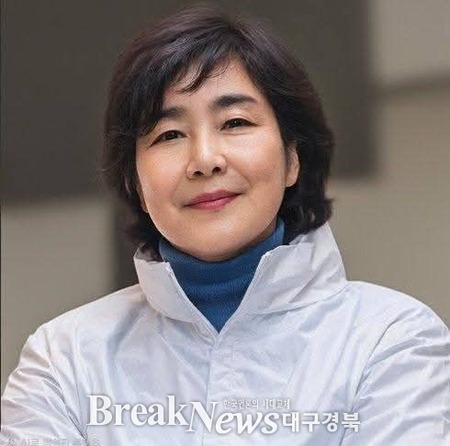
▲ 정길선 칼럼니스트 ©브레이크뉴스 |
15세기 이전만 하더라도 캄보디아는 영광의 시대였다. 크메르 제국이 동남아시아 대부분을 장악했고 멀리 인도에서도 조공이 올 정도였다. 그러나 베트남이 중국의 천년 지배에서 독립하고 점차 세력을 확장함에 따라 강력했던 크메르 제국은 점차 내리막길을 걷는다. 그러다가 원나라 쿠빌라이 칸의 침공을 받고 원나라에 조공하는 조공국으로 전락했고 원나라 쿠빌라이 칸의 침공을 세 번이나 격파한 베트남의 쩐 왕조에게도 조공하는 신세가 되었다. 이어 태국 아유타야 왕조의 지배를 받으며 캄보디아는 암혹의 시기로 접어들게 된다. 옛날 크메르 제국의 영광은 사라지고 이제는 베트남과 태국의 왕조들의 힘을 빌려 서로를 견제하는 형태가 되었으니 캄보디아는 거의 두 나라의 종속국이 되었다. 이를 타계하기 위해 끌어들인 또 다른 외세가 바로 프랑스였다.
캄보디아는 태국과 베트남으로부터 생존하기 위해 자진하여 프랑스에 보호를 청하게 된다. 캄보디아는 1853년 프랑스의 보호를 요청했으나 태국에 의해 좌절되었다가, 1863년 다시 보호를 요청해 캄보디아는 프랑스의 식민지가 되었다. 이와 같이 캄보디아는 프랑스의 보호령이 되었으며, 프랑스는 태국에게서 씨엠립 영토를 할양받아 캄보디아에게 붙여 주었고, 역시 프랑스의 보호령이 된 베트남으로부터 시아누크빌 캄포트, 케프, 스바이리엥을 할양받아 캄보디아에 돌려주었다. 그나마 프랑스의 개입으로 캄보디아는 민족을 유지할 수 있었고 더 나아가 절반 가량의 영토를 되찾은 셈이 되었다. 그러나 사실 프랑스가 캄보디아 영토를 돌려준 것은 어디까지나 원할한 식민통치를 위해서 캄보디아 인들의 반발을 막고 그들을 충실하게 프랑스 정부의 명령을 따르게 하기 위한 방책이었다. 프랑스는 캄보디아 인들 자체를 열등한 인종으로 취급했으며 친(親) 프랑스 베트남인 부역자들에게 캄보디아 통치를 맡기게 하는 등, 가혹한 통치를 자행한 것으로 보인다.
캄보디아는 이렇다 할 지하자원도 없는 국가였고 수로 자원이 있었지만 수로 자원은 베트남이 훨씬 압도하는 수준이었기 때문에 프랑스 식민당국은 캄보디아에 대한 관심보다는 베트남 개발에 더욱 주력하고 있었다. 그리고 캄보디아에는 별다른 개발과 투자를 하지 않았고, 그나마도 철도를 깔거나도로를 까는 수준에 그치게 되면서 전 국민의 95%가 빈농으로 남게 되었다. 교육 수준도 그다지 다르지 않았는데, 귀족들은 그나마 여러가지 고급 교육을 받았지만, 평민들은 단순한 불교 사찰에서 받은 교육 정도가 전부였다. 따라서 1930년대까지도 캄보디아는 국민의 95% 가량이 가난한 농부나 어부인 국가로 남아 있었다. 그나마 캄보디아는 고무와 옥수수 재배지가 되어, 그나마 나은 삶을 보였으나 1930년대 대공황 이후 이조차도 더 이상 캄보디아 주민들의 수익성을 올리지 못했다. 캄보디아에는 아직 왕이 남아 있어 완전히 국가가 멸망했다기에도 애매한 상황이었고 교육 수준도 심하게 낮았던 캄보디아에선 민족주의 열기가 그렇게 강하지도 않았다.
그러한 부분으로 인해 프랑스는 물론 중국, 베트남, 태국의 지식인들로부터도 대다수 캄보디아 주민들은 멸시와 차별을 받았으나, 도시에서 프랑스에 유학 다녀온 엘리트들을 중심으로 캄보디아 민족주의가 태동하기 시작했다. 캄보디아는 1945년 일본이 동남아시아를 침공하자 독립을 선언했다. 노로돔 시아누크를 중심으로 성립된 캄보디아 왕국은 사실상 일본의 괴뢰국으로 존재했으며 이 괴뢰 왕국은 제2차 세계대전 동안 짧게 존속하다가 일본이 패망한 이후 프랑스의 식민지로 복귀했다. 이에 캄보디아 도시민들이 캄보디아 내부의 민주주의를 요구하자 프랑스 총독부에서는 10월에 정당 결성을 허가했다. 그리고 대다수의 캄보디아 지식인들이 프랑스 총독부에 크메르 민족의회 구성을 요구했으나, 프랑스와 괴뢰왕정의 예상과는 달리 민주당이 절대 다수를 차지했기 때문에 민주당을 지지한다. 이에 시아누크 왕은 프랑스와 결탁해 민족의회의 총선을 무효로 돌리고 민족의회를 무력화시키자 민족의회는 있으나 마나한 존재가 되었다. 그 상태로 1949년에는 괴뢰왕정은 프랑스로부터 독립을 선언했다.
캄보디아 서북부에서는 1948년에 손 녹 탄의 민족주의 무장세력인 크메르인민자유위원회(KNLC)가 결성되어 독립을 선언하고 캄보디아 동북부에서는 1951년에 베트민의 지원을 받는 좌익무장단체 크메르인민혁명당(KPRP)이 각각 대두하여 따로 수반을 선출하는 등 정치적으로 혼란에 빠지자, 1953년 1월에 시아누크 왕은 계엄령을 선포하여 의회를 해산시켰다. 같은 시기 프랑스가 인도차이나 전쟁으로 인해 더이상 식민지를 유지할 여력이 없었기 때문에 1953년에 정식으로 캄보디아 독립을 인정하게 된다. 독립을 승인받은 시아누크 왕은 귀국 당시 국민들로부터 독립 영웅으로 찬사를 받았다. 독립 이후 한동안 크메르 왕가의 후손인 시아누크 왕이 입법, 행정, 사법 3권을 장악하며 사실상의 전제 정치를 하게 된다. 1963년 시아누크는 국왕이자 수상까지 겸임하면서 자신의 임기를 영구히 하는 헌법 개정을 국회에 강요하여 통과시키며 절대적 독재의 서막을 열었다.
국민들의 투표에서 사회주의 세력이 절대 다수의 지지를 얻고 왕당파가 선거에 참패하게 되자 강제적으로 자신의 권력을 지키고자 이러한 어처구니 없는 정책을 실시한 것이다. 시아누크는 좌파와 우파를 조절하며 불교사회주의라는 사상을 만들어 통제했고 정치적으로 통제와 협박, 국민들의 후원을 강요하여 자신의 권력을 계속 유지했다. 이러한 과정에서 비밀경찰 등을 다수 동원해 반대파를 무자비하게 숙청했다. 그럼에도 불구하고 시아누크의 독재가 비난 받지 않은 이유는 식민지 당시 만들어진 도로나 철도 등의 시설이 전쟁에도 불구하고 거의 온전하게 보전되었기 때문에 독립 이후 비교적 안정적으로 국민들의 지지를 업고 경제성장을 이룬 것이다. 그러나 제2차 인도차이나 전쟁이 격화되자 이런 기관산업 정책의 유지가 심각하게 어려워지기 시작했다. 또한 태국 국경을 넘어서 이루어지는 쌀 밀매로 인해 캄보디아의 경제에 심각한 타격을 주게 된다.
시아누크 자신 또한 어느 정도 경제 성장을 이룩하자 더 이상 경제 분야를 신경쓰기보다는 권력유지와 개인 축재 등으로 많은 신경을 썼기 때문에 캄보디아의 경제력은 점차 하락하기 시작했다. 같은 시기에 벌어진 좌익 농민 투쟁에 대해서도 무자비하게 이들을 진압하여 공산주의자들의 공적이 되었다. 경제적 분야를 제외하면 시아누크가 나라의 수장으로서 이루어 내었던 치적이 그다지 많지 않다. 그 중 최악의 실책 중 하나는 외교적 것에 있다. 시아누크는 자신의 사욕에 이득이 된다고 판단 될 때마다 미국, 중국, 소련, 유럽 등에 무차별적인 우호적 발언을 통해 가까이하려 했고 1964년 베트남 전쟁이 터지자 서방 세력과 단교하여 중국과 수교했는데, 이는 베트남을 견제하기 위한 목적이 컸다. 1968년에는 다시 미국과 수교하여 단기적으로 각 세력의 지원을 이끌었지만 이런 외교는 당시 냉전 체제에 있었기에 좋은 모습으로 비춰질리 없었다.
공산권에서는 기회주의자, 서방 세계에서는 공산주의자 취급을 받으며 국제사회에서 시아누크 치하의 캄보디아는 신뢰할 수 없는 국가로 여기게 된다. 시아누크는 이러한 교차외교가 본인 스스로에게 있어 치명적으로 작용할 것임을 짐작하지 못했다. 시아누크는 자신의 권력을 강화하기 위해 의회를 해산하고 지식인과 반대파를 숙청함으로써 캄보디아의 민주주의는 오히려 후퇴했다. 그러나 시아누크는 캄보디아는 서방 세계와 다르기 때문에 새로운 질서가 필요하다고 역설하여 민주주의는 전혀 후퇴하지 않았다고 주장했다. 이렇게 시아누크가 주장한 캄보디아의 질서는 불교식 사회주의였고 이는 시아누크를 부처의 대변인으로 보는 것을 기초로 하여 시아누크는 종교적, 정치적 양면에서 최고의 위치를 확보해 중세시대로 퇴보하는 모습을 보여 주었다. 캄보디아가 전통적으로 불교국가 였고 불교의 세력이 강했음을 염두에 둔 부분이었지만 이는 시대적 변화를 거부하는 모습으로 보여졌고 그의 전제정 자체 오히려 캄보디아를 후진국이자 개발도상국으로 떨어지는 가장 큰 원인이 되었다.
시아누크 왕은 1970년 소련을 방문한 시기에 민족의회로부터 폐위를 당해 결국은 왕정이 멸망하게 되었고, 이후 그의 옛 친구인 론 놀 장군의 크메르 공화국으로 이어지면서 그는 한동안 도망자이자 망명자의 신세가 된다. 이후에 벌어지는 크메르 루주의 킬링필드 사건 및 폴 포트의 공포정치나 베트남과의 전쟁에서 패배 등이 캄보디아가 현재 이와 같은 상태가 된 것은 부정할 수 없지만 실질적으로 캄보디아가 이렇게 후진국이자 개발도상국으로 남아 있었던 이유의 시작은 바로 노르돔 시아누크 왕의 통치기 때부터 보는 것이 합당하다. 그렇지 않아도 갖추어지지 않은 상태로 취약한 캄보디아의 경제 조건에 국왕의 전제정치 및 국가 재정의 파탄, 그로 인해 이어진 쿠데타와 연이은 전쟁은 오히려 캄보디아의 경제가 회생불능의 상태로 만든 요인이 된 것이다. 자원 없는 나라의 빠른 몰락 원인 또한 자질 없는 리더의 무능한 전제적 통치였다.
*필자/ 정길선.
노바토포스 회원, 역사학자, 고고인류학자, 칼럼니스트, 러시아 과학아카데미 유라시아 고고인류학연구소 연구교수
*아래는 위 기사를 '구글 번역'으로 번역한 영문 기사의 [전문]입니다. '구글번역'은 이해도 높이기를 위해 노력하고 있습니다. 영문 번역에 오류가 있을 수 있음을 전제로 합니다.<*The following is [the full text] of the English article translated by 'Google Translate'. 'Google Translate' is working hard to improve understanding. It is assumed that there may be errors in the English translation.>
Cambodia was in glory even before the 15th century. The Khmer Empire dominated most of Southeast Asia and even paid tribute from India in the distance. However, the powerful Khmer Empire gradually declined as Vietnam gained independence from China's millennium rule and gradually expanded its power. It was then invaded by Kublai Khan of the Yuan Dynasty and reduced to a tribute state to the Yuan Dynasty, and became a tribute to the Vietnamese Tran dynasty who defeated Kublai Khan's invasion three times. Cambodia then entered a period of darkness under the control of the Ayutthaya dynasty of Thailand. Cambodia became almost a subordinate country of two countries, as the glory of the Khmer Empire disappeared in the old days and became a form of checking each other with the power of Vietnamese and Thai dynasties. France was another foreign power that was brought in to pass away.
Cambodia volunteered to seek protection from France in order to survive from Thailand and Vietnam. Cambodia requested French protection in 1853, but was thwarted by Thailand, and in 1863 requested protection again, Cambodia became a French colony. In this way, Cambodia became a protection of France, and France ceded Siem Reap territory from Thailand and attached it to Cambodia, and ceded Sihanoukville Campot, Kep, and Sbyering from Vietnam, which also became a protection of France, and returned them to Cambodia. However, with French intervention, Cambodia was able to maintain its people and further reclaimed about half of its territory. However, France's return of Cambodia's territory was a measure to prevent opposition from the Cambodians and faithfully obey the French government's orders for the sake of smooth colonization. France seems to have imposed harsh rule by treating the Cambodians themselves as an inferior race and having pro (親) French and Vietnamese workers take over the control of Cambodia.
Cambodia did not have any significant underground resources and had waterway resources, but the waterway resources were far overwhelming by Vietnam, so the French colonial authorities were more focused on developing Vietnam than on interest in Cambodia. And even though Cambodia did not develop and invest much, 95% of the people remained poor as it stopped at the level of laying railways or laying roads. The level of education was not that different, but the nobles had a variety of advanced education, but the commoners only received the education from simple Buddhist temples. Thus, until the 1930s, Cambodia remained a country where 95% of its people were poor farmers and fishermen. Cambodia became a rubber and corn plantation, which had a better life, but even this has not increased the profitability of Cambodian residents since the Great Depression of the 1930s. The nationalist fervor was not so strong in Cambodia, where the state was completely destroyed because there was still a king left.
Due to this, the majority of Cambodian residents were despised and discriminated against by French as well as Chinese, Vietnamese, and Thai intellectuals, but Cambodian nationalism began to emerge, mainly from elites who studied in France. Cambodia declared independence when Japan invaded Southeast Asia in 1945. The Kingdom of Cambodia, founded around Norodom Sihanouk, effectively existed as a puppet state of Japan, and after Japan's defeat, the puppet kingdom returned to its French colony after a brief existence during World War II. As a result, the French Government-General granted permission to form a political party when Cambodian city-dwellers demanded democracy within Cambodia. The majority of Cambodian intellectuals also requested that the French Government-General form a Khmer National Assembly, but they support the Democratic Party because the Democratic Party had an absolute majority, contrary to the expectations of France and the puppet monarchy. As a result, King Sihanouk conspired with France to nullify the National Assembly's general election and neutralize it, and the National Assembly became a nuisance. As a result, the puppet monarchy declared independence from France in 1949.
In January 1953, King Sihanouk declared martial law and dissolved the parliament, as the Khmer People's Freedom Committee (KNLC), a nationalist militant of Son Noktan, was formed in 1948 and declared independence in northwestern Cambodia, and in 1951 the left-wing armed group Khmer People's Revolution Party (KPRP), which was supported by Vietnam, each emerged and elected a separate head. At the same time, France was able to no longer maintain its colony due to the Indochina War, so it officially recognized Cambodia's independence in 1953. Upon his return to Korea, King Sihanouk was praised as an independence hero by the people. For a while after independence, King Sihanouk, a descendant of the Khmer royal family, took control of three legislative, administrative, and judicial powers and took over de facto tyranny. In 1963, Sihanouk also served as king and prime minister, forcing the National Assembly to pass a constitutional amendment that perpetuated his term of office, opening the prelude to absolute dictatorship.
When the socialist forces won the support of the absolute majority in the people's vote and the royalists suffered a crushing defeat in the election, they implemented this ridiculous policy to forcibly protect their power. By controlling the left and the right, Sihanouk created and controlled the idea of Buddhist socialism, and politically enforced control, intimidation, and public support to maintain his power. In this process, he ruthlessly purged the opposition by mobilizing a large number of secret police and others. Nevertheless, Sihanouk's dictatorship was not condemned because the roads and railroads created during the colonial period were almost completely preserved despite the war, resulting in relatively stable economic growth with the support of the people after independence. However, as the Second Indochina War intensified, maintaining these institutional industrial policies began to become seriously difficult. Rice trafficking across Thailand's borders also dealt a serious blow to Cambodia's economy.
When Sihanouk himself achieved some economic growth, Cambodia's economic power gradually began to decline because he paid more attention to maintaining power and personal wealth rather than focusing on the economic sector. The communist people mercilessly suppressed the left-wing peasant struggles that took place during the same period. Excluding the economic sector, Sihanouk's achievements as the head of the country are not very significant. Diplomatic is one of the worst mistakes. Whenever Sihanouk felt it was beneficial to his self-interest, he tried to get close to the United States, China, the Soviet Union, and Europe through indiscriminate friendly remarks, and in the wake of the Vietnam War in 1964, he severed ties with Western forces to establish diplomatic ties with China, which was primarily aimed at keeping Vietnam in check. In 1968, he established diplomatic relations with the United States again, leading to the support of each force in the short term, but such diplomacy was not seen as a good form because it was under the Cold War at the time.
Cambodia under Sihanouk is considered unreliable by the international community and treated as an opportunist in the communist world and a communist in the Western world. Sihanouk did not realize that such cross-diplomacy would be fatal to him. Sihanouk rather retreated from Cambodia's democracy when he disbanded the parliament and purged intellectuals and opponents to strengthen his power. Sihanouk, however, argued that democracy did not retreat at all, emphasizing the need for a new order because Cambodia was different from the Western world. In this way, Sihanouk's claim of Cambodia's order was Buddhist socialism, and based on seeing Sihanouk as a spokesperson for the Buddha, Sihanouk secured the highest religious and political position and showed a regression to the Middle Ages. Although Cambodia was traditionally a Buddhist state and had a strong Buddhist power, this was seen as a rejection of changes in the times, and his dictatorship itself was the biggest reason for Cambodia's fall into a developing and underdeveloped country.
During his visit to the Soviet Union in 1970, King Sihanouk was deposed by the National Assembly, which eventually led to the collapse of the monarchy. Later, he became a fugitive and asylum for a while as he led his old friend General Ron Nol to the Khmer Republic. Although it cannot be denied that Cambodia is currently in this state due to the Khmer Rouge Killing Field incident, Paul Port's reign of terror, and defeat in the war with Vietnam, it is reasonable to see the beginning of why Cambodia remained such a backward and developing country from the time of King Nordom Sihanouk's rule. The collapse of the king's tyranny and state finances in Cambodia's unfinished and vulnerable economic conditions, and the ensuing coups and wars, on the other hand, caused Cambodia's economy to become unrenewable. The cause of the rapid collapse of a country without resources was also the incompetent and despotic rule of a leader without quality.