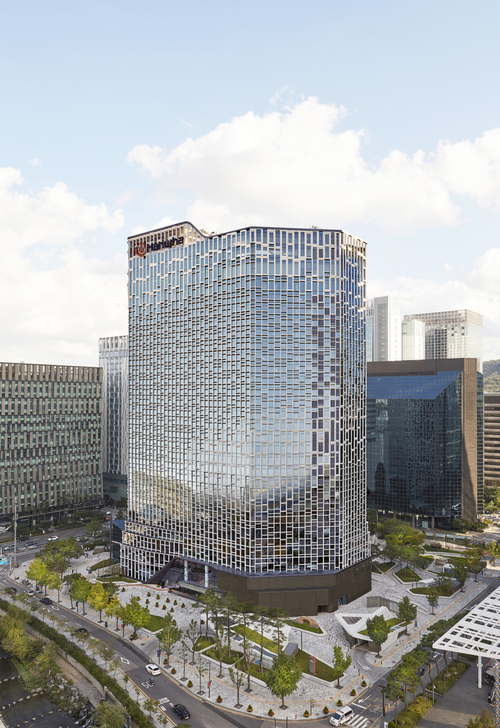
▲ 현대차 인도네시아 생산법인(HMMI) 전경 © 현대차 |
브레이크뉴스 문홍철 기자= 현대자동차가 ‘아세안(ASEAN: Association of Southeast Asian Nations·동남아 국가연합)’ 지역 공략에 나선다. 각국 정부의 자동차 지원 정책 강화와 선호 차종 다양화 등 아세안 자동차 시장이 빠르게 변화하는 상황에서 인도네시아를 아세안 공략을 위한 교두보로 삼겠다는 계획이다.
해외 생산법인 가운데 가장 높은 가동률을 자랑하는 인도네시아 생산법인(HMMI)과 현지 합작법인에서 생산된 배터리셀 본격 생산을 시작으로 현지 생산에서부터 판매까지 아우르는 밸류체인을 구축하며 시장 공략에 속도를 낼 방침이다.
여기에 현재 가동 중인 베트남 생산법인(HTMV)과 지난해 준공한 ‘싱가포르 글로벌 혁신센터(HMGICS)’까지 인도네시아 및 아세안 지역에서 안정적인 제품 개발, 생산, 판매체제 구축을 통한 차별화를 전개한다는 전략이다.
아세안 공식 포털에 따르면 아세안 전체 인구는 6억7170만명(2022년 기준)에 달한다. 아세안은 2050년에는 인구가 8억명을 돌파할 것으로 예상하고 있다.
아세안의 평균 나이는 30세로, 소비시장과 생산연령 인구 규모가 지속적으로 커지고 있다. 최근에는 젊은 층을 중심으로 합리적인 가격과 실용적인 사이즈를 갖춘 자동차 수요가 급증하고 있다.
같은 시기 일본 자동차 제조사가 독점해온 시장에 전기차와 현지 특화 MPV(다목적차량) 등 선호하는 차종이 다양해지면서 한국과 중국 자동차 회사들이 앞다퉈 아세안 시장 공략에 공을 들이고 있다.
현대차는 2022년 9월 인도네시아 브카시 델타마스 공단 내 HMMI를 준공하면서 아세안 시장 개척을 위한 행보를 이어왔다. 약 77만7000㎡의 부지에 2030년까지 약 15억5000만 달러를 투자하는 HMMI는 현대차그룹 최초로 아세안에 만든 완성차 공장으로 관심을 모았다.
현재 HMMI에서는 현지 특화 전략 차종인 크레타와 △MPV(다목적차량) 스타게이저 △중형 SUV 싼타페 △아이오닉5 등 4종의 차량을 만들고 있다.
HMMI는 가동 2년여 만에 유의미한 성과를 내고 있다. 올해 1분기(1~3월) 기준 HMMI 생산능력은 2만300대, 생산실적은 2만2520대를 기록하며 110.9%의 가동률을 기록했다. 이는 한국 공장(114.9%)을 제외하고 해외 공장 가운데 가장 높은 수치다.
지난해 1분기 50.3%를 기록했던 HMMI 공장 가동률은 같은 해 4분기 63.6%를 기록했으며, 올해 1분기 100%대를 넘어서며 빠른 속도로 성장하고 있다.
HMMI의 누적 공장 판매대수는 올해 5월 말 기준 19만2792대로 집계됐다. 6월 수치가 더해질 경우 상반기를 전후로 누적 20만대 돌파가 유력하다. 올해 1~5월 HMMI 수출 물량도 2만2880대를 기록하며 전년 동기(1만8984대) 대비 20.5% 증가했다.
현대차는 인도네시아 현지 배터리가 탑재된 전기차 판매에 나선다. 현대차그룹과 LG에너지솔루션이 인도네시아 카라왕 지역의 신산업 단지(KNIC: Karawang New Industry City)에 건설한 배터리셀 합작공장(HLI그린파워)이 지난해 6월 완공된 이후 전기차 시장 공략은 한층 강화될 것으로 기대된다.
HLI그린파워의 인도네시아산 배터리가 처음으로 적용되는 현대차 모델은 신형 코나 일렉트릭(EV)이다. 코나 일렉트릭 생산은 현대차가 인도네시아에 진출한 완성차 업체 중 최초로 전기차 배터리셀부터 완성차까지 현지 생산 및 판매 체계를 갖춘 유일한 기업이 된다는 점에서 의미가 크다.
본격적인 전기차 생태계를 구축하면서 물류비도 줄이고, 배터리 공급 납기일까지 단축시켜 전기차 생산 효율을 크게 향상시킬 수 있다. 중장기적으로 인도네시아 생산 밸류체인을 구축하면서 ‘현대차는 현지화된 차량’이라는 이미지를 줄 수 있다는 점에서도 기대감을 모으고 있다.
현대차는 지난해 7475대의 전기차를 판매하며 인도네시아 시장 점유율(43.8%) 1위를 기록했지만, 올해 들어 중국 기업들의 추격이 거세지면서 경쟁이 치열해지고 있다. 현대차는 코나 일렉트릭을 앞세워 전기차 선도 브랜드 이미지를 각인시키는 한편, 특화 차량 등 현지화 판매 전략으로 아세안 시장을 적극 공략할 계획이다.
아세안자동차연맹(ASEAN AUTOMOTIVE FEDERATION)에 따르면 지난해 아세안 자동차 시장은 335만 5136대로 현대차가 생산거점을 가동 중인 인도네시아가 29.9%의 비중으로 가장 큰 규모를 차지하고 있다. 이어 말레이시아(23.9%), 태국(23.1%), 필리핀(12.8%), 베트남(9.0%), 싱가포르(1.1%), 미얀마(0.1%) 순으로 시장이 형성돼 있다.
현대차는 2017년 베트남 탄콩그룹과 베트남 닌빈성에 생산 합작법인 ‘HTMV’를 설립한 데 이어 2022년 9월에는 HTMV 2공장을 준공하는 등 판매에 박차를 가하고 있다.
지난해 11월에는 싱가포르 서부 주룽 혁신지구에서 제조 설비, 연구개발(R&D) 공간, 고객 체험 시설을 갖춘 ‘현대차그룹 싱가포르 글로벌혁신센터(HMGICS)’를 구축하며 혁신적인 모빌리티 성장동력으로 삼겠다는 전략이다.
break9874@naver.com
*아래는 위 기사를 '구글 번역'으로 번역한 영문 기사의 [전문]입니다. '구글번역'은 이해도 높이기를 위해 노력하고 있습니다. 영문 번역에 오류가 있을 수 있음을 전제로 합니다.<*The following is [the full text] of the English article translated by 'Google Translate'. 'Google Translate' is working hard to improve understanding. It is assumed that there may be errors in the English translation.>
Hyundai Motor Company establishes a beachhead in Indonesia... spurring its expansion into the ‘blue ocean’ ASEAN region
Break News Reporter Moon Hong-cheol= Hyundai Motor Company is targeting the ASEAN (Association of Southeast Asian Nations) region. In a situation where the ASEAN automobile market is rapidly changing, such as the strengthening of automobile support policies by governments and the diversification of preferred vehicle types, the plan is to use Indonesia as a bridgehead for targeting ASEAN.
Starting with full-scale production of battery cells produced by the Indonesian Manufacturing Corporation (HMMI), which boasts the highest operation rate among overseas production corporations, and a local joint venture, the company plans to speed up its market penetration by establishing a value chain that encompasses local production and sales.
In addition, the strategy is to differentiate by establishing a stable product development, production, and sales system in Indonesia and the ASEAN region, including the currently operating Vietnam Production Corporation (HTMV) and the Singapore Global Innovation Center (HMGICS) completed last year.
According to the official ASEAN portal, the total population of ASEAN reaches 671.7 million (as of 2022). ASEAN expects its population to exceed 800 million by 2050.
The average age in ASEAN is 30, and the consumer market and working-age population are continuously growing. Recently, demand for cars with reasonable prices and practical sizes has been rapidly increasing, especially among young people.
At the same time, as preferred vehicle types such as electric vehicles and locally specialized MPVs (multi-purpose vehicles) become more diverse in the market that has been monopolized by Japanese automobile manufacturers, Korean and Chinese automobile companies are competing to target the ASEAN market.
Hyundai Motor Company has continued its efforts to pioneer the ASEAN market by completing HMMI in the Bekasi Deltamas Industrial Complex in Indonesia in September 2022. HMMI, which is investing about $1.55 billion by 2030 on a site of about 777,000 m2, has attracted attention as Hyundai Motor Group's first automobile factory built in ASEAN.
Currently, HMMI is producing four types of vehicles, including Creta, a locally specialized strategic vehicle, △MPV (multi-purpose vehicle) Stargazer, △mid-sized SUV Santa Fe, and △Ioniq 5.
HMMI is producing significant results after just two years of operation. As of the first quarter of this year (January to March), HMMI production capacity was 20,300 units and production performance was 22,520 units, recording an operation rate of 110.9%. This is the highest figure among overseas factories excluding Korean factories (114.9%).
The HMMI factory operation rate, which recorded 50.3% in the first quarter of last year, recorded 63.6% in the fourth quarter of the same year, and is growing rapidly, exceeding 100% in the first quarter of this year.
HMMI's cumulative factory sales were 192,792 units as of the end of May this year. If June's figures are added, the cumulative number is likely to exceed 200,000 units around the first half of the year. HMMI export volume from January to May this year also recorded 22,880 units, an increase of 20.5% compared to the same period last year (18,984 units).
Hyundai Motor Company plans to sell electric vehicles equipped with local batteries in Indonesia. After the completion of the battery cell joint factory (HLI Green Power) built by Hyundai Motor Group and LG Energy Solutions in the new industrial complex (KNIC: Karawang New Industry City) in Karawang, Indonesia, in June last year, the company's penetration of the electric vehicle market is expected to be further strengthened. do.
The first Hyundai car model to which HLI Green Power's Indonesian batteries will be applied is the new Kona Electric (EV). The production of Kona Electric is significant in that Hyundai Motor Company becomes the first automaker in Indonesia to have a local production and sales system for everything from electric vehicle battery cells to finished vehicles.
By establishing a full-fledged electric vehicle ecosystem, logistics costs can be reduced and the battery supply delivery date can be shortened, thereby significantly improving electric vehicle production efficiency. Expectations are also rising in that Hyundai Motors can give the image of ‘localized vehicles’ while establishing an Indonesian production value chain in the mid to long term.
Hyundai Motor sold 7,475 electric vehicles last year and ranked first in Indonesian market share (43.8%), but competition is intensifying this year as Chinese companies are increasingly catching up. Hyundai Motor Company plans to imprint its image as a leading electric vehicle brand with the Kona Electric, while actively targeting the ASEAN market with localized sales strategies such as specialized vehicles.
According to the ASEAN AUTOMOTIVE FEDERATION, the ASEAN automobile market last year amounted to 3,355,136 units, with Indonesia, where Hyundai Motors operates a production base, accounting for the largest share at 29.9%. The markets are followed by Malaysia (23.9%), Thailand (23.1%), Philippines (12.8%), Vietnam (9.0%), Singapore (1.1%), and Myanmar (0.1%).
Hyundai Motor Company established ‘HTMV’, a production joint venture in Ninh Binh Province, Vietnam, with Vietnam’s Thanh Cong Group in 2017, and is accelerating sales by completing the 2nd HTMV plant in September 2022.
In November last year, the company built the ‘Hyundai Motor Group Singapore Global Innovation Center (HMGICS)’, which is equipped with manufacturing facilities, research and development (R&D) space, and customer experience facilities, in Kowloon Innovation District, western Singapore, and plans to use it as a growth engine for innovative mobility.