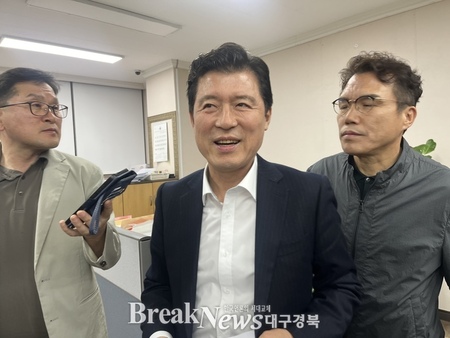
▲ 정길선 박사 ©브레이크뉴스 |
중서부 아프리카의 석유 부국 가봉은 60년 가까이 봉고 가문이 통치해 온 전형적인 독재 국가다. 1960년 프랑스로부터 독립한 이래, 가봉의 국부(國父)라 할 수 있는 레옹 음바(Léon M'ba, 1902~1967) 대통령을 거쳐 오마르 봉고(Omar Bongo, 1935~2009) 대통령이 42년 동안 장기 집권을 해왔다. 국부인 레옹 음바가 1967년 11월 28일에 사망하자 그 4일 뒤인 1967년 12월 2일에 오마르 봉고는 정식으로 대통령에 되었고, 임기 초반에는 전임인 레옹 음바의 반대파들을 석방하고 복권시키면서도 레옹 음바가 이미 일당제를 구축한 기반을 이어 받아 1968년 3월부터 1990년 5월 22일에 개헌할 때까지 가봉 독립당(PDG)라는 여당만 허용되는 일당 독재 체제를 만들어 철권 통치를 휘둘렀다. 오마르 봉고는 국방부, 정보부, 기획부, 내무부의 장관과 가봉 총리까지 겸직했고, 1973년에는 첫 대통령 선거에 유일하게 대통령 후보로 나가 99.56%의 지지율로 당선되었다.
이어 같은 해에 있던 오일쇼크로 인해 원유 가격이 폭등하자 봉고는 이를 바탕으로 석유를 팔아 엄청난 경제성장도 이루었으며 그로 인해 벌어들인 자금을 바탕으로 도로, 철도, 항구, 항공사, 발전소 등의 인프라도 구축해가며 해외에서 '가봉의 기적'이라는 찬사를 받을 정도로 아프리카에서는 경제적 선진국이라 불릴 정도로 성장했다. 1979년에 있던 선거에서도 봉고는 다시 99.96%로 당선되었으며, 1986년에도 99.97%로 또다시 당선되었다. 이 때문에 당시의 선거는 별다른 의미가 없는 요식행위에 불과했다. 어차피 가봉 독립당이라는 1개 밖에 없는 정당에 혼자 출마했으니 득표율이 100% 가까이 되는 것은 당연한 일이다. 그럼에도 요식행위처럼 남겨 놓은 이름 뿐인 야권 인사들이 대권에 도전했으나 그 또한 보여주기 식이었다. 그러던 차에 오마르 봉고는 2009년 6월 8일에 요양차 머무른 스페인 바르셀로나에서 대장암으로 사망했다.
이후 선거에서 오마르 봉고의 죽음에 따른 동정론 등이 대두되었고 아들인 알리 봉고 온딤바(Ali Bongo Ondimba)가 2명의 야당 후보와 경쟁하여 득표율 41.73%로 당선되어 현재까지 14년 동안 나라를 이끌어왔다. 그러나 2009년의 이 선거도 부정선거라는 의혹이 재기되었고 야가봉의 제2의 도시인 포르장틸에서 폭동이 일어나는 등, 여러 곳에 부정선거를 규탄하는 시위가 이어졌다. 이에 가봉 의회는 정국을 안정시키기 위해 재선거를 승인했고 2009년 10월 12일에 재선거가 실시되었지만 봉고 온딤바는 41.79%의 득표율을 얻어 의심의 여지 없이 당선을 확정했다. 이후 2016년 대선에서는 봉고 대통령이 대부분의 지역에서 상대 후보인 장 핑에게 뒤쳐졌으나 오트 오고웨(Haut-Ogooué) 주에서 투표율 100%, 득표율 96%를 받아 불과 5,600표 차이로 재선되었으며, 사실상 가봉에서 이 또한 부정 선거가 이루어졌음이 인정된 꼴이 되었다.
봉고 온딤바는 미국에 방문해 힐러리 클린턴과 대담을 갖기도 하고, 한국에도 방문하여 TV 예능인 무한도전 배달의 무도 특집에 몸소 출연하여 예능인 정준하와 사진을 같이 찍기도 했다. 그러한 상황에서 2023년 8월 26일 대선과 총선이 치러졌다. 야권에서는 정당 Alternance 23의 알베르 온도 오사 후보가 강력한 대권 주자로 떠오른 상황이었다. 그러나 선거 당일 투표소가 제 시간에 열리지 않고 오후 늦게 되어서야 열리면서 시민들의 투표를 방해하면서 논란이 되었고 선거 중 전국의 인터넷이 차단되어 3일 넘게 복구되지 않는 등 대놓고 선거를 조작한다는 의혹이 생기기 시작했다. 선거 후 3일이 지난 8월 30일, 가봉 선거관리위원회는 오전 3시 30분에 알리 봉고 현 대통령이 64.27%의 득표율로 3선에 성공했다고 발표하면서 이는 기정사실화 되었다. 그러자 전국 각지, 특히 수도 리브르빌 등의 대도시에서 대규모 시위가 발생하였다.
군부 또한 봉고 가문에 대해 오랜 불만을 갖고 있었다. 특히 브리스 올리기 응게마 장군은 중앙아프리카 공화국에 주둔한 러시아 용병 그룹 바그너의 전격적인 지원을 받고 있었다. 응게마 장군은 우선 수도 리브르빌을 경비하고 있던 사령부를 장악하고 수도경비군을 움직여 주요 정부 부처 건물, 텔레비전, 라디오 송신소, 인터넷 기지국 등을 장악했다. 같은 날 아침 국영방송 Gabon 24를 통해 "우리는 현 정권에 종지부를 찍음으로써 국가의 평화를 수호하기로 결정했다"고 쿠데타 동기를 밝혔고, "봉고의 책임감 없고 예측 불가능한 통치는 우리 사회의 결속력을 약화시켜 국가를 혼란에 빠뜨릴 위험이 있다"면서 쿠데타 발생을 알렸다. 이어 군은 지난 26일 실시된 선거 결과의 무효화를 선언했으며, 정부 기구를 해산하고, 국경 폐쇄와 일부 지역에 대해 통행금지를 시행했다. 봉고 온딤바 대통령은 쿠데타 과정에서 가족과 함께 가택연금을 당했고, 그의 아들 누레딘 봉고와 3명의 고위 정치인이 체포되었다.
쿠데타 수장인 브리스 올리기 응게마는 프랑스 언론 르몽드와의 인터뷰에서, 군 장성들이 모인 회의에서 과도정부를 이끌 지도자를 결정할 것이라고 밝혔으며 결국 응게마 본인이 과도정부 지도자로 추대되어 대통령 선거를 준비하게 되었다. 그러나 지난 부르키나파소나 니제르 쿠데타와는 다르게 응게마 장군은 봉고 온딤바 전 대통령의 친척이었다. 게다가 부패 의혹 또한 상당해 국민 지지를 얻지 못하고 있는 실정이다. 2020년 이후 현재까지 아프리카 중서부에서는 중앙아프리카공화국, 말리, 부르키나파소, 기니, 차드, 수단, 니제르, 가봉 등 8개국에서 쿠데타가 발발했다. 대부분 과거 프랑스의 식민지였고 독립 후 미국과 가까웠으나 최근 러시아, 중국과 관계가 강화되어 친러, 친중 세력들이 계속 정권을 잡는 사례가 빈번해지고 있다. 미국과 서유럽이 비용 부담, 국내 정치로의 치중 여파로 아프리카에서 발을 빼는 모습이 뚜렷해지면서 곳곳에서 비슷한 상황이 나타나고 있다.
그간 가봉 정부와 밀접했던 프랑스조차 쿠데타 음모를 사전 입수하지 못했고 쿠데타 발발 이후에도 군부에 영향력을 행사하지 못하고 있었다. 반면 러시아는 민간 용병회사 바그너 그룹 등을 통해 수단, 말리 등의 독재 정권을 비호하고 치안을 유지해주는 대신 광물 채굴 등 각종 이권 사업을 따냈다. 서방과 결탁한 지도자들이 독재와 부패로 일관하고, 먹고사는 문제를 해결하지 못한 것 또한 민심 이반을 불렀으며 가봉의 경우, 원유, 다이아몬드 등 풍부한 원자재를 보유했지만 234만 명 인구의 3분의 1 이상이 빈곤에 시달려 왔다. 결국 친러 군부 응게마 장군이 대통령 선거에 도전할 것이고 쿠데타를 일으킨 친러 세력이 가봉을 통제함에 따라 러시아의 도움을 받아 응게마 장군이 차기 가봉의 대통령이 될 것은 유력해보인다. 가봉이 친러시아 쪽으로 기울어지게 되면 인근 적도기니, 카메룬, 콩고, 콩고민주공화국까지 여기에 영향을 받을 가능성이 커 보인다.
*필자/ 정길선.
노바토포스 회원, 역사학자, 고고인류학자, 칼럼니스트, 러시아 과학아카데미 유라시아 고고인류학연구소 연구교수.
*아래는 위 기사를 '구글 번역'으로 번역한 영문 기사의 [전문]입니다. '구글번역'은 이해도 높이기를 위해 노력하고 있습니다. 영문 번역에 오류가 있을 수 있음을 전제로 합니다.<*The following is [the full text] of the English article translated by 'Google Translate'. 'Google Translate' is working hard to improve understanding. It is assumed that there may be errors in the English translation.>
Gabon, an oil-rich country in Africa, has been ruled by the Bongo family for nearly 60 years. Since gaining independence from France in 1960, Gabon has been ruled by President Léon M'ba (1902-1967), the father of the nation, and President Omar Bongo (1935-2009) for 42 years. When the father of the nation, Leon Mba, died on November 28, 1967, Omar Bongo officially became president four days later on December 2, 1967. In the early part of his term, while releasing and reinstating his predecessor's opponents, he took over the foundation of the one-party system that Leon Mba had already established, and ruled with an iron fist by creating a one-party dictatorship that allowed only the ruling party, the Gabonese Independence Party (PDG), from March 1968 until the constitutional amendment on May 22, 1990. Omar Bongo concurrently held the posts of Minister of Defense, Minister of Information, Minister of Planning, Minister of the Interior, and Prime Minister of Gabon, and in 1973, he was the only candidate for president in the first presidential election and was elected with 99.56% of the vote. In the same year, when the oil shock caused crude oil prices to skyrocket, Bongo achieved tremendous economic growth by selling oil, and based on the money earned from this, he built infrastructure such as roads, railways, ports, airlines, and power plants, and grew to the point where he was called an economically advanced country in Africa, receiving praise from overseas as the 'Gabon Miracle'. In the 1979 election, Bongo was elected again with 99.96%, and in 1986, he was elected again with 99.97%. Because of this, the election at the time was nothing more than a meaningless formality. Since he ran alone for the only party, the Gabon Independence Party, it was natural that he would receive close to 100% of the votes. Nevertheless, opposition figures who were just nominal figures who were left behind as a formality challenged for the presidency, but that was also just for show. Meanwhile, Omar Bongo died of colon cancer in Barcelona, Spain, where he was staying for treatment on June 8, 2009. In the subsequent elections, sympathy arose following the death of Omar Bongo, and his son, Ali Bongo Ondimba, was elected with 41.73% of the votes in a competition with two opposition candidates, and has led the country for 14 years to date. However, suspicions of election fraud were revived in 2009, and protests against election fraud continued in many places, including riots in Port-Gentil, Gabon's second largest city. In response, the Gabonese parliament approved a new election to stabilize the political situation, and the new election was held on October 12, 2009, and Bongo Ondimba was elected without a doubt with 41.79% of the votes. In the 2016 presidential election, President Bongo was defeated by his opponent Jean Ping in most regions, but he was re-elected by a margin of only 5,600 votes in Haut-Ogooué with a 100% voter turnout and 96% of the votes cast, effectively acknowledging that this was also an election fraud in Gabon. Bongo Ondimba visited the United States and had a conversation with Hillary Clinton, and also visited Korea, where he appeared in person on the TV entertainment show Infinite Challenge's Delivery Dance special and took a photo with entertainer Jeong Jun-ha. In such a situation, the presidential and general elections were held on August 26, 2023. In the opposition, Alternance 23's candidate Albert Ondo Osa emerged as a strong presidential candidate. However, on election day, the polling stations did not open on time and opened late in the afternoon, causing controversy as citizens were prevented from voting, and during the election, the internet was blocked nationwide and not restored for more than three days, raising suspicions of blatant election manipulation. On August 30, three days after the election, the Gabon Electoral Commission announced at 3:30 am that incumbent President Ali Bongo had won a third term with 64.27% of the vote, making this a fait accompli. Then, large-scale protests broke out all over the country, especially in large cities such as the capital Libreville. The military also had long-standing grievances against the Bongo family. In particular, General Brice Oligy Nguema was receiving full support from the Russian mercenary group Wagner stationed in the Central African Republic. General Nguema first took control of the headquarters guarding the capital Libreville and then moved the capital security forces to seize key government buildings, television and radio transmission stations, and internet base stations. On the same morning, the state broadcaster Gabon 24 announced the motive for the coup, saying, "We have decided to protect the peace of the country by putting an end to the current regime." They also announced the coup, saying, "Bongo's irresponsible and unpredictable rule threatens to weaken the unity of our society and throw the country into chaos." The military then declared the results of the elections held on the 26th invalid, dissolved government institutions, closed the borders, and imposed a curfew in some areas. President Bongo Ondimba and his family were placed under house arrest during the coup, and his son Noureddine Bongo and three other high-ranking politicians were arrested.
In an interview with the French newspaper Le Monde, the coup leader, Brice Oligy Nguema, said that a meeting of military generals would decide on the leader of the interim government, and Nguema himself was eventually elected as the interim leader and prepared for the presidential election. However, unlike the previous coups in Burkina Faso and Niger, General Nguema was a relative of former President Bongo Ondimba. In addition, he is suspected of corruption and is not receiving public support. Since 2020, coups have occurred in eight countries in central and western Africa: the Central African Republic, Mali, Burkina Faso, Guinea, Chad, Sudan, Niger, and Gabon. Most of them were former French colonies and were close to the United States after independence, but recently, as relations with Russia and China have strengthened, pro-Russian and pro-Chinese forces have been frequently taking power. As the United States and Western Europe have become more evident in withdrawing from Africa due to the burden of costs and the focus on domestic politics, similar situations are appearing in various places.
Even France, which had been close to the Gabon government, did not learn of the coup plot in advance and was unable to exert influence on the military even after the coup. On the other hand, Russia, through private mercenary companies such as the Wagner Group, protected dictatorial regimes in Sudan, Mali, etc., and maintained public order in return for various concessions such as mineral mining. The leaders who colluded with the West have consistently been dictatorial and corrupt, and have failed to solve the problem of making a living, which has also led to public discontent. In the case of Gabon, although it possesses abundant raw materials such as crude oil and diamonds, more than a third of its 2.34 million population has suffered from poverty. In the end, it seems likely that General Nguema, a pro-Russian military leader, will run for president, and as the pro-Russian forces that staged a coup take control of Gabon, it seems likely that General Nguema will become the next president of Gabon with Russia's help. If Gabon tilts toward Russia, it is highly likely that neighboring Equatorial Guinea, Cameroon, Congo, and the Democratic Republic of Congo will also be affected.