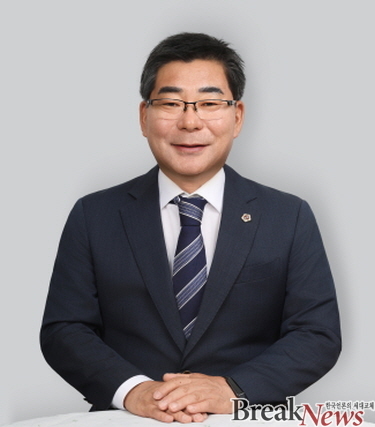
▲ 김효숙 세종시의원[사진=세종시의회] (C) 김환일 기자 |
세종시 7개 지역에서 운영되고 있는 마을택시 운영에 개선이 필요하다는 주장이 나왔다.
세종시의회 김효숙 의원(나성동, 더불어민주당)은 2일 제94회 정례회 산업건설위원회의 25년도 교통국 대상 본예산 심의에서 10년 차를 맞이한 마을 택시의 요금체계와 운영방식의 재구조화를 주문했다.
현재 세종시 마을택시는 버스가 운행되지 않거나 1일 운행 횟수 4회 이하의 마을로 마을회관에서 버스정류장까지 500m 떨어진 마을에서 운영되고 있다.
세종시 7개면(부강, 연서, 장군, 전의, 전동, 금남, 소정) 총 44개 마을에서 운영되고 있는 마을 택시는 주민이 1,200원만 부담하면 택시요금 차액을 운송사업자에게 지원하고 있다.
시는 마을택시 운영 예산은 2022년 4억5000만원, 2023년 4억8000만원, 2024년 5억원이며, 2025년도 예산은 6억원이 편성됐다.
김 의원은 “올해 인상된 택시요금(기본 3,300원/ 1.5km에서 4,000원/1.4km)으로 2025년도 예산이 증액된 것은 알겠으나, 4년간 꾸준히 예산이 증가하고 있다”며 “특히 마을 택시 1대당 재정지원금 현황은 마을별로 천차만별로 지원금이 가장 많이 편성되는 금남면(약 8,700만원)과 제일 작게 편성되는 전동면(약 3,200만원)은 세 배 가까이 차이가 난다”고 지적했다.
특히 "수요응답형버스 두루타도 지원되는 지역도 있어 중복지원이 되지 않는지 면밀하게 살펴볼 필요가 있다”고 강조했다.
김 의원은 “10년 동안 대상마을만 확대됐을 뿐 요금 체계나 이용 방법, 이용 요건 등에 대한 변화가 전혀 없었다”라며 “택시요금이 점진적으로 올랐지만 이용자 부담은 1,200원으로 동결됐고, 호출예약이 아닌 노선형으로 운영되면서 시간에 따라 빈 택시로 다니는 경우가 있다”고 설명했다.
이어 “특히 택시 한번 이용에 1,200원이라 4명이 이용하면 인당 300원만 부담하면 돼 버스요금(1,400원), 이응버스 요금(1,800원) 등과 비교해 현실화가 필요하다”고 덧붙였다.
김효숙 의원은 “충청남도 공공형택시 이용현황에 따르면, 청소년·어린이는 무료지만 거리별로 요금을 차등하는 등 주민부담요금을 다양화했다”며 “전국적으로 마을택시 운영체계에 대한 손질을 하고 있는 만큼, 10년차을 맞이한 마을택시가 효율적인 사업 개선 노력으로 장기적으로 지속가능한 사업이 되길 바란다”고 당부했다.
*아래는 위 기사를 '구글 번역'으로 번역한 영문 기사의 [전문]입니다. '구글번역'은 이해도를 높이기를 위해 노력하고 있습니다. 영문 번역에 오류가 있을 수 있음을 전제로 합니다.<*The following is [the full text] of the English article translated by 'Google Translate'. 'Google Translate' is working hard to improve understanding. It is assumed that there may be errors in the English translation.>
[Sejong City Council Member Kim Hyo-sook, "Village taxi operation method needs to be diversified"
Must be sustainable in the long term by utilizing Duruta and realizing the burden on residents]
There is a claim that the operation of village taxis operating in 7 areas of Sejong City needs to be improved.
On the 2nd, Sejong City Council Member Kim Hyo-sook (Naseong-dong, Democratic Party of Korea) ordered a restructuring of the fare system and operation method of village taxis, which are in their 10th year, at the 25th Transportation Bureau budget deliberation of the 94th regular session of the Industry and Construction Committee.
Currently, Sejong City village taxis are operated in villages where buses do not operate or operate less than 4 times a day, and where the bus stop is 500m from the village hall.
The village taxis, which are operated in a total of 44 villages in 7 townships of Sejong City (Bugang, Yeonseo, Janggun, Jeonui, Jeondong, Geumnam, and Sojeong), support the difference in taxi fare to the transportation business operator with a fee of only 1,200 won paid by residents.
The city's village taxi operation budget is 450 million won in 2022, 480 million won in 2023, and 500 million won in 2024, and 600 million won in 2025.
Rep. Kim said, “I understand that the 2025 budget has increased due to the increased taxi fare this year (from 3,300 won/1.5km to 4,000 won/1.4km), but the budget has been steadily increasing for four years,” and pointed out, “In particular, the financial support per village taxi varies greatly by village, with Geumnam-myeon (approximately 87 million won) receiving the most support and Jeondong-myeon (approximately 32 million won) receiving the least, with a difference of nearly three times.”
“In particular, there are regions where demand-responsive buses are also supported, so we need to closely examine whether there is any duplicate support,” he emphasized.
Rep. Kim said, “For 10 years, only the target villages have expanded, and there has been no change in the fare system, usage method, or usage requirements.” He explained, “Taxi fares have gradually increased, but the user burden has been frozen at 1,200 won, and since it is operated by route rather than call reservation, there are cases where empty taxis are used depending on the time.”
He added, “In particular, since a single taxi ride costs 1,200 won, if four people use it, they only have to pay 300 won per person, so it needs to be made more realistic compared to bus fares (1,400 won) and I-eung bus fares (1,800 won).”
Rep. Kim Hyo-sook said, “According to the Chungcheongnam-do public taxi usage status, teenagers and children are free, but the resident burden fares have been diversified, such as by differentiating fares by distance.” He added, “As the village taxi operation system is being improved nationwide, I hope that the village taxi, which is now in its 10th year, will become a sustainable business in the long term through efficient business improvement efforts.”
원본 기사 보기:브레이크뉴스대전충청