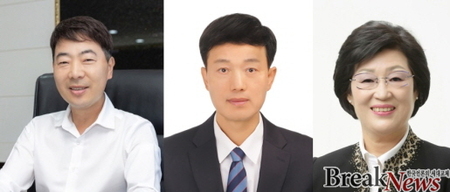
▲필자/ 정길선 박사 ©브레이크뉴스 |
1994년 12월에 치러진 러시아 총선에서 옐친의 여당은 15.5%의 득표를 올리며 패배했다. 그리고 야당이자 극우정당인 러시아 자유민주당이 23%로 제1당이 되었으며 공산당-농민당 연합도 22%를 차지했다. 이어 나머지 정파는 대다수가 사민주의 정파였다. 이후 1995년 12월 의회에서는 공산당이 22%를 득표하며 1당이 되면서 옐친의 정치적 입지는 점차 좁아지게 된다. 당시 자유민주당은 11%로 제2당을 차지했으며 여당인 러시아-우리집 당은총 득표 10%대를 유지하며 제3당에 그쳤다. 하지만 비례대표 제도의 특성상 어느 한쪽도 과반을 유지할 수 없었고 그로 인한 정치적 혼란은 더욱 가중되었다. 1996년 대통령 선거에서도 옐친은 잦은 음주로 인한 심장마비로 투병하고 있었음에도 불구하고 여러 친(親) 서민적 이미지메이킹을 시도한 결과 초반 지지율 6%에서 다시 지지율이 고속성장해 결선투표 진출은 물론 옐친의 정적이자 라이벌인 공산당의 겐나디 주가노프(Геннадий Зюганов)를 54%대 41%로 약 14% 가량 크게 앞서며 승리했다.
하지만 대통령 선거에서 이기기 위해 옐친은 배당을 위한 융자라는 악명 높은 정치자금을 받는 합의를 통해 자신에게 선거 자금을 대주는 대가로 신흥 재벌들인 올리가르히(Oлигархи)들에게 러시아의 중요한 경제적 자산 통제권을 나눠주겠다는 이른바 정경유착 강화 등의 약속을 하게 된다. 그와 같은 범죄적 조치는 러시아 내에서 올리가르히들의 부를 강화하는 결과를 낳게 된다. 당시 옐친의 라이벌인 겐나디 주가노프(Геннадий Зюганов)는 러시아를 공산주의로 복귀시키고자 하는 사회주의자로 1966년 소련 공산당에 입당한 후 1970년 오룔 주 대의원을 시작으로 활발히 정치 활동을 했던 인물로 니콜라이 리즈코프의 파벌에 속해 있었다. 소련이 붕괴한 뒤 당시 러시아 내 소련 공산당 지지세력 중 가장 상위에 있었던 그는 1991년 RSFSR 대선 후보인 니콜라이 리즈코프의 신임을 얻어 미하일 고르바초프와 옐친의 정적으로 떠오르게 되면서 러시아 연방 공산당의 당수가 되었다.
그리고 1993년 러시아 헌정위기 당시에는 두마 최고회의가 강제 해산되는 사태를 막기 위해 보리스 옐친과 가장 먼저 타협을 시도했으며 그 사건을 계기로 주요 경쟁자들이 옐친의 정치 보복으로 인해 사법 처리를 받게 되자 당내에서 독보적인 위치에 오르게 된다. 처음 선거를 지휘했던 1995년의 총선에서 옐친을 이기고 공산당이 원내 1당에 등극하는데 성공했으며 친(親) 옐친파 정당들이 1993년 두마 선거와 마찬가지로 참패하면서 야당의 영수로써 주가노프는 유력한 차기대권 주자로 떠오르게 된다. 이러한 기세로 1996년 대선에서 압도적인 득표율로 대통령이 될 것이라는 전망이 높았으나 엘친이 소비에트로 다시 돌아가면 러시아는 회생이 불가능해질 것 등으로 네거티브 선거 전략에 말리게 되었다. 더불어 올리가르히 언론사들은 의도적 옐친을 밀어주는 것으로 선거 막판에 판세가 뒤집히며 낙선하였고, 그로 인해 정치적 입지에 타격을 입어 정계에서 은퇴하고 말았다.
원래 소련은 1930년대 산업화를 육성하는 시절 군대를 키우기 위해 군수 산업과 관련된 중공업에 집중적으로 투자했다. 하지만 1950년대와 1960년대를 거치면서 점점 공업 생산력과 경쟁력이 서방 국가들보다 떨어지면서 적자가 늘어났다.
이에 따라 소련 정부는 재정을 충당하기 위해 자원 채굴 사업에 많이 의존했고 실제로도 국가 예산의 상당 부분을 자원의 소득에서 얻었다. 이러한 자원의존형 구조 형태는 소련 붕괴 이후 점차 심각해졌고 오늘날 러시아는 국고의 52%를 자원 수출에 의존하고 있다. 러시아의 재벌들 역시 주요 수익이 자원 채굴과 수출에 있다. 당시 러시아에서는 가스를 담당하는 국영기업 가즈프롬(Газпром)이나 알루미늄 제련 및 제조 기업인 루살(Русал) 등 에너지나 광물 관련 회사들 등 나름 흑자를 벌어들이는 사업이 많았다. 문제는 이러한 사업체들이 모두 소련 내 관료들과 시장 원리에 밝았던 전직 공산 관료들이나 권력 핵심부에 있던 정부 관리들에게 넘어감으로써 소련이 해체됨과 동시에 모두 벼락부자들이 되었다. 이들 중 몇몇은 옐친이 집권한지 몇 년만에 세계적인 부호로 성장할 정도로 큰 재산들을 축적했다. 이런 벼락부자들의 대표적인 예로는 수학자 및 공학자 출신으로, 보리스 옐친 대통령 재임 시 로고바자 그룹 회장인 보리스 베레좁스키(Борис Березовский)와 석유재벌이자 유태계인 로만 아브라모비치(Роман Абрамович) 등이 있다.
소련 시절에는 부동산 및 생산 수단들이 국유화되었기 때문에 모을 수 있는 재산은 예금이 전부였고, 개인이 가질 수 있는 재산은 미국과 서방 기준으로 수천 달러가 고작이었다. 그런데 옐친 집권 하에서 자본주의에 빠르게 적응한 이들은 2, 3년 만에 수조에서 수십조 가량의 자산가들이 된다. 물론 이들 뿐 아니라 구소련 국가였던 우크라이나와 카자흐스탄 등에서도 올리가르히들의 영향력들이 강하게 나타났고 경제 규모가 더욱 좁은 국가들인 구소련권 국가들에서는 체감상 더욱 심한 경우가 있었다. 후일 우크라이나의 대통령이 된 페트로 포로셴코(Петро Порошенко)도 대표적인 올리가르히 중 하나였으며 카자흐스탄의 고려인으로 카자흐스탄 최대의 구리 광산 기업인 카작무스의 CEO인 블라디미르 김(Владимир Ким)도 중앙아시아 최고 올리가르히 중에 하나였다. 이들 올리가르히의 일부는 러시아 마피아와 결탁하여 사업을 벌리기도 했으며 이들을 이용해 다수의 스킨헤드들을 양성하여 유색인종들을 탄압함으로써 다수의 사회문제들을 야기하기도 했다. 특히 1990년대에 올리가르히들은 부정부패가 대단했고 그에 따른 사치향락은 매우 악명이 높았다.
90년대 러시아인들 대다수가 암흑기를 겪으며 물가폭등과 더불어 이로 인한 모든 재산 들이 휴지 조각이 되어 크게 고통받고 있을 때 올리가르히들은 호화스러운 해외여행이나 고급 호화 별장과 같은 것들을 지어 매우 사치스러운 생활을 했고 그러면서도 투자해야 할 금액을 외국으로 반출했다. 이와 같은 부분도 러시아 세무법 상 명백한 "외환관리법 위반"이었지만 옐친을 비롯한 각 정부 각료들이 이를 눈감아 주면서 사법 처리의 기회는 날아가고 말았다. 옐친에게 불법적인 정치자금을 대준 자들도 이들 올리가르히들이고 이를 미끼로 옐친과 각료들은 올리가르히들의 이익을 보호해줬던 일종의 공생관계였던 셈이다. 당연히 공업화를 위해 공장을 짓거나 투자해야 할 돈이 외국으로 흘러 나갔으니 일자리는 줄어들게 되고 그로 인해 러시아의 빈부격차는 상상을 초월할 정도로 커지게 된다. 또한 올리가르히들은 마피아들도 이용했고 정경유착과 뇌물 등을 적극적으로 이용하는 불법과 탈법 행위를 서슴치 않았다.
그리고 이러한 행위들은 지금도 현재진행형으로 나타나고 있어 러시아의 경제를 좀먹고 있다. 그러한 이유로 인해 러시아 국내에서는 올리가르히들을 증오하는 사람들이 많으며 푸틴이 집권한 2000년대에 이르러 부패와 전쟁을 선포함에 따라 그 정도가 줄어들었기는 했지만 그 시절과 크게 다를 바 없다는 얘기들이 많다. 보리스 옐친 대통령의 민영화 정책으로 인한 최대 수혜자들이 이들이라고 할 수 있는데 이들은 옐친에게 전폭적인 지원을 해줬다. 특히 민영 TV방송에서 공산당 후보를 낙마시키기 위해 소련을 암울하게 그린 뉴스나 다큐를 집중적으로 방영하게 하면서 온갖 흑색선전의 도구로 이용되었다. 1996년 대통령 선거에서 옐친이 대패할 것으로 예측되었지만 대통령 선거에서 옐친이 예상을 깨고 53%로 재선에 성공을 거둔 것도 올리가르히들의 절대적인 도움이 있었기에 가능했다. 1999년 8월, 옐친은 건강까지 좋지 않아 KGB 출신의 블라디미르 푸틴을 총리로 지명했고 옐친은 푸틴을 차기 대권 주자로 내정하였으며 그 해 말인 12월 31일 옐친은 건강 문제로 자신의 실정에 대해 사과하면서 사임했고, 푸틴에게 대통령직을 넘겨주었다.
이 때도 베레좁스키를 비롯한 올리가르히들은 푸틴에게도 상당한 금전적 지원을 했다. 그러나 푸틴은 올리가르히의 지원을 받아 대통령이 되기는 했지만, 올리가르히의 행태가 그동안 매우 악명이 높았기에 여론이 매우 좋지 않은 데다 이들이 많은 금액을 이용하여 다른 인물을 대체할지도 모른다는 불안감도 있었기에 결국 상당수의 올리가르히들을 부패 척결 명목으로 숙청했다. 이들 올리가르히 세력들은 푸틴을 지원하고도 토사구팽 당하며 몰락하고 말았다. 이와 같은 상황에서 살아 남은 올리가르히들은 때마침 러시아의 경제가 호황기에 접어들면서 더 많은 부를 창출하게 된다.
*필자/ 정길선.
노바토포스 회원, 역사학자, 고고인류학자, 칼럼니스트, 러시아 과학아카데미 유라시아 고고인류학연구소 연구교수.
*아래는 위 기사를 '구글 번역'으로 번역한 영문 기사의 [전문]입니다. '구글번역'은 이해도 높이기를 위해 노력하고 있습니다. 영문 번역에 오류가 있을 수 있음을 전제로 합니다.<*The following is [the full text] of the English article translated by 'Google Translate'. 'Google Translate' is working hard to improve understanding. It is assumed that there may be errors in the English translation.>
After the Russian constitutional crisis, the era of Yeltsin and the emergence of new oligarchs
- Jeong Gil-seon, columnist
In the Russian general election held in December 1994, Yeltsin's ruling party lost with 15.5% of the votes. Then, the opposition and far-right Liberal Democratic Party of Russia became the first party with 23%, and the Communist-Peasant Party alliance also won 22%. The remaining parties were mostly social democratic parties. After that, in the parliament in December 1995, the Communist Party won 22% of the votes and became the first party, and Yeltsin's political position gradually narrowed. At that time, the Liberal Democratic Party came in second with 11%, and the ruling party, Russia - Our Home, remained in third place with 10% of the total votes. However, due to the nature of the proportional representation system, neither side could maintain a majority, and the resulting political chaos was further aggravated. In the 1996 presidential election, despite suffering from a heart attack due to frequent drinking, Yeltsin attempted to create a pro-commoner image, and as a result, his approval rating increased rapidly from 6% in the beginning, and he not only advanced to the runoff election, but also won by a large margin of about 14%, beating his political opponent and rival, Gennady Zyuganov of the Communist Party, by 54% to 41%.
However, in order to win the presidential election, Yeltsin made a promise to strengthen political and business collusion, such as giving control of Russia's important economic assets to the new oligarchs in exchange for providing him with election funds through the notorious political fund loan agreement called dividend-based loan. Such criminal measures resulted in strengthening the wealth of the oligarchs in Russia. At that time, Yeltsin's rival, Gennady Zyuganov, was a socialist who wanted to return Russia to communism. He joined the Communist Party of the Soviet Union in 1966 and was active in politics, starting with his election as a deputy of the Oryol Oblast in 1970. He was a member of Nikolai Ryzhkov's faction. After the collapse of the Soviet Union, he was at the top of the list of supporters of the Communist Party of the Soviet Union in Russia, and in 1991, he gained the trust of Nikolai Ryzhkov, the RSFSR presidential candidate, and emerged as a political opponent of Mikhail Gorbachev and Yeltsin, becoming the leader of the Communist Party of the Russian Federation. And in 1993, during the Russian constitutional crisis, he was the first to attempt a compromise with Boris Yeltsin in order to prevent the forced dissolution of the State Duma, and as a result of this incident, when his main rivals were prosecuted for Yeltsin's political retaliation, he rose to a unique position within the party. In the 1995 general election, which he led for the first time, he defeated Yeltsin and succeeded in making the Communist Party the largest party in the National Assembly, and as the pro-Yeltsin parties suffered a crushing defeat just like in the 1993 State Duma election, Zyuganov emerged as a strong candidate for the next presidential election as the leader of the opposition party. With this momentum, there was a high expectation that he would become president with an overwhelming vote rate in the 1996 presidential election, but he was caught up in a negative election strategy, as there was a worry that if Yeltsin returned to the Soviet Union, Russia would be unable to recover. In addition, the oligarchic media intentionally supported Yeltsin, and the situation changed at the end of the election, leading to his defeat, which damaged his political standing and led to his retirement from politics.
Originally, the Soviet Union invested heavily in heavy industry related to the military industry to build up its military during the industrialization period in the 1930s. However, as industrial productivity and competitiveness gradually declined compared to Western countries in the 1950s and 1960s, the deficit increased.
Accordingly, the Soviet government relied heavily on resource mining to secure its finances, and in fact, a significant portion of the national budget came from resource income. This resource-dependent structure gradually worsened after the collapse of the Soviet Union, and today, Russia relies on resource exports for 52% of its national treasury. Russian tycoons also rely primarily on resource mining and exports for their income. At that time, there were many businesses in Russia that were making a profit, such as state-run gas company Gazprom and aluminum smelting and manufacturing company Rusal, energy and mineral companies. The problem was that these businesses were all taken over by Soviet bureaucrats, former communist bureaucrats who were well-versed in market principles, and government officials at the center of power, so they all became nouveau riche as the Soviet Union collapsed. Some of these people accumulated such great wealth that they became world-class rich people within a few years of Yeltsin taking power. Representative examples of these nouveau riche include Boris Berezovsky, a mathematician and engineer who was the chairman of the Logovaza Group during Boris Yeltsin's presidency, and Roman Abramovich, an oil tycoon and Jew. During the Soviet era, real estate and means of production were nationalized, so the only wealth one could accumulate was deposits, and the most an individual could own was a few thousand dollars by American and Western standards. However, those who quickly adapted to capitalism under Yeltsin's rule became wealthy individuals with assets ranging from trillions to tens of trillions in just two to three years. Of course, the influence of the oligarchs was strong not only in these countries, but also in former Soviet republics such as Ukraine and Kazakhstan, and in countries with smaller economies, the feeling was even worse. Petro Poroshenko, who later became the president of Ukraine, was one of the most representative oligarchs, and Vladimir Kim, a Kazakh Koryo-saram and CEO of Kazakhmus, the largest copper mine in Kazakhstan, was also one of the top oligarchs in Central Asia. Some of these oligarchs colluded with the Russian mafia to do business, and they used them to raise many skinheads to suppress people of color, causing many social problems. In particular, in the 1990s, the oligarchs were notorious for their corruption and extravagance.
In the 1990s, when most Russians were going through a dark age and suffering greatly from the skyrocketing prices and all their assets becoming worthless pieces of paper, the oligarchs lived extravagant lives by going on luxurious overseas trips and building luxurious villas, while also sending money that should have been invested abroad. This was also a clear violation of the “Foreign Exchange Management Act” under Russian tax law, but Yeltsin and other government ministers turned a blind eye to it, and the opportunity for legal action was lost. These oligarchs were also the ones who provided illegal political funds to Yeltsin, and Yeltsin and his ministers used this as bait to protect the interests of the oligarchs, creating a kind of symbiotic relationship. Naturally, the money that should have been used to build factories or invest in industrialization flowed abroad, so jobs decreased, and as a result, the gap between the rich and the poor in Russia widened to an unimaginable degree. In addition, the oligarchs used the mafia and did not hesitate to engage in illegal and unlawful acts such as active collusion between politics and business and bribery.
And these acts are still ongoing, eating away at the Russian economy. For this reason, many people in Russia hate the oligarchs, and although the level decreased in the 2000s when Putin came to power and declared war on corruption, many say that it is not much different from that time. These people can be said to have been the biggest beneficiaries of President Boris Yeltsin's privatization policy, and they gave Yeltsin full support. In particular, they were used as a tool for all kinds of black propaganda by having private TV stations broadcast news and documentaries that portrayed the Soviet Union in a dark light in order to defeat the Communist Party candidate. In the 1996 presidential election, it was predicted that Yeltsin would suffer a crushing defeat, but he was able to break expectations and win reelection with 53% of the votes, thanks to the absolute support of the oligarchs. In August 1999, due to poor health, Yeltsin nominated Vladimir Putin, a former KGB member, as prime minister, and Yeltsin designated Putin as the next presidential candidate. Later that year, on December 31, Yeltsin apologized for his poor health and resigned, handing over the presidency to Putin. At this time, the oligarchs, including Berezovsky, also provided considerable financial support to Putin. However, although Putin became president with the support of the oligarchs, public opinion was very negative because the behavior of the oligarchs had been very notorious, and there was also concern that they might use a large amount of money to replace other people, so a significant number of the oligarchs were eventually purged in the name of eradicating corruption. These oligarchs supported Putin but were thrown out of business and fell into ruin. In this situation, the oligarchs who survived created more wealth as the Russian economy entered a boom period.
lukybaby7@gmail.com
*Author/ Gil-seon Jeong.
Member of Novatopos, historian, paleoanthropologist, columnist, research professor at the Institute of Eurasian Paleoanthropology, Russian Academy of Sciences.