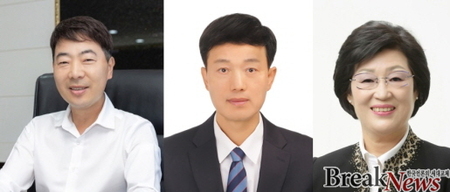
▲ 정길선 박사 ©브레이크뉴스 |
독일 뮌헨안보회의(MSC)가 14일에 개막해 16일까지 이어졌다. 이 회의에는 국가 원수와 정부 수반 약 60명, 장관 및 주요 국제기구 수장 약 150명 등 총 450여 명이 참석했으며 러시아는 예상대로 여기에 불참했다. 14일 프랑크-발터 슈타인마이어(Frank-Walter Steinmeier) 독일 대통령의 개막 선언을 시작으로 하여 참가자들이 다양한 방식으로 안보 문제를 협의하였으며 15일에는 '현재의 국제 질서와 대서양 파트너십의 미래'에 대한 주제로 세미나와 컨퍼런스가 열렸고 16일 마지막 날에는 '세계에서의 유럽 역할'에 대한 주제로 각종 컨퍼런스 행사가 진행되었다. 그리고 최종적으로 크리스토프 호이스겐(Christoph Heusgen) 안보회의 의장이 옌스 스톨텐베르크 전 나토 사무총장에게 뮌헨안보회의 의장직을 넘기는 것으로 모든 일정이 종결되었다. 그런데 원래 이 회의는 그 동안 나토 국방장관들의 비공식 회담으로 시작하는 것이 관례였지만 국가 수반 및 부수반이 회동하여 회담을 치르는 일은 거의 없었다. 그러나 트럼프 2기 행정부와 우크라이나 수반과의 만남은 매우 그간 관례에 비해 매우 이례적이었기에 많은 주목을 받았다.
미국 측에서는 J. D 밴스 부통령과 마르코 루비오(Marco Rubio) 국무장관이 회담에 응했으며 우크라이나 측에서는 젤렌스키 대통령과 안드레이 예르마크(Андрей Ермак) 대통령 실장 등이 참석했다. 그러나 미국과 우크라이나의 첫 만남은 처음부터 좋지 않았다. 지난 해 11월 대선에서 트럼프가 당선된 뒤 '24시간 내 러시아-우크라이나 전쟁 종전'을 공약했었는데 트럼프는 우크라이나의 나토 가입 반대와 영토 양보 등 우크라이나에 불리한 종전 방안을 제시했었다. 그러자 급한 측은 젤렌스키와 우크라이나였다. 젤렌스키는 자국에서 가장 가치있는 광물인 희토류 개발건을 당시 트럼프 당선자 팀(정권 인수위)에게로 주기로 했다. 이에 영국의 파이낸셜 타임스(FT)의 보도에 의하면 "우크라이나가 트럼프 대통령 측에게 주요 자원의 개발 협력에 관해 특별한 조건을 제안했다."고 보도했고, 미국 뉴욕타임스(NYT)는 "키예프는 트럼프 차기 행벙부와 광물 채굴 협정을 체결하기 위해 지난해 12월 바이든 당시 행정부와 협정 서명을 두 차례나 연기했다"고 보도했다.
우크라이나는 지난 12일 키예프에서 스콧 베센트(Scott Bessent) 미국 재무 장관으로부터 받은 미국-우크라이나 광물 협정 초안을 검토한 뒤 수정안을 14일 미국에 전달했고, 미국이 이를 검토하기 위해 회의 연기를 제안했다. 그래서 미국과 우크라이나 간의 첫 공식 회의가 늦게 시작된 이유다. 이처럼 미국과 우크라이나의 회담은 미국-러시아의 종전 회담과는 달리, 우크라이나의 광물을 둔 회담이 핵심이었다. 베센트 재무 장관은 키예프에서 젤렌스키에게 협정 초안을 전달한 뒤 "광물협정이 전후 우크라이나의 '안보 보호막'(Security Shield) 역할을 할 것"이라 했다. 이는 미군이 우크라이나에 주둔해 러시아로부터 우크라이나를 보호하는 댓가로 희토류와 같은 광물을 채굴하겠다는 것이다. 마르코 루비오 국무장관은 "우크라이나와의 협력을 통해 우크라이나의 광물 자원을 획득하면, 일부는 그곳에서 쓰인 수십억 달러에 대한 미국의 납세자들에게 반환되고, 일부는 우크라이나의 전쟁 피해 복구에 재투자될 것"이라 설명했다. 이는 미국 기업이 우크라니나 전후 피해 복구에 참여하는 것에 재투자하겠다는 것이다.
이러한 행위는 기존의 타 국가들이 우크라이나 재건 사업의 수주를 따내고 이를 이행하려 하는 기업들이 오히려 타격을 입을 수 있다. 특히 우크라이나 재건 수주에 막대한 자금과 계약건을 따낸 삼부토건에게는 최악의 상황이 될 수 있다. 하지만 이와 같은 광물 협정은 젤렌스키가 응하지 않으면서 결국 무산되는 것으로 결론이 났다. 광물 자원을 제공하는 대신, 우크라이나가 요구하는 확실한 안보 보장에 대한 내용이 빠졌기에 젤렌스키가 협정에 조인을 하지 않은 것이다. 미국의 로이터 통신에 의하면 미국이 젤렌스키에게 검토할 것도 없이 그냥 협정에 서명하도록 했다고 보도했다. 워싱턴 포스트(WP)와 파이낸셜 타임스(FT)는 미국이 젤렌스키에게 우크라이나의 광물 자원의 50%에 대한 권리를 미국에게 넘기도록 하는 협정 초안을 제시했지만, 거절당했다고 했다. 그러니까 미국은 우크라이나에게 협정을 강요했던 것이고 젤렌스키는 나름 우크라이나의 주권을 지키기 위해 거절했다는 얘기가 되는데 이렇게 되면 우선 거절을 했던 젤렌스키에게 앞으로의 협정은 매우 험난할 것으로 예측된다. 러시아는 급할 것이 없다. 이러한 상황을 적절히 이용하면서 러시아가 유리하게끔 협정을 이끌어낼 수밖에 없게 만드는 것이다.
미국 NBC는 베센트 재무 장관이 우크라이나 측에 '희토류의 50%를 보장하면 종전 후 우크라이나에 미군을 주둔시키겠다(If 50% of rare earths are guaranteed, we will station US troops in Ukraine after the war).'고 했다고 보도했다. 그러나 이것이 트럼프의 의중이었는지는 확인되지 않았다. 미군의 우크라이나 주둔은 러시아가 절대로 받아들이지 않을 것은 분명하고 이는 오히려 러시아의 반발을 부를 것이다. 이 전쟁의 목적이 우크라이나의 비나토화였는데 미군이 주둔한다면 나토화 한다는 것과 다를게 없기 때문이다. 이러한 미국의 광물협정 초안은 그 내용으로 볼 때 식민지 협정과 다를게 없다. 게다가 이러한 내용운 우크라이나의 내부에서 엄청난 반발을 부를 것은 뻔했다. 그래서 젤렌스키는 기자들에게 미국 측에서 제대로 된 협정안이 준비되지 않았기 때문에 나는 서명을 허락하지 않았고, 이와 같은 협정안은 우크라이나의 이익에 반하는 것으로 판단했다고 설명했다. 이에 당연히 벤스나 트럼프도 우크라이나의 부정적인 반응에 매우 불만스러워했다.
이러한 독일 뮌헨안보회의를 취재한 우크라이나 언론인인 율리아 자벨리나(Юлия Джавелина)는 유튜브 '라디오 NV(Радіо НВ)'를 통해 미국은 우크라이나에 대해 미국의 싱크탱크 전문가 수백 명이 광물협정 초안을 준비했는데, 우크라이나에서는 대통령과 그의 보좌관 몇몇이 졸속으로 수정해 불만을 갖고 있다고 주장했다. 미국과 우크라이나의 회담은 고작 40여 분만에 종료되었다. 회담 직후, 벤스 부통령은 인터뷰에서 전쟁을 끝내고 살상을 멈추길 원한다고 주장했으며 몇 년 뒤 동유럽이 분쟁에 휘말리게 될 평화가 아닌, 견고하고 지속적인 평화를 원한다고 언급했다. 젤렌스키 또한 좋은 대화를 나눴으며 이번이 첫 만남이고 마지막이 아닐 것으로 확신한다고 했다. 그러면서 더욱 대화하고 협력해 푸틴 을 막을 계획을 준비해야 한다고 했다. 그는 회담에 앞서 우크라이나는 트럼프, 유럽과 공모하여 공통된 계획을 세운 뒤에야 푸틴 대통령과 협상할 수 있다면서 전쟁 종식을 위한 미국의 준비되어진 어떠한 계획도 보이지 않는다고 비판하기도 했다. 광물협정 초안을 두고 회담이 아닌 협상을 했던 양측의 첫 회담은 좋지않았다는 분위기다.
그런데 필자가 볼 때 우크라이나는 미국이 우크라이나의 광물 협정 수정안을 거부하며 버틸 경우, 대체할 수 있는 보험이 전무하다는 것이 현실이다. 미국이 대 우크라이나 군사 지원의 대부분을 감당하고 있는 상황에서 광물 협정으로 인한 협상은 미국이 받아들이겠다고 해야만 유용하기 때문이다. 젤렌스키는 광물 아니면 현재 트럼프의 마음을 움직일 수 있는 카드가 마땅치 않기 때문인데 희토류가 상당수 묻혀 있는 그린란드도 노리고 있는 트럼프가 굳이 우크라이나의 희토류에 집착할 이유가 없다. 트럼프에게 있어 우크라이나의 희토류는 있으면 "땡큐"인거고 없어도 그닥 아쉬울게 없다. 만약 그린란드에 대한 트럼프의 배팅이 실패할 경우, 차선으로 우크라이나를 찾을 지 모르겠지만 현재 트럼프는 우크라이나의 희토류는 있으면 감사하고 없어도 그닥 아쉬울 것이 없는 그런 존재에 불과하다. 마침 데미스 슈미갈 우크라이나 총리는 미국 폴리티코에 우크라이나의 광물 자원을 유럽에도 제공할 수 있다며 기고했다. 기고문에 의하면 "우크라이나는 EU에 중요한 30가지 광물 중 22가지를 보유하고 있다" 며 "유럽 대륙에서 최다 매장량을 지닌 우라늄을 유럽에 수출할 수 있다"고 지적했다.
또 "우크라이나에는 유럽에서 가장 큰 리튬 광산이 있고, 티타늄 매장량도 세계 상위권에 속해 유럽 시장에서 러시아 티타늄을 대체할 수 있다"고 했다. 그러나 이 자원의 매장 지역의 70%는 러시아의 점령지 관할에 있다. 즉, 이 자원을 갖고 싶으면 러시아와 전쟁을 해서 가져가라는 것이다. 그러나 유럽이나 미국은 러시아와 전쟁을 할 수 있는 여력이 없다. 그렇기 때문에 우크라이나의 자원은 공수표에 불과할 수밖에 없다. 젤렌스키의 선택지는 하나 뿐이다. 러시아에 항복해 러시아의 요구조건을 수용해야 집단서방과 미국의 불합리한 조건에서 해방될 수 있다. 이 선택지가 우크라이나와 젤렌스키에게 최선의 선택이다.
*필자/ 정길선.
노바토포스 회원, 역사학자, 고고인류학자, 칼럼니스트, 러시아 과학아카데미 유라시아 고고인류학연구소 연구교수.
*아래는 위 기사를 '구글 번역'으로 번역한 영문 기사의 [전문]입니다. '구글번역'은 이해도 높이기를 위해 노력하고 있습니다. 영문 번역에 오류가 있을 수 있음을 전제로 합니다.<*The following is [the full text] of the English article translated by 'Google Translate'. 'Google Translate' is working hard to improve understanding. It is assumed that there may be errors in the English translation.>
US & Ukraine Meeting at the Munich Security Conference (MSC) in Germany
Columnist Gil-seon Jeong
The Munich Security Conference (MSC) in Germany opened on the 14th and continued until the 16th. Approximately 450 people attended the conference, including about 60 heads of state and government, 150 ministers, and heads of major international organizations. As expected, Russia did not attend. Starting with the opening declaration by German President Frank-Walter Steinmeier on the 14th, participants discussed security issues in various ways. On the 15th, seminars and conferences were held on the topic of 'Current International Order and the Future of the Atlantic Partnership', and on the last day of the conference on the 16th, various conference events were held on the topic of 'Europe's Role in the World'. Finally, all schedules were concluded with Security Conference Chairman Christoph Heusgen handing over the Munich Security Conference Chairmanship to former NATO Secretary General Jens Stoltenberg. However, this meeting originally began as an informal meeting between NATO defense ministers, and it was rare for heads of state and deputy heads of state to meet and hold a meeting. However, the meeting between the Trump administration and the Ukrainian leader was very unusual compared to previous meetings, and thus attracted a lot of attention.
From the U.S. side, Vice President J.D. Vance and Secretary of State Marco Rubio attended the meeting, while from the Ukrainian side, President Zelensky and Presidential Chief of Staff Andrei Yermak attended. However, the first meeting between the U.S. and Ukraine was not good from the beginning. After Trump was elected in the presidential election last November, he promised to "end the Russia-Ukraine war within 24 hours," but Trump proposed an end-of-war plan that was unfavorable to Ukraine, such as opposing Ukraine's accession to NATO and territorial concessions. Then, the side that was in a hurry was Zelensky and Ukraine. Zelensky decided to give the development of rare earth minerals, the most valuable minerals in his country, to the then-Trump team (the transition team). According to the Financial Times (FT), “Ukraine proposed special conditions to President Trump regarding cooperation in the development of key resources,” and the New York Times (NYT) reported that “Kiev postponed the signing of the agreement with the Biden administration twice in December of last year in order to conclude a mineral mining agreement with the Trump administration.” Ukraine reviewed the draft of the US-Ukraine minerals agreement received from US Treasury Secretary Scott Bessent in Kiev on the 12th and delivered the revised version to the US on the 14th, and the US proposed to postpone the meeting in order to review it. That is why the first official meeting between the US and Ukraine started late. Unlike previous meetings between the US and Russia, the meeting between the US and Ukraine was centered on Ukraine’s minerals. After delivering the draft agreement to Zelensky in Kiev, Treasury Secretary Besent said, “The minerals agreement will serve as a ‘security shield’ for postwar Ukraine.” This means that in exchange for the US military stationed in Ukraine to protect Ukraine from Russia, the US will mine minerals such as rare earths. Secretary of State Marco Rubio explained, “If we obtain Ukraine’s mineral resources through cooperation with Ukraine, some of it will be returned to American taxpayers for the billions of dollars spent there, and some will be reinvested in Ukraine’s war recovery.” This means that US companies will reinvest in Ukraine’s postwar recovery efforts.
This practice could actually hurt companies that have already won contracts for Ukraine’s reconstruction projects from other countries and are trying to implement them. In particular, it could be the worst situation for Sambu Construction, which won a huge amount of money and contracts for Ukraine’s reconstruction. However, this minerals agreement ended up falling through when Zelensky refused to respond. Instead of providing mineral resources, Zelensky did not sign the agreement because it lacked the content of the security guarantee that Ukraine demanded. According to Reuters, the United States made Zelensky sign the agreement without even reviewing it. The Washington Post (WP) and the Financial Times (FT) reported that the United States presented Zelensky with a draft agreement that would have Zelensky transfer the rights to 50% of Ukraine's mineral resources to the United States, but it was rejected. In other words, the United States forced Ukraine to sign the agreement, and Zelensky rejected it in order to protect Ukraine's sovereignty. If this happens, it is predicted that the future agreement will be very difficult for Zelensky, who initially rejected it. Russia is in no hurry. It is necessary to make the most of this situation and force Russia to reach an agreement that is advantageous to it. NBC reported that US Treasury Secretary Bessent told Ukraine, "If 50% of rare earths are guaranteed, we will station US troops in Ukraine after the war." However, it has not been confirmed whether this was Trump's intention. It is clear that Russia will never accept the stationing of US troops in Ukraine, and this will rather provoke a backlash from Russia. The purpose of this war was to de-NATO Ukraine, so stationing US troops there would be no different from integrating Ukraine into NATO. Judging from its content, this US mineral agreement draft is no different from a colonial agreement. Furthermore, it was obvious that this content would provoke a huge backlash within Ukraine. Therefore, Zelensky explained to reporters that he did not allow the signing because the US side did not prepare a proper agreement, and that he judged that such an agreement was against Ukraine's interests. Naturally, both Vance and Trump were very dissatisfied with Ukraine's negative response. Yulia Dzhavelina, a Ukrainian journalist who covered the Munich Security Conference in Germany, claimed on YouTube's Radio NV that the United States was dissatisfied with the fact that hundreds of experts from U.S. think tanks had prepared a draft minerals agreement for Ukraine, but Ukraine was dissatisfied with the hasty revisions made by the president and several of his aides. The U.S.-Ukrainian talks ended in just 40 minutes. Immediately after the talks, Vice President Bence said in an interview that he wanted to end the war and stop the killings, and that he wanted a solid and lasting peace, not a peace that would lead to conflict in Eastern Europe in a few years. Zelensky also said that they had a good conversation and that he was sure that this would be the first and not the last meeting. He said that they should talk more and cooperate to prepare a plan to stop Putin. Before the talks, he criticized that the United States did not have any prepared plan to end the war, saying that Ukraine could only negotiate with President Putin after colluding with Trump and Europe and coming up with a common plan. The atmosphere is that the first meeting between the two sides, which was not a meeting but a negotiation over the draft mineral agreement, was not good.
However, in my view, the reality is that Ukraine has no alternative insurance if the United States refuses to amend the mineral agreement and holds out. Since the United States is responsible for most of the military support to Ukraine, negotiations based on the mineral agreement are only useful if the United States accepts it. Zelensky does not have any cards that can move Trump's heart other than minerals, and Trump, who is also targeting Greenland, which has a significant amount of rare earth minerals, has no reason to be obsessed with Ukraine's rare earth minerals. For Trump, if there are rare earth minerals in Ukraine, it is "thank you" and if there are none, it is not so bad. If Trump's bet on Greenland fails, he might look to Ukraine as a second choice, but for now, Trump is just someone who is grateful for Ukraine's rare earth minerals and not so bad without them. At the same time, Ukrainian Prime Minister Demis Shmygal contributed to Politico, saying that Ukraine's mineral resources can be provided to Europe. According to the contribution, "Ukraine has 22 of the 30 minerals important to the EU," and "it can export uranium, which has the largest reserves on the European continent, to Europe." He also said, "Ukraine has the largest lithium mine in Europe and its titanium reserves are among the top in the world, so it can replace Russian titanium in the European market." However, 70% of the reserves of these resources are under the jurisdiction of Russian occupied territories. In other words, if you want these resources, you have to go to war with Russia and take them. However, Europe and the United States do not have the capacity to go to war with Russia. Therefore, Ukraine's resources can only be an empty promise. Zelensky has only one choice. He can only surrender to Russia and accept its demands in order to be freed from the unreasonable conditions of the collective West and the United States. This option is the best choice for Ukraine and Zelensky.