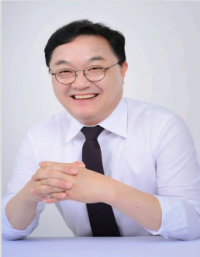
▲ 노승석 박사. ©브레이크뉴스 |
도서출판 여해는 4월24일 보도자료에서 “이순신 장군 탄신 8주갑(480년)을 맞아 2013년 유네스코 세계기록유산 난중일기 등재 시에 심의도서였던 『교감완역 난중일기(이순신 지음, 노승석 옮김)』의 개정 3판(도서출판 여해)이 출간되었다. 교감(校勘)이란, 서로 다른 판본을 비교 조사하여 오류를 교정하는 작업이다. 이 책은 2010년에 간행한 후 15년 만에 간행한 것이다. 이 책은 용어와 인명, 지명 등 최근까지 연구된 내용을 반영하고 어려운한문을 한글로 쉽게 풀어 가독성을 높였다”고 알렸다.
이 자료에 따르면, 『교감완역 난중일기』는 2015년 문화관광부 산하기관인 한국문학번역원의 지원으로 베트남어로 번역되어 베트남에서 출간되었고, 이 책의 축약판은 2016 출판문화산업진흥원 대학신입생 추천도서로 선정됐다. 그후 성균관대학교 성균고전 100선 선정됐고, 대구교육대학교 DNUE 50 Greatbooks 교양도서에 선정됐다.
이 책의 역자 노승석 여해고전연구소장은 40여 년 간 초서와 한문을 연구한 고전학자로서 이순신 서체에 영향을 준 동진(東晉)의 왕희지(王羲之)와 당(唐)의 손과정(孫過庭) 초서를 연구해왔다. 이러한 연구를 바탕으로 난중일기를 완역하고 가장 방대한 문헌으로 고증한 난중일기 교주본을 간행하였다. 그 과정에서 새로운 난중일기 36일치와 유성룡이 쓴 이순신의 전사기록 등을 발굴했다.
이 책에는 약 150여 년 전후에 그려진 것으로 추정되는 미공개본 이순신 영정이 실려 있다. 이 영정은 우측에 ‘여해진영(汝諧眞影)’이라고 적혀 있어 이순신의 영정임을 알 수 있다. 여해(汝諧)는 이순신의 자(字)이다. 이 영정의 얼굴상은 현존하는 영정들에 비해 가장 잘 그려진 것으로 평가된다. 특히 이순신이 쓴 것으로 추정되는 새로운 편지1통을 소개했다. 저작 시기와 수신자 미상이나, 딸의 혼사를 앞두고 사돈이 될 두동(斗洞) 지역의 집사(執事)에게 예물과 주단을 요청한 편지이다.
 ▲ 교감완역 개정3판 표지. ©브레이크뉴스 |
1597년 6월 2일 백의종군 중에 이순신이 단계 시냇가(산청 벽계마을 단계천)에서 아침밥을 먹고 삼가현으로 갔다는 내용이 난중일기에 있다. 최근 해당 유적지의 옛길 상황을 조사한 내용에 의하면, 단계천에서 산청군 신등면의 두곡과 간공리 연산 마을, 농산재 산길을 거쳐 삼가현으로 이어진 것이 확인되었다. 이곳은 임진왜란 당시 산청에서 삼가로 가는 유일한 길이었다. 때문에 간공마을 입구에 640여년 된 느티나무가 서있는데, 그 당시 이순신이 이 나무 앞을 지나간 것으로 보인다. 그러나 현재의 조성된 백의종군로에서는 신등면 간공리 길이 누락되고 대신 대체로(1089번 도로)를 사용하므로 그동안 소개되지 못했다. 이 책에는 이순신의 전사설에 근거가 되는 유성룡이 『경자년 대통령』표지에 적은 이순신의 전사기록 전문을 수록하였다. 이 내용은 2022년 국외소재문화유산재단의 의뢰로 역자가 해독한 것이다. 특히 노량해전에서 부하들이 이순신에게 “대장께서 스스로 가벼이 해서는 안됩니다(大將不宜自輕)”라고 말한 내용과 “직접 출전하여 전쟁을 독려하다(親出督戰)”라는 내용은 이 기록에만 있는 것으로 밝혀졌다.
그 외 이순신이 인척 집안인 현덕승과 현건에게 보낸 편지를 엮은 서간첩, 난중일기의 대표적인 유적지 50여 곳의 사진을 모은 사진첩이 수록되어 있다. 특히 이순신의 모친이 생전에 여수에서 사용했을 것으로 추정되는 솥과 이순신이 낙안객사 뒤뜰에 심은 푸조나무 사진을 수록했다.
*아래는 위 기사를 '구글 번역'으로 번역한 영문 기사의 [전문]입니다. '구글번역'은 이해도 높이기를 위해 노력하고 있습니다. 영문 번역에 오류가 있을 수 있음을 전제로 합니다.<*The following is [the full text] of the English article translated by 'Google Translate'. 'Google Translate' is working hard to improve understanding. It is assumed that there may be errors in the English translation.>
Published the 3rd revised edition of the 'Gyogamwanyeok Nanjung Ilgi' to mark the 480th anniversary of Admiral Yi Sun-sin's birth
- Reporter Park Jeong-dae
Yeohae Publishing announced in a press release on April 24 that "In commemoration of the 8th anniversary of Admiral Yi Sun-sin's birth (480 years), the 3rd revised edition (Yeohae Publishing) of the 'Gyogamwanyeok Nanjung Ilgi (written by Yi Sun-sin, translated by Noh Seung-seok)', which was a book under review when the Nanjung Ilgi was registered as a UNESCO Memory of the World in 2013, has been published. Proofreading is the process of comparing and examining different editions to correct errors. This book was published 15 years after its publication in 2010. This book reflects the latest research on terms, names of people, and place names, and improves readability by easily translating difficult Chinese characters into Korean." According to this data, 『Gyogamwanyeok Nanjung Ilgi』 was translated into Vietnamese and published in Vietnam in 2015 with the support of the Literature Translation Institute of Korea, an affiliate of the Ministry of Culture and Tourism, and the abridged version of this book was selected as a recommended book for university freshmen by the 2016 Publication Culture Industry Promotion Agency. Afterwards, it was selected as one of the 100 Sungkyunkwan Classics by Sungkyunkwan University and one of the DNUE 50 Greatbooks liberal arts books by Daegu National University of Education.
The translator of this book, Noh Seung-seok, the director of the Yeohae Classics Research Institute, is a classicist who has studied cursive script and Chinese characters for over 40 years and has studied the cursive script of Wang Xizhi (王羲之) of the Eastern Jin Dynasty and Sun Jiaoting (孫過庭) of the Tang Dynasty, which influenced Yi Sun-sin's calligraphy. Based on this research, he translated the Nanjung Ilgi completely and published the Nanjung Ilgi Gyojubon, which is the most extensively verified version of the literature. In the process, we discovered a new 36-day Nanjung Ilgi and Yi Sun-sin's war records written by Yu Seong-ryong.
This book includes an unpublished portrait of Yi Sun-sin, which is estimated to have been painted around 150 years ago. This portrait has the words "Yeohae Jinyeong (汝諧眞影)" written on the right side, indicating that it is Yi Sun-sin's portrait. Yeohae (汝諧) is Yi Sun-sin's courtesy name. The facial features of this portrait are considered to be the best-drawn of all existing portraits. In particular, we introduce a new letter presumed to have been written by Yi Sun-sin. The date of writing and recipient are unknown, but it is a letter requesting gifts and silk from the local magistrate of Dudong (斗洞), who would become his in-laws, in preparation for his daughter's wedding.
There is a record in Nanjung Ilgi that on June 2, 1597, during his Baekui Jonggun, Yi Sun-sin ate breakfast at the Dange Stream (Dange Stream in Byeokgye Village, Sancheong) and went to Samga-hyeon. According to a recent investigation into the old road conditions at the site, it was confirmed that it went from Dange Stream to Dugok in Sindang-myeon, Sancheong-gun, and Yeonsan Village in Gan-gong-ri, and Nongsanjae Mountain Road to Samga-hyeon. This was the only road from Sancheong to Samga during the Imjin War. Therefore, there is a 640-year-old zelkova tree standing at the entrance to Gan-gong Village, and it seems that Yi Sun-sin passed by this tree at the time. However, the current Baekui Jonggun Road omits the Sindang-myeon Gan-gong-ri Road and instead uses the general route (Road No. 1089), so it has not been introduced until now. This book includes the full text of Yi Sun-sin’s battle record written by Yu Seong-ryong on the cover of “President of Gyeongja Year,” which is the basis for the theory of Yi Sun-sin’s death. This content was deciphered by the translator at the request of the Overseas Cultural Heritage Foundation in 2022. In particular, the content of the subordinates telling Yi Sun-sin in the Battle of Noryang, “The general should not take things lightly (大將不宜自輕)” and “He went out to personally encourage the war (親出督戰)” were found to be only found in this record.
In addition, it includes a collection of letters sent by Yi Sun-sin to his relatives, Hyeon Deok-seung and Hyeon Geon, and a photo album of photos of around 50 representative historical sites in the Nanjung Ilgi. In particular, it includes a photo of a pot that Yi Sun-sin’s mother is believed to have used in Yeosu while she was alive and a photo of a persimmon tree that Yi Sun-sin planted in the backyard of Nakan Guesthouse.