1990년대 초반, 국제 사회를 뒤흔든 극심한 정치·경제적 격변의 한복판에서 북한은 기존의 국가 중심 계획경제 체계가 돌연 붕괴하는 전례 없는 위기를 경험했다. 소련과 동구권 사회주의 국가들의 동시다발적 몰락과 그에 따른 외부 지원 중단, 그리고 자연재해로 인한 연이은 경제적 타격은 북한의 공식 배급 체계를 무력화시키면서 사회 전반에 깊은 혼란과 불안을 초래했다. 이러한 극단적 상황 하에서 전통적 국가 의존적 생존 모델은 무너졌고, 주민들은 국가가 보장하지 못하는 생계의 틈새를 스스로 메우기 위한 새로운 경제적 공간으로서 ‘시장’을 자발적으로 형성하기 시작했다.
특히 이 과정에서 주목할 만한 점은, 북한 시장경제의 태동기에 여성들이 가장 적극적이고 주도적인 경제 행위자로 부상했다는 사실이다. 이는 단순한 생계형 활동을 넘어 북한 사회 내부의 성별 권력 구조, 가족 규범, 계급 관계의 근본적인 재편을 시사하는 중요한 사회변동의 징후로 이해되어야 한다. 여성들은 전통적으로 국가와 가족에 의해 제한되었던 공간을 넘어서, 시장에서 가사노동의 상품화와 경제적 주체화라는 새로운 역할을 획득함으로써, 가부장적 질서 내에 존재하던 성별 위계가 수행적 재구성 과정을 거치고 있음을 보여준다.
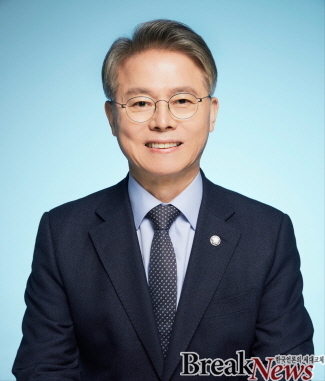
 ▲ 곽인옥 ©브레이크뉴스 |
따라서 본 연구는 북한 여성의 경제활동을 단순한 체제 적응이나 표면적 생존 전략이 아닌, 북한 특유의 시장화 과정 속에서 성별과 권력 구조의 근원적 변동과 사회 재편의 실천적 장면으로 분석하고자 한다. 이를 통해 여성의 경제 주체화가 야기하는 가족 내 권위의 재조정, 여성 내부 계층화, 그리고 전체 북한 사회가 직면한 경제·사회적 위기와 그 대응 양상의 복합성을 규명하는 데 기여하고자 한다. 이는 궁극적으로 북한 사회 내 성별 관계와 권력 역학을 다시 읽는 이론적·경험적 토대를 마련하는 데 중요한 의미를 가진다.
1. 평양 여성 경제인의 부상 – 생계를 넘은 경제주체로의 전환
북한의 시장화는 위기 속 생존의 도구로 출발했으나, 2000년대에 접어들면서 점차 일상화·체계화되며 사실상의 평행 경제 체계를 형성하기 시작했다. 특히 국가의 이념 중심 체계가 여전히 작동하는 한편, 일상생활 영역에서는 생존을 위한 유연한 경제 활동이 두드러지는 이중 구조가 평양을 포함한 주요 도시에 출현했다.
자연스럽게 기존의 국가 중심 생산체계에서 배제되거나 고정된 남성들, 특히 군 복무나 지정된 국가 직장(“배치”)에 얽매인 남성들과 달리, 여성들은 경제활동에 유연하게 참여할 수 있는 위치에 있었다. 이에 따라 장마당, 노점, 비공식 무역, 다방·음식점 운영, 도·소매 유통 분야에서 여성들이 새로운 경제생태계의 주축으로 부상했다.
이러한 현상은 특히 행정 중심지인 평양에서 두드러지게 나타난다. 중구역, 모란봉구역, 보통강구역 등 평양의 중심 상권에서는 여성 무역상, 도소매상, 음식점 운영자, 이른바 ‘이동 장사꾼’들에 이르기까지 다양한 형태의 여성 경제활동가들이 지역 경제를 주도하고 있다. 이들은 물자 유통과 거래 가격 결정, 소비자와의 커뮤니케이션 능력을 통해 경제활동을 조직하고 이끌며, 단순히 ‘생계를 위한 대체 역할’에서 머무르지 않고 지역 상권의 권력층으로 자리매김하고 있다.
2. 성별 권력 구조의 변화 – 가정과 사회에서의 재배치
이처럼 여성의 경제적 영향력이 크게 증가하면서, 그 변화는 단지 시장 영역에 국한되지 않고 가정 내 권력 관계와 의사결정 구조마저 뒤흔드는 결과를 낳았다. 전통적으로 남성은 ‘국가의 병사, 일꾼으로서 공적 영역을 담당하고’, 여성은 ‘가사를 책임지는 가족 관리자’로 자리매김하는 이원적 역할 구조가 고정되어 있었으나, 이제 가족의 실질적인 생계와 소비, 교육, 자원 배분 등을 여성들이 이끌게 되면서, 가정 내 결정권이 여성에게 재편되는 경향을 보인다.
이는 국가가 제공하던 사회주의적 생계안전망이 무너지고, 자신이 벌어들인 수입으로 가정을 지탱해야 하는 조건 속에서 자연스럽게 등장한 결과다. 이로 인해 북한 사회에서 오랫동안 유지되어 온 가부장적 성별 권력 구조가 구조적으로 흔들리는 양상이 나타나고 있다.
3. 가사노동의 시장화 – 성별 분업의 실질적 전환
여성들이 시장경제의 주체로 떠오르는 과정에서 이들이 원래 담당하던 가정 내 무보수 가사노동은, 점차 외주화라는 방식으로 구조 전환되기 시작했다. 특히 평양에서는 이러한 변화가 선도적으로 나타났다. 초기 단계에서는 경제적으로 여유가 있는 가정들이 지방 출신의 친척 여성을 불러 가사와 육아를 맡기던 관행에서 시작되었으며, 이는 형식상 가족 내부 도움처럼 포장되기도 했다.
시간이 지나면서 이러한 방식은 보다 체계적이고 실용적인 노동 고용 형태로 전환되었다. 평양 주변부나 지방 출신 여성들이 ‘출퇴근형 가사도우미’로 고용되는 사례가 확산되었으며, 최근에는 단기 용역 노동이나 대학생 케어(학생 알바식 도우미) 형식으로도 발전하고 있다. 현재 평양시에서는 약 5만 명에 이르는 여성이 비공식 가사도우미로 활동 중인 것으로 추정되며, 이들은 일정한 현금, 쌀, 생필품 등으로 임금을 받는다.
주목할 점은 일부 권력 가정이나 상류층에서는 가사도우미에게 단순한 보상 이상의 특혜성 혜택—자녀 취업 알선, 대학 입학 지원, 행정 편의 제공 등—을 제공하는 경우도 있다는 점이다. 이는 가사노동 외주화가 단순 노동 거래를 넘어 사회적 연결망과 권력 관계의 재편을 병행하는 구조로 진화하고 있음을 의미한다.
즉, 과거 ‘여성의 책임’으로 여겨졌던 가사노동이 이제는 현금 가치를 지닌 상품으로 거래되며, 성별 분업 구조가 시장 메커니즘에 의거해 재구성되고 있는 것이다. 동시에 이 과정은 여성 내부의 경제적 위계와 고용·피고용의 권력관계까지 복합적으로 드러낸다.
4. 여성 내부의 계층화 – ‘여성 vs 여성’ 권력 갈등의 출현
이러한 변화 과정에서 여성 내부에서도 경제적 자율성과 사회적 지위를 갖춘 상층 여성과, 생계형 고용에 종속된 하층 여성 간에 계층적 격차가 뚜렷해지고 있다. 고용주로서의 여성과 고용된 여성 간에는 단순한 경제적 불균형만이 아니라, 일상적 권력 관계, 노동 조건 결정, 신체적·정서적 부담 분배 등 다층적인 차이가 존재한다.
이로써 북한 사회는 기존의 ‘남성 대 여성’이라는 성별 이분법을 넘어서, 여성 내부의 계급적 분화와 권력의 재배분이라는 새로운 갈등 구조에 직면하게 됐다. 이러한 내부 분열은 장기적으로 여성 연대의 약화를 초래하면서 여성 전체의 사회적 입지를 불안정하게 만들 가능성이 있다.
5. 삼중(三重) 노동과 여성 삶의 질 악화
현대 북한 여성은 경제활동, 가사·육아, 국가 체제에 따른 정치적 동원이라는 삼중 노동에 시달리는 구조 속에 놓여 있다. 시장에서의 활동과 가정 내 책임이 병행되는 가운데, 국가의 정치행사, 조직 생활, 집단 노동 동원 등에 따른 시간과 에너지 소모까지 가중되기 때문이다.
이러한 다중역할은 단지 생계의 고달픔을 넘어 여성의 육체적·정신적 소진을 초래하며, 사회 전반의 삶의 질을 저하시키는 요인으로 작용한다. 공적 돌봄 시스템의 부재, 노동권 보호 장치 미비, 양육비용 부담 구조 등 다양한 문제가 복합적으로 작용해, 여성의 불안정성과 피로감은 북한 사회 전체의 지속 가능성에 대한 위협 요인으로 부상하고 있다.
6. 가사노동의 시장화, 사회구조적 재편의 신호
평양 여성 경제인의 부상은 북한사회 성별 권력 구조 재편의 구조적 신호이며, 수행적 성 역할 개념으로 확장될 수 있다.
지금까지 살펴본 바와 같이, 평양을 중심으로 나타난 여성 경제인의 부상과 가사노동의 시장화, 그리고 여성 내부의 계층 분화는 일시적 현상이나 개인 선택의 산물이 아니다. 이는 북한 사회 내부에서 기존 성별 권력 구조와 계급 구조가 교차 재편되며 나타나는 구조적 변화의 표지이다.
특히 국가 배급 중심의 사회주의 체제 안에서 자생적으로 나타난 시장주의적 생존 전략은, 여성들을 경제와 사회의 실질적 주체로 부상시킴과 동시에 성 역할의 개념 자체를 유연하게 확장시키는 전환점으로 작용하고 있다. 더 나아가 이 과정은 전통적 성별 역할 규범을 탈 구조화하여, 새로운 방식의 여성성과 가부장제적 질서의 상호작용을 의미 있게 드러낸다.
이 점에서 사회학자 주디스 버틀러(Judith Butler)의 ‘성별 수행성(gender performativity)’ 개념은 이 현상을 해석하는 데 유의미한 이론적 틀을 제공한다. 버틀러는 성별이 생물학적 본질이 아닌 사회적으로 수행되고 구성되는 정체성의 일종이라고 보았다. 북한 여성들이 기존의 ‘가정의 보조자’라는 수행된 성 역할에서 벗어나, 경제 주체로 스스로를 재구성함으로써 새로운 성 정체성과 권력을 수행하게 되었다는 점에서, 이러한 변화는 수행적인 성 역할 해체의 대표적 사례라고 볼 수 있다.
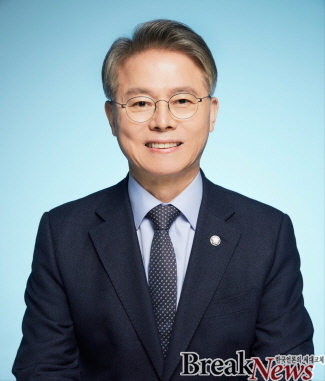
 ▲필자/ 곽인옥 교수. ©브레이크뉴스 |
궁극적으로, 평양 여성 경제인의 부상은 단순한 경제 주체의 전환을 넘어, 북한 체제 내부에서 성별 권력 구조, 가족 규범, 계급 질서의 다층적 재편이 시작되고 있다는 사회학적 신호이다. 따라서 향후 북한의 변화 방향은 이처럼 등장한 비공식 시장과 새로운 성별 권력 구도를 억제하거나 억압할 것이 아니라, 제도적으로 통합하고 보호하는 방향으로 재설계되어야 할 것이다. 그래야만 북한 사회는 내적 지속 가능성과 성별 정의를 실현하는 기반을 확보할 수 있을 것이다.
*필자/곽인옥 교수.
*아래는 위 기사를 '구글 번역'으로 번역한 영문 기사의 [전문]입니다. '구글번역'은 이해도 높이기를 위해 노력하고 있습니다. 영문 번역에 오류가 있을 수 있음을 전제로 합니다.<*The following is [the full text] of the English article translated by 'Google Translate'. 'Google Translate' is working hard to improve understanding. It is assumed that there may be errors in the English translation.>
[Pyongyang Market Economy Report] Rise of Pyongyang’s Female Entrepreneurs ‘Marketization of Housework’
Signs of Restructuring of North Korea’s Social Structure
-Professor Kwak In-ok
In the early 1990s, amidst the extreme political and economic upheaval that shook the international community, North Korea experienced an unprecedented crisis in which its existing state-centered planned economic system suddenly collapsed. The simultaneous collapse of the Soviet Union and Eastern Bloc socialist countries, the subsequent suspension of external support, and the subsequent economic blows from natural disasters rendered North Korea’s official distribution system ineffective, causing deep confusion and anxiety throughout society. Under these extreme circumstances, the traditional state-dependent survival model collapsed, and residents began to voluntarily form ‘markets’ as a new economic space to fill the gap in their livelihoods that the state could not guarantee.
What is particularly noteworthy in this process is the fact that women emerged as the most active and leading economic actors during the early stages of North Korea’s market economy. This should be understood as a sign of significant social change that goes beyond simple livelihood activities and fundamentally reorganizes the gender power structure, family norms, and class relations within North Korean society. Women have gone beyond the space traditionally restricted by the state and family, and have acquired new roles in the market, such as the commercialization of housework and economic subjectivation, showing that the gender hierarchy that existed within the patriarchal order is undergoing a process of performative reorganization.
Therefore, this study aims to analyze North Korean women’s economic activities not as simple adaptation to the system or a superficial survival strategy, but as a practical scene of fundamental changes in the gender and power structure and social reorganization within the marketization process unique to North Korea. Through this, it aims to contribute to clarifying the readjustment of authority within the family, the internal stratification of women, and the complexity of the economic and social crises and responses faced by the entire North Korean society caused by women’s economic subjectivation. This ultimately has important significance in establishing a theoretical and empirical foundation for rereading gender relations and power dynamics within North Korean society.
1. The Rise of Pyongyang’s Women Entrepreneurs – Transitioning from a Livelihood to an Economic Entity
North Korea’s marketization began as a tool for survival in times of crisis, but as it entered the 2000s, it gradually became routine and systematized, forming a de facto parallel economic system. In particular, while the state’s ideologically centered system still operates, a dual structure emerged in major cities, including Pyongyang, in which flexible economic activities for survival were prominent in everyday life.
Unlike men who were naturally excluded or fixed from the existing state-centered production system, especially those tied to military service or designated state jobs (“deployment”), women were in a position to flexibly participate in economic activities. Accordingly, women emerged as the mainstays of the new economic ecosystem in markets, street vendors, informal trade, teahouses and restaurants, and wholesale and retail distribution.
This phenomenon is particularly evident in Pyongyang, the administrative center. In the central commercial districts of Pyongyang, such as Jung-gu, Moranbong-gu, and Pothonggang-gu, various types of female economic activists, including female traders, wholesalers, retailers, restaurant operators, and so-called “mobile merchants,” are leading the local economy. They organize and lead economic activities through the distribution of goods, price determination, and communication skills with consumers, and they are not simply “alternative roles for livelihood,” but are establishing themselves as the power elite of the local commercial district.
2. Changes in the gender power structure – redistribution in the family and society
As women’s economic influence has increased significantly, the changes have not been limited to the market sector, but have also shaken up power relations and decision-making structures within the family. Traditionally, the dual role structure was fixed, with men “responsible for the public sector as soldiers and workers of the state,” and women “responsible for housework,” but now, as women take the lead in the family’s actual livelihood, consumption, education, and resource allocation, there is a tendency for decision-making power within the family to be reorganized in the hands of women.
This is a natural result of the collapse of the socialist livelihood safety net provided by the state, and the conditions under which households must be supported by their own income. As a result, the patriarchal gender power structure that has long been maintained in North Korean society is showing signs of structural shaking.
3. Marketization of housework – practical transformation of gender division of labor
In the process of women emerging as the main players in the market economy, the unpaid housework within the household that they were originally responsible for began to gradually transform into outsourcing. This change was particularly prevalent in Pyongyang. In the early stages, it began with the practice of wealthy families calling in female relatives from the provinces to do housework and childcare, which was sometimes packaged as internal family help.
Over time, this method transformed into a more systematic and practical form of labor employment. Cases of women from the outskirts of Pyongyang or the provinces being hired as “commuting housekeepers” have spread, and recently, it has also developed into short-term contract labor or college student care (student part-time helpers). Currently, it is estimated that approximately 50,000 women are working as unofficial housekeepers in Pyongyang, and they receive a certain amount of wages in the form of cash, rice, and daily necessities.
It is noteworthy that some powerful families and the upper class provide housekeepers with special benefits beyond simple compensation—such as job placement for their children, college admission assistance, and administrative convenience. This means that outsourcing of housework is evolving into a structure that goes beyond simple labor transactions and involves the reorganization of social networks and power relations.
In other words, housework, which was once considered “women’s responsibility,” is now traded as a commodity with cash value, and the gender division of labor structure is being reconstructed based on market mechanisms. At the same time, this process reveals the complex economic hierarchy within women and the power relations of employment and employment.
4. Stratification within women – Emergence of “women vs. women” power conflicts
In the process of this change, the hierarchical gap between upper-class women with economic autonomy and social status and lower-class women dependent on livelihood-type employment is becoming more evident within women. There are not only simple economic imbalances between women as employers and employed women, but also multi-layered differences in everyday power relations, determining labor conditions, and distribution of physical and emotional burdens.
As a result, North Korean society has gone beyond the existing gender dichotomy of ‘men versus women’ and has come to face a new conflict structure of class division and redistribution of power within women. This internal division is likely to weaken women’s solidarity in the long term and destabilize the social position of women as a whole.
5. Triple Labor and Deterioration of Women’s Quality of Life
Modern North Korean women are placed in a structure where they suffer from triple labor: economic activity, housework/childcare, and political mobilization according to the state system. This is because while market activities and domestic responsibilities are carried out simultaneously, time and energy consumption due to state political events, organizational life, and collective labor mobilization is also increased.
These multiple roles go beyond the simple hardship of making a living, causing physical and mental exhaustion for women and acting as a factor that lowers the quality of life in society as a whole. The absence of a public care system, the lack of labor rights protection devices, and the burden structure of childcare costs are all complex problems that are causing women’s instability and fatigue to emerge as threats to the sustainability of North Korean society as a whole.
6. Marketization of Housework and a Sign of Social Structural Reorganization
The rise of women businesswomen in Pyongyang is a structural sign of the reorganization of the gender power structure in North Korean society, and can be expanded into the concept of performative gender roles.
As we have seen so far, the rise of women businesswomen, the marketization of housework, and the class differentiation within women centered around Pyongyang are not temporary phenomena or products of individual choice. They are signs of structural changes that are occurring as the existing gender power structure and class structure are reorganized within North Korean society.
In particular, the market-oriented survival strategy that emerged spontaneously within the socialist system centered on state distribution is acting as a turning point that raises women as real subjects of the economy and society while flexibly expanding the concept of gender roles itself. Furthermore, this process deconstructs traditional gender role norms, meaningfully revealing the interaction between new forms of femininity and patriarchal order.
In this regard, the concept of ‘gender performativity’ by sociologist Judith Butler provides a meaningful theoretical framework for interpreting this phenomenon. Butler viewed gender as a kind of identity that is socially performed and constructed, rather than a biological essence. In that North Korean women have broken away from their existing performed gender role as ‘household helpers’ and reconstructed themselves as economic agents, thereby performing new gender identities and power, this change can be seen as a representative example of the dismantling of performative gender roles.
Ultimately, the rise of Pyongyang’s female entrepreneurs is a sociological signal that a multi-layered reorganization of gender power structures, family norms, and class order within the North Korean system is beginning, beyond the simple transformation of economic agents. Therefore, the direction of change in North Korea in the future should be redesigned in a way that institutionally integrates and protects the informal market and new gender power structures that have emerged in this way, rather than suppressing or repressing them. Only then will North Korean society be able to secure the foundation for realizing internal sustainability and gender justice.
*Author/Professor Kwak In-ok