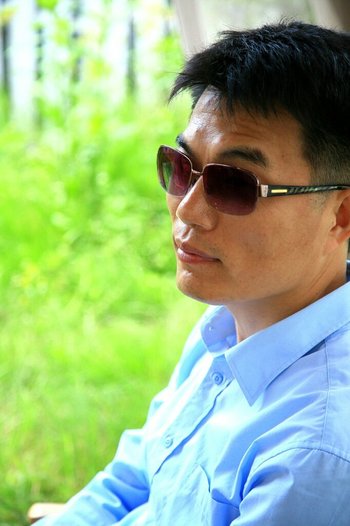
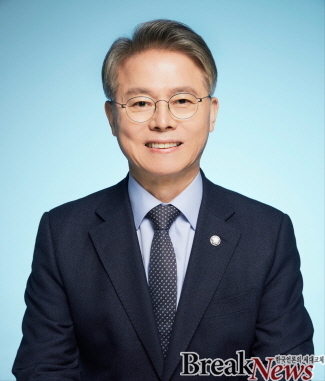
▲ 김수종 작가 ©브레이크뉴스 |
2023년 현재 대한민국은 지독한 지방소멸위기 속에 살고 있다. 일본도 비슷한 현실 속에서 동반침몰의 모습을 보여주고 있다. 이런 가운데 일본 후쿠이현(福井県)의 다양한 성공 사례는 지방의 시장과 군수 및 시도, 시군의원들에게 무엇인가 희망의 좌표를 제시하고 있다.
지난 2016년에 출간된 <이토록 멋진 마을(福井モデル)>(도서출판 황소자리)은 가장 먼저 지역민들의 고향사랑 즉 향토애를 중요하게 강조하고 있다. 다음은 지역에 살고 있는 젊은이들에게 취업과 창업기회를 무한제공하는 것이다.
세 번째는 외지인에 대한 적극적 수용이다. 결코 배타적이지 않은 열린 마음과 행동을 강조한 것이다. 마지막은 재주 많고 똑똑하고 튀는 괴짜들에 대한 우대정책이다. 이를 통해 마을과 거리는 넘치는 예술혼과 문화적 풍토가 완성된다.
기본적으로 능력 있고 사고가 열린 시장, 군수를 포함한 지역 리더의 필요성, 여기에 권위의식 없는 공무원도 많아야 한다. 늘 연구, 공부하는 지역사회의 분위기 및 남다른 교육방법과 열린 태도도 주창하고 있다.
또 가족중심의 사고와 열정적이고 전문화, 특화된 소상공인들, 여기에 수출중심의 세계적 기술력을 갖춘 중소기업이 많은 것도 특징이다. 마지막은 모든 시민들이 평생현역으로 살겠다는 마음, 누구나 평등하다는 사고, 사람과 사람의 끊임없는 대화와 연계, 동질성으로 뭉친 부지런함이 후쿠이현을 강하게 만든 원동력이다.
일본은 우리보다 20년 앞서 저성장의 늪에 빠졌다. 정점을 지난 경제성장률, 젊은 세대를 비정규직으로 내모는 사회시스템 및 그와 맞물린 지속적으로 추락하는 저출산 지표, 인구의 고령화와 지역 공동체의 해체도 일찍 찾아왔다.
하지만 행정도 경제도 학계도 뾰족한 대책을 내놓지 못하기는 마찬가지였다. 그러던 2015년 일본인 모두가 후쿠이현에 눈을 돌리기 시작했다. 후쿠이현은 놀랍게도 객관적인 모든 지표에서 대도시를 압도하는 마을이었다.
노동자 세대 실수입에서 도쿄를 여유 있게 제치며 1위를 유지하는 곳. 초중학교 학력평가 1위, 맞벌이 비율 1위, 정규직 사원 비율 1위, 대졸 취업률 1위, 인구 10만 명당 서점 숫자 1위이며 노인과 아동 빈곤률 및 실업률은 가장 낮은 마을. 행복도 평가에서 10년 넘게 부동의 1위를 달리는 지역이다.
비결이 뭘까? 저자가 세계 3대 안경 산지인 후쿠이현 사바에시를 처음 찾았을 때 안경회관에서 만난 젊은 기업인은 의외의 말을 했다. “이곳은…, 일본에서 가장 빨리 중국에 당한 곳입니다.” 놀라운 말이다.
안경 산업뿐 아니다. 섬유와 칠기를 비롯해 후쿠이현이 자랑하는 제조업 대다수는 우리가 흔히 사양 산업이라고 부르는 직종이었다. 후쿠이의 제조업은 위축되고 붕괴하는 상황일까? 아니다. 끊임없는 소재혁명과 사업 확장을 통해 ‘사양산업판 실리콘밸리’를 만들어내고 있었다.
지난 2000년 시드니 올림픽 마라톤 금메달리스트 다카하시 나오코가 신어 유명해진 스포츠 슈즈가 있다. 신축성이 좋아 일명 ‘다카하시 나오코 모델’이라 불리며 매년 500만 켤레 이상 판매되는 이 스포츠 슈즈의 갑피는 후쿠이현의 핫타타테아미라는 직물회사가 개발한 더블 라셸 메시를 사용한다. 이 회사는 소재 혁신을 통해 신발과 의료용품 등 신사업 분야에서 승승장구하고 있다.
후쿠이 기업들의 이런 기술혁신의 밑바탕에는 지역 후쿠이대학, 후쿠이공업전문학교가 기업체와 손잡고 진행하는 공동개발에 있다. 수십 년간 한 우물을 파온 장인들과 IT에 능한 젊은 인재들이 머리를 맞대고 끊임없이 새로운 사업모델을 발굴하는 것이다.
지금 후쿠이에는 세계 1위 제품 및 기술이 14개, 일본 내 1위가 51개나 있다. 게다가 이들 모두는 중소기업이다. 흔히 지방은 도회에 비해 배타적이다. 하지만 후쿠이와 도야마로 대표되는 호쿠리쿠 지역은 다르다.
이웃 도마야현에 있는 항구도시 이와세. 세계 각지에서 찾아오는 관광객들로 북적이는 마을이다. 한때 길고양이와 전단지, 주정뱅이들만 즐비했던 이와세가 탈바꿈을 시작한 건 한 외지인에 의해서였다. 바다와 하늘과 시간이 남아도는 이곳의 헌 창고를 개조해 ‘덴카도’라는 명품점을 낸 사람은 수입제품 판매상 시케마쓰 히데카즈였다.
여기에 ‘마스다주조점’에서 3대째 가업을 계승한 마스다 류이치로가 새로운 이와세 만들기에 동참했다. 빈 집을 사들여 전통디자인을 적용한 복구작업을 하는 과정에서 행정이 합류하고 지역민이 적극 가세했다. 이렇게 해서 버려졌던 이와세는 단번에 역사적 풍취 가득한 마을로 변신했다.
후쿠이현으로 이사와 생각지도 않던 인생을 살게 된 여성도 있다. 의료제품 생산업체 ‘미디디어’사장 야마모토 노리코이다. 간호사로 일하다 결혼 후 전업주부가 된 야마모토는 2000년 남편의 본가가 있는 사바에로 이사한 후 맞벌이가 상식으로 통하는 이 동네분위기에 따라 의료현장에 복귀했다.
병원에서 환부를 고정하는 외과용 테이프가 자주 바닥에 떨어져 먼지가 묻는 것을 보며 아쉬워하던 그는 어느 날 화장품가게 부인에게 그 이야기를 들려주었다. 그날 이후 모든 게 일사천리로 진행됐다. 남편이 나서고 상공회의소와 인큐베이션 매니저가 도와 의료용 외과테이프 커터 ‘기루루(きるる)’가 뚝딱 만들어졌다.
평범한 가정주부에서 사업가로 변신한 야마모토는 말한다. “이곳으로 이사한 후 제 인생은 완전히 바뀌었습니다. 달려갈 수 있는 거리에 열정 넘치는 사람들이 숱하고, ‘대금은 천천히 줘도 좋아’라고 여유 부리면서도 일은 무척이나 빨랐습니다. 이곳에는 모든 것이 갖춰져 있습니다.”
그러면 왜 이런 풍토가 후쿠이에서 자생한 것일까? 지역의 약진 배경에는 중앙정부의 방침에 역행하는 후쿠이만의 교육방식이 있다고 저자는 말한다. 초중학교 학력평가 및 체력평가에서 항상 1등을 차지하는 후쿠이현에는 전국 각지의 교사들이 시찰 온다.
그들이 묻는 것은 딱 한 가지다. “왜 시험에서 항상 1등입니까?” 명쾌하게 들려줄 해답은 없다. 단지 주입식으로 진행되어온 일본의 교육방침을 따르지 않은 후쿠이만의 교육시스템이 있을 뿐이다. 오래 전부터 후쿠이는 ‘10년 앞을 내다본 수업’을 교육기초로 삼아 학습지도 요령을 독자적으로 구축해왔다.
지식을 습득하는 대신 생각하는 법을 가르치는 교실, 사고과정을 가시화해 자신의 생각이 어떻게 바뀌어 어떤 결론에 도달했는가를 자신의 말로 써내고 동료를 가르치며 배우고 익히는 수업. 한마디로 바뀐 세상에 맞게 생각하고 문제를 해결해가는 능력을 키워주는 자발교육이다.
후쿠이 사람들은 부지런한데다 평생 현역이고, 여성이 사회에 나가 일하는 것을 당연하게 생각했다. 마을 전체가 나서 육아하고, 일상 자체가 학교 역할을 했다. 끈끈한 향토애로 뭉쳐 있지만 외지인이 쉽사리 스며들기 쉬운 관용의 풍토가 널리 퍼져 있다.
후쿠이가 전국 상위에 오른 다른 분야를 열거해보면 고교생 취업내정률 2위, 맞벌이 비율 1위, 서점 숫자(인구 10만 명당) 1위, 도서관 숫자(인구 100만 명당) 6위, 자신소유의 집 소유율 3위, 보육원 수용 정원 비율 1위, 정사원 비율 1위이다.
지역의 과제는 문제에 직면한 지역에서 해결할 수밖에 없다. 국가정책은 지방에서 효과를 내기 어렵다. ‘향토주의’가 효과를 발휘하는 까닭이 여기에 있다. 도쿄와 지방의 가장 큰 차이는 소득 격차가 아니라 인재층의 두께다. 대학과 기업이 수도에 몰려 있으니 도리가 없다고 말할 수도 있지만 그런 생각으로 지방활성화란 불가능하다.
후쿠이현은 사회의 토양이 급격하게 바뀐 오래 전부터 ‘역발상’으로 사람을 교육해온 지역이다. 일본에서 가장 빨리 중국에 추월당한 후쿠이현 사바에시가 그럼에도 불구하고 망하지 않은 비밀은 미래를 만드는 사고능력, 환경에 적응해 체제를 변화시키는 유연한 발상능력에 있다.
후쿠이의 행복도가 높은 비결이 뭘까. 그 답은 아이를 낳고 키우기 좋은 환경을 만들기 위해 가정, 기업, 행정이 선순환 하는 ‘후쿠이 모델’에 있다. 눈앞의 현실에 대한 주먹구구식 대처가 아니라 지속가능한 삶을 어떻게 실현할 것인가. ― 2015년 6월 14일 - 아사히 신문
후지요시의 르포는 그야말로 명쾌하다! 후쿠이현은 지방재생의 생생한 모델이자 일본의 북유럽이다. - 후나바시 요이치
<이토록 멋진 마을>의 저자인 후지요시 마사하루는 일본의 작가 겸 저널리스트. <슈칸분슌(週刊文春)>기자를 거쳐 지금은 〈Forbes JAPAN〉 편집장으로 재직 중이다. 책을 번역한 김범수 기자는 〈한국일보〉 도쿄특파원으로 2011년 3월 말까지 3년 동안 일했다. 국제부장, 문화부장을 거쳐 논설위원으로 재직 중이다. daipapa@hanmai.net
*필자/김수종
김수종 작가는 1968년생으로 대학에서 종가학문인 철학을 공부한 덕에 같은 줄기인 문학과 역사에도 관심이 많다. 주로 역사, 문화와 관련된 유물 유적과 지역을 둘러보면서 연구도 하고 글도 쓰고 있다. 서울 성북구에서 사진 찍는 아내와 대학생인 아들과 함께 살고 있다. 그동안 <열정과 집념으로 승부한다> <영주를 걷다> <역사 그리고 문화, 그 삶의 흔적을 거닐다> <지방이 살아야 대한민국이 산다> 등을 집필하여 책으로 출간했다. 현재 민간 문화재청+환경부 역할을 하고 있는 (사)한국내셔널트러스트(NT)에서 문화유산위원회 위원, 망우리 위원회 위원 등으로 활동 중이다.
[Book Review] ‘Such a wonderful town’…Discover future alternatives in Fukui Prefecture, Japan!
In ‘such a wonderful village’, local love, young people, outsiders, and geeks claim to prevent local extinction.
-Writer Kim Soo-jong
As of 2023, South Korea is living in a terrible local extinction crisis. Japan is also showing the appearance of sinking together in a similar reality. In the midst of this, the various success stories of Fukui Prefecture in Japan are presenting the coordinates of hope to local mayors, county governors, city and county council members.
Published in 2016, <So Wonderful Village (福井 MODEL)> (Book Publishing Taurus) emphasizes the love of the hometown of the local people, that is, love for the homeland. The next step is to provide unlimited employment and entrepreneurship opportunities to young people living in the region.
The third is active acceptance of foreigners. It emphasized an open mind and action that was never exclusive. The last is a preferential policy for talented, smart, and outstanding geeks. Through this, the artistic soul and cultural climate overflowing in the village and streets are completed.
Basically, there should be a need for competent and open-minded mayors, regional leaders including county governors, and many public officials without a sense of authority. He always advocates the atmosphere of the community where he studies and studies, as well as a unique educational method and an open attitude.
It is also characterized by family-oriented thinking, passionate, specialized, specialized small business owners, and many small and medium-sized enterprises equipped with export-oriented world-class technology. Lastly, the mindset that all citizens will live on active duty for the rest of their lives, the idea that everyone is equal, the constant dialogue and connection between people, and diligence united by homogeneity are the driving forces that made Fukui Prefecture strong.
Japan fell into a swamp of low growth 20 years ahead of us. The economic growth rate that has passed its peak, the social system that pushes the younger generation into non-regular jobs, and the continuously falling birthrate index coupled with it, the aging population, and the dissolution of local communities have also come early.
However, the administration, economy, and academia were equally unable to come up with sharp measures. Then, in 2015, all Japanese people started to turn their eyes to Fukui Prefecture. Surprisingly, Fukui Prefecture was a town that overwhelms large cities in all objective indicators.
It is a place that maintains the first place in the real income of the worker generation, comfortably overtaking Tokyo. 1st in elementary and middle school academic achievement, 1st in dual-income ratio, 1st in full-time employee ratio, 1st in college graduate employment rate, 1st in bookstores per 100,000 population, and the lowest poverty and unemployment rates for the elderly and children. It is an area that has been undisputedly ranked first in happiness evaluation for over 10 years.
What's the trick? When the author first visited Sabae City, Fukui Prefecture, one of the world's top three eyewear producers, a young entrepreneur he met at the Glasses Center said something unexpected. "This place… , It is the place in Japan that was hit by China the fastest.” It's amazing.
It's not just the eyewear industry. Most of the manufacturing industries that Fukui Prefecture is proud of, including textiles and lacquerware, were what we commonly call declining industries. Is Fukui's manufacturing industry shrinking and collapsing? no. Through ceaseless material innovation and business expansion, it was creating a ‘Silicon Valley for the Sayang Industry’.
There are sports shoes that became famous as worn by Naoko Takahashi, a marathon gold medalist at the 2000 Sydney Olympics. Dubbed the “Takahashi Naoko Model” because of its excellent elasticity, the uppers of these sports shoes, which sell more than 5 million pairs each year, use double raschel mesh developed by Hatta Tateami, a textile company in Fukui Prefecture. The company is on the rise in new business areas such as shoes and medical supplies through material innovation.
The foundation of such technological innovation by Fukui companies lies in the joint development carried out by the local Fukui University and Fukui Institute of Technology in partnership with companies. Artisans who have been digging a well for decades and young talents who are good at IT put their heads together to constantly discover new business models.
Currently, Fukui has 14 world No. 1 products and technologies and 51 No. 1 products and technologies in Japan. Moreover, all of them are small and medium-sized enterprises (SMEs). Often the provinces are more exclusive than the cities. However, the Hokuriku region represented by Fukui and Toyama is different.
Iwase is a port city in neighboring Tomaya Prefecture. It is a town crowded with tourists from all over the world. Iwase, which was once full of stray cats, flyers, and drunks, began to change thanks to an outsider. It was Hidekazu Shikematsu, an imported goods dealer, who opened a luxury store called “Tenkado” by renovating an old warehouse here where the sea, the sky, and time linger.
In addition, Ryuichiro Masuda, who inherited the family business from “Masuda Brewery” for the third generation, joined in the creation of a new Iwase. In the process of buying an empty house and restoring it with a traditional design, the administration joined in and local residents actively joined in. In this way, Iwase, which had been abandoned, was transformed into a town full of historical charm at once.
There is also a woman who moved to Fukui Prefecture and lived an unexpected life. She is Noriko Yamamoto, president of Media, a medical product manufacturer. After working as a nurse for her and becoming her full-time housewife after her marriage, Yamamoto moved to Sabae, her husband's home in 2000, and returned to the medical field according to the atmosphere of this neighborhood where her dual income is common sense. did.
Seeing the surgical tape used to fix the affected area frequently falling on the floor and collecting dust at the hospital, he regretted it. One day, he told the story to his wife at the cosmetics store. From that day on, everything went smoothly. With the help of her husband and the Chamber of Commerce and Incubation Manager, a medical surgical tape cutter called ‘Kiruru’ was quickly created.
Says Yamamoto, she turned from an ordinary housewife into a businesswoman. “After moving here, my life has completely changed. There are many passionate people within walking distance, and the work was very fast even though they were relaxed saying, ‘It’s okay to pay slowly’. We have everything here.”
Then, why did this climate grow naturally in Fukui? The author says that there is an educational method unique to Fukui that runs counter to the central government's policy behind the rapid progress of the region. Teachers from all over the country visit Fukui Prefecture, which always ranks first in elementary and junior high school academic and physical fitness tests.
They ask only one thing. “Why do you always come first in exams?” There is no clear answer to hear. There is only Fukui's own education system that does not follow Japan's education policy, which has been carried out in an injectable way. For a long time, Fukui has been independently establishing learning guidance methods based on the “classes looking ahead 10 years” as the educational foundation.
A class that teaches thinking instead of acquiring knowledge, a class that visualizes the thinking process, writes in your own words how your thoughts have changed and what conclusions you have reached, and teaches your colleagues to learn and learn. In short, it is a voluntary education that develops the ability to think and solve problems in accordance with the changed world.
The people of Fukui are diligent and active throughout their lives, and it was taken for granted that women go out and work in society. The whole village came forward to raise children, and daily life itself played the role of a school. Although they are united by a strong love for the hometown, a climate of tolerance that is easy for outsiders to permeate is widespread.
Listing other fields in which Fukui ranks nationally, it ranks 2nd in job placement rate for high school students, 1st in dual-income ratio, 1st in number of bookstores (per 100,000 population), 6th in number of libraries (per 1 million population), and 6th in self-owned home ownership rate. It ranks 3rd, 1st in nursery school capacity, and 1st in full-time employee ratio.
Regional challenges can only be solved by the region facing the problem. It is difficult for national policies to be effective in the provinces. This is why ‘localism’ is effective. The biggest difference between Tokyo and rural areas is not the income gap, but the thickness of the talent pool. Universities and businesses are concentrated in the capital city, so it may be said that there is no way to do it, but it is impossible to revitalize local areas with that kind of thinking.
Fukui Prefecture is a region that has been educating people with “reverse thinking” for a long time since the social soil has changed radically. The secret that Sabae City in Fukui Prefecture, which was overtaken by China the fastest in Japan, has not collapsed despite this, lies in its ability to think for the future and its ability to think flexibly to change the system by adapting to the environment.
What is the secret to Fukui's high level of happiness? The answer lies in the “Fukui Model,” in which families, businesses, and administration create a virtuous cycle to create a conducive environment for having and raising children. How to realize a sustainable life, not a fist-fighting response to the reality in front of you. ― June 14, 2015 - Asahi Shimbun
Fujiyoshi's report is absolutely clear! Fukui Prefecture is a vivid model for fat regeneration and is the Nordic region of Japan. - Yoichi Funabashi
Masaharu Fujiyoshi, the author of <Such a Wonderful Village>, is a Japanese writer and journalist. After working as a reporter for <Shukan Bunshun (週刊 文春)>, he is currently serving as editor-in-chief of <Forbes JAPAN>. Reporter Kim Bum-soo, who translated the book, worked as a Tokyo correspondent for the Hankook Ilbo for three years until the end of March 2011. After serving as the head of the international department and the cultural department, he is serving as an editorial writer. daipapa@hanmai.net
*Writer/Kim Soo-jong
Author Kim Soo-jong was born in 1968 and studied philosophy, the head family science, at university, so he is also interested in literature and history, which are related to him. He mainly researches and writes while touring relics and areas related to history and culture. He lives in Seongbuk-gu, Seoul with his photography wife and son who is a college student. In the meantime, he has written and published books such as <Competing with Passion and Tenacity>, <Walking in Yeongju>, <History and Culture, Walking in the Traces of Life> and <South Korea Lives in Fats>. He is currently working as a member of the Cultural Heritage Committee and the Manguri Committee at the Korea National Trust (NT), which serves as the private Cultural Heritage Administration + the Ministry of Environment.