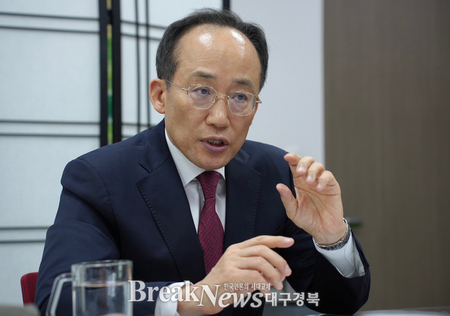
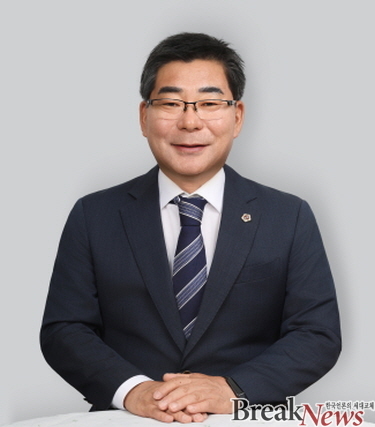
▲ 이찬구 박사. ©브레이크뉴스 |
천부경과 고대사 전문 연구자인 이찬구 박사가 최근 신간 『우주의 코드 369-오징어게임과 한류 수비학 천부경』(도서출판 덕주)을 출간했다.
이 책은 한류 콘텐츠 속에 숨겨진 원·방·각(○△□)과 369 수리 체계를 천부경의 우주 수비학과 연결한 연구 성과다.
이 박사는 2021년 드라마 ‘오징어게임’ 속 기호인 원방각을 보고 집필을 시작해, 5년 만에 연구 결실을 내놓았다. 책에서는 ‘오징어게임’의 원·방·각과, K팝스타 로제의 곡 ‘아파트’ 속 3·6·9 리듬 등 한류 문화에 깃든 한국 고유의 수비학 코드를 해석한다.
그는 이를 “세계인의 마음을 울리는 한류의 보이지 않는 핵심 동력”이라고 설명한다. 책은 테슬라의 3·6·9 우주 수리학과도 맞닿아 있다. 세르비아 출신의 세계적 발명가 니콜라 테슬라는 “3·6·9의 장엄함을 알면 우주의 열쇠를 얻게 될 것이다”라고 예언했으며, 후대 연구자인 마르코 로댕은 124875 수열을 통해 이 수리 구조의 과학적 의미를 규명했다.
또한, 운초 계연수가 100여 년 전 묘향산에서 탁본한 ‘천부경도(天符經圖)’를 비롯해, 부도지의 성수·법수·체수 체계와 천·지·인(天·地·人)의 원리를 테슬라 3·6·9 코드로 처음으로 풀어낸다. 책은 동서양의 수리 사상을 하나로 잇는 시도로, 1·2·4·8·7·5 수의 비밀까지 독자들에게 흥미롭게 제시한다.
 © 이찬구 박사의 신간 '우주의 코드 369'(사진, 출판사제공) |
특별히 북경에서 발간된 전병훈의 천부경으로부터 탄허 스님, 원불교 김대산 종법사, 서예가 손경식, 주역학자 김석진 선생 등 대가들의 천부경 해석도 소개하고 있다.
저자 이찬구 박사는 1956년 충남 논산 출생으로, 1983년부터 천부경을 연구하고 1985년부터 9년간 대산 김석진 선생 문하에서 주역과 사서를 수학했다. 주요 저서로는 『천부경』(2014), 『홍산문화의 인류학적 조명』(2018), 『고조선의 오행과 역법연구』(2021) 등이 있다.
*아래는 위 기사를 '구글 번역'으로 번역한 영문 기사의 [전문]입니다. '구글번역'은 이해도 높이기를 위해 노력하고 있습니다. 영문 번역에 오류가 있을 수 있음을 전제로 합니다.<*The following is [the full text] of the English article translated by 'Google Translate'. 'Google Translate' is working hard to improve understanding. It is assumed that there may be errors in the English translation.>
Dr. Lee Chan Goo Publishes “The Code of the Universe 369 – Squid Game and Korean Numerology Cheonbu-gyeong”
Dr. Lee Chan Goo, a specialist in Cheonbu-gyeong studies and ancient Korean history, has recently published his new book, “The Code of the Universe 3·6·9 – Squid Game and Korean Numerology Cheonbu-gyeong” (Deokju Publishing).
The book presents the results of his research connecting the circle, square, and triangle (○□△) and the 3·6·9 numerical structure found in Korean Wave (Hallyu) contents with the cosmic numerology of Cheonbu-gyeong.
Dr. Lee began writing the book in 2021 after noticing the circle, square, and triangle symbols in the hit drama “Squid Game,” and completed it after five years of research.
The book interprets how Korean traditional numerological codes—such as 3·6·9 rhythms embedded in traditional games and K-pop, including Rosé’s “Apartment”—form the invisible driving force of the Korean Wave that resonates with audiences worldwide.
The book also connects with the numerological theories of Nikola Tesla (1856–1943).
Tesla famously said, “If you only knew the magnificence of 3, 6, and 9, then you would have the key to the universe,” highlighting the cosmic significance of these numbers.
Later, Marko Rodin further explored their structure through the 1‑2‑4‑8‑7‑5 sequence, helping to clarify the scientific and numerological implications of Tesla’s 3·6·9.
Additionally, the book examines the “Cheonbu-gyeong Diagram (天符經圖)” first rubbingly recorded by Uncho Gye Yeon-su(桂延壽) about a century ago at Mt. Myohyang, and it interprets the Bu-do-ji system of sacred and legal numbers (Seongsu·Beopsu·Chesu) through Tesla’s 3·6·9 cosmic code.
Dr. Lee offers an integrated perspective on Eastern and Western numerology, revealing the hidden numerical world of 1·2·4·8·7·5 as well.
It also introduces interpretations of Cheonbu-gyeong by prominent scholars and masters, including Jeon Byeong-hun (whose edition was published in Beijing), Ven. Tanheo, Kim Dae-san(the 3rd Head Dharma Master of Won-Buddhism), the calligrapher Son Gyeong-sik, and I Ching scholar Kim Seok-jin, showcasing the rich tradition of Korean numerological studies.
Dr. Lee Chan Goo (Ph.D.) was born in 1956 in Nonsan, Chungnam Province, Korea.
He began studying Cheonbu-gyeong in 1983 and studied I Ching and the Chinese classics under Master Kim Seok-jin (大山 金碩鎭) for nine years starting in 1985.
His major works include “Cheonbu-gyeong” (2014), “An Anthropological Study of Hongshan Culture” (2018), and “A Study on the Five Elements and Calendar System of Gojoseon” (2021).