1945년 8월 15일, 한반도의 하늘은 들끓는 함성으로 가득했습니다. 일본의 항복 소식이 전해지자, 골목마다 태극기가 펄럭였고, 시민들은 손에 손을 잡고 조선 독립 만세를 외쳤습니다. 그러나 그 환희의 뒤편에는 혼란과 불안이 함께 스며 있었습니다. 일본군과 경찰은 여전히 거리를 지키고 있었고, 미군이 도착하기 전까지 권력은 허공 속에 떠 있었습니다.
청년들은 좌익과 우익으로 갈라져 각자의 깃발을 높이 흔들었고, 거리의 함성과 격렬한 논쟁이 뒤엉켰습니다. 해방의 기쁨과 새로운 체제를 둘러싼 혼돈, 두 감정이 한 공간에서 교차하는 서울의 모습은 자유의 축복과 불안이 동시에 존재함을 보여주었습니다.
 ▲ 2025년 6월 26일 서울 용산구 백범김구기념관에서 열린 백범 김구 선생 제76주기 추모식에서 김구 선생 장손자 김진 광복회 부회장 등 유족들이 헌화한 뒤 인사하고 있다. 2025.06.26. ©뉴시스 |
 ▲ 이승만 전 대통령. ©브레이크뉴스 |
그럼에도 오늘날 일부에서는 분단의 책임을 외세에 돌리지만, 진실은 더욱 복잡합니다. 1차적 책임은 우리 자신에게 있습니다. 힘이 부족했고, 준비도 미흡했습니다. 1910년 강제병합 이후, 2차 세계대전의 격류 속에서 우리는 독립전쟁의 주체로서 국제사회에 확실한 존재감을 드러내지 못했습니다.
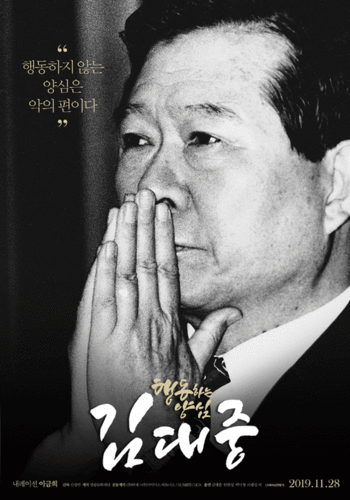
상하이와 충칭에서 명맥을 이어가던 대한민국 임시정부는 국제 정세의 거센 물결 앞에서 역부족이었습니다. 김구 선생은 장제스 총통을 설득하여 1943년 카이로 회담의 선언문에 ‘한국은 적절한 시기에 자유롭고 독립된 나라가 될 것’이라는 약속을 담는 성과를 거두었습니다. 그러나 1945년 2월 4일, 2차 대전을 마무리하는 얄타회담에서 중국 대신 소련이 참여하며 국제 질서는 급변했고, 1945년 8월 8일 소련은 일본에 선전포고하며 만주와 한반도 북부를 파죽지세로 장악했습니다. 당시 미국은 식민지 조선 처리에 대한 구체적 계획을 마련하지 못한 상태였고, 결국 소련의 진군을 기준으로 한반도는 38도를 경계로 남북으로 분할 점령되는 비극적 운명을 맞이하게 되었습니다.
귀국길 비행기 안, 김구 선생의 눈에서는 하염없는 눈물이 흘렀습니다. '우리가 이번 전쟁에 기여한 바가 없으니, 장래 국제무대에서 발언권은 약해질 수밖에 없다.' 그의 눈물에는 좌절과 통렬한 자책이 서려 있었습니다. 만약 광복군이 일본군과 직접 교전해 조선을 해방시켰다면, 승전국으로서 연합국 협상 테이블에 당당히 앉을 수 있었을 것입니다. 그러나 현실은 냉혹했습니다.
이와 대조적으로, 미국에서 독립운동가로 맹활약을 해왔던 이승만 박사가 해방의 무대에 등장하였습니다. 그는 1919년 임시정부 초대 대통령으로 선출된 이후 줄곧 국제사회에서 조선의 독립을 호소하며 외교 투쟁을 이어왔습니다. 1920~30년대 여러 국제회의와 해외 언론을 통해 '조선이 독립하지 못하면 극동의 평화는 불가능하다'고 호소하였고, 이는 국제사회 일각의 주목을 받았습니다. 이러한 외교적 기반 위에서 해방 직후 귀국한 그는 미군정과 협력하며 공산주의 확산을 막는 데 전력을 다했습니다.
이승만 박사는 남북 통일정부가 현실적으로 불가능하다고 판단하고 남한 단독정부 수립을 강력히 추진했습니다. 그러나 김구 선생은 끝까지 민족 통일의 꿈을 포기하지 않았습니다. 1948년 평양에서 김일성과 마주 앉았지만, 회담의 테이블 위에는 성과 대신 공허만이 남았습니다. 결국 5월 남한 단독 총선과 8월 대한민국 정부 수립으로 분단은 현실이 되었습니다.
이승만 박사의 선택은 냉전 초기 자유민주주의 체제를 세우기 위한 전략적 판단이었지만, 동시에 분단 고착이라는 역사적 한계를 남겼습니다. 김구 선생의 길은 민족 통합이라는 이상을 품었으나, 현실 정치의 벽 앞에서 좌절로 끝났습니다.
그리하여 8·15는 단순한 해방일이 아닙니다. 힘이 없으면 운명을 스스로 결정할 수 없다는 냉엄한 진실을 보여주는 날입니다. 김구의 눈물, 이승만의 결단, 그리고 수많은 독립운동가들의 좌절 속에서 우리는 교훈을 찾아야 합니다. 외세의 협상 테이블이 아닌, 우리의 힘으로 미래를 결정할 수 있는 나라가 되어야 합니다. 그것이 8·15가 오늘 우리에게 전하는 깊은 울림입니다. jeongkeekim@naver.com
*필자/김정기
● 학력
- 뉴욕주립대학교(Stony Brook) 정치학과 수석 졸업
- 마케트대학교(Marquette) 로스쿨 법학박사
- 하버드대학교(Harvard) 케네디스쿨 최고위 과정
- 베이징대학교(Peking) 북한학 연구학자
 ▲필자/ 김정기 Korea and the World (Advance Reader Copy) 저자. ©브레이크뉴스 |
● 경력
- 세계스마트시티기구(WeGO) 사무총장 (현)
- 유엔 국제전기통신연합 (UN ITU) 가상세계 및 AI 글로벌 이니셔티브 집행위원(현)
- 아시아태평양지방정부네트워크(CityNet) 대표
- 제8대 주상하이 대한민국 총영사(13등급 대사)
- 2010 상하이엑스포 대한민국관 정부대표
- 제17대 대선 한나라당 이명박 대통령 후보 국제위원장
- 제20대 대선 국민의힘 윤석열 대통령 후보 정치개혁 공약 총괄
- 제21대 대선 국민의힘 김문수 대통령 후보 외교고문
- 자유한국당 오세훈 당대표 후보 SH전략회의 총괄 및 조직본부 총괄본부장
- 자유한국당 서울시장 예비후보
- 법무법인 대륙아주 중국 총괄 미국변호사
- 난징대학교 국제경제연구소 객좌교수
- 동국대학교 경영전문대학원 석좌교수
- 숭실사이버대학교 총장
● 저서
1. 대학생을 위한 거로영어연구[전 10권](거로출판사)
2. 나는 1%의 가능성에 도전한다(조선일보사)
3. 한국형 협상의 법칙(청년정신사)
4. 대한민국과 세계 이야기 (도서출판 책미듬)
5. Korea and the World (Advance Reader Copy)
*아래는 위 기사를 '구글 번역'으로 번역한 영문 기사의 [전문]입니다. '구글번역'은 이해도 높이기를 위해 노력하고 있습니다. 영문 번역에 오류가 있을 수 있음을 전제로 합니다.<*The following is [the full text] of the English article translated by 'Google Translate'. 'Google Translate' is working hard to improve understanding. It is assumed that there may be errors in the English translation.>
August 15 Liberation and Division—Kim Gu's Tears and Dr. Syngman Rhee's Choice
“August 15th is a day that reveals the harsh truth that without power, we cannot determine our own destiny.”
-kimjeonggi Columnist
On August 15, 1945, the skies over the Korean Peninsula were filled with thunderous cheers. As news of Japan's surrender spread, Taegeukgi flags fluttered in every alley, and citizens joined hands and chanted, “Long Live Korean Independence.” However, behind this jubilation, chaos and anxiety permeated the air. Japanese soldiers and police still guarded the streets, and power remained suspended in the air until the arrival of the US military.
Young people, divided into left and right, waved their respective flags aloft, and the shouts of the streets intertwined with fierce debate. The sight of Seoul, where the joy of liberation and the chaos surrounding the new system intertwined in one space, demonstrated the simultaneous presence of both the blessings of freedom and the anxieties of anxiety.
Far away in Pyongyang, a completely different scene unfolded. As soon as Soviet troops arrived, the administrative and military systems were reorganized. Under the command of Lieutenant General Shtikov, Kim Il-sung was put at the forefront, swiftly pushing forward land reform and the purge of pro-Japanese collaborators. Order and structure were established in the North, and the seeds of political and ideological division between the North and South were thus sown.
Nevertheless, some today blame foreign powers for the division, but the truth is more complex. The primary responsibility lies with us. We were underpowered and ill-prepared. Following the forced annexation in 1910 and amidst the turbulent waters of World War II, we failed to establish a clear presence in the international community as a leading force in the war for independence.
The Provisional Government of the Republic of Korea, which had been survivable in Shanghai and Chongqing, was inadequate in the face of the turbulent international situation. Kim Gu persuaded President Chiang Kai-shek to include a promise in the 1943 Cairo Conference declaration that "Korea will become a free and independent nation at the appropriate time." However, on February 4, 1945, the international order shifted dramatically when the Soviet Union replaced China in the Yalta Conference, which concluded World War II. On August 8, 1945, the Soviet Union declared war on Japan and seized Manchuria and northern Korea in a decisive victory. At the time, the United States had yet to develop a concrete plan for dealing with its colonial territories, and the Korean Peninsula was ultimately divided into North and South along the 38th parallel, a tragic fate for the Soviet Union.
On the plane ride home, Kim Gu wept uncontrollably. "Since we contributed nothing to this war, our voice on the international stage will inevitably be weakened in the future." His tears were filled with frustration and bitter self-reproach. Had the Korean Liberation Army directly engaged the Japanese army and liberated Korea, they would have been able to proudly sit at the Allied negotiating table as a victorious nation. However, reality was harsh.
In contrast, Dr. Syngman Rhee, who had been active as an independence activist in the United States, emerged on the stage of liberation. Since being elected the first president of the Provisional Government in 1919, he has consistently advocated for Korea's independence in the international community and engaged in diplomatic struggles. Throughout the 1920s and 1930s, he pleaded at numerous international conferences and in the foreign press, "Peace in the Far East is impossible without Korea's independence," a sentiment that garnered significant attention from some in the international community. Building on this diplomatic foundation, he returned to Korea immediately after liberation and, in cooperation with the US military government, devoted himself to preventing the spread of communism.
Dr. Rhee, believing a unified government between North and South Korea was realistically impossible, vigorously pursued the establishment of a separate government in South Korea. However, Kim Gu persisted in his dream of national unification. He met with Kim Il-sung in Pyongyang in 1948, but the talks yielded only empty words, not achievements. Ultimately, the division of the Korean Peninsula became a reality with the separate general elections in South Korea in May and the establishment of the Republic of Korea in August.
Dr. Syngman Rhee's choice was a strategic decision to establish a liberal democratic system in the early Cold War, but it also left behind the historical limitation of perpetuating division. Kim Koo's path, while embracing the ideal of national unity, ended in frustration in the face of the realities of political realities.
Thus, August 15th is not simply a day of liberation. It is a day that reveals the harsh truth: without power, we cannot determine our own destiny. We must draw lessons from Kim Koo's tears, Syngman Rhee's resolve, and the frustrations of countless independence activists. We must become a nation capable of determining our future through our own strength, not through the negotiating table of foreign powers. This is the profound resonance that August 15th conveys to us today. jeongkeekim@naver.com
*Author/Kim Jeong-gi
● Education
- Graduated summa cum laude from the State University of New York (Stony Brook) with a degree in Political Science
- Doctor of Law, Marquette Law School
- Graduated from Harvard Kennedy School of Government
- North Korean Studies Research Scholar, Peking University
● Career
- Secretary General of the World Smart Cities Organization (WeGO) (current)
- Executive Committee Member, Virtual World and AI Global Initiative, UN International Telecommunication Union (UN ITU) (current)
- Representative of the Asia-Pacific Local Government Network (CityNet)
- 8th Consul General of the Republic of Korea in Shanghai (Ambassador, Class 13)
- Government Representative, Republic of Korea Pavilion, 2010 Shanghai Expo
- Chairman of the International Affairs Committee, Grand National Party (GNP) Presidential Candidate Lee Myung-bak in the 17th Presidential Election
- Chief of Political Reform Pledges, People Power Party Presidential Candidate Yoon Seok-yeol in the 20th Presidential Election
- Foreign Affairs Advisor, People Power Party Presidential Candidate Kim Moon-soo in the 21st Presidential Election
- Liberty Korea Party Oh Se-hoon, Candidate for Party Leader, SH Strategy Council, and General Manager of the Organization Headquarters
- Liberty Korea Party's Seoul Mayoral Candidate
- American Attorney, Head of China, Continental Law Firm
- Visiting Professor, Nanjing University International Economics Institute
- Distinguished Professor, Dongguk University Graduate School of Business
- President, Soongsil Cyber University
● Books
1. Georo English Studies for College Students [10 Volumes] (Georo Publishing)
2. I Challenge the 1% Chance (Chosun Ilbo)
3. The Law of Korean Negotiation (Chungnyeon Jeongshin Publishing)
4. Korea and the World (Chaekmidum Publishing)
5. Korea and the World (Advance Reader Copy)