1965년 한일국교정상회담 이후 한국 대통령으로 취임 후 첫 방문한 이재명 대통령이 23일 이시바 시게루(石破茂) 일본 총리와의 한일 정상회담에서 “한일은 앞마당을 같이 쓰는 이웃 같은 관계”라고 강조했다. 이시바 총리는 “일본과 한국의 관계 발전은 양국 관계뿐 아니라 이 지역 전체 이익이 된다”고 말했다.
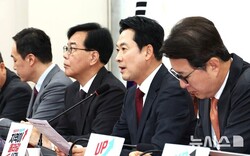
 ▲ 이재명 대통령은 “특히 최근에는 통상 문제나 안보 문제 등을 놓고 국제 질서가 요동치고 있기에 가치 체제 이념에서 비슷한 입장을 가진 한국 일본이 어느 때보다 협력관계 강화해야 하겠다는 생각이 든다”고 말했다. (사진, 뉴시스) © 김충열 정치전문기자 |
이 날 오후 MBN 뉴스속보에 따르면 이 대통령은 일본 도쿄 이시바 총리 관저에서 진행된 한-일 정상회담 확대회담에서 “서로 많은 것들을 공유하고 있고 협력할 분야도 참으로 많지만 한편으로 너무 가깝다 보니 불필요한 갈등도 가끔씩 발생한다”며, “서로 좋은 면은 존중하고 불필요한 것들은 교정하고 필요한 것들을 얻을 수 있도록 협력하는 것이 이웃 국가들간의 가장 바람직한 관계”라고 강조했다. 이재명 정부의 ‘실용외교’ 원칙을 강조한 것이다.
이 대통령은 “총리께서 지방 균형발전에 각별한 관심을 가진 걸로 아는데 다음 셔틀외교의 일환으로 한국에 방문하면 서울이 아니라 대한민국 지방에서 뵀으면 좋겠다”고 제안하기도 했다.
우호적 인사로 이 대통령을 맞은 이시바 총리는 “평화와 안정은 거저 주어지는 것이 아니라 아무것도 하지 않으면 실현되지 않는 것”이라며 “국제시대가 격변의 시대를 맞고 있는 가운데 더욱 그런 것 같다”고 말했다.
이 대통령은 “특히 최근에는 통상 문제나 안보 문제 등을 놓고 국제 질서가 요동치고 있기에 가치 체제 이념에서 비슷한 입장을 가진 한국 일본이 어느 때보다 협력관계 강화해야 하겠다는 생각이 든다”고 말했다.
이시바 총리도 "국민 간 교류는 이미 활발하게 이뤄지고 있는 상황이지만 젊은 세대 교류 수요에 부응해 양국 간 워킹홀리데이 비자 제도의 확충이 결정된 것을 환영한다"며, "아울러 북핵 미사일 포함 대북 대응을 논의하고 완전한 비핵화 위해 일한미 삼국이 긴밀히 대응할 것"이라고 말했다.
하지만 한반도 비핵화는 전문가들의 견해는 실현 불가능하다는 게 지배적 여론이다. 왼전한 비핵화를 들고 한국정부에서 북한을 설득하여 김정은 위원장이 대화의 협상테이블에 나오게 할 수 있을까? 정동영 통일부장관과 이종석 국정원장의 어깨가 더욱 무거워졌다. hpf21@naver.com
* 아래는 위 기사를 '구글 번역'으로 번역한 영문 기사의 [전문]입니다. '구글번역'은 이해도 높이기를 위해 노력하고 있습니다. 영문 번역에 오류가 있을 수 있음을 전제로 합니다.
*The following is [the full text] of the English article translated by 'Google Translate'. 'Google Translate' is working hard to improve understanding. It is assumed that there may be errors in the English translation.
Lee Jae-myung and Ishiba: "Shuttle Diplomacy Resumed... Korea-Japan Consultative Body Launched to Address Common Challenges"
Developing Korea-Japan Relations Benefits the Entire Region
President Lee Jae-myung, making his first visit to South Korea since the 1965 Korea-Japan Summit, emphasized at a summit with Japanese Prime Minister Shigeru Ishiba on the 23rd that "Korea and Japan are like neighbors sharing a front yard." Prime Minister Ishiba stated, "Developing relations between Japan and South Korea benefits not only our bilateral relationship but also the entire region."
President Lee stated, "With the international order in turmoil over issues like trade and security, Korea and Japan, which share similar values, systems, and ideologies, must strengthen their cooperative relationship more than ever."
At an expanded Korea-Japan summit held at Prime Minister Ishiba's official residence in Tokyo that afternoon, President Lee emphasized, "While we share much in common and have numerous areas for cooperation, our close proximity sometimes leads to unnecessary conflicts." He added, "The most desirable relationship between neighboring countries is one where we respect each other's strengths, correct unnecessary shortcomings, and cooperate to obtain what we need." This underscored the Lee Jae-myung administration's "pragmatic diplomacy" principle of "facing the past while looking toward the future."
President Lee also suggested, "I understand that the Prime Minister has a particular interest in balanced regional development. If you visit Korea as part of your next shuttle diplomacy, I would like to meet you in a local area of the Republic of Korea, not in Seoul."
Prime Minister Ishiba also greeted President Lee with a friendly greeting. He stated, "Peace and stability are not given for free; they cannot be achieved without action." He said, "It seems even more so as the international order faces a period of upheaval."
President Lee said, "Especially recently, with the international order in turmoil over issues like trade and security, I feel that South Korea and Japan, which share similar values and ideologies, need to strengthen their cooperative relationship more than ever."
Prime Minister Ishiba added, "While people-to-people exchanges are already active, I welcome the decision to expand the working holiday visa system between our two countries to meet the needs of younger generations." He added, "Furthermore, we will discuss responses to North Korea, including its nuclear and missile programs, and work closely with Japan, South Korea, and the United States to achieve complete denuclearization."
However, the prevailing opinion among experts is that denuclearization of the Korean Peninsula is impossible. Can the South Korean government, with its unwavering commitment to denuclearization, persuade North Korea to bring Chairman Kim Jong-un to the negotiating table? The burden on Unification Minister Chung Dong-young and National Intelligence Service Director Lee Jong-seok has grown even heavier. hpf21@naver.com