게임이론 시각에서 가장 고단수는 충청도다. 충청도 할머니는 수박을 팔 때 그 수박 한 덩이에 얼마냐고 물으면, “얼마 줄거유”하고 되묻는다고 한다. 이는 게임이론 시각에서 큰 의미가 있다. 옛날부터 충청도 사람 속을 모른다는 말이 있다. 조롱이 아니라 직관적으로 그만큼 장사를 더 잘할 수 있다는 뜻일 수도 있다.
 ▲ 장동혁 국민의힘 대표가 지난 8월27일 서울 여의도 국회에서 열린 의원총회에서 발언을 하고 있다. 사진/뉴시스. |
경매를 할 때, 오름차순 식이 있다. 100만원, 200만원...500만원까지 모두 손을 들어 의사표현을 하고, 비딩(bidding)할 사람 단 한명 남은 상화오에서 그는 내심 600만원까지 비딩할 의사가 있었다고 가정하자. 하지만 굳이 자기 속내를 밝힐 필요가 없을테다. 500만원에서 1원만 더 해도 그는 낙찰받을 수 있기 때문이다. 비더들이 모두 속을 드러낸 격이다.
손을 드는 으름차순 식 말고 봉투에 원하는 가격을 써서 제출한다고 해보자. 사람들이 헛갈리기 쉬원데 게임이론 시각에서 가장 최선의 전략은 원하는 가격을 가장 솔직히 쓰는 것이다. 오름차순 식으로 했다면 그는 500만1원만 써도 낙찰 받았을 테다. 봉투에 써서 제출했다면 600만원을 지불해야 했을 것이다. 즉, 게임을 어떻게 하느냐에 따라 결과가 크게 달라진다. 낙찰자는 변함이 없지만 그 액수가 달라지는 것이다.
지혜를 짜보면, 원거리에서 봉투에 원하는 가격을 써서 경매를 진행해도 직접 모여서 오름차순 식으로 하는 것과 똑같은 결과를 가져올 수 있다. 최고가를 쓴 이에게 물건을 넘겨주고, 차가 ‘second price’ 즉, 두 번째로 높은 가격을 지불하게 하면 된다. 그게 ‘차가(second price) 낙찰제’다. 그렇게 하면 직접 모여 오름차순 식 경매를 하는 것과 같아진다. 공간적 한계를 극복하는 것이다. ‘차가 낙찰제’는 구매자에게 유리하고 ‘최고가 낙찰제’는 매도자에게 유리하다.
충청도 할머니가 수박을 팔 때, “얼마 줄거요”하고 묻는 것에서도 그와 유사한 의미를 찾을 수 있다. 수박 한덩이가 3만원이라고 가정하고 생각해보라. 소비자들은 다양하다. 그 수박에 부여하는 가치(value)도 다양하다. 즉, 원하는 가격이 다양하다는 뜻이다. 할머니가 수박 한 덩이에 ‘3만원’하고 가격을 정확히 밝혔을 때, ‘3만원’ 미만의 가격을 생각했던 이들은 수박 구매를 포기한다. 이론적으로 그렇다. 문제는 ‘3만원’ 초과의 가격을 생각하고 있었던 소비자들이다. 예를 들어, ‘3만5천원’ 가격을 생각하고 있었던 이는 그 할머니가 ‘3만5천원’ 가격을 불렀어도 구매했을 거라는 뜻이 된다. 소비자가 원하는 가격은 소비자가 그 제품에 부여한 가치를 말한다.
충청도 할머니는 그렇게 가격을 초과해 가치를 부여하고 있는 소비자들에게 가격을 차등적으로 부과, 소비자의 잉여가 자신에게 이전되도록 하는 것이다. 가격을 묻는 소비자에게 “얼마 줄거요” 하고 되물어 소비자를 순간 당황시킨 후 속내를 적당히 털어놓게 해 그 잉여를 이전시키는 메커니즘인 것이다. 즉, 충청도 할머니는 경매 방식을 ‘최고가 낙찰제’로 치환한 것으로 볼 수 있다. 당연히 매도자인 할머니가 유리하다. 이는 게임이론적 근거가 있다. 누군가 논문을 쓸거라면 본 칼럼을 출처로 밝혀주기 바란다.
최근 충청도 정치인이 떴다. 장동혁 국힘 신임 당대표다. 충청도 할머니가 고단수이듯 장동혁도 고단수일 것 같다.
하나 예측하자면, 장동혁은 중도확장으로 갈 것이다. 당연하다. 그는 조연 배우에서 이제 주연 배우가 된 격이다. 틈새시장으로 만족하지 못할 것이다. 시장은 중요하다. 정치도 시장이 있어야 한다. 극단주의나 극성스러운 이들의 문제는 틈새시장을 지향한다는 것이다. 더욱 폐쇄적으로 변해간다. 생각해보라. 만년 야당할 게 아니라 수권 정당이 되려면 더 큰 정치시장을 찾아갈 필요가 있다. 장동혁은 그러한 포부가 있을 것이다.
충청 출신에 재선이지만 정치 경력이 몇년 안 된 이가 왕년의 대선후보 김문수를 누르고 제1야당 당대표까지 된 마당에 ‘윤어게인’을 통해 틈새시장에 집착할 이유가 없어 보인다. 장동혁을 열심히 지지하는 건 좋다. 하지만 그에게서 윤석열에 대한 일편단심 금석맹약 충성심을 기대한다면 착각일 것 같다.
그는 지금 큰 무대에 섰다. 자신이 주인공이고 주연이라고 생각할까? 자신이 윤석열을 위한 조연이라고 생각할까? 더 큰 정치를 하기 위해서 장동혁 국민의힘 당 대표에게 필요한 건 중도확장일 것이다. 다시 지적하지만 그건 정치적 호불호 또는 신념이 아니라 과학이다. 바로 ‘중위투표자’ 정리다. 그 사실을 장동혁 당 대표가 누구보다 더 잘 알 것이다. yslee1992@kunsan.ac.kr
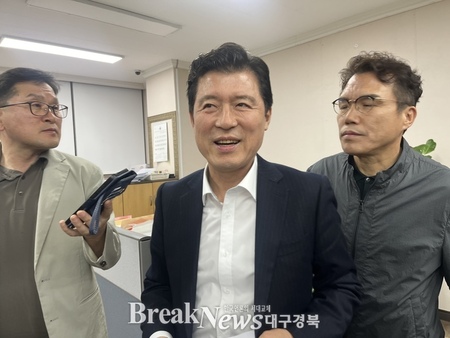
 ▲필자/ 이양승 군산대 교수. ©브레이크뉴스 |
*필자/이양승
군산대 교수. 국제경제, 게임이론 그리고 지역 발전전략에 대해 연구하는 학자이다. 현재 국립 군산대 무역학과 교수로 재직 중이다. 이전엔 캐나다 앨버타 대학교(University of Alberta) 경제학과에서 ‘게이임(gaming)’에 대해 연구와 강의를 했으며, 한국건설산업연구원에서 연구위원으로 근무했다.
전북 남원에서 출생해 전주한일고와 전북대 상과대학을 졸업했다. 이후 미국으로 건너가 노스 캐롤라이나 주립대학교 (North Carolina State University)에서 통계학과 경제학을 공부해 석사를 받았으며, 캔자스 대학교(The University of Kansas)에서 산업조직과 게임이론에 대한 연구로 경제학 박사를 받았다.
저서로는 '메트로 이코노미 (타임라인)'과 ‘와일드 게임이론 (박영사)’, ‘무역학개론(공저, 두남)’, ‘문화지체에 빠진 건설산업 (공저, 한국건설산업연구원)’ '자유무역론(박영사)' 등이 있고, 36편의 단독연구 학술논문이 있다.
*아래는 위 기사를 '구글 번역'으로 번역한 영문 기사의 [전문]입니다. '구글번역'은 이해도 높이기를 위해 노력하고 있습니다. 영문 번역에 오류가 있을 수 있음을 전제로 합니다.<*The following is [the full text] of the English article translated by 'Google Translate'. 'Google Translate' is working hard to improve understanding. It is assumed that there may be errors in the English translation.>
The "Chungcheong Mechanism": Jang Dong-hyuk's "How much will you give?" Strategy
"What Jang Dong-hyuk, People Power Party leader, needs is moderate expansion."
- Professor Lee Yang-seung of Kunsan National University
From a game theory perspective, the most challenging region is Chungcheong Province. It's said that when a grandmother in Chungcheong Province sells a watermelon, if you ask her how much it costs, she'll respond with, "How much will you give me?" This holds significant significance from a game theory perspective. There's a saying that you can't fathom the minds of Chungcheong Province residents. This isn't meant as a joke, but rather as an intuitive indication that they're better at business.
In an auction, there's an ascending order of bids. Let's assume that in Sanghwa-o, where everyone raises their hand to bid 1 million won, 2 million won, and 5 million won, and only one bidder remains, the bidder is secretly willing to bid up to 6 million won. However, there's no need to reveal their true intentions. He could win the bid by just 1 won more than 5 million won. All the bidders are practically exposed.
Let's say, instead of the "lowest-price" auction, we submit an envelope with our desired price written on it. People are easily confused, but from a game theory perspective, the best strategy is to be as honest as possible about our desired price. If we had used the ascending order, he would have won with just 5 million won. If we had written it in an envelope, he would have had to pay 6 million won. In other words, the outcome can vary significantly depending on how the game is played. The winner remains the same, but the amount varies.
With some cleverness, conducting an auction remotely by writing our desired price in an envelope can produce the same result as conducting an auction in person in ascending order. We can award the item to the highest bidder, and have the other bidder pay the "second price," or the second highest bid. This is called the "second-price" auction. This is equivalent to conducting an ascending order auction in person, overcoming spatial limitations. A "second-price bidding system" favors buyers, while a "highest-price bidding system" favors sellers.
A similar meaning can be found in the question, "How much will you pay?", asked by the grandmother in Chungcheong Province when selling a watermelon. Imagine a watermelon costing 30,000 won. Consumers are diverse. The value they place on it also varies. This means their desired prices vary. When the grandmother clearly states the price of a watermelon at 30,000 won, those who were considering a price below 30,000 won will give up. Theoretically, yes. The problem lies with those consumers who were considering a price above 30,000 won. For example, those considering a price of 35,000 won would have purchased it even if the grandmother had quoted a price of 35,000 won. The desired price reflects the value a consumer places on a product.
The grandmother in Chungcheong Province is charging a different price to those consumers who place a value above the price, thereby transferring the consumer surplus to herself. This mechanism involves asking consumers who ask for a price, "How much will you pay?" to momentarily fluster them, and then prompting them to reveal their true feelings, thereby transferring the surplus. In other words, the Chungcheong grandmother can be seen as a replacement for the auction system with a "highest bidder system." Naturally, the grandmother, as the seller, has the advantage. This has game-theoretic basis. If anyone is going to write a paper, please cite this column as the source.
A politician from Chungcheong Province has recently emerged: Jang Dong-hyuk, the new leader of the People Power Party. Just as the Chungcheong grandmother is a skilled player, Jang Dong-hyuk is likely to be a skilled player as well.
One prediction: Jang Dong-hyuk will pursue moderate expansion. It's a given. He's like a supporting actor who has now become a leading actor. He won't be satisfied with a niche market. Markets are crucial. Politics also requires a market. The problem with extremists and radicals is that they tend to focus on niche markets. They become even more insular. Think about it. To become a ruling party, rather than a perpetual opposition party, they need to find a larger political market. Jang Dong-hyuk likely has such ambitions.
A second-term candidate from Chungcheong Province with only a few years of political experience defeated former presidential candidate Kim Moon-soo to become the leader of the main opposition party. Now, there seems no reason to obsess over a niche market through "Yoon Again." It's good to support Jang Dong-hyuk enthusiastically. However, expecting him to be unwaveringly loyal to Yoon Seok-yeol would be a mistake.
He's now on a grand stage. Does he see himself as the protagonist and the main character? Or does he see himself as a supporting actor for Yoon Seok-yeol? To achieve greater political power, People Power Party leader Jang Dong-hyuk needs to expand the center. Again, this isn't a matter of political preference or belief, but science: the "median voter" theory. Jang Dong-hyuk knows this better than anyone. yslee1992@kunsan.ac.kr
*Author/Lee Yang-seung
Professor at Kunsan National University. He studies international economics, game theory, and regional development strategies. He is currently a professor in the Department of International Trade at Kunsan National University. Previously, he researched and lectured on "gaming" at the Department of Economics at the University of Alberta, Canada, and served as a research fellow at the Korea Construction and Economy Research Institute.
Born in Namwon, North Jeolla Province, he graduated from Jeonju Hanil High School and the College of Commerce at Chonbuk National University. He later moved to the United States, where he earned a master's degree in statistics and economics from North Carolina State University and a doctorate in economics from the University of Kansas for his research on industrial organization and game theory.
His publications include "Metro Economy" (Timeline), "Wild Game Theory" (Parkyoungsa), "Introduction to International Trade" (co-authored, Doonam), "The Construction Industry in Cultural Lag" (co-authored, Construction and Economy Research Institute of Korea), and "Free Trade" (Parkyoungsa). He has also published 36 independent academic papers.