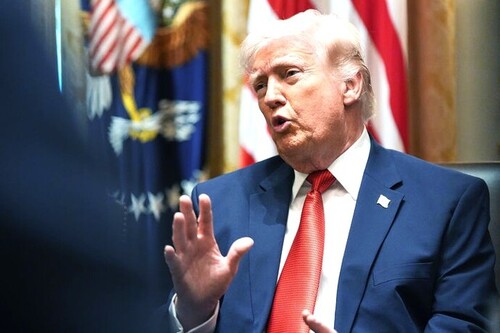
▲ 도널드 트럼프 미국 대통령 © AP/뉴시스 |
도널드 트럼프 미국 대통령이 관세 정책 관련 연방 대법원 심리 D-1인 4일 (현지시간) “나라 생사가 걸린 일”이라고 밝혔다.
미 'AP 통신'에 따르면 트럼프 대통령은 이날 자신의 트루스소셜 글을 통해 “내일 있을 대법원 심리는 말 그대로 우리나라에 사느냐 죽느냐 문제”라며 이같이 전했다.
그러면서 “정부가 승리한다면 우리는 막대하지만 공정한 재정·국가 안보를 확보케 될 것”이라며 “패배한다면 수년 간 미국을 이용해온 다른 국가들에 거의 무방비 상태로 노출될 것”이라고 했다.
또 “미국 증시는 꾸준히 사상 최고치를 경신했으며 우리나라가 지금처럼 존경받은 적 없었다”며 “이 모든 건 관세 정책이 만들어낸 경제 안보 덕분이고, 이를 기반으로 유리한 무역 협상을 이끌어낼 수 있었다”고 덧붙였다.
이번 재판은 미 연방 대법원이 트럼프 2기 행정부 핵심 정책에 처음 최종 결정을 내리는 사례인 가운데 'AP'는 이날 "이번 재판은 단순히 무역 분쟁 관련 법적 다툼을 넘어 미 대통령 권한이 어디까지 가능한지 가르는 역대적 사건이란 의미가 크다"고 전했다.
이어 "트럼프 대통령은 연방 대법원이 자신에게 불리한 판결을 내릴 경우 '재앙'이 될 거라고 언급한 바 있다"며 "선고는 이르면 연말, 늦어도 내년 초 예상된다"고 전했다.
'AP'는 연방 대법원에서 심리될 핵심 쟁점 네가지를 분석한 가운데 특히 주목되는 건 '국제비상경제권한법(IEEPA)'에 대통령의 관세 부과 권한이 포함되는지 여부에 대한 판단이다.
해당 법은 자산 동결·경제 제재를 폭넓게 허용하나 관세 관련 명문 규정이 없어 대법원 해석 여부에 따라 향후 미 정부 통상 정책 수행 범위가 결정될 수도 있다.
또 연방 대법원이 판례로 형성한 중대 질문 원칙이 적용되는지 여부인 가운데 정치·경제적 중대 사안 경우 의회가 명확히 위임했을 때만 행정부가 조치를 시행할 수 있다는 원칙이다.
보수 성향이 짙은 것으로 평가받는 현 미 연방 대법원은 이 원칙을 적용해 지난 바이든 행정부 퇴거 유예·백신 의무화·학자금 탕감 정책 등에 대해 연이어 무효로 한 바 있다.
현 관세 조치는 향후 10년 간 약 3조불(약 4100조) 세수 증가가 예상되는 가운데 만약 위법 판결이 나올 시 상당한 파장이 불가피해진다.
다른 핵심 쟁점은 대통령 외교·안보 재량 범위로 트럼프 대통령 측은 관세 부과가 단순 경제 조치가 아닌 외교 전략 수단이라 주장하는 가운데 일부 대법관 경우 '국가 안보 사안에서 행정부 재량을 넓게 인정해야 한다'는 입장을 취하고 있다.
최종 판단 시기 및 후속 파장 역시 주목 거리로 연방 대법원은 사건 접수 후 두 달 만에 심리를 잡은 가운데 이례적 빠른 속도로 연내 판단이 나올 가능성이 있다는 관측이 나온다.
판결 결과에 따라 미 통상 정책·주요 교역국과의 관계·국제 공급망·금융·무역 시장 등에도 적잖은 영향을 미칠 것이란 분석이다.
앞서 하급심은 트럼프 대통령이 국가비상사태를 근거로 전 세계 수입품에 일괄 관세를 매긴 조치는 법적 근거가 부족하다고 판단했다.
트럼프 행정부는 IEEPA를 근거로 캐나다·멕시코·중국 등 주요 교역국에 관세를 부과했다는 입장으로 불법 이민·마약 유입·무역 적자 등은 국가비상사태에 해당해 관세 부과 조치가 정당하다는 논리다.그러나 하급심은 '해당 법이 관세를 명시하고 있지 않아 대통령의 권한 남용'으로 봤다.
영문 기사의 [전문]입니다. '구글번역'은 이해도 높이기를 위해 노력하고 있습니다. 영문 번역에 오류가 있을 수 있음을 전제로 합니다.<*The following is [the full text] of the English article translated by 'Google Translate'. 'Google Translate' is working hard to improve understanding. It is assumed that there may be errors in the English translation.
President Trump: "This is a matter of life and death for our nation," with just one day remaining before the Supreme Court tariff trial.
"If we win, we will secure a substantial but fair financial and national security. If we lose, we will be exposed to other countries that have exploited the United States for years, leaving us virtually defenseless."
-kihong Kim reporter
US President Donald Trump declared on the 4th (local time), one day before the Supreme Court hearing on his tariff policy, that "this is a matter of life or death for our country."
According to the Associated Press, President Trump wrote in his TruSocial post that day, "Tomorrow's Supreme Court hearing is literally a matter of life or death for our country."
He added, "If the administration wins, we will secure enormous but equitable financial and national security. If we lose, we will be nearly defenseless against other countries that have exploited the United States for years."
He added, "The US stock market has consistently reached record highs, and our country has never been more respected. All of this is thanks to the economic security created by our tariff policy, which has enabled us to secure favorable trade negotiations."
This trial marks the first time the US Supreme Court has made a final ruling on a key policy of the Trump administration's second term. The AP reported, "This trial is significant not only as a legal battle over a trade dispute, but also as a landmark case that will determine the extent of the US presidential power."
The article continued, "President Trump has stated that a ruling by the Supreme Court against him would be 'disastrous,'" adding, "A ruling is expected as early as the end of the year or early next year at the latest."
The Associated Press analyzed four key issues to be heard by the Supreme Court. Of particular note is the question of whether the International Emergency Economic Powers Act (IEEPA) includes the president's authority to impose tariffs.
While the law broadly allows for asset freezes and economic sanctions, it lacks explicit provisions regarding tariffs, and the Supreme Court's interpretation could determine the scope of future U.S. trade policy.
Furthermore, the issue is whether the principle of "material question," established by the Supreme Court through precedent, applies. This principle states that in cases of significant political and economic importance, the executive branch can only take action if Congress explicitly authorizes it.
The current U.S. Supreme Court, considered conservative, has repeatedly invalidated the Biden administration's eviction moratorium, vaccine mandates, and student loan forgiveness policies, applying this principle.
The current tariff measures are expected to increase tax revenue by approximately $3 trillion (approximately 4,100 trillion won) over the next decade, and if they are ruled unlawful, significant repercussions are inevitable.
Another key issue is the scope of the president's discretion in foreign policy and security. President Trump's team argues that tariffs are not simply economic measures but rather strategic diplomatic tools. However, some Supreme Court justices have taken the position that "the executive branch's discretion should be broadly recognized in national security matters."
The timing of the final ruling and its subsequent repercussions are also noteworthy. The Supreme Court held a hearing just two months after filing the case, raising speculation that a decision could be reached within the year, an unusually rapid process.
The outcome of the ruling is expected to have significant implications for US trade policy, relations with major trading partners, international supply chains, finance, and trade markets.
A lower court previously ruled that President Trump's blanket tariffs on global imports under the national emergency declaration lacked legal basis.
The Trump administration's position is that it imposed tariffs on major trading partners such as Canada, Mexico, and China based on the IEEPA, arguing that illegal immigration, drug trafficking, and trade deficits constitute a national emergency and thus justify the tariffs. However, the lower court ruled that "the law does not specifically specify tariffs, so it constitutes an abuse of presidential authority."