이재명 대통령이 12·3 사태 1주년을 맞아 발표한 특별성명은 단순한 정치적 코멘트가 아니었다. 그것은 정권의 2026~2027년 정치 전략을 집약한 선언이자, 향후 국정을 ‘프레임 전쟁’으로 끌고 가겠다는 공개적 예고에 가까웠다. 대통령은 “친위 쿠데타 가담자들에 대한 엄정한 처벌이 정의로운 통합의 출발”이라고 말했다. 그러나 이 한 문장은 통합이 아닌 분열, 조정이 아닌 전선을 예고하는 정치적 선언이었다.
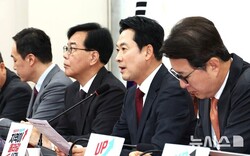
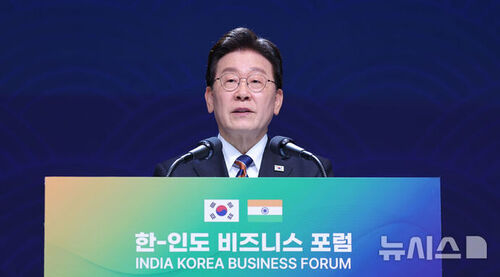
 ▲ 이재명 대통령이 12월3일 오전 청와대 영빈관에서 열린 12·3 비상계엄 1년 외신 기자회견에서 발언하고 있다. ©뉴시스 |
이재명식 프레임은 협상, 조정, 국민 통합을 사실상 포기한 채 정치적 생존을 위해 갈등을 의도적으로 증폭시키는 전략적 선택에 가깝다. 협상학적으로 보면 최악의 방식이지만, 정치 전략으로 보면 매우 계산된 행동이다. 정치 전략의 기본은 프레임 선점이며, 프레임을 선점하면 해석권을 장악한다. 대통령이 이날 사용한 언어는 이를 정확히 보여준다. 그는 “쿠데타”, “전쟁 획책”, “무도함”, “심판받아야 한다”는 극단적 단어들을 연속으로 배치했다. 이는 논리적 설명이 아니라 지지층에게 보내는 감정적 신호였다. 곧, 우리 편은 정의, 상대는 범죄자라는 정치적 선 긋기다.
정치적 생존이 위태로울수록 정권은 통합이 아니라 분열을 택한다. 분열의 상황에서만 지지층은 결집하고, 중도층은 선택을 강요받으며, 반대 진영은 방어에 몰린다. 이재명식 정의로운 통합은 바로 그 분열 전략의 포장지에 불과하다. 대통령의 발언은 심판이라는 단어로 시작해 정의로 끝나지만, 그 사이에 놓인 것은 법치가 아니라 정치적 규정이다. 아직 재판도 끝나지 않은 사안을 두고 최고 통치권자가 특정 세력을 ‘쿠데타 가담자’로 단정하는 순간, 사법 절차는 무력화되고 권력의 언어가 판결을 대신하게 된다. 이는 통합의 언어가 아니라 정치적 낙인을 국가 권력이 공식화하는 위험한 선례다.
대통령이 12·3을 빛의 혁명으로 규정한 것도 같은 맥락이다. 정치는 서사 경쟁이지만, 이재명 정권은 경쟁이 아니라 서사 독점 전략을 택했다. 어떤 통치자도 자신이 겪은 정치적 사건을 스스로 혁명으로 규정해선 안 된다. 혁명은 국민이 명명하는 것이지, 권력이 자기 정당성을 강화하기 위해 자화자찬하듯 붙이는 이름이 아니다. 그럼에도 12·3이 혁명으로 확정되는 순간, 정권의 모든 행위는 정의로운 혁명이 되고, 반대 세력은 자동으로 반혁명 세력이 된다. 평범한 정치적 갈등이 역사적 선악 구도로 치환되는 것이다.
"한국형 협상의 법칙"의 저자로서 나는 이를 서사 사유화(Narrative Privatization)라고 규정한다. 누구도 반박할 수 없는 신성화된 서사를 권력이 선점하는 순간 협상은 사라지고 복종만 남는다. 자기 세력은 혁명군으로 절대화되고, 반대 세력은 헌정 파괴자로 악마화되며, 정치적 논쟁은 도덕적 전쟁으로 승격된다. 오늘 대통령의 성명은 바로 그 장면을 그대로 보여주었다.
더 심각한 문제는 이러한 언어가 단순한 정치 수사가 아니라 사법과 정치 전반에 사전적 압박을 가하는 포석이라는 점이다. 대통령이 “전쟁까지 획책한 무도함은 반드시 심판받아야 한다”고 단정한 순간, 헌법이 명시한 무죄추정의 원칙과 사법부 독립의 원칙은 정면으로 흔들린다. 대통령의 발언은 단순한 의견 표명이 아니라 대국민 특별성명, 즉 국가 최고 통치권자의 공식 지시, 의도 표현이다. 재판이 끝나기도 전에 대통령이 유죄를 암시하는 구조를 만들면 재판부는 정치적 압력으로부터 자유로울 수 없다.
이는 헌법 제27조 제4항이 보장한 무죄추정의 원칙, 헌법 제103조의 사법권 독립, 헌법 제76조의 대통령 권한 남용 금지와도 충돌한다. ‘내란’, ‘전쟁 획책’은 형법상 극히 중대한 범죄의 구성요건인데, 이를 대통령이 특정 세력에 대해 단정적으로 적용하는 것은 사실상 사전 판결이자 사법 판단의 선점이다. 나아가 이런 발언은 수사기관과 재판부에 “이 방향으로 가라”는 정치적 신호로 작동하며, 법률적으로는 직권남용 논란까지 불러올 수 있는 위험한 언어다. 대통령은 국가원수로서 통합과 절제의 언어를 사용해야 할 헌법적 의무를 지니지만, 이번 발언은 정치적 숙청의 신호탄에 더 가깝다.
협상학의 관점에서 보면 이재명식 프레임은 명백한 협상 포기 선언이다. 나는 "한국형 협상의 법칙"에서 상대를 악으로 규정하는 순간 협상은 즉시 끝난다고 썼다. 협상의 출발은 상대의 존재를 인정하는 데 있다. 그러나 이재명식 언어 구조에서 상대는 쿠데타 세력이고, 논쟁은 혁명 대 반혁명이며, 의견 차이는 정의 대 무도로 치환되고, 비판은 곧 국민주권 방해가 된다. 이런 구조에서는 협상도, 조정도, 타협도, 사실에 기반한 논쟁도 모두 불가능하다. 정권이 원하는 것은 협상이 아니라 정적을 도덕적으로 무너뜨리고, 중도를 두려움 속에 줄 세우는 정치다. 이것이 바로 프레임 전쟁의 핵심 전략이다.
그렇다면 왜 하필 지금 이런 메시지를 꺼냈는가. 이재명 정권의 정치적 시간표를 보면 답은 분명하다. 정권 지지율 하락, 경제 지표 악화, 사법 리스크 확대, 그리고 2026년 지방선거와 2028년 총선이라는 정치 일정이 동시에 다가오고 있다. 경제와 민생이라는 불리한 전선을 벗어나 혁명과 반혁명, 국민주권 수호 대 쿠데타 세력이라는 정서적 전선으로 국면을 전환해야만 정치적 생존이 가능해지는 순간이다. 어제까지 경제와 민생이 전선이었다면, 오늘부터는 혁명, 쿠데타, 심판이라는 전혀 다른 전장이 열린 것이다.
결국 오늘 대통령의 발언은 협상이 아니라 정치적 생존을 위한 총력전의 선언이다. 정권은 협상이 아니라 전쟁을 선택했고, 통합이 아니라 분열을 선택했으며, 사실이 아니라 프레임을 선택했고, 법 절차가 아니라 정치적 선전선동을 선택했다. 한국형 협상의 법칙으로 보면 이재명식 정치 전략은 분명하다. 협상의 공간을 파괴하고 갈등을 인위적으로 극대화해 자신의 정치적 생존 공간을 확보하는 전략이다.
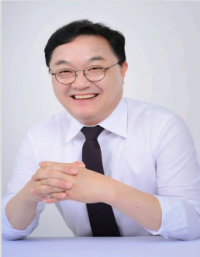
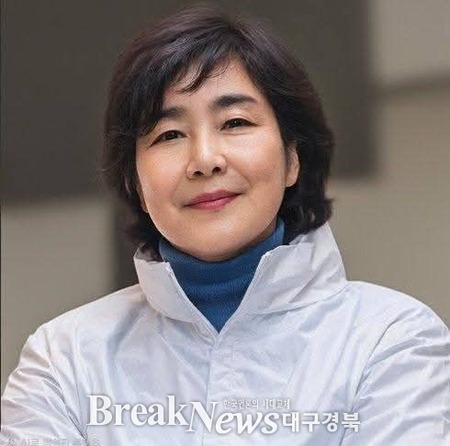
 ▲ 필자/김정기 칼럼니스트. '한국형 협상의 법칙(청년정신사)' 저자. ©브레이크뉴스 |
대통령은 통합을 말했지만, 그 언어 아래 숨어 있는 것은 협상이 아니라 정치적 숙청의 논리였고, 통합이 아니라 정치적 생존을 위한 총력전이었다. 정권이 스스로를 ‘선’으로 규정하는 순간, 반대편은 자동으로 ‘악’이 된다. 그 프레임 속에서 나오는 통합은 통합이 아니라 굴복의 요구이며, 정치적 심판을 통합으로 포장한 권력의 언어일 뿐이다. 지금 필요한 것은 혁명이라는 신화를 덧칠한 정치적 자화자찬이 아니라, 12·3 사태의 실체를 가리지 않고 드러내려는 냉정한 사실 규명과 법 절차를 존중하는 절제된 정치다. 12·3, 이재명 대통령의 발언은 바로 그 절제의 선을 넘었다. Jeongkeekim@naver.com
*필자/김정기
● 학력
- 뉴욕주립대학교(Stony Brook) 정치학과 수석 졸업
- 마케트대학교(Marquette) 로스쿨 법학박사
- 하버드대학교(Harvard) 케네디스쿨 최고위 과정
- 베이징대학교(Peking) 북한학 연구학자
● 경력
- 세계스마트시티기구(WeGO) 사무총장 (현)
- 유엔 국제전기통신연합 (UN ITU) 가상세계 및 AI 글로벌 이니셔티브 집행위원(현)
- 아시아태평양지방정부네트워크(CityNet) 대표
- 제8대 주상하이 대한민국 총영사(13등급 대사)
- 2010 상하이엑스포 대한민국관 정부대표
- 제17대 대선 한나라당 이명박 대통령 후보 국제위원장
- 제20대 대선 국민의힘 윤석열 대통령 후보 정치개혁 공약 총괄
- 제21대 대선 국민의힘 김문수 대통령 후보 외교고문
- 자유한국당 오세훈 당대표 후보 SH전략회의 총괄 및 조직본부 총괄본부장
- 자유한국당 서울시장 예비후보
- 법무법인 대륙아주 중국 총괄 미국변호사\
- 난징대학교 국제경제연구소 객좌교수
- 동국대학교 경영전문대학원 석좌교수
- 숭실사이버대학교 총장
● 저서
1. 대학생을 위한 거로영어연구[전 10권](거로출판사)
2. 나는 1%의 가능성에 도전한다(조선일보사)
3. 한국형 협상의 법칙(청년정신사)
4. 대한민국과 세계 이야기 (도서출판 책미듬)
5. Korea and the World (Advance Reader Copy)
*아래는 위 기사를 '구글 번역'으로 번역한 영문 기사의 [전문]입니다. '구글번역'은 이해도 높이기를 위해 노력하고 있습니다. 영문 번역에 오류가 있을 수 있음을 전제로 합니다.<*The following is [the full text] of the English article translated by 'Google Translate'. 'Google Translate' is working hard to improve understanding. It is assumed that there may be errors in the English translation.>
Jeongkeekim@naver.com
Lee Jae-myung's 'Revolution of Light'... The Dangerous Choice of Frame Politics
"The Dangerous Choice of Frame Politics as Seen Through Kim Jeong-gi's 'Korean-Style Negotiation Laws'" - Columnist Kim Jeong-gi
President Lee Jae-myung's special statement commemorating the first anniversary of the December 3 Incident was not simply a political commentary. It was a declaration summarizing the administration's political strategy for 2026-2027, and a public warning that the future of national affairs would be dragged into a "frame war." The president stated, "Stern punishment of those involved in the coup d'état is the beginning of just unification." However, this single sentence was a political declaration foreshadowing division, not unification, and front lines, not coordination.
Lee Jae-myung's frame approach is more a strategic choice, intentionally escalating conflict for political survival, effectively abandoning negotiation, coordination, and national unity. From a negotiation perspective, it's the worst approach, but from a political strategy perspective, it's a highly calculated move. The cornerstone of political strategy is securing a frame, and securing a frame secures the power to interpret it. The president's language that day clearly illustrates this. He successively deployed extreme words like "coup d'état," "war plot," "outrage," and "must be judged." This wasn't a logical explanation, but an emotional signal to his supporters. In other words, it was a political line drawn: justice on our side, criminals on the other side.
The more political survival is at stake, the more a regime chooses division over unity. Only in situations of division does the supporters rally, the moderates are forced to choose, and the opposition is forced to defend. Lee Jae-myung's version of just unity is merely a wrapping for this divisive strategy. The president's remarks begin with the word "judgment" and end with "justice," but what lies between them is not the rule of law, but political rules. The moment the supreme ruler labels a specific group as "participants in a coup d'état" in a case that hasn't even been decided, judicial procedures are rendered powerless, and the language of power replaces judgment. This is a dangerous precedent, not the language of unity, but the formalization of political stigmatization by state power.
The president's characterization of December 3rd as a "Revolution of Light" echoes this sentiment. Politics is a competition of narratives, but the Lee Jae-myung administration has chosen a narrative monopoly strategy, not competition. No ruler should define a political event they have experienced as a revolution. Revolution is something the people name, not a self-congratulatory label given by those in power to bolster their legitimacy. Nevertheless, the moment December 3rd is confirmed as a revolution, all actions of the regime become just revolutions, and the opposition automatically becomes counter-revolutionary forces. Ordinary political conflict is transformed into a historical construct of good and evil.
As the author of "The Laws of Korean Negotiation," I define this as narrative privatization. The moment power monopolizes a sacred narrative that no one can refute, negotiation disappears, leaving only obedience. The self-serving forces are absolutized as revolutionaries, the opposition is demonized as destroyers of the Constitution, and political debate is elevated to a moral war. The president's statement today exemplifies this very situation.
A more serious problem is that this language isn't simply political rhetoric, but rather a pretext for exerting preemptive pressure on the judiciary and politics as a whole. The moment the president asserts, "The outrageousness of plotting war must be judged," the principles of the presumption of innocence and judicial independence enshrined in the Constitution are directly undermined. The president's remarks are not simply an expression of opinion, but a special statement to the nation—an official directive and expression of the highest authority in the country. If the president creates a structure that implies guilt before the trial is even concluded, the judiciary cannot be free from political pressure.
This also conflicts with the presumption of innocence guaranteed by Article 27, Paragraph 4 of the Constitution, the independence of the judiciary under Article 103, and the prohibition of presidential abuse of power under Article 76. "Insurrection" and "plotting war" constitute extremely serious crimes under criminal law, but the president's assertive application of these principles to a specific group is effectively a preemptive ruling and preemption of judicial judgment. Furthermore, such statements function as a political signal to investigative agencies and the courts, telling them to "go this way," and legally, they are dangerous language that could even spark controversy over abuse of power. While the president, as head of state, has a constitutional obligation to use language of unity and moderation, this statement is more akin to signaling a political purge.
From a negotiation studies perspective, Lee Jae-myung's framing is a clear declaration of abandonment of negotiation. In "The Laws of Korean Negotiation," I wrote that negotiations end immediately the moment the other party is defined as evil. The starting point of negotiation lies in acknowledging the other party's existence. However, in Lee Jae-myung's language, the other party is a coup force, debate is revolution versus counterrevolution, disagreement is relegated to justice versus injustice, and criticism becomes an obstruction of popular sovereignty. In this structure, negotiation, mediation, compromise, and fact-based debate are all impossible. What the regime seeks is not negotiation, but a political strategy that morally undermines its opponents and forces the moderates into a state of fear. This is the core strategy of the frame war.
So why bring up this message now? The answer is clear when looking at the Lee Jae-myung administration's political timeline. Declining approval ratings, worsening economic indicators, increasing judicial risks, and the simultaneous approach of the 2026 local elections and 2028 general elections are crucial political events. Political survival is only possible by shifting from the unfavorable fronts of the economy and people's livelihoods to the emotional battlefields of revolution and counterrevolution, defending popular sovereignty versus coup forces. While the economy and people's livelihoods were the battle lines until yesterday, today marks the beginning of a completely different battlefield: revolution, coup, and judgment.
Ultimately, the president's remarks today are not a declaration of negotiation but an all-out war for political survival. The administration has chosen war over negotiation, division over integration, framing over facts, and political propaganda over legal procedures. By the laws of Korean negotiation, Lee Jae-myung's political strategy is clear: it destroys the space for negotiation and artificially exacerbates conflict to secure its own political survival space.
The president spoke of unity, but hidden beneath that language was not negotiation, but the logic of political purge, not unification, but an all-out war for political survival. The moment a regime defines itself as "good," the opposition automatically becomes "evil." The unification that emerges within that framework is not unification, but a demand for submission, and merely the language of power disguising political judgment as unification. What's needed now is not political self-praise cloaked in the myth of revolution, but a sober investigation of the facts and a restrained politics that respects legal procedures to uncover the truth of the December 3rd Incident without obscuring them. President Lee Jae-myung's remarks on December 3rd crossed that very line of restraint. Jeongkeekim@naver.com
*Author/Kim Jeong-gi
● Education
- Summa Cum Laude, Department of Political Science, State University of New York (Stony Brook)
- Doctor of Law, Marquette Law School
- Harvard Kennedy School, Executive Program
- North Korean Studies Research Scholar, Peking University
● Career
- Secretary General of the World Smart Cities Organization (WeGO) (current)
- Executive Committee Member, Virtual World and AI Global Initiative, International Telecommunication Union (ITU)
- Representative, Asia-Pacific Local Government Network (CityNet)
- 8th Consul General of the Republic of Korea in Shanghai (Ambassador, Class 13)
- Government Representative, Republic of Korea Pavilion, 2010 Shanghai Expo
- Chairman of the International Affairs Committee, Grand National Party (GNP) Presidential Candidate Lee Myung-bak in the 17th Presidential Election
- Chief of Political Reform Pledges, People Power Party (PPP) Presidential Candidate Yoon Seok-yeol in the 20th Presidential Election
- President Kim Moon-soo of the People Power Party in the 21st Presidential Election Foreign Affairs Advisor to the Candidate
- Oh Se-hoon, Liberty Korea Party Candidate for Party Leadership, SH Strategy Council, and Head of the Organization Headquarters
- Liberty Korea Party Candidate for Seoul Mayor
- American Attorney, Head of China, Continental Law Firm
- Visiting Professor, Nanjing University International Economics Institute
- Distinguished Professor, Dongguk University Graduate School of Business
- President, Soongsil Cyber University
● Books
1. Georo English Studies for College Students [10 Volumes] (Georo Publishing)
2. I Challenge the 1% Chance (Chosun Ilbo)
3. The Law of Korean Negotiation (Chungnyeon Jeongshinsa)
4. Stories of Korea and the World (Chaekmidum Publishing)
5. Korea and the World (Advance Reader Copy)