요즘 정치권 일각에서 용인 반도체 국가산업단지를 새만금(전북)으로 이전하자는 주장이 거론되고 있다. 지역 균형 발전이라는 명분이 앞에 붙지만, 이 문제는 지역 정책 차원의 논의로 다룰 사안이 아니다. 반도체는 공공기관이 아니며, 행정구역 조정의 대상도 아니다. 반도체는 오늘날 대한민국이 사실상 마지막으로 붙잡고 있는 전략 산업이다.
 ▲새만금 신항. |
이미 반도체를 제외한 전통 제조업의 상당수는 중국에 추월당했거나, 추월을 허용하는 구조 속에 들어가 있다. 전자, 철강, 자동차, 조선, 석유화학 모두 한때는 한국 경제의 기둥이었지만, 지금은 구조적 경쟁력에서 분명한 한계를 드러내고 있다. 이 상황에서 반도체마저 흔들리면 한국 경제가 기댈 수 있는 기반은 거의 남지 않는다. 반도체는 선택지가 아니라 생존선에 가깝다.
이처럼 산업의 생존이 걸린 상황에서는, 정치권의 언어와 인식 역시 그 무게만큼 신중해야 한다. 이런 맥락에서 최근 김민석 국무총리의 발언은 가볍지 않다. 그는 호남 지역 공개 행사에서 “예전에는 5년이 길다고 했는데, 요즘은 5년이 짧다는 말도 나온다”는 취지의 발언을 했다. 표현을 둘러싼 해석은 엇갈릴 수 있다. 그러나 정치가 권력의 시간표를 늘려 놓고 사고하기 시작했다는 인상을 준 것만은 부인하기 어렵다.
문제는 그 이후다. 광주·전남은 AI 중심 도시를 선언했고, 전북은 상대적 소외를 느낀다는 이야기가 정치권에서 공공연히 나왔다. 지역 간 균형을 고민하는 것은 정치의 책무다. 그러나 그 해법으로 국가 전략 산업인 반도체를 새만금(전북) 이전 카드로 꺼내 드는 순간, 논의는 지역 정책의 차원을 넘어선다. 산업이 정치의 조정 대상, 표 계산의 수단으로 인식되기 시작했다는 신호이기 때문이다.
반도체 산업의 경쟁력은 부지에 있지 않다. 용인은 1985년 기흥에서 한국 반도체 산업이 시작된 이후 수십 년 동안 인력, 연구, 협력업체, 전력, 물류, 보안이 층층이 축적된 공간이다. 이 생태계는 단기간에 새만금(전북)으로 이전해 복제할 수 있는 것이 아니다. 산업은 자연의 흐름을 거스르면 반드시 비용을 치른다.
이것은 책상 위의 이론이 아니라 내가 현장에서 직접 확인한 현실이다. 나는 18년 전 주상하이 대한민국 총영사로 중국 반도체 산업의 핵심 거점인 수저우와 우시를 관할했다. 당시 중국은 반도체를 산업이 아니라 국가 생존 자산으로 다루고 있었다. 당 조직을 중심으로 중앙정부와 지방정부, 금융기관이 동시에 움직였고, 목표는 분명했다. 기업을 키워 파이를 키우고, 그 성과를 국가가 흡수하는 구조였다.
당시 중국 현장에서 한국 반도체 기업이 처한 현실은 결코 녹록지 않았다. 시간이 흘렀지만, 그때의 긴장감은 아직도 또렷하다. 나는 대한민국 정부 대표로서 삼성과 하이닉스를 지켜내기 위해 수저우 시장과 우시 시장은 물론 장쑤성 성장까지 직접 만나며 국익 수호의 최전선에 서 있었다. 하루하루가 외줄 타기 같았고, 한 번의 판단이 산업의 미래를 좌우할 수 있다는 압박 속에서 움직였다.
특히 잊혀지지 않는 장면이 있다. 삼성 이재용 회장이 상하이시 당서기 출신으로 중국의 차기 권력으로 평가되던 시진핑 국가부주석을 30분간 면담하기까지의 과정이다. 그 짧은 면담을 성사시키기 위해 얼마나 많은 물밑 조율과 긴장이 이어졌는지는 현장에 있었던 사람만이 안다. 그것은 단순한 기업인의 면담이 아니었다. 대한민국 반도체 산업의 생존을 걸고 벌인, 조용하지만 치열한 외교전이었다.
현장에서 마주한 두 기업의 처지는 극명하게 갈렸다. 수저우의 삼성반도체는 일부 공정만 현지에서 운영하며 보안 통제를 유지하려 애쓰고 있었지만, 우시의 하이닉스반도체는 전·후 공정이 중국 현장에서 이뤄지며 늘 기술 유출의 위험과 마주하고 있었다. 중국 내부에서는 “주인 없는 하이닉스는 이미 중국 기업”이라는 말이 공공연히 돌았고, 중국 최고 지도부가 상하이를 방문할 때마다 하이닉스는 빠지지 않는 시찰 대상이 되곤 했다.
그 현장을 지켜보며 나는 분명히 깨달았다. 반도체는 결코 기업 하나의 문제가 아니라는 사실을.... 그것은 외교와 안보, 산업과 권력이 맞물려 움직이는 국가 전략 자산이었고, 국가 간 힘이 정면으로 충돌하는 최전선이었다. 그래서 반도체는 한 번의 정책 결정, 한 번의 정치적 판단으로 쉽게 옮기거나 흔들 수 있는 대상이 아니었다. 반도체를 가볍게 다루는 국가는 결국 산업 주권을 잃는다. 쌀이 무너지면 식량 주권이 흔들리듯, 반도체가 무너지면 미래 산업 전체가 흔들린다. 그래서 반도체는 흔히 말하는 주력 산업이 아니라, 미래산업의 쌀이다.
이런 산업을 정치 일정과 지역 민심을 이유로 새만금(전북) 이전이라는 방식으로 다루는 발상은 전북을 위한 정책도 아니다. 반도체를 옮긴다고 전북이 살아난다는 보장은 없다. 실패할 경우 그 부담은 고스란히 지역을 포함하여 대한민국에 남는다. 전북이 가야 할 길은 수도권의 대체지가 되는 것이 아니라, 전북만이 맡을 수 있는 역할을 갖는 것이다. 농생명 기반 AI, 센서와 데이터, 반도체 응용과 실증 같은 영역은 전북이 충분히 전략 거점이 될 수 있는 분야다.
중국 공산당조차도 산업 정책에서는 한 가지 원칙을 분명히 지킨다. 잘되는 기업을 더 지원하여 파이를 키운 뒤, 그 성과를 국가가 흡수한다는 것이다. 이는 이념의 문제가 아니라 철저히 계산의 문제다. 어떻게 보면 중국 공산당이 한국 민주당보다 더 자본주의적이라고 해도 과언이 아니다.
그런데 대한민국 정치권 일각에서는, 그나마 국제 경쟁력을 유지하고 있는 반도체 산업을 이전 카드로 불확실한 미래로 밀어 넣자는 발상이 아무렇지 않게 거론된다. 산업을 키워 국가의 몫을 늘리겠다는 전략은 보이지 않는다. 이미 형성된 산업을 나누고 재배치하려는 정치적 계산만 앞선다. 이대로라면 국가의 곶간을 누가 책임질 것인가.
물론 정치는 지역의 박탈감을 달래야 한다. 그러나 그 방식이 국가 생존의 축을 흔드는 것이어서는 안 된다. 반도체는 정치의 수단이 아니다. 반도체는 국가 생존의 조건이다. 이 점을 가볍게 여기는 순간, 흔들리는 것은 산업 하나가 아니라 대한민국의 미래다. Jeongkeekim@naver.com
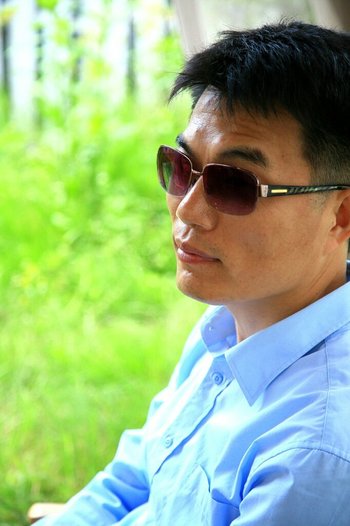
*필자/김정기
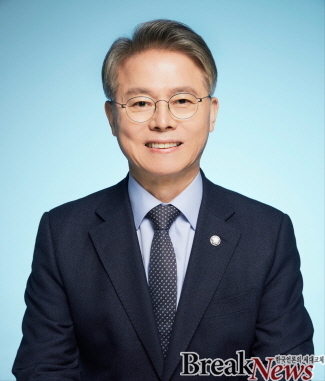
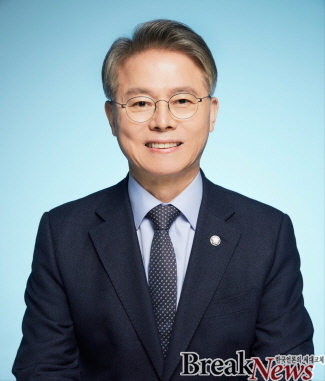
 ▲ 김정기 ©브레이크뉴스 |
● 학력
- 뉴욕주립대학교(Stony Brook) 정치학과 수석 졸업
- 마케트대학교(Marquette) 로스쿨 법학박사
- 하버드대학교(Harvard) 케네디스쿨 최고위 과정
- 베이징대학교(Peking) 북한학 연구학자
● 경력
- 세계스마트시티기구(WeGO) 사무총장 (현)
- 유엔 국제전기통신연합 (UN ITU) 가상세계 및 AI 글로벌 이니셔티브 집행위원(현)
- 아시아태평양지방정부네트워크(CityNet) 대표
- 제8대 주상하이 대한민국 총영사(13등급 대사)
- 2010 상하이엑스포 대한민국관 정부대표
- 제17대 대선 한나라당 이명박 대통령 후보 국제위원장
- 제20대 대선 국민의힘 윤석열 대통령 후보 정치개혁 공약 총괄
- 제21대 대선 국민의힘 김문수 대통령 후보 외교고문
- 자유한국당 오세훈 당대표 후보 SH전략회의 총괄 및 조직본부 총괄본부장
- 자유한국당 서울시장 예비후보
- 법무법인 대륙아주 중국 총괄 미국변호사
- 난징대학교 국제경제연구소 객좌교수
- 동국대학교 경영전문대학원 석좌교수
- 숭실사이버대학교 총장
● 저서
1. 대학생을 위한 거로영어연구[전 10권](거로출판사)
2. 나는 1%의 가능성에 도전한다(조선일보사)
3. 한국형 협상의 법칙(청년정신사)
4. 대한민국과 세계 이야기 (도서출판 책미듬)
5. Korea and the World (Advance Reader Copy)
*아래는 위 기사를 '구글 번역'으로 번역한 영문 기사의 [전문]입니다. '구글번역'은 이해도 높이기를 위해 노력하고 있습니다. 영문 번역에 오류가 있을 수 있음을 전제로 합니다.<*The following is [the full text] of the English article translated by 'Google Translate'. 'Google Translate' is working hard to improve understanding. It is assumed that there may be errors in the English translation.>
If semiconductors collapse, South Korea will be finished too!
"Politics should not shake up industries that cannot be moved!"
-*Author/Kim Jeong-gi
Recently, some in the political world are suggesting relocating the Yongin Semiconductor National Industrial Complex to Saemangeum (North Jeolla Province). While the rationale for this is balanced regional development, this issue is not one to be discussed at the level of regional policy. Semiconductors are not a public institution, nor are they subject to administrative district adjustments. Semiconductors are effectively the last strategic industry South Korea is clinging to today.
Many traditional manufacturing industries, excluding semiconductors, have already been overtaken by China or are in a structure that allows them to do so. Electronics, steel, automobiles, shipbuilding, and petrochemicals were once the pillars of the Korean economy, but now their structural competitiveness is clearly limited. If even semiconductors falter, the Korean economy will have little left to rely on. Semiconductors are not an option, but rather a survival necessity.
In such a situation where the survival of an industry is at stake, the language and perceptions of politicians must be equally cautious. In this context, Prime Minister Kim Min-seok's recent remarks are significant. He made these remarks at a public event in the Honam region. He made a statement to the effect of, "In the past, people said five years was a long time, but these days, people say five years is short." Interpretations of his expression may vary. However, it's undeniable that it gave the impression that politicians began to think in terms of extending the timeline of power.
The problem lies in what followed. Gwangju and South Jeolla Province declared themselves AI-centered cities, while North Jeolla Province openly expressed its relative isolation in political circles. It is the responsibility of politics to consider regional balance. However, the moment the national strategic industry, semiconductors, are brought up as a solution to this problem by relocating to Saemangeum (North Jeolla Province), the discussion transcends the level of regional policy. This signals that the industry is beginning to be perceived as a target of political manipulation and a means of vote-counting.
The competitiveness of the semiconductor industry does not lie in its location. Yongin is a space where, since the Korean semiconductor industry began in Giheung in 1985, human resources, research, partners, power, logistics, and security have accumulated over the decades. This ecosystem cannot be replicated by simply relocating to Saemangeum (North Jeolla Province). Industry is a natural resource. Going against the grain will inevitably result in a cost.
This isn't a theory on paper; it's a reality I witnessed firsthand. Eighteen years ago, as the Consul General of the Republic of Korea in Shanghai, I oversaw Suzhou and Wuxi, the core hubs of China's semiconductor industry. At the time, China treated semiconductors not as an industry but as a national asset for survival. Central and local governments, along with financial institutions, operated simultaneously, centered around the Party organization. The goal was clear: to grow companies, expand the market share, and for the state to absorb the profits.
The reality facing Korean semiconductor companies in China at the time was anything but easy. Time has passed, but the tension of that time remains vivid. As a representative of the South Korean government, I stood on the front lines of protecting national interests, meeting directly with the mayors of Suzhou and Wuxi, and even the governor of Jiangsu Province, to protect Samsung and Hynix. Every day felt like a tightrope walk, and I operated under the pressure that a single decision could determine the future of the industry.
There's one particularly unforgettable moment: Samsung Chairman Lee Jae-yong, a former Shanghai Party Secretary, and Xi Jinping, who was considered China's next leader. This is the process leading up to a 30-minute meeting with the Vice President. Only those who were present know the amount of behind-the-scenes coordination and tension that went into making that brief meeting a success. It wasn't just a meeting between businessmen. It was a quiet but fierce diplomatic battle, with the survival of the South Korean semiconductor industry at stake.
The two companies faced a stark contrast. Samsung Semiconductor in Suzhou struggled to maintain security controls by operating only some of its processes locally, while Hynix Semiconductor in Wuxi faced the constant risk of technology leaks, with all pre- and post-processing being done on-site in China. It was widely said within China that "Hynix without an owner is already a Chinese company," and Hynix was a constant target of inspections whenever top Chinese leaders visited Shanghai.
Witnessing this scene, I realized clearly: semiconductors were never just a single company's problem. They were a national strategic asset, intertwined with diplomacy, security, industry, and power, and a frontline where power clashed head-on. Therefore, semiconductors were a matter of policy, of every single policy decision, every single decision. It wasn't something that could be easily moved or shaken based on political judgment. A country that treats semiconductors lightly ultimately loses its industrial sovereignty. Just as a collapse in rice threatens food sovereignty, a collapse in semiconductors threatens the entire future industry. Therefore, semiconductors are not just a so-called flagship industry, but the rice of the future industry.
The idea of relocating this industry to Saemangeum (Jeonbuk) based on political schedules and local public sentiment is not a policy for Jeonbuk. Relocating semiconductors doesn't guarantee Jeonbuk's revival. If it fails, the burden will fall entirely on the region and South Korea. Jeonbuk's path isn't to become a replacement for the Seoul metropolitan area, but to fulfill a role unique to Jeonbuk. Areas like agricultural and biotechnology-based AI, sensors and data, and semiconductor application and verification are areas where Jeonbuk can fully serve as a strategic base.
Even the Chinese Communist Party adheres to one principle in its industrial policy: to further support successful companies to expand the pie, and then absorb the fruits of their labor for the state. This isn't a matter of ideology; it's a matter of thorough calculation. In a way, it's a matter of China. It's no exaggeration to say that the Communist Party is more capitalist than the Democratic Party of Korea.
Yet, some in South Korean politics are casually discussing the idea of using the transfer card to push the semiconductor industry, which has maintained its international competitiveness, into an uncertain future. There's no apparent strategy to grow the industry and increase the nation's share. Instead, the political calculation of dividing and redistributing an already established industry takes precedence. If this continues, who will take responsibility for the nation's future?
Of course, politics should alleviate regional deprivation. However, this approach should not be used to shake the very foundations of national survival. Semiconductors are not a political tool. They are a prerequisite for national survival. The moment this is taken lightly, it's not just an industry that's being shaken, but the future of South Korea itself. Jeongkeekim@naver.com
*Author/Kim Jeong-gi
● Education
- Summa Cum Laude, Department of Political Science, State University of New York (Stony Brook)
- Doctor of Laws, Marquette Law School
- Harvard Kennedy School, Executive Program
- North Korean Studies Scholar, Peking University
● Career
- Secretary-General of the World Smart Cities Organization (WeGO) (current)
- Executive Committee Member, Virtual World and AI Global Initiative, UN International Telecommunication Union (ITU) (current)
- Representative, Asia-Pacific Local Government Network (CityNet)
- 8th Consul General of the Republic of Korea in Shanghai (Ambassador, Rank 13)
- Government Representative, Republic of Korea Pavilion, 2010 Shanghai Expo
- Chairman of the International Affairs Committee, Grand National Party Presidential Candidate Lee Myung-bak in the 17th Presidential Election
- Head of Political Reform Pledges, People Power Party Presidential Candidate Yoon Seok-yeol in the 20th Presidential Election
- Foreign Affairs Advisor, People Power Party Presidential Candidate Kim Moon-soo in the 21st Presidential Election
- Head of SH Strategy Council and Organization Headquarters, Liberty Korea Party Representative Candidate Oh Se-hoon
- Preliminary Candidate for Seoul Mayor, Liberty Korea Party
- U.S. Attorney, China Head, Liaoyuan Aju Law Firm
- Visiting Professor, Nanjing University International Economics Institute
- Distinguished Professor, Dongguk University Graduate School of Business
- President of Soongsil Cyber University
● Books
1. Georo English Studies for College Students [10 Volumes] (Georo Publishing)
2. I Challenge the 1% Chance (Chosun Ilbo)
3. The Law of Korean Negotiation (Cheongnyeonjeongsinsa)
4. Stories of Korea and the World (Chaekmidum Publishing)
5. Korea and the World (Advance Reader Copy)