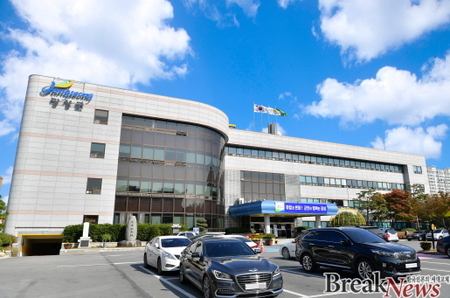
▲ 인천연구원 전경 © 박상도 기자 |
(브레이크뉴스인천 박상도 기자) 인천연구원이 14일, “체험경제 기반 인천시 뷰티산업 활성화 방안” 연구보고서를 발표했다.
인천연구원에 따르면, 이 연구는 전국 최대 규모의 화장품 제조 인프라를 보유한 인천시가 OEM/ODM (주문자 상표 부착 생산) 중심의 구조적 한계를 넘어 체험경제형 뷰티산업으로 전환하기 위한 정책 방향을 제시하고자 수행됐다.
○ 인천 뷰티산업 현황: 강점과 한계
인천시는 324개의 화장품 기업이 집적된 전국 최대 규모의 제조 기반을 보유하고 있다. 주로 남동구(54.9%)와 서구(27.5%)에 분포해 있으며, K-뷰티 성장을 뒷받침하는 핵심 동력 역할을 해왔다.
그러나 대부분의 기업이 OEM/ODM 방식에 의존하고 있어 부가가치 창출에 한계를 보인다.
전 세계 뷰티 시장이 2033년 5,705억 달러 규모로 성장할 것으로 전망되는 가운데, 시장 패러다임은 단순 제품 판매를 넘어 개인화된 '체험'을 제공하는 서비스 중심으로 빠르게 재편되고 있어 이러한 구조의 한계를 넘어서는 인천시 차원의 뷰티산업 혁신성장 전략이 필요하다.
○ 기업 인식조사 결과: `인식과 현실의 괴리'
인천 관내 뷰티 기업을 대상으로 실시한 심층 인식조사 결과, 대부분의 기업이 체험경제가 뷰티산업의 미래 트렌드라는 점에는 동의하면서도(5점 만점 2.83점), 실제 자사 비즈니스와의 연관성은 낮게 평가(5점 만점 2.10점)했다.
향후 3년 내 도입 의지도 1.2점대로 매우 저조해 `인식과 현실의 괴리' 현상이 가장 큰 구조적 문제임이 드러났다.
이는 자금이나 인프라 부족 이전에, 체험경제에 대한 낮은 이해도와 구체적인 실행 방안 부재가 산업 전환의 발목을 잡고 있음을 보여준다.
○ 정책 제언: ‘인천형 뷰티산업 혁신 패키지’ 4대 정책
연구는 인천이 보유한 독보적 자산인 연간 7천만 명이 이용하는 인천국제공항과 남동국가산업단지의 제조 인프라를 유기적으로 결합해 `만드는 도시'에서 `체험하는 도시'로 도약하는 비전을 제시하고 이를 실현하기 위한 4대 핵심 정책을 제안했다.
주요 내용은 인천형 체험 플랫폼 구축, 뷰티산업 협력 네트워크 구축, 뷰티 관광벨트 조성, 인재 양성 선순환 프로그램 등이다.
인천연구원의 민규량 연구위원은 “인천의 우수한 제조 역량을 체험경제와 결합하면 K-뷰티의 생산 심장부를 소비와 경험의 중심지로 전환할 수 있다”며, “체계적인 정책 지원과 기업의 인식 전환이 함께 이뤄져야 한다”고 강조했다.
또한, 인천연구원이 2025년 정책과제로 수행한 “영종․검단지역 생활SOC 공급 방안 연구” 결과보고서에서 빠르게 증가하는 인구와 생활권 구조 변화에 대응하여 두 신설 자치구는 기반시설의 전략적 확보가 필요한 상황이라고 진단했다.
인천연구원에 따르면, 2026년 7월 1일 인천은 제물포구, 영종구, 검단구 새로운 구의 출범을 앞두고 있다.
기존 구청사와 시설을 가지고 있는 제물포구와는 달리 영종지역과 검단지역은 각각 중구와 서구의 외곽지역에 해당하고 개발 중인 지역이 많아 시설에 대한 종합적 검토가 필요하다.
이 연구는 영종구와 검단구가 하나의 자치구로 기능하기 위해 생활SOC의 현황과 수요를 조사하고 공급 방안을 제시했다.
영종지역과 검단지역은 지난 20여 년간 각각 536%, 385% 증가한 빠른 인구 성장을 보였으며, 2030년까지 영종은 16만 명, 검단은 30만 명 규모로 확대될 것으로 전망된다.
두 지역은 0~49세 비중이 높아 젊은 생활권의 성격이 강하며, 특히 검단은 유아동 인구가 매우 높은 구조를 보이고 있어 향후 보육·교육·청소년시설 수요가 크게 증가할 것으로 분석됐다.
현황 조사와 설문조사 결과에서 영종은 ‘응급실 운영 의료기관’이 모든 생활권에서 최우선 필요 시설로 나타났다.
또, 지역 내 문화 향유 공간이 부족해 소규모 공연장을 포함한 문화회관 조성이 중요한 과제로 제시됐다.
고령 인구가 많은 용유동은 소규모 복지시설과 생활체육시설의 확보가 필요하다.
검단지역은 동별로 필요 시설이 상이하나, 공공도서관·체육시설·공원 등 기본적 시설 수요가 높고 문화예술회관에 대한 요구가 강하게 나타났다.
이미 일부 시설은 공급 예정으로 확정된 시설을 조기에 확보하는 것이 중요한 과제이다.
한편으로 영종지역, 검단지역 모두 유아동·청소년 인구 비중이 높아 보육시설과 청소년시설의 단계적 확충이 필수적이다.
이 연구는 신설 자치구가 갖추어야 할 주요 기반시설을 우선 확보하고, 생활복합SOC 1개와 추가 단일시설 1~2개를 중심으로 중·소규모 생활SOC를 단계적으로 확충해야 한다고 제안했다.
문화예술회관 등 대규모 문화시설은 구청사 부지와 연계한 입지 전략이 필요하며, 민간개발 공공기여·주택사업 내 어린이집 확보 등 다양한 재원 확보 방안을 병행할 필요가 있다고 강조했다.
인천연구원 안내영 연구위원은 “영종․검단지역은 인구 규모와 생활권 특성이 빠르게 변화하는 지역으로, 생활SOC의 균형적 확충이 시민 삶의 질을 결정짓는 핵심 요소가 될 것”이라며 “생활권별 맞춤형 시설 공급과 재원 확보 전략을 통해 신설 자치구의 지속가능한 도시 기반을 마련할 필요가 있다”고 밝혔다.
*아래는 위 기사를 ‘구글 번역’으로 번역한 영문 기사의 [전문]입니다.‘구글번역’은 이해도 높이기를 노력하고 있습니다. 영문 번역에 오류가 있을 수 있음을 전제로 합니다.<*Below is the full text of the English translation of the above article, translated using Google Translate. Google Translate strives to improve comprehension. Please note that there may be errors in the English translation.>
Incheon Research Institute: Presenting a Beauty Industry Innovation Growth Strategy and Securing New Autonomous District Infrastructure Needed
-Break News Incheon Park Sang-do Reporter
On the 14th, the Incheon Research Institute released a research report titled "Incheon City's Beauty Industry Revitalization Plan Based on the Experience Economy."
According to the Incheon Research Institute, this research was conducted to suggest policy directions for Incheon, which possesses the largest cosmetics manufacturing infrastructure in the country, to overcome its structural limitations centered on OEM/ODM (Original Equipment Manufacturer) and transition to an experience-oriented beauty industry.
○ Current Status of Incheon's Beauty Industry: Strengths and Limitations
Incheon boasts the largest manufacturing base in the country, with 324 cosmetics companies. These are primarily located in Namdong-gu (54.9%) and Seo-gu (27.5%), and have served as a key driving force behind the growth of K-beauty.
However, most companies rely on OEM/ODM methods, limiting their ability to create added value.
With the global beauty market projected to grow to $570.5 billion by 2033, the market paradigm is rapidly restructuring beyond simple product sales to focus on services that provide personalized "experiences." Therefore, an innovative growth strategy for the beauty industry at the Incheon Metropolitan Government level is needed to overcome this structural limitation.
○ Corporate Perception Survey Results: "Gap Between Perception and Reality"
An in-depth perception survey of beauty companies in Incheon revealed that while most companies agreed that the experiential economy is a future trend in the beauty industry (2.83 out of 5), they rated its relevance to their business as low (2.10 out of 5).
The intention to adopt the experience economy within the next three years was also extremely low, at around 1.2, revealing that the "gap between perception and reality" is the most significant structural problem.
This demonstrates that, even before a lack of funding or infrastructure, a low understanding of the experiential economy and the absence of concrete implementation plans are hindering industrial transformation.
○ Policy Recommendation: Four Key Policies for the "Incheon-Style Beauty Industry Innovation Package"
The study presented a vision for Incheon to transform from a "manufacturing city" to an "experience-focused city" by organically combining Incheon International Airport, which receives 70 million passengers annually, and the manufacturing infrastructure of the Namdong National Industrial Complex. It also proposed four key policies to achieve this vision.
Key initiatives include establishing an Incheon-style experience platform, establishing a beauty industry cooperation network, creating a beauty tourism belt, and developing a virtuous cycle of talent development.
Min Gyu-ryang, a research fellow at the Incheon Institute, stated, "Combining Incheon's exceptional manufacturing capabilities with the experiential economy can transform the heart of K-beauty production into a hub of consumption and experience." He emphasized, "Systematic policy support and a shift in corporate awareness are essential."
The Incheon Research Institute's 2025 policy report, "Study on the Supply of Living SOC in Yeongjong and Geomdan," identified the two newly established autonomous districts as requiring strategic infrastructure improvements to address the rapidly growing population and changing residential structures.
According to the Incheon Research Institute, Incheon is set to launch three new districts: Jemulpo-gu, Yeongjong-gu, and Geomdan-gu on July 1, 2026.
Unlike Jemulpo-gu, which already has existing district offices and facilities, Yeongjong-gu and Geomdan-gu are located on the outskirts of Jung-gu and Seo-gu, respectively, and contain many areas under development. Therefore, a comprehensive review of their facilities is necessary.
This study examined the current status and demand for living SOC and proposed supply measures for Yeongjong-gu and Geomdan-gu to function as a unified autonomous district.
Yeongjong and Geomdan have experienced rapid population growth over the past 20 years, increasing by 536% and 385%, respectively. By 2030, Yeongjong's population is projected to reach 160,000, and Geomdan's by 300,000.
Both areas have a strong youthful character, with a high proportion of people aged 0-49. Geomdan, in particular, has a very high infant and child population, leading to a significant increase in demand for childcare, education, and youth facilities.
According to the current situation survey and questionnaire, "medical institutions with emergency rooms" were identified as the top priority in all areas of Yeongjong.
Furthermore, due to the lack of cultural spaces within the area, the development of cultural centers, including small performance halls, was identified as a key priority.
Yongyu-dong, with its large elderly population, needs to secure small welfare facilities and sports facilities.
In Geomdan, while facility needs vary by neighborhood, there is a high demand for basic facilities such as public libraries, sports facilities, and parks, and a strong demand for cultural and arts centers.
Securing some facilities early, as they are already scheduled for supply, is a critical task.
Meanwhile, both Yeongjong and Geomdan regions have high populations of infants and young children, making the gradual expansion of childcare and youth facilities essential.
This study proposed that new autonomous districts should prioritize securing key infrastructure and gradually expand small and medium-sized social overhead capital (SOC) facilities, focusing on one complex SOC facility and one or two additional single-use facilities.
Large-scale cultural facilities, such as cultural and arts centers, require a location strategy aligned with district office sites. The study emphasized the need to pursue diverse funding options, including private sector development and public contributions, and the establishment of daycare centers within housing projects.
Ahn Nae-young, a research fellow at the Incheon Institute, stated, "The Yeongjong and Geomdan regions are rapidly changing in terms of population size and residential characteristics. A balanced expansion of SOC facilities will be a key factor in determining the quality of life for residents." She added, "We need to establish a sustainable urban foundation for these new autonomous districts through customized facility supply and resource acquisition strategies tailored to each residential area."
원본 기사 보기:ebreaknews.com