정치에는 소음이 있다. 감정이 앞설수록 구호는 커지고, 승패를 가르는 판단 기준은 사라진다. 반대로 소음이 걷히면 권력의 흐름과 선택의 대가가 드러난다. 지금 보수 정치가 서 있어야 할 자리는 분노의 언어가 아니라 승패와 책임을 가르는 판단의 자리다. 그러나 최근 보수 정치의 내부는 지나치게 시끄럽다. 그 소음의 진원지에는 “한동훈(국민의힘 전 대표) 다음은 오세훈(서울시장)을 몰아내자”는 구호가 있다.
 ▲ 오세훈 서울시장. ©뉴시스 |
이 주장을 공개적으로 전면화한 인물은 극단 성향 유튜버 고성국이다. 그는 자신의 채널을 통해 윤석열 전 대통령과 장동혁 대표를 비판한 오세훈 서울시장마저 ‘배제 대상’으로 규정했다. 그러나 이 주장은 정치 전략이 아니라 위험 신호에 가깝다. 그 발언 어디에도 ‘그 다음’이 없기 때문이다. 오세훈을 몰아낸 뒤 누가 서울을 맡을 것인지, 수도권을 어떻게 지킬 것인지, 무너진 지방 권력을 어떻게 복구할 것인지에 대한 설계는 보이지 않는다. 배제만 있고 대안은 없다.
정치는 비판으로 성장할 수 있다. 그러나 대안 없는 배제는 정치가 아니라 자해다. 특히 지금의 보수 지형에서 오세훈을 흔드는 것은 전략 포기 선언에 가깝다. 냉정하게 보자. 현재 기준으로 오세훈을 제외하면 수도권에서 승리를 기대할 수 있는 광역단체장급 카드가 존재하는가. 수도권이 모두 구조적 열세에 놓여 있다. 이런 상황에서 서울시장 자리까지 내주면 결과는 명확하다. 수도권 단체장 전멸과 전국 단위 선거의 작동 불능이다. 충청권에서 완패가 현실이 될 것이고, 부울경 지역으로 출혈이 이어지면 낙동강 벨트도 무너지고 TK는 정치적으로 고립된 섬이 된다. 이는 단순한 지방선거 패배가 아니다. 보수 정당의 정치 생태계가 연쇄적으로 붕괴되는 시나리오다. 그럼에도 오세훈 배제론을 외치는 것은, 남아 있는 마지막 성채까지 불태우자는 주장과 다르지 않다.
더 심각한 문제는 이런 발언이 ‘정치 비평’의 외피를 쓰고 유통된다는 점이다. 고성국식 정치는 분석이 아니라 장사에 가깝다. 내부의 적을 설정하고, 분열을 자극하고, 분노를 클릭과 후원으로 환전한다. 이 구조에서 중요한 것은 당의 생존도, 보수의 재건도 아니다. 조회수와 수익이다. 그래서 대안은 필요 없다. 대안은 자극을 약화시키기 때문이다. 이 방식은 당을 강하게 만들지 않는다. 오히려 책임 있는 정치인을 소모품으로 만들고, 정당을 극단과 피로감만 남는 집단으로 전락시킨다.
여기에 하나의 구조적 불리함이 더해진다. 2026년 서울시장 선거는 이재명 정권 출범 1년 만에 치러지는 선거다. 선거 정치학(Electoral Politics)에서 말하는 이른바 밴드왜건 효과(Bandwagon Effect)가 가장 강하게 작동하는 시점이다. 밴드왜건 효과란 유권자들이 정책이나 후보의 실질적 성과보다 현재 승리하고 있다고 인식되는 권력에 편승하려는 심리를 말한다. 집권 초기의 정치적 관성, 제도 장악력, 이기는 쪽에 서려는 심리가 결합되면서 야당은 특별한 실책이 없어도 태생적 열세에 놓이게 된다. 이 시기의 선거는 공정한 출발선 위의 경쟁이 아니라, 이미 기울어진 운동장에서 치러지는 승부다.
이 지형은 낯설지 않다. 2018년 지방선거가 정확히 그랬다. 박근혜 탄핵 이후 문재인 정부 출범 직후에 치러진 그 선거에서, 지방선거는 사실상 정권에 대한 중간평가가 아니라 정권 출범 효과의 연장선으로 작동했다. 정책 성과가 충분히 검증되기도 전에 여당은 전국적 압승을 거뒀고, 야당은 후보 개인의 역량과 무관하게 구조적 참패를 피하지 못했다. 밴드왜건 효과가 극대화된 전형적 사례였다.
그럼에도 정치에는 늘 하나의 질문이 남는다. 모든 곳이 같아야 하는가. 서울은 종종 예외였다. 수도 서울은 단순한 행정 단위가 아니라 권력의 흐름을 재편하는 정치적 공간이기 때문이다. 2006년 지방선거에서 서울은 전국 흐름과 다른 선택을 했다. 2011년 재보선 역시 중앙 정치의 격랑 속에서도 ‘정권 심판’이 아니라 ‘도시 운영’의 기준으로 판단했다. 2021년 보궐선거 또한 전국 정치의 혼란 속에서 관리와 회복이라는 신호를 선택했다. 이 사례들이 말해주는 것은 분명하다. 서울은 늘 예외가 될 가능성을 품고 있는 도시라는 점이다.
다만 그 예외는 우연히 만들어지지 않는다. 가장 관리가 필요한 시점에, 가장 검증된 인물을 선택할 때만 가능해진다. 바로 이 지점에서 2026년 서울시장 선거의 의미가 갈린다. 이번 선거는 전국 흐름에 순응할 것인지, 아니면 그 흐름에 균열을 낼 것인지의 선택이다. 만약 서울마저 관성에 흡수된다면, 그 다음은 명확하다. 수도권은 완전히 잠기고, 야권은 총선과 대선에서 출발선 자체를 잃는다. 서울이 무너지면 정치의 시간표는 단숨에 길어진다.
그래서 다시 묻게 된다. 왜 하필 오세훈인가. 답은 단순하다. 그는 서울을 실제로 운영해 본 인물이기 때문이다. 서울은 이념의 실험장이 아니라 삶의 현장이다. 교통, 주거, 안전, 일자리, 도시 경쟁력 같은 문제는 구호로 해결되지 않는다. 대규모 예산과 복잡한 이해관계를 조정해 본 경험, 실패와 수정, 재설계를 모두 겪어 본 경험이 필요하다. 오세훈은 그 과정을 이미 통과한 인물이다.
무상급식 논란으로 시장직을 내려놓았고, 긴 정치적 공백을 견뎠다. 그 실패는 흠이지만 동시에 자산이다. 정치에서 실패의 비용을 감당해 본 인물은 위기 앞에서 경솔해지지 않는다. 2026년 서울에 필요한 것은 새로운 실험가가 아니라 검증된 설계자다.
2026년 서울시장 선거는 단순한 지방선거가 아니다. 차기 총선의 수도권 교두보이자, 차기 대선의 최소 방어선이다. 지금 기준에서 이 방어선을 지킬 수 있는 인물이 오세훈이라는 사실은 감정의 문제가 아니다. 현실 판단이다. 완벽해서가 아니라 대체 불가능하기 때문에 그렇다. 정치에서 유일한 카드를 마음에 들지 않는다는 이유로 걷어차는 순간, 그 정치는 전략을 포기한 것이다.
보수는 지금 공격할 단계가 아니다. 지금은 버텨야 할 단계다. 오세훈을 지키는 것이 서울을 지키고, 수도권을 지키고, 보수가 다시 숨을 쉴 수 있는 최소한의 공간을 지키는 것과 같다. 대안 없는 배제론, 책임 없는 선동, 장사로 전락한 정치 비평이 계속된다면, 보수는 외부의 적이 아니라 내부의 무책임으로 무너질 것이다.
결론은 분명하다. 오세훈을 흔들수록 이재명 집권의 시간은 길어진다. 이 단순한 인과를 외면하는 보수 정치에는 내일이 없다. Jeongkeekim@naver.com
*필자/김정기
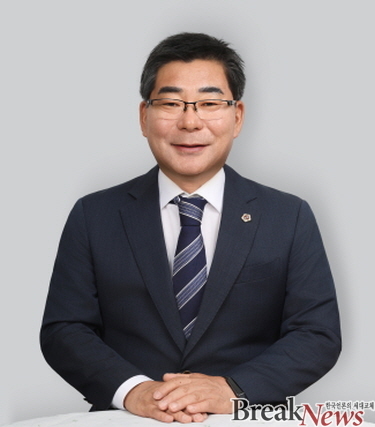
 ▲필자/ 김정기 "한국형 협상의 법칙(청년정신사)" 의 저자. ©브레이크뉴스 |
● 학력
- 뉴욕주립대학교(Stony Brook) 정치학과 수석 졸업
- 마케트대학교(Marquette) 로스쿨 법학박사
- 하버드대학교(Harvard) 케네디스쿨 최고위 과정
- 베이징대학교(Peking) 북한학 연구학자
● 경력
- 세계스마트시티기구(WeGO) 사무총장 (현)
- 유엔 국제전기통신연합 (UN ITU) 가상세계 및 AI 글로벌 이니셔티브 집행위원(현)
- 아시아태평양지방정부네트워크(CityNet) 대표
- 제8대 주상하이 대한민국 총영사(13등급 대사)
- 2010 상하이엑스포 대한민국관 정부대표
- 제17대 대선 한나라당 이명박 대통령 후보 국제위원장
- 제20대 대선 국민의힘 윤석열 대통령 후보 정치개혁 공약 총괄
- 제21대 대선 국민의힘 김문수 대통령 후보 외교고문
- 자유한국당 오세훈 당대표 후보 SH전략회의 총괄 및 조직본부 총괄본부장
- 자유한국당 서울시장 예비후보
- 법무법인 대륙아주 중국 총괄 미국변호사\
- 난징대학교 국제경제연구소 객좌교수
- 동국대학교 경영전문대학원 석좌교수
- 숭실사이버대학교 총장
● 저서
1. 대학생을 위한 거로영어연구[전 10권](거로출판사)
2. 나는 1%의 가능성에 도전한다(조선일보사)
3. 한국형 협상의 법칙(청년정신사)
4. 대한민국과 세계 이야기 (도서출판 책미듬)
5. Korea and the World (Advance Reader Copy)
*아래는 위 기사를 '구글 번역'으로 번역한 영문 기사의 [전문]입니다. '구글번역'은 이해도 높이기를 위해 노력하고 있습니다. 영문 번역에 오류가 있을 수 있음을 전제로 합니다.<*The following is [the full text] of the English article translated by 'Google Translate'. 'Google Translate' is working hard to improve understanding. It is assumed that there may be errors in the English translation.>
Why Oh Se-hoon? The more you shake Oh Se-hoon, the longer Lee Jae-myung's presidency will last?
- Columnist Kim Jeong-gi
There's noise in politics. The more emotions take over, the louder the slogans become, and the criteria for judging victory or defeat disappear. Conversely, when the noise clears, the flow of power and the costs of choices become apparent. Conservative politics should now be positioned not in the language of anger, but in the judgment that determines victory or defeat and responsibility. However, the internal structure of conservative politics has recently become excessively noisy. At the epicenter of this noise is the slogan, "After Han Dong-hoon (former People Power Party leader), let's oust Oh Se-hoon (Seoul Mayor)."
The person who has publicly championed this argument is extremist YouTuber Ko Seong-guk. On his channel, he has even labeled Seoul Mayor Oh Se-hoon, who criticized former President Yoon Seok-yeol and Jang Dong-hyuk, as a "subject for exclusion." However, this argument is less a political strategy and more a warning signal, as there's no "next" in his statement. There's no clear plan for who will take charge of Seoul after Oh Se-hoon's ouster, how to protect the Seoul metropolitan area, or how to restore the collapsed local power. There's only exclusion, no alternative.
Politics can grow through criticism. However, exclusion without alternatives isn't politics; it's self-destruction. Especially in the current conservative landscape, shaking Oh Se-hoon is tantamount to declaring strategic abandonment. Let's take a hard look. Excluding Oh Se-hoon, is there a metropolitan-level leader capable of winning in the Seoul metropolitan area? The entire Seoul metropolitan area is structurally disadvantaged. Under these circumstances, if the Seoul mayoralty is also lost, the consequences are clear: a complete annihilation of local government leaders and the inoperability of nationwide elections. A crushing defeat in the Chungcheong region will be a reality, and if the damage spreads to the Busan, Ulsan, and Gyeongnam regions, the Nakdong River Belt will collapse, leaving TK as a politically isolated island. This isn't simply a local election defeat. It's a scenario that will lead to a cascading collapse of the conservative party's political ecosystem. Nevertheless, clamoring for Oh Se-hoon's exclusion is no different from calling for the burning down of every last remaining stronghold.
An even more serious problem is that such remarks are circulated under the guise of "political criticism." Go Seong-guk's style of politics is less about analysis and more about merchandising. It establishes internal enemies, incites division, and converts anger into clicks and donations. In this structure, what matters is not the party's survival or the revival of the conservative movement, but rather views and profits. Therefore, alternatives are unnecessary, as they weaken the incentive. This approach does not strengthen the party. Instead, it turns responsible politicians into expendable commodities, and reduces the party to a group riddled with extremism and exhaustion.
Adding to this is another structural disadvantage. The 2026 Seoul mayoral election will be held just one year after the Lee Jae-myung administration took office. This is when the so-called "bandwagon effect," as described in electoral politics, is at its most powerful. The bandwagon effect refers to voters' willingness to piggyback on the perceived current winner, rather than the actual performance of policies or candidates. The combination of political inertia, institutional dominance, and a desire to be on the winning side in the early days of a new administration places the opposition party at a natural disadvantage, even without any particular mistakes. Elections during this period are not competitions on a level playing field, but rather battles fought on an already uneven playing field.
This landscape is familiar. The 2018 local elections were precisely this. Held immediately after the impeachment of Park Geun-hye and the inauguration of the Moon Jae-in administration, the local elections effectively functioned not as a midterm evaluation of the administration but as an extension of its inaugural effects. Before policy outcomes could be fully verified, the ruling party achieved a landslide victory nationwide, while the opposition suffered a crushing structural defeat regardless of the individual candidates' abilities. It was a classic example of the bandwagon effect at its peak.
Nevertheless, one question remains in politics: should everything be the same? Seoul has often been an exception. This is because the capital city is not simply an administrative unit, but a political space that reshapes the flow of power. In the 2006 local elections, Seoul chose a different path from the national trend. The 2011 by-elections, too, amidst the turbulent political climate of central government, were judged not by "judging the administration," but by "urban management." The 2021 by-elections, amidst the turmoil of national politics, signaled management and recovery. These examples clearly demonstrate that Seoul is a city that always harbors the potential to become an exception.
However, that exception doesn't happen by accident. It only becomes possible when the most proven candidate is chosen at a time when management is most needed. This is precisely where the significance of the 2026 Seoul mayoral election hinges. This election will be a choice between conforming to the national trend or creating a rift within it. If even Seoul is absorbed by inertia, the consequences are clear. The metropolitan area will be completely submerged, and the opposition will lose its starting point in the general and presidential elections. If Seoul collapses, the political timeline will be dramatically extended.
So, the question arises again: Why Oh Se-hoon? The answer is simple. This is because he has actually run Seoul. Seoul is not a testing ground for ideology, but a place of life. Issues like transportation, housing, safety, jobs, and urban competitiveness cannot be solved with slogans. Experience in managing large budgets and complex interests, as well as in experiencing failure, revision, and redesign, are necessary. Oh Se-hoon has already gone through this process.
He resigned as mayor amid the free school lunch controversy and endured a long political vacuum. That failure is a flaw, but also an asset. Those who have endured the cost of political failure do not become reckless in the face of crisis. What Seoul needs in 2026 is not a new experimenter, but a proven designer.
The 2026 Seoul mayoral election is not simply a local election. It is the bridgehead for the Seoul metropolitan area in the next general election and the minimum line of defense for the next presidential election. The fact that Oh Se-hoon is the person capable of securing this line of defense by today's standards is not a matter of sentiment. It is a matter of practical judgment. It is not because he is perfect, but because he is irreplaceable. The moment you kick away the only card in politics because you don't like it, that politics has abandoned its strategy.
Conservatives are not in a position to attack now. They must hold on. Protecting Oh Se-hoon is tantamount to protecting Seoul, the metropolitan area, and the minimal space where conservatives can breathe again. If exclusionism without alternatives, irresponsible incitement, and political criticism degenerated into mere business persist, conservatives will collapse not from external enemies but from internal irresponsibility.
The conclusion is clear: the more they shake Oh Se-hoon, the longer Lee Jae-myung will remain in power. Conservative politics that ignores this simple cause and effect have no future. Jeongkeekim@naver.com
*Author/Kim Jeong-gi
● Education
- Summa Cum Laude, Department of Political Science, State University of New York (Stony Brook)
- Doctor of Law, Marquette Law School
- Harvard Kennedy School, Executive Program
- North Korean Studies Research Scholar, Peking University
● Career
- Secretary General of the World Smart Cities Organization (WeGO) (current)
- Executive Committee Member, Virtual World and AI Global Initiative, International Telecommunication Union (ITU)
- Representative, Asia-Pacific Local Government Network (CityNet)
- 8th Consul General of the Republic of Korea in Shanghai (Ambassador, Class 13)
- Government Representative, Republic of Korea Pavilion, 2010 Shanghai Expo
- Chairman of the International Affairs Committee, Grand National Party (GNP) Presidential Candidate Lee Myung-bak in the 17th Presidential Election
- Chief of Political Reform Pledges, People Power Party (PPP) Presidential Candidate Yoon Seok-yeol in the 20th Presidential Election
- President Kim Moon-soo of the People Power Party in the 21st Presidential Election Foreign Affairs Advisor to the Candidate
- Oh Se-hoon, Liberty Korea Party Candidate for Party Leadership, SH Strategy Council, and Head of the Organization Headquarters
- Liberty Korea Party Candidate for Seoul Mayor
- American Attorney, Head of China, Continental Law Firm
- Visiting Professor, Nanjing University International Economics Institute
- Distinguished Professor, Dongguk University Graduate School of Business
- President, Soongsil Cyber University
● Books
1. Georo English Studies for College Students [10 Volumes] (Georo Publishing)
2. I Challenge the 1% Chance (Chosun Ilbo)
3. The Law of Korean Negotiation (Chungnyeon Jeongshinsa)
4. Stories of Korea and the World (Chaekmidum Publishing)
5. Korea and the World (Advance Reader Copy)