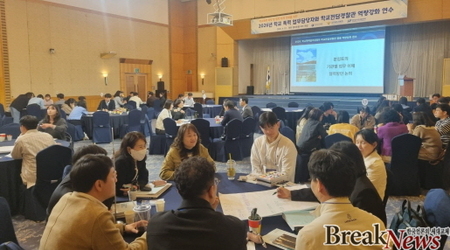
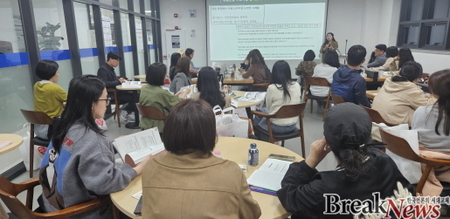
▲ 충남 특수학교와 병원 연계 학교 내 '의료적 지원 사업' 운영을 위한 협의회 진행 모습=충남교육청 제공 © 정지완 기자 |
충남교육청이 개별 맞춤형 특수교육 정책의 일환으로 의료적 지원이 필요한 특수교육대상학생 보호 체계를 강화하고 있다. 특히 중도·중복장애 학생이 학교 안에서 안정적으로 교육받을 수 있도록 의료지원 기반을 제도적으로 정비하는 데 행정 역량을 집중하는 모습이다.
교육청은 12일 천안 단국대학교병원 암센터에서 특수학교와 병원 간 연계 의료지원 사업 운영 협의회를 열고, 현장 중심 지원 확대 방안을 논의했다. 회의에는 나사렛새꿈학교와 천안인애학교, 병원 관계자들이 참여해 의료 협력 구조 고도화, 학생 특성별 맞춤 지원, 학교 내 응급 대응 체계 구축 등을 주요 의제로 다뤘다. 논의는 단순 협력 수준을 넘어 실제 수업 참여 안전성을 높이는 실행 방안 마련에 초점이 맞춰졌다.
이번 사업의 핵심은 전문 인력 투입과 의료 처치 지원 체계의 상시화다. 이는 중증 장애 학생의 교육권을 보장하려면 교육과 의료가 분리된 서비스가 아니라 통합적 지원 모델이 필요하다는 현장 요구를 반영한 조치로 풀이된다. 교육청은 기존 사업 성과를 토대로 2026학년도부터 간호 인력 지원 대상을 확대해 나사렛새꿈학교에 이어 천안인애학교까지 포함할 계획이다.
김지철 충남교육감은 의료 지원이 필요한 학생들이 보다 안전한 환경에서 학습할 수 있도록 병원 협력 네트워크를 지속적으로 확장하고, 현장 적용성이 높은 맞춤형 지원 체계를 정착시키겠다는 방향을 분명히 했다. 이는 특수교육 정책이 단순 복지 차원을 넘어 교육 접근권 보장이라는 공교육 본연의 책무로 이동하고 있음을 보여주는 대목이다.
학교 기반 의료지원 체계 구축은 특수교육의 질을 좌우하는 핵심 요소다. 중도·중복장애 학생은 건강 상태 변동 가능성이 높아 수업 참여 지속성이 낮은 경우가 많은데, 의료 대응 역량이 학교 내부에 확보될 경우 학습 단절 위험을 크게 줄일 수 있다. 결국 이번 정책 방향은 안전 확보와 학습권 보장을 동시에 달성하려는 구조적 접근으로 평가된다.
*아래는 위 기사를 '구글 번역'으로 번역한 영문 기사의 [전문]입니다. '구글번역'은 이해도를 높이기를 위해 노력하고 있습니다. 영문 번역에 오류가 있을 수 있음을 전제로 합니다.<*The following is [the full text] of the English article translated by 'Google Translate'. 'Google Translate' is working hard to improve understanding. It is assumed that there may be errors in the English translation.>
Chungnam Office of Education Expands 'In-School Medical Support System' for Students with Severe and Multiple Disabilities
Strengthening Hospital Collaboration to Create a Safe Learning Environment… Expanding Support for Nursing Staff at Special Schools
As part of its personalized special education policy, the Chungnam Office of Education is strengthening its protection system for students with special needs who require medical support. In particular, the Office is focusing its administrative capabilities on institutionally establishing a medical support infrastructure to ensure students with severe and multiple disabilities can receive stable education within schools.
On the 12th, the Office of Education held a meeting of the Operations Council for the Joint Medical Support Project between Special Schools and Hospitals at the Dankook University Hospital Cancer Center in Cheonan to discuss ways to expand on-site support. Representatives from Nazareth New Dream School, Cheonan Inae School, and the hospital attended the meeting, which focused on enhancing the medical cooperation structure, providing customized support based on student characteristics, and establishing an emergency response system within schools. The discussion went beyond simple collaboration and focused on developing action plans to enhance the safety of students participating in classes.
The core of this project is the deployment of specialized personnel and the permanent establishment of a medical treatment support system. This measure is interpreted as reflecting the field's demand for an integrated support model, rather than separate education and medical services, to ensure the right to education for students with severe disabilities. Building on the success of previous projects, the Office of Education plans to expand the scope of nursing support from the 2026 school year to include Cheonan Inae School, following Nazareth New Dream School.
Chungnam Superintendent of Education Kim Ji-cheol has clearly stated his intention to continuously expand the hospital collaboration network and establish a highly applicable, customized support system to ensure that students in need of medical assistance can learn in a safer environment. This demonstrates that special education policy is moving beyond mere welfare to the fundamental responsibility of public education: ensuring access to education.
Establishing a school-based medical support system is a key factor in determining the quality of special education. Students with severe and multiple disabilities are prone to fluctuating health conditions, often leading to low levels of continuity in class participation. Establishing medical response capabilities within schools can significantly reduce the risk of learning disruption. Ultimately, this policy direction is seen as a structural approach that simultaneously ensures safety and the right to education.
원본 기사 보기:브레이크뉴스대전세종충청