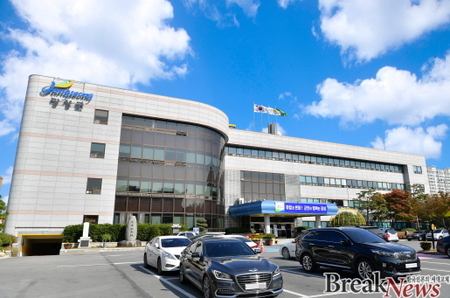
▲ 창원특례시청 |
[브레이크뉴스=이성용 기자] 창원특례시의 노후 주거지 지형도가 완전히 바뀐다. 그동안 정비사업의 '사각지대'였던 읍·면 지역에 제도적 기반이 마련되고, 까다로웠던 정비구역 지정 요건은 대폭 완화된다. 창원시는 27일, 이 같은 내용을 골자로 한 ‘2030 창원시 도시·주거환경정비 기본계획’ 재정비안을 최종 고시했다.
기존 계획이 주로 도심권(의창·성산·마산·진해)에 집중됐다면, 이제는 읍·면 지역 주민들도 스스로 정비사업을 제안하고 추진할 수 있는 법적 근거가 마련됐다. 이는 지역 간 균형 발전을 꾀함과 동시에 외곽 지역의 노후화를 방치하지 않겠다는 시의 의지로 풀이된다.
정비구역으로 지정받기 위해 반드시 넘어야 했던 ‘주거정비지수’의 배점 기준이 낮아졌다. 이는 노후도가 심각함에도 불구하고 번번이 탈락했던 지역들에게 단비 같은 소식이다. 시는 진입 장벽을 낮춰 민간 주도의 정비사업이 보다 활성화될 수 있도록 규제를 완화했다.
단순했던 용적률 체계도 기준·허용·상한용적률로 세분화되어 법적 근거가 명확해졌다. 특히 시민들의 삶의 질과 직결되는 항목에 파격적인 혜택을 부여한다.
이번 고시는 2024년 10월 용역 착수 이후 전문가 자문과 시의회 의견 청취, 도시계획위원회 심의 등 꼼꼼한 검증 과정을 거쳐 완성됐다. 10년 단위 계획 중 5년마다 시행하는 법정 절차지만, 시는 단순 보완을 넘어 변화된 도시 여건을 적극 반영했다.
장금용 창원시장 권한대행은 “이번 기본계획 재정비를 통해 정비 근거를 명확히 하고, 시민들이 보다 용이하게 정비계획을 수립할 수 있는 토대를 마련했다는데 의의가 있다”며, “향후 정비사업의 원활한 추진을 위해 행정적 지원을 아끼지 않겠다”고 말했다.
*아래는 위 기사를 '구글 번역'으로 번역한 영문 기사의 [전문]입니다. '구글번역'은 이해도 높이기를 위해 노력하고 있습니다. 영문 번역에 오류가 있을 수 있음을 전제로 합니다.
*Below is the [full text] of the English article translated using ‘Google Translate’.‘Google Translate’ is working to increase understanding.It is assumed that there may be errors in the English translation.
Changwon Special City to Address Isolation of Outlying Areas and Modernize Urban Density System… Final Notification Released on the 27th
Relaxing the Housing Improvement Index to Lower the Barrier, and Increase the Floor Area Ratio for Rental Housing and Care Facilities
The topography of Changwon Special City's aging residential areas is undergoing a complete transformation. Townships and counties, previously overlooked for redevelopment projects, will now have an institutional foundation, and stringent requirements for designating redevelopment zones will be significantly relaxed. On the 27th, Changwon City announced the final revision of the "2030 Changwon City Urban and Residential Environment Improvement Master Plan," which outlines these changes.
While previous plans focused primarily on the urban core (Uichang, Seongsan, Masan, and Jinhae), residents of townships and counties now have a legal basis to propose and implement redevelopment projects on their own. This is interpreted as the city's commitment to promoting balanced regional development while also addressing the aging of outlying areas.
The "Residential Redevelopment Index," a mandatory score requirement for designation as a redevelopment zone, has been lowered. This is welcome news for areas that have repeatedly failed to qualify despite their severe deterioration. The city has relaxed regulations to lower the barriers to entry and encourage private-sector-led redevelopment projects.
The previously simple floor area ratio system has been further refined into standard, permitted, and maximum floor area ratios, clarifying its legal basis. In particular, special benefits are granted to areas directly related to citizens' quality of life.
This notification was finalized after a meticulous review process, including expert advice, city council input, and deliberation by the Urban Planning Committee, following the start of the project in October 2024. While this is a statutory procedure implemented every five years of a 10-year plan, the city has gone beyond simple revisions and actively reflected evolving urban conditions.
Changwon Acting Mayor Jang Geum-yong said, “The significance of this basic plan revision lies in the fact that it clarifies the basis for redevelopment and provides a foundation for citizens to more easily establish redevelopment plans,” adding, “We will not spare administrative support to ensure the smooth progress of future redevelopment projects.”
원본 기사 보기:브레이크뉴스경남