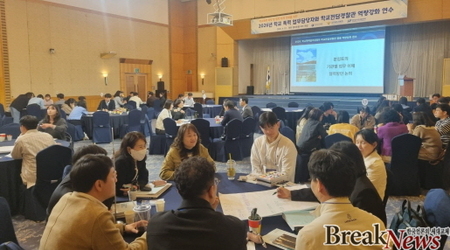
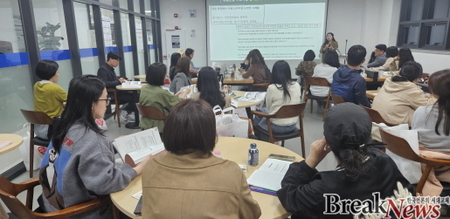
▲ 2026년 통합돌봄 충청권 지역설명회 및 기본교육에 앞서 이기순 원장이 인사말을 전하고 있다.=세종시사회서비스원 제공 © 정지완 기자 |
세종시사회서비스원은 27일 원내 강의실에서 ‘2026년 통합돌봄 충청권 지역설명회 및 기본교육’을 열고, 내년 3월 27일 시행 예정인 '의료·요양 등 지역 돌봄의 통합지원에 관한 법률'에 대한 현장 대응 체계를 점검했다.
이번 행사는 충청권(세종·대전·충남·충북) 사회서비스원과 서비스 제공기관 종사자를 대상으로 통합돌봄 정책의 추진 방향을 공유하고, 제도 변화에 따른 실무 이해도를 높이기 위해 마련됐다. 설명회는 중앙사회서비스원과 공동으로 추진됐으며, 관계자 약 50명이 참석해 제도 시행을 앞둔 준비 상황을 함께 논의했다.
교육은 '통합돌봄 추진계획, 정책 구조와 서비스 제공기관의 책무, 사회서비스원 기능과 서비스 연계 사례' 등을 중심으로 진행됐다. 정책 개요에 대한 설명에 그치지 않고, 현장에서 적용 가능한 연계 모델과 운영 경험을 공유함으로써 실천 역량을 보강하는 데 초점을 맞췄다. 특히 국민건강보험공단 등 유관 기관과 시·도 사회서비스원이 참여해 의료·요양·돌봄 자원의 통합적 조정 방안을 다각도로 제시했다.
이기순 원장은 통합돌봄지원법 시행을 앞둔 현 시점을 지역 중심 돌봄체계 전환의 분기점으로 평가하며, 통합돌봄은 선택적 복지정책이 아니라 지역사회 지속 가능성을 좌우하는 핵심 과제라고 짚었다. 아울러 민·관 협력을 토대로 현장에서 실제로 작동하는 전달체계를 구축하겠다는 의지를 밝혔다.
통합돌봄지원법은 분절적으로 운영돼 온 의료·요양·복지 서비스를 지역 단위에서 통합 지원하는 것을 골자로 한다. 고령화 심화와 1인 가구 증가 등 사회구조 변화 속에서, 서비스 간 연계 부재로 발생하던 사각지대를 해소하기 위한 제도적 기반이라는 점에서 의미가 크다. 따라서 지역사회 차원의 협력 네트워크 구축과 기관 간 정보 공유 체계 정비는 법 시행의 성패를 가르는 관건으로 평가된다.
세종시사회서비스원은 향후 중앙 및 타 시·도 사회서비스원과의 협업을 확대해 지역 주도형 통합돌봄 모델을 구체화할 계획이다. 이번 설명회는 충청권 내 사회서비스기관 간 연계를 공고히 하고, 제도의 현장 안착과 서비스 품질 제고를 위한 공동 대응의 출발점이 될 것으로 보인다.
*아래는 위 기사를 '구글 번역'으로 번역한 영문 기사의 [전문]입니다. '구글번역'은 이해도를 높이기를 위해 노력하고 있습니다. 영문 번역에 오류가 있을 수 있음을 전제로 합니다.<*The following is [the full text] of the English article translated by 'Google Translate'. 'Google Translate' is working hard to improve understanding. It is assumed that there may be errors in the English translation.>
Sejong City Social Service Center Joins Chungcheong Region in Response to 'Integrated Care Support Act'
Preparing for the Act's March 2026 Implementation… Sharing Policy Direction and Strengthening Field Application Capabilities
On the 27th, the Sejong City Social Service Center held the "2026 Integrated Care Chungcheong Region Regional Briefing and Basic Training" in its lecture hall. The center reviewed the field response system for the "Act on Integrated Support for Regional Care, Including Medical and Nursing Care," scheduled to take effect on March 27th of next year.
This event was designed to share the direction of the integrated care policy with social service centers and service providers in the Chungcheong region (Sejong, Daejeon, South Chungcheong, and North Chungcheong) and enhance practical understanding of the changes in the system. The briefing, co-hosted with the Central Social Service Center, was attended by approximately 50 participants to discuss preparations for the upcoming implementation.
The training focused on the "Integrated Care Implementation Plan," policy structure, responsibilities of service providers, and examples of social service center functions and service linkages." Beyond simply explaining the policy outline, the meeting focused on strengthening practical capabilities by sharing applicable linkage models and operational experiences. In particular, relevant organizations, including the National Health Insurance Service, and city and provincial social service providers participated, presenting a multifaceted approach to integrating medical, nursing, and care resources.
Director Lee Ki-soon evaluated the current period, leading up to the implementation of the Integrated Care Support Act, as a turning point in the transition to a community-centered care system. He emphasized that integrated care is not a selective welfare policy, but a core task that determines the sustainability of local communities. He also expressed his commitment to establishing a delivery system that actually works on the ground, based on public-private cooperation.
The Integrated Care Support Act aims to integrate medical, nursing, and welfare services, which have been operated in a fragmented manner, at the local level. Amidst social structural changes such as the deepening aging population and the rise of single-person households, this Act is significant as it serves as an institutional foundation for addressing blind spots arising from a lack of connectivity among services. Therefore, establishing a community-level cooperative network and establishing an information sharing system between agencies are considered crucial to the success of the law's implementation.
The Sejong City Social Service Center plans to expand collaboration with central and other city and provincial social service centers to develop a regionally driven integrated care model. This briefing session is expected to solidify connections among social service organizations in the Chungcheong region and serve as a starting point for joint efforts to ensure the system's implementation and improve service quality.
원본 기사 보기:브레이크뉴스대전세종충청