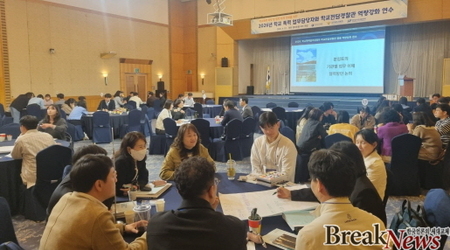
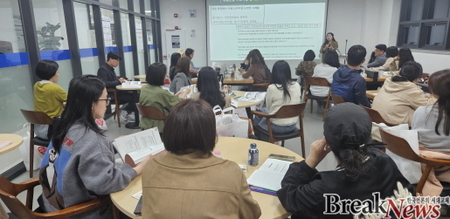
▲ 충남대병원 권역호스피스센터 '일반인을 위한 호스피스 교육' 단체 기념촬영 모습=충남대학교병원 제공 © 정지완 기자 |
충남대학교병원 권역호스피스센터가 지난 26일부터 27일까지 이틀간 의생명융합연구센터 2층 대회의실에서 일반 시민을 대상으로 ‘일반인을 위한 호스피스 교육’을 진행했다. 이번 교육은 호스피스·완화의료에 대한 정확한 이해를 확산하고, 생애 말기 환자와 가족을 위한 지역사회 돌봄 문화를 정착시키는 동시에 자원봉사 인력을 체계적으로 양성하기 위한 취지로 마련됐다.
교육 과정은 총 13개 강의로 편성됐다. 호스피스·완화의료의 개념과 연명의료결정법에 대한 제도적 이해를 비롯해 말기 환자의 심리·사회적 지원, 통증을 포함한 신체 증상 관리, 자원봉사자의 역할과 윤리, 삶과 죽음에 대한 성찰, 환자와 가족을 위한 정서적 지지와 의사소통 방식 등이 균형 있게 다뤄졌다. 이론 중심 설명에 더해 선배 자원봉사자의 현장 경험을 공유하는 시간도 포함돼 실제 활동에 필요한 감수성과 태도를 구체화했다.
참여자들은 호스피스·완화의료의 기본 원리를 체계적으로 학습하며, 환자와 가족의 삶의 질을 중심에 둔 돌봄의 가치에 대해 숙고하는 기회를 가졌다. 특히 연명의료결정법에 대한 이해를 통해 자기결정권과 존엄성 보장의 의미를 재확인했다는 점에서 교육의 실질적 성과가 도출됐다는 평가다.
윤석준 센터장은 권역호스피스센터가 시민 대상 교육을 지속적으로 확대해 지역사회 내 인식을 제고하고, 환자와 가족이 존엄을 유지한 채 삶을 마무리할 수 있도록 지역 돌봄 체계를 한층 공고히 하겠다는 방향성을 제시했다. 이는 의료기관 중심의 서비스 제공을 넘어, 지역사회가 함께 참여하는 공공적 돌봄 모델로의 전환을 지향하는 움직임으로 읽힌다.
고령화가 심화되는 상황에서 호스피스·완화의료는 단순한 의료 서비스가 아니라 사회적 연대의 영역으로 확장되고 있다. 이번 교육은 전문 인력 중심 체계를 보완해 시민 참여 기반을 넓혔다는 점에서 의미가 있다. 제도적 기반과 현장 경험을 접목한 교육 방식은 지역사회가 생애 말기 돌봄의 주체로 성장하는 토대를 마련하는 과정으로 평가된다.
*아래는 위 기사를 '구글 번역'으로 번역한 영문 기사의 [전문]입니다. '구글번역'은 이해도를 높이기를 위해 노력하고 있습니다. 영문 번역에 오류가 있을 수 있음을 전제로 합니다.<*The following is [the full text] of the English article translated by 'Google Translate'. 'Google Translate' is working hard to improve understanding. It is assumed that there may be errors in the English translation.>
Chungnam National University Hospital Regional Hospice Center Conducts Hospice Education for the Public
13 Lectures, from Life-Sustaining Treatment Decision-Making to the Role of Volunteers, Raising Awareness of End-of-Life Care
Chungnam National University Hospital Regional Hospice Center held a two-day "Hospice Education for the Public" program for the general public in the conference room on the second floor of the Biomedical Convergence Research Center from May 26th to 27th. The program aimed to promote a clear understanding of hospice and palliative care, establish a community care culture for terminally ill patients and their families, and systematically cultivate volunteers.
The curriculum consisted of 13 lectures. The program covered a balanced range of topics, including the concepts of hospice and palliative care and the institutional understanding of life-sustaining treatment decisions, psychosocial support for terminally ill patients, management of physical symptoms including pain, the role and ethics of volunteers, reflections on life and death, and emotional support and communication methods for patients and their families. In addition to theoretical explanations, the program included time to share the field experiences of senior volunteers, concretizing the sensitivity and attitudes necessary for practical work.
Participants systematically learned the fundamental principles of hospice and palliative care and had the opportunity to reflect on the value of care centered on the quality of life of patients and their families. The training was evaluated as having produced tangible results, particularly in that it reaffirmed the importance of self-determination and dignity through an understanding of the Life-Sustaining Treatment Decision Act.
Director Yoon Seok-jun outlined the direction for regional hospice centers to continuously expand education for the public, raising awareness within the community and further strengthening local care systems to ensure patients and their families can end their lives with dignity. This represents a shift from a medical institution-centered service model to a public care model in which the community participates.
With the aging population, hospice and palliative care is expanding beyond simple medical services to encompass social solidarity. This training is significant in that it complements the professional-centered system and broadens the foundation for citizen participation. The educational method that combines institutional foundations and field experience is evaluated as a process that lays the foundation for the community to grow into a leading provider of end-of-life care.
원본 기사 보기:브레이크뉴스대전세종충청