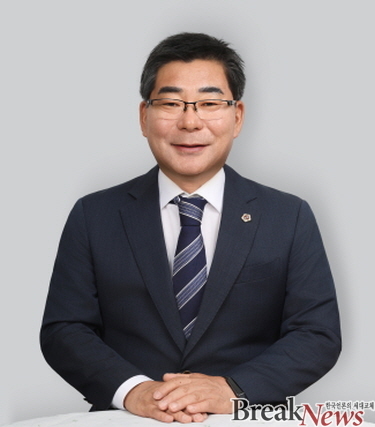
▲ 김대현 의원 ©이성현 기자 |
【브레이크뉴스 대구】진예솔 기자=6월 3일 치러지는 전국 동시지방선거를 앞두고 기초단체장들의 행정 마인드가 어느 때보다 중요한 화두로 떠올랐다.
특히 대구·경북 지역에서는 오랜 기간 ‘보수 텃밭’으로 불려온 국민의힘이 정권을 넘겨주는 과정에서 지역민을 대표하는 단체장들의 역할이 얼마나 막중한지 다시 한 번 절감하고 있다. 이번 6월 지방선거를 준비하는 각오가 남다를 수밖에 없다.
누구나 선거에 출마할 수 있지만, 모두가 당선의 영광을 안을 수 있는 건 아니다. 결국 지역에 맞는 행정 철학과 이를 실현할 역량을 갖춘 인물이 선택받는다.
이에 본지는 다양한 분야의 질문으로 이번 선거에 나선 후보들의 행정 철학을 검증하고, 유권자들에게 신중한 선택을 할 수 있도록 기획 인터뷰를 마련했다.<편집자 주>
대구 서구청장 출마예정자 김대현 대구시의원
“서구 인구 문제는 감소가 아니라 ‘선택에서 밀려난 구조’다”
대구 서구의 인구 문제를 두고 흔히 ‘자연 감소’라는 표현이 쓰이지만, 김대현 대구시의원은 이를 단호히 부정한다. 문제는 숫자가 아니라 선택의 문제라는 것이다. 청년과 신혼 가구가 서구를 떠나는 것이 아니라, 애초에 선택지에서 지워지고 있다는 진단이다.
김 의원은 서구의 인구 구조 변화를 “구조적 포기의 누적”이라고 표현했다. 주거는 노후화됐고, 청년이 머물 만한 일자리는 부족하며, 문화·돌봄 등 생활 인프라는 청년 세대의 기준을 따라가지 못했다는 설명이다. 그는 “주거·일자리·생활 인프라가 동시에 실패한 도시에서 정착은 불가능하다”고 말했다.
교육 여건 역시 중요한 원인으로 꼽았다. 아이를 키우는 부모 입장에서 서구는 점점 선택하기 어려운 지역이 됐고, 장기 전략 없는 교육·돌봄 환경 정체가 신혼 가구의 유입을 가로막았다는 것이다. 김 의원은 이 흐름의 책임을 행정에서 찾았다. 변화 관리에 머물며 ‘왜 서구여야 하는가’에 대한 비전을 제시하지 못했고, 청년을 정책의 주체가 아닌 대상에만 머물게 했다는 평가다.
그는 “인구 감소를 외부 환경 탓으로 돌릴 게 아니라, 사람이 떠나는 구조를 방치해 온 행정의 한계를 인정해야 한다”며 “주거·일자리·교육·생활 인프라를 하나로 묶는 정주 중심 행정으로 전환하겠다”고 밝혔다.
도심과 가깝지만, 살고 싶지 않은 도시
서구는 대구 도심과 인접해 있다는 분명한 공간적 장점을 갖고 있지만, 주거·상권·생활 환경 경쟁력에서는 뒤처져 있다는 평가를 받아왔다. 김 의원은 그 이유를 “공간의 장점을 생활의 가치로 전환하지 못한 행정”에서 찾았다.
그가 가장 먼저 손대야 할 지역으로 꼽은 곳은 내당·비산·평리 생활권이다. 도심 접근성은 뛰어나지만, 노후 주거와 부족한 생활 편의, 쇠퇴한 골목 상권이 겹치며 ‘머무는 공간’으로 인식되고 있다는 판단이다. 해법은 단일 개발이 아니라, 주거·상권·보행·생활 인프라를 함께 묶는 생활권 재구조화다.
노후 주거지의 단계적 정비와 소형·신혼 맞춤형 주택 공급, 골목 상권과 연계한 생활형 상업·문화 공간 재편, 학교·공원·돌봄시설을 잇는 보행 중심 생활 축을 동시에 추진해야 한다는 구상이다. 김 의원은 “도심과 가깝다는 물리적 조건이 실제 선택 이유로 작동해야 한다”고 강조했다.
염색산단, 방치도 급전환도 아닌 ‘단계적 전환’
염색산단 문제에 대해서는 보다 현실적인 접근을 내놨다. 이미 대구시 차원에서 이전을 전제로 한 검토가 진행 중인 상황에서, 김 의원은 단순 유지나 즉각적 전면 이전 모두 해법이 아니라고 선을 그었다.
그는 “이전 논의를 이유로 현 산단을 방치하는 것은 행정의 직무유기”라며, 이전 전까지는 환경 기준을 강화하고 고오염·저효율 공정에 대해서는 개선이나 단계적 축소를 요구해야 한다고 밝혔다. 동시에 이전 이후를 대비한 현 부지 활용 전략을 지금부터 준비하지 않으면 또 다른 도시 공백을 낳을 수 있다고 경고했다.
이 과정에서 구청장의 역할은 명확하다. 이전을 결정하는 권한은 없지만, 대구시와 중앙정부를 상대로 서구의 입장을 공식화하고, 이전 시기·방식·환경 개선을 놓고 주민 피해를 최소화하는 협상을 책임져야 한다는 것이다. 김 의원은 “염색산단은 방치의 대상이 아니라 서구 산업 구조 전환의 출발점”이라고 말했다.
무너진 생활권, 해법은 ‘도보 10분’
골목 상권 붕괴와 생활권 해체로 고령층의 일상 이동 부담이 커진 현실에 대해 김 의원은 이를 복지 문제가 아닌 도시 구조 문제로 규정했다. 해법으로 제시한 것은 ‘도보 10분 생활권 기반의 동네 생활 인프라 재구조화’다.
이는 상권 하나를 살리는 정책이 아니라, 주거·상점·의료·돌봄·교통을 동네 단위로 다시 묶는 구조적 접근이다. 사라진 골목 상권을 과거 방식으로 복원하는 대신, 의료·소매·돌봄·공공서비스가 결합된 생활 밀착형 동네 거점을 만들고, 고령자 이동을 기준으로 보행·교통 체계를 재편하겠다는 구상이다.
김 의원은 “지금까지의 지원은 점포 하나를 살리는 사후 처방에 그쳤다”며 “사람의 일상 동선을 기준으로 도시 구조를 다시 설계해야 한다”고 강조했다.
도시재생의 실패, 방식의 문제
도시재생 사업이 체감 변화를 만들지 못했다는 비판에 대해서도 그는 원인을 분명히 했다. 사람의 삶보다 사업 집행이 앞섰고, 점 단위 재생에 머물렀으며, 지속 가능한 운영 주체를 만들지 못했다는 것이다.
앞으로의 도시재생은 공간이 아니라 생활 문제를 출발점으로 삼아야 한다는 게 그의 생각이다. 고령층 이동, 골목 상권 붕괴, 돌봄 공백 같은 실제 문제를 해결하는 방식으로 재생을 설계하고, 동네 단위 생활권 재편을 중심에 둬야 한다는 주장이다. 김 의원은 “시설을 짓는 데서 끝나는 행정이 아니라, 운영까지 책임지는 재생으로 바뀌어야 한다”고 말했다.
후순위가 된 서구, 전략으로 바꾼다
대구시 정책 결정 과정에서 서구가 늘 후순위로 밀려왔다는 지적에 대해 김 의원은 “서구의 문제가 덜 중요해서가 아니라, 전략적으로 전달되지 못했기 때문”이라고 진단했다. 구청장이 바뀌면 이 방식부터 바꿔야 한다는 것이다.
그는 요구가 아닌 실행 가능한 대안을 들고 들어가겠다고 밝혔다. 서구 현안을 민원이 아닌 대구시 연계형 정책 패키지로 제시하고, 기획 단계부터 직접 개입해 서구의 입장이 사전에 반영되도록 하겠다는 전략이다. 염색산단과 노후 주거지, 고령화 문제를 대구 전체의 과제로 격상시키는 것도 핵심이다.
“관리하는 행정에서, 책임지는 행정으로”
김 의원은 서구 행정이 현상 관리에 머물렀다는 평가를 부정하지 않았다. 문제는 의지가 아니라, 위험을 감수하지 않는 구조였다는 것이다. 그가 임기 중 가장 먼저 바꾸고 싶은 행정 운영 방식은 ‘문제 해결 책임제’다.
예산 집행 여부가 아니라, 문제가 실제로 해결됐는지를 기준으로 행정을 평가하고, 핵심 현안마다 구청장 책임 아래 전담 책임자를 두겠다는 구상이다. 그는 “서구에 필요한 것은 더 많은 계획이 아니라, 결단하고 끝까지 책임지는 행정”이라고 강조했다.
김 의원이 가장 앞세운 공약은 ‘서구 생활권 재구조화 프로젝트’다. 주거·교육·상권·이동·돌봄을 동네 단위로 다시 묶는 정주 전략으로, 대구시 정책과 연계해 예산과 우선순위를 함께 끌어오겠다는 구상이다.
그는 “서구에 필요한 구청장은 말 잘하는 사람이 아니라, 서구의 몫을 끝까지 챙길 수 있는 사람”이라며 “관리되는 지역이 아니라 다시 선택받는 도시로 서구를 바꾸겠다”고 말했다.
<구글 번역으로 번역한 영문 기사의 전문 입니다. 번역에 오류가 있을 수 있음을 밝힙니다.>
With the nationwide local elections scheduled for June 3rd approaching, the administrative mindset of local government heads has become a more important topic than ever.
In particular, the Daegu-Gyeongbuk region, long considered a "conservative stronghold," is once again realizing the crucial role of local government heads representing their constituents as the People Power Party hands over power. The determination to prepare for this June's local elections is bound to be extraordinary.
Anyone can run for office, but not everyone can achieve the glory of election. Ultimately, the person chosen will be one with an administrative philosophy suited to the region and the ability to implement it.
Accordingly, this magazine conducted a series of interviews to examine the administrative philosophies of the candidates running in this election through a variety of questions and to help voters make a careful choice. <Editor's Note>
Kim Dae-hyun, Daegu City Council Member, Candidate for Mayor of Seo-gu District
"Seo-gu's population problem is not a decline, but a 'structural shift away from choice'"
While the term "natural decline" is often used to describe Daegu's Seo-gu population problem, Daegu City Council Member Kim Dae-hyun firmly refutes this. He argues that the problem is not numbers, but rather a matter of choice. He concludes that young people and newlyweds are not leaving Seo-gu, but rather are being eliminated from the options available to them in the first place.
Council Member Kim described Seo-gu's demographic shift as an "accumulation of structural abandonment." Housing is aging, jobs are scarce, and the city's infrastructure, including culture and care, fails to meet the needs of the younger generation. He stated, "Settlement is impossible in a city where housing, jobs, and living infrastructure all fail simultaneously."
He also cited poor educational conditions as a key factor. For parents raising children, Seogu has become an increasingly difficult choice, and the stagnant educational and childcare environment, lacking a long-term strategy, has hindered the influx of newlyweds. Representative Kim blames the administration for this trend. He criticizes the administration for failing to present a vision for "Why Seogu?" and for relegating young people to the status of mere objects of policy, rather than the subjects.
He stated, "Rather than blaming external factors for the population decline, we must acknowledge the limitations of the administration that has neglected the exodus of people." He added, "I will transition to a settlement-centered administration that integrates housing, jobs, education, and living infrastructure."
Close to the City Center, but an Undesirable City
Seogu, despite its obvious spatial advantage of being adjacent to downtown Daegu, has been perceived as lagging behind in terms of competitiveness in housing, commercial districts, and living environments. Representative Kim attributes this to "the administration's failure to translate this spatial advantage into livable value."
He identified the Naedang, Bisan, and Pyeongri living areas as the areas he most urgently needs to address. While the area boasts excellent access to the city center, aging housing, inadequate amenities, and a declining alleyway commercial district are overlapping, leading to its perception as a "stay-at-home" space. The solution is not a single development, but a restructuring of the living space that integrates housing, commercial areas, pedestrian access, and living infrastructure.
This plan calls for the simultaneous implementation of a phased redevelopment of aging residential areas, the provision of small, newlywed-friendly housing, the reorganization of commercial and cultural spaces linked to alleyway commercial districts, and a pedestrian-oriented lifestyle axis connecting schools, parks, and childcare facilities. Representative Kim emphasized, "The physical proximity to the city center must be a real reason for choosing this area."
Dyeing Industrial Complex: A "Phasal Transition," Not Neglect or Abrupt Transition
Representative Kim proposed a more realistic approach to the dyeing industrial complex issue. With the Daegu City government already considering relocation, Representative Kim emphasized that neither simple maintenance nor immediate, full relocation are viable solutions.
He stated, "Leaving the current industrial complex unattended due to relocation discussions is a dereliction of duty by the administration." He added that environmental standards should be strengthened before the relocation, and that high-pollution and low-efficiency processes should be improved or gradually reduced. He also warned that failing to prepare a post-relocation strategy for the current site now could create another urban vacuum.
The role of the district mayor in this process is clear. While he does not have the authority to decide on the relocation, he is responsible for formalizing Seo-gu's position with Daegu City and the central government and negotiating with them on the timing, method, and environmental improvements to minimize the impact on residents. Rep. Kim stated, "The dyeing industrial complex is not an object of neglect, but a starting point for the transformation of Seo-gu's industrial structure."
Collapsed Living Areas: The Solution: A '10-Minute Walk'
Regarding the increased burden of daily transportation for the elderly due to the collapse of local commercial districts and the dismantling of living areas, Rep. Kim characterized this as an urban structural issue, not a welfare issue. His proposed solution: "Restructuring neighborhood living infrastructure based on a 10-minute walk."
This isn't a policy to revitalize individual commercial districts, but a structural approach that reconnects housing, retail, healthcare, care, and transportation to the neighborhood level. Instead of restoring vanished alleyways using the old-fashioned methods, the plan is to create neighborhood hubs that integrate healthcare, retail, care, and public services, closely linked to the mobility of seniors. The plan also aims to reorganize pedestrian and transportation systems based on the mobility of seniors.
Councilmember Kim emphasized, "Support so far has been limited to post-hoc measures aimed at reviving individual stores," and added, "We need to redesign urban structures based on people's daily movements."
Failures of Urban Regeneration: A Problem of Method
He clarified the reasons behind criticism that urban regeneration projects have failed to produce tangible change. He argued that project execution took precedence over people's lives, that regeneration was limited to individual stores, and that sustainable operating entities were not established.
He believes that future urban regeneration should begin with issues of livelihood, not space. He argues that regeneration should be designed to address real-world issues such as the migration of seniors, the collapse of alleyways, and the lack of care, while prioritizing the reorganization of neighborhood-level living spaces. Councilman Kim stated, "The administration should not simply focus on building facilities, but should shift to a regeneration approach that also takes responsibility for operations."
Seo-gu, relegated to a lower priority, will be transformed through strategy.
Regarding the criticism that Seo-gu has consistently been relegated to a lower priority in Daegu City's policy-making process, Councilman Kim stated, "It's not because Seo-gu's issues are less important, but because they haven't been strategically communicated." He emphasized that this approach must be changed when the district mayor changes.
He stated that he would approach the issue with actionable solutions, not demands. His strategy is to present Seo-gu's issues not as complaints but as a policy package linked to the city of Daegu, and to directly intervene from the planning stage to ensure Seo-gu's perspectives are proactively reflected. Elevating the issues of the dyeing complex, aging housing, and the aging population to the level of Daegu's overall priorities is also crucial.
"From a management-oriented administration to a responsible administration"
Councilman Kim did not deny the assessment that Seo-gu's administration has remained stuck in status quo management. He argued that the problem lies not in willpower, but in a structure that refuses to take risks. The first administrative reform he hopes to implement during his term is a "problem-solving responsibility system."
The plan is to evaluate administrative performance not based on budget execution but on whether problems are actually resolved, and to appoint a dedicated person responsible for each key issue under the district mayor. He emphasized, "What Seo-gu needs is not more plans, but an administration that is decisive and responsible to the end."
Councilman Kim's most prominent campaign pledge is the "Seo-gu Living Area Restructuring Project." This settlement strategy re-integrates housing, education, commercial areas, transportation, and care into neighborhood-level areas. It aims to align budgets and priorities with Daegu city policies.
He stated, "The district mayor Seo-gu needs is not someone who is eloquent, but someone who can fully secure Seo-gu's share. I will transform Seo-gu from a managed district to a city of choice."
원본 기사 보기:브레이크뉴스 대구경북