서울을 잃는 순간 국민의힘은 더 이상 전국 정당이 아니다. 수도권 정치 지형의 절반이 무너지고 정치 구조 전체가 흔들린다. 서울은 단순한 지방자치단체가 아니라 대한민국 정치의 중심 축이다. 서울이 흔들리면 경기와 인천이 흔들리고, 수도권이 흔들리면 충청과 부울경까지 정치 지형이 연쇄적으로 흔들린다. 결국 TK 지역에 의존하는 축소된 정당으로 밀려날 가능성이 커진다. 이 때문에 서울시장 선거는 단순한 지방 권력 경쟁이 아니다. 사실상 수도권 정치의 향방을 결정하는 선거다.
선거는 결국 후보 중심으로 치러진다. 당 지도부가 전면에 나서는 선거는 대개 전략의 결과가 아니라 위기 관리 실패의 결과다. 대선이든 지방선거든 선거 국면에 들어가면 지도부는 한 걸음 뒤로 물러서고 후보가 중심에 서는 것이 정치의 기본 원칙이다.
 ▲ 오세훈 서울시장. ©뉴시스 |
이미 국민의힘 지도부는 계엄 문제에 대한 사과와 윤석열 대통령과의 정치적 거리 두기를 공식적으로 정리했다. 의원총회에서 관련 결의가 만장일치로 채택되었다면 그것은 정치적 출구를 마련한 것이다.
문제는 그 이후다. 출구가 열렸는데도 당 내부에서는 여전히 서로를 향해 총을 겨누고 있다. 지금 필요한 것은 과거 책임 공방이 아니라 다음 선거를 준비하는 전략이다. 그러나 최근 당 내부의 움직임을 보면 전략보다 감정이 앞서고 있다는 인상을 지우기 어렵다.
특히 오세훈 서울시장을 향한 공격은 정치적 경쟁이라기보다 감정적 반응에 가깝다. 대통령 탄핵이라는 헌정사적 위기를 겪고 정당 존립 자체가 흔들리는 상황 속에서도 수도 서울을 지켜낸 인물에게 최소한의 정치적 평가조차 하지 못한다면 그것은 비판이 아니라 자기 파괴에 가깝다.
일부 정치인의 발언도 이해하기 어렵다.
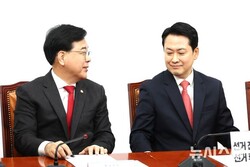
장동혁 대표는 침묵 속에서 딜레마에 빠진 모습이다. 지금은 말을 아끼는 것이 맞다. 당 대표로서 자리를 지키되 선거 전면에 나설 상황은 아니다. 정치에는 때로 침묵이 필요한 순간이 있다.
이정현 공천관리위원장의 발언은 더욱 납득하기 어렵다. 서울 정치의 의미를 누구보다 잘 아는 인물이 서울시장을 향해 감정적 언사를 쏟아낸 것은 전략적 판단이라기보다 정치적 조급함을 드러낸 모습에 가깝다. 대통령 탄핵이라는 정치적 격변 속에서도 수도 서울을 지켜낸 인물에게 감사는 못할망정 내부 공격부터 시작하는 태도는 정당 정치의 상식과 거리가 멀다.
문제는 정치권 내부만이 아니다. 일부 정치 유튜브 채널이 만들어내는 과열된 정치 환경도 상황을 악화시키고 있다. 자극적인 프레임이 강성 지지층 사이에서 확대 재생산되며 당 내부 정치에까지 영향을 미치는 구조가 형성되고 있다.
정당은 정치 조직이지 유튜브 채널이 아니다. 조회수는 늘릴 수 있어도 표를 늘릴 수는 없다.
최근 벌어진 한 장면은 이런 정치 문화의 위험을 단적으로 보여준다. 전한길이 오세훈 시장을 향해 던진 “니 우파냐 좌파냐”라는 발언이다. 정치에도 금도가 있다. 비판은 가능하지만 모욕은 허용되지 않는다. 요구는 할 수 있지만 충성 시험은 정당화될 수 없다.
서울시장은 정당 활동가가 아니다. 천만 시민의 행정을 책임지는 자리다. 공공시설 대관 문제 역시 법과 규정, 형평성과 안전이라는 행정 기준에 따라 판단되는 사안이다. 여기에 “우파라면 도와달라”는 식의 요구를 덧붙이는 것은 공공 권력을 진영 정치의 시험대로 끌어내리는 행위에 가깝다.
정치는 설득의 영역이다. 설득은 논리와 책임, 대안으로 이루어진다. 그러나 이런 방식은 설득이 아니라 압박이다. ‘우리 편이면 허용하라’는 메시지가 반복되는 순간 공직은 진영의 눈치를 보는 자리로 전락한다. 그 순간 행정의 중립성은 훼손되고 시민의 신뢰는 흔들린다.
더 심각한 문제는 이런 방식이 보수의 얼굴로 소비된다는 점이다. 보수는 본래 법치와 절제, 책임의 정치였다. 강한 언어가 박수를 얻을 수는 있다. 그러나 박수는 정책이 아니다. 흥분은 도시를 운영하지 못한다. 서울 같은 초대형 행정 단위는 데이터와 절차, 신중한 조율 위에서 움직인다.
또 하나의 문제는 일부 강성 당원들의 집단적 분위기다. 지금 당 내부에는 냉정한 정치 판단보다 감정적 충성 경쟁이 우선되는 분위기가 퍼져 있다. 정치학에서는 이를 열성 지지층 함정(Activist Trap)이라고 부른다. 가장 목소리가 큰 지지층의 요구에 정치가 끌려갈수록 중도 유권자는 멀어진다. 수도권 선거에서는 이 현상이 특히 치명적이다.
최근 보수 정치 내부를 혼란스럽게 만드는 또 하나의 요소는 여론조사 정치다. 일부 여론조사는 정치적 흐름을 반영하기보다 특정 진영의 정치적 프레임을 확대 재생산하는 방식으로 작동하고 있다. 특정 플랫폼이 만든 흐름을 다른 조사기관들이 따라가며 여론이 형성되는 구조까지 나타나고 있다.
이런 수치는 정치 전략의 기준이 될 수 없다. 선거에서 의미 있는 여론조사는 대개 양대 정당 후보가 확정된 이후 나타난다. 선거 한 달 전부터 투표 직전까지 형성되는 흐름이 실제 민심에 가장 가깝다.
이제 질문으로 돌아가 보자. 왜 지금 오세훈인가.
그 이유는 단순하다. 그가 완벽해서가 아니다. 지금 정치 구조에서 서울 승리를 기대할 수 있는 가장 현실적인 카드이기 때문이다.
오세훈의 정치적 의미는 개인의 정치 스타일에 있지 않다. 수도권 확장성을 가진 몇 안 되는 보수 정치인이라는 점에 있다. 수도권 선거는 강한 진영 정치가 아니라 확장 정치의 영역이다. 수도권 유권자들은 강한 이념 언어보다 안정적인 행정 능력과 현실적 정책을 더 중요하게 평가한다.
서울시 예산은 약 50조 원이다. 천만 시민의 삶이 이 도시의 행정에 연결되어 있다. 이런 도시를 운영하는 데에는 경험과 행정 능력이 필요하다. 오세훈은 이미 그 경험을 갖고 있는 정치인이다.
그는 정치적으로 순탄한 길만 걸어온 인물이 아니다. 시장직을 스스로 내려놓은 경험도 있고 선거 패배도 겪었다. 그러나 결국 다시 서울시장으로 돌아왔다. 정치에서 실패를 경험한 인물은 위기를 가볍게 보지 않는다. 실패의 경험은 정치인을 더 신중하게 만든다.
최근 오세훈 시장의 행보 역시 같은 맥락에서 이해할 필요가 있다. 그는 서울시장 후보 공천 신청에 즉각 응하지 않겠다는 입장을 밝혔다. 이유는 단순하다. 의원총회에서 채택된 ‘노선 전환’ 결의가 실제 정치 변화로 이어지고 있는지 의문이라는 것이다.
그는 당 지도부와의 만남에서 두 가지를 분명히 요구했다고 한다. 하나는 노선 전환을 체감할 수 있는 인적 변화, 다른 하나는 혁신 선거대책위원회의 조기 출범이다. 그러나 현재까지는 그런 변화의 실행 조짐이 보이지 않는다는 것이 그의 판단이다.
이 발언은 선거 거부가 아니다. 오세훈 시장 본인도 분명히 밝혔다. 선거에 불참하는 것이 아니며, 무소속 출마 역시 고려하지 않는다고 했다. 결국 그의 메시지는 하나다. 선거를 치르려면 정치의 방향부터 바로 세우라는 요구다.
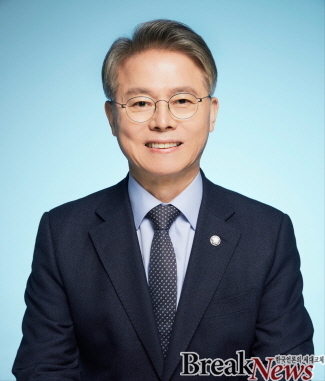
 ▲필자/ 김정기 칼럼니스트. ©브레이크뉴스 |
지금 보수 정치가 내부를 향해 겨누고 있는 총구는 상대 진영이 아니라 자기 자신의 심장을 향하고 있다. 지도자를 검증하는 것과 지도자를 소모시키는 것은 전혀 다른 문제다. 대안 없는 공격은 정치가 아니라 감정이다.
정치는 소음이 아니라 전략이다. 서울에서 이기지 못하는 보수는 전국 정당이 아니다. 그것은 단지 지역 정당일 뿐이다. 지금 보수 정치에 필요한 것은 내부 전쟁이 아니라 수도권 승리를 위한 냉정한 정치다. Jeongkeekim@naver.com
*필자/김정기
● 학력
- 뉴욕주립대학교(Stony Brook) 정치학과 수석 졸업
- 마케트대학교(Marquette) 로스쿨 법학박사
- 하버드대학교(Harvard) 케네디스쿨 최고위 과정
- 베이징대학교(Peking) 북한학 연구학자
● 경력
- 세계스마트시티기구(WeGO) 사무총장 (현)
- 유엔 국제전기통신연합 (UN ITU) 가상세계 및 AI 글로벌 이니셔티브 집행위원(현)
- 법무법인 대륙아주 중국 총괄 미국변호사
- 동국대학교 경영전문대학원 석좌교수
- 숭실사이버대학교 총장
- 칼럼니스트
● 저서
1. 대학생을 위한 거로영어연구[전 10권](거로출판사)
2. 나는 1%의 가능성에 도전한다(조선일보사)
3. 한국형 협상의 법칙(청년정신사)
4. 대한민국과 세계 이야기 (도서출판 책미듬)
5. Korea and the World (Advance Reader Copy).
*아래는 위 기사를 '구글 번역'으로 번역한 영문 기사의 [전문]입니다. '구글번역'은 이해도 높이기를 위해 노력하고 있습니다. 영문 번역에 오류가 있을 수 있음을 전제로 합니다.<*The following is [the full text] of the English article translated by 'Google Translate'. 'Google Translate' is working hard to improve understanding. It is assumed that there may be errors in the English translation.>
Reasons for supporting Seoul Mayor Oh Se-hoon..."Internal self-harm, conservatives will lose Seoul!"
"The Seoul Mayoral Election is, in effect, an election that determines the direction of metropolitan politics."
- Columnist Kim Jeong-gi
The moment the People Power Party loses Seoul, it is no longer a national party. Half of the metropolitan political landscape will collapse, and the entire political structure will be shaken. Seoul is not merely a local government but the central axis of South Korean politics. If Seoul is shaken, Gyeonggi and Incheon will be shaken; if the metropolitan area is shaken, the political landscape will be shaken in a chain reaction extending to Chungcheong and the Busan-Ulsan-Gyeongnam region. Ultimately, there is a high possibility that the party will be relegated to a reduced party dependent on the TK region. For this reason, the Seoul Mayoral Election is not simply a competition for local power. It is, in effect, an election that determines the direction of metropolitan politics.
Elections are ultimately conducted around the candidates. Elections where the party leadership steps to the forefront are usually the result of a failure in crisis management, not a strategic one. Whether it is a presidential or local election, once the election phase begins, the leadership steps back and the candidate stands at the center; this is the basic principle of politics.
The People Power Party leadership has already [apologized] for the martial law issue and [distanced] itself politically from President Yoon Suk-yeol The two sides have been officially resolved. If the relevant resolution was adopted unanimously at the general assembly of lawmakers, it means a political exit has been secured.
The problem lies in what comes after. Even though an exit has opened, people within the party are still aiming guns at one another. What is needed now is not a battle over past responsibility, but a strategy to prepare for the next election. However, looking at recent internal movements, it is difficult to shake the impression that emotions are taking precedence over strategy.
In particular, the attacks on Seoul Mayor Oh Se-hoon are closer to an emotional reaction than political competition. If one fails to offer even the slightest political evaluation to a figure who defended the capital city of Seoul amidst a constitutional crisis of presidential impeachment and a situation where the very existence of the party was shaken, that is closer to self-destruction than criticism.
The remarks of some politicians are also difficult to understand.
Representative Jang Dong-hyuk appears to be caught in a dilemma amidst his silence. It is appropriate for him to refrain from speaking at this time. He should hold his position as party leader, but this is not a situation where he should step to the forefront of the election. In politics, there are moments when silence is necessary.
The remarks of Nomination Management Committee Chairman Lee Jung-hyun are even more difficult to accept. A figure who knows the significance of Seoul politics better than anyone... The outpouring of emotional rhetoric directed at the Mayor of Seoul is closer to a display of political impatience than a strategic judgment. To begin with an internal attack, rather than expressing gratitude to a figure who defended the capital city of Seoul amidst the political turmoil of the presidential impeachment, is far removed from the common sense of party politics.
The problem is not limited to the political sphere. The overheated political environment created by certain political YouTube channels is also exacerbating the situation. A structure is forming where provocative frames are amplified and reproduced among hardline supporters, influencing even internal party politics.
A political party is a political organization, not a YouTube channel. View counts can be increased, but votes cannot.
A recent incident starkly illustrates the dangers of this political culture. It is the remark Jeon Han-gil directed at Mayor Oh Se-hoon: "Are you right-wing or left-wing?" Politics has its boundaries. Criticism is permissible, but insults are not. Demands can be made, but tests of loyalty cannot be justified.
The Mayor of Seoul is not a party activist. It is a position responsible for the administration of ten million citizens. The issue of renting public facilities is also subject to the law and This is a matter to be judged according to administrative standards of regulation, equity, and safety. Adding demands along the lines of "If you are right-wing, help us" is tantamount to dragging public power down to the testing ground of partisan politics.
Politics is a realm of persuasion. Persuasion is achieved through logic, accountability, and alternatives. However, this approach is not persuasion but coercion. The moment the message "Allow it if you are on our side" is repeated, public office degenerates into a position where one has to pander to the political camp. At that moment, administrative neutrality is compromised, and citizens' trust is shaken.
A more serious problem is that this approach is being consumed as the face of conservatism. Conservatism was originally a politics of the rule of law, restraint, and accountability. Strong language may garner applause. However, applause is not policy. Excitement cannot run a city. A massive administrative unit like Seoul operates based on data, procedures, and careful coordination.
Another problem is the collective atmosphere among some hardline party members. Currently, an atmosphere is spreading within the party where a competition for emotional loyalty takes precedence over cool-headed political judgment. In political science, this is called the "Activist Trap." As politics is swayed by the demands of the loudest supporters, centrist voters drift away. This phenomenon is particularly fatal in metropolitan elections.
Another factor recently causing confusion within conservative politics is the politics of opinion polls. Some polls operate by amplifying and reproducing the political frames of specific camps rather than reflecting political trends. A structure is emerging where public opinion is formed as other polling agencies follow the trends created by specific platforms.
Such figures cannot serve as a standard for political strategy. Meaningful polls in an election usually appear after the candidates of the two major parties have been finalized. The trends formed from one month before the election until just before the vote are closest to actual public sentiment.
Now, let's return to the question. Why Oh Se-hoon now?
The reason is simple. It is not because he is perfect. It is because, in the current political structure, he is the most realistic card for expecting a victory in Seoul.
Oh Se-hoon's political significance does not lie in his personal political style. It lies in the fact that he is one of the few conservative politicians with the potential to expand within the metropolitan area. Elections in the metropolitan area are a realm of expansion politics, not strong factional politics. Voters in the metropolitan area value stable administrative capabilities and... He places greater importance on realistic policies.
The Seoul Metropolitan Government's budget is approximately 50 trillion won. The lives of ten million citizens are connected to the administration of this city. Operating such a city requires experience and administrative capability. Oh Se-hoon is a politician who already possesses that experience.
He is not a figure who has walked a smooth political path. He has voluntarily stepped down from the mayoral position and has suffered electoral defeats. However, he eventually returned as the Mayor of Seoul. A person who has experienced failure in politics does not view crises lightly. The experience of failure makes a politician more cautious.
Mayor Oh Se-hoon's recent moves also need to be understood in the same context. He stated his position that he would not immediately apply for the nomination as a candidate for Seoul Mayor. The reason is simple: he doubts whether the resolution to "shift the course" adopted at the general assembly of lawmakers is actually leading to political change.
It is said that he clearly demanded two things during his meeting with the party leadership. One is personnel changes that allow the shift in course to be felt, and the other is the early launch of the Innovation Election Campaign Committee. However, his judgment is that there are no signs of such changes being implemented so far.
This statement implies a boycott of the election No. Mayor Oh Se-hoon himself has made this clear. He stated that he is not abstaining from the election, nor is he considering running as an independent. Ultimately, his message is singular: a demand to set the direction of politics straight before holding an election.
The guns currently aimed inward by conservative politics are not aimed at the opposing camp, but at their own hearts. Vetting a leader is a completely different matter from exhausting one. Attacks without alternatives are not politics; they are emotion.
Politics is strategy, not noise. A conservative party that cannot win in Seoul is not a national party. It is merely a regional party. What conservative politics needs right now is not an internal war, but cool-headed politics aimed at winning in the metropolitan area. **Jeongkeekim@naver.com
*Author/Kim Jeong-ki
● Education
- Graduated with honors in Political Science from Stony Brook University, State University of New York
- Juris Doctor from Marquette University Law School
- Advanced Program at Harvard University Kennedy School
- North Korean Studies at Peking University Research Scholar
● Career
- Secretary General, World Smart City Organization (WeGO) (Current)
- Executive Committee Member, UN International Telecommunication Union (ITU) Global Initiative on Virtual Worlds and AI (Current)
- US Attorney General for China at Daeryuk Aju Law Firm
- Distinguished Professor, Graduate School of Business, Dongguk University
- President, Soongsil Cyber University
- Columnist
● Publications
1. Georo English Research for University Students [10 Volumes] (Gero Publishing)
2. I Challenge the 1% Possibility (Chosun Ilbo)
3. The Laws of Korean-Style Negotiation (Cheongnyeonjeongsinsa)
4. Stories of Korea and the World (Chaekmidum Publishing)
5. Korea and the World (Advance Reader Copy)